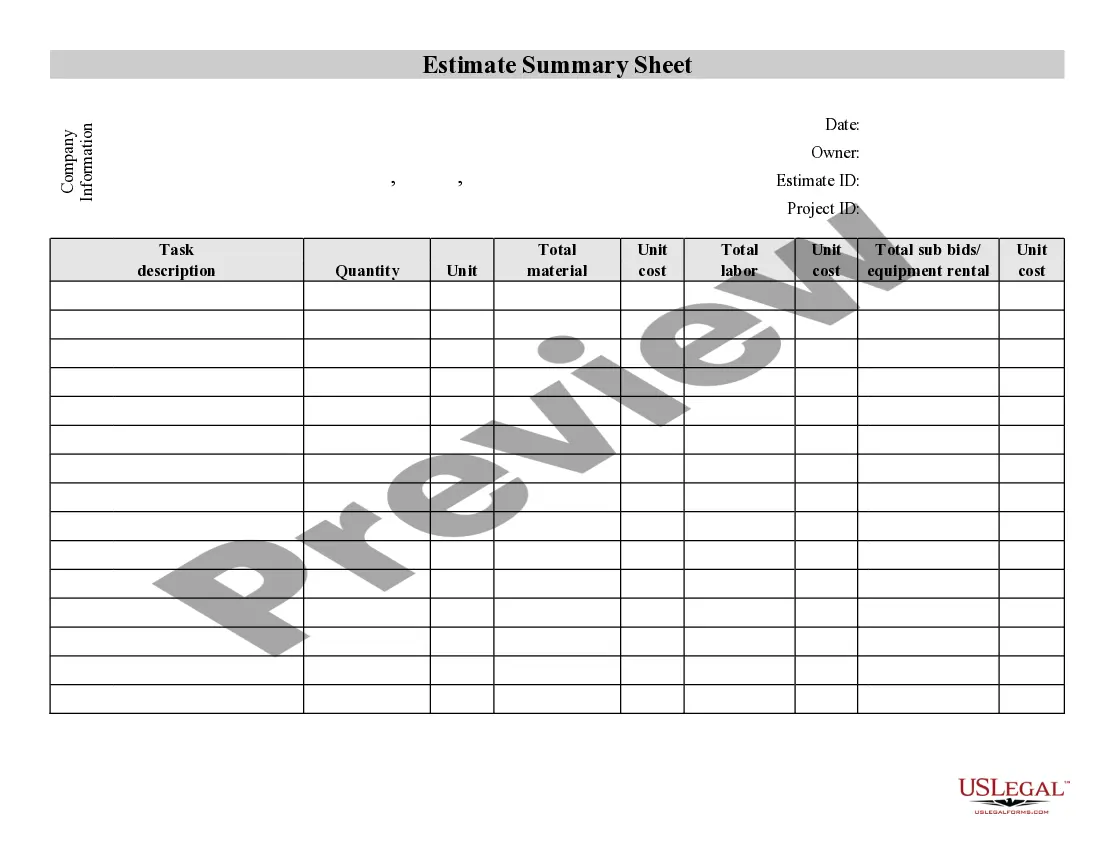
Construction Bid Bond Form
Description


Get your form ready online
Our built-in tools help you complete, sign, share, and store your documents in one place.
Make edits, fill in missing information, and update formatting in US Legal Forms—just like you would in MS Word.
Download a copy, print it, send it by email, or mail it via USPS—whatever works best for your next step.
Sign and collect signatures with our SignNow integration. Send to multiple recipients, set reminders, and more. Go Premium to unlock E-Sign.
If this form requires notarization, complete it online through a secure video call—no need to meet a notary in person or wait for an appointment.
We protect your documents and personal data by following strict security and privacy standards.

Make edits, fill in missing information, and update formatting in US Legal Forms—just like you would in MS Word.

Download a copy, print it, send it by email, or mail it via USPS—whatever works best for your next step.

Sign and collect signatures with our SignNow integration. Send to multiple recipients, set reminders, and more. Go Premium to unlock E-Sign.

If this form requires notarization, complete it online through a secure video call—no need to meet a notary in person or wait for an appointment.

We protect your documents and personal data by following strict security and privacy standards.
Looking for another form?


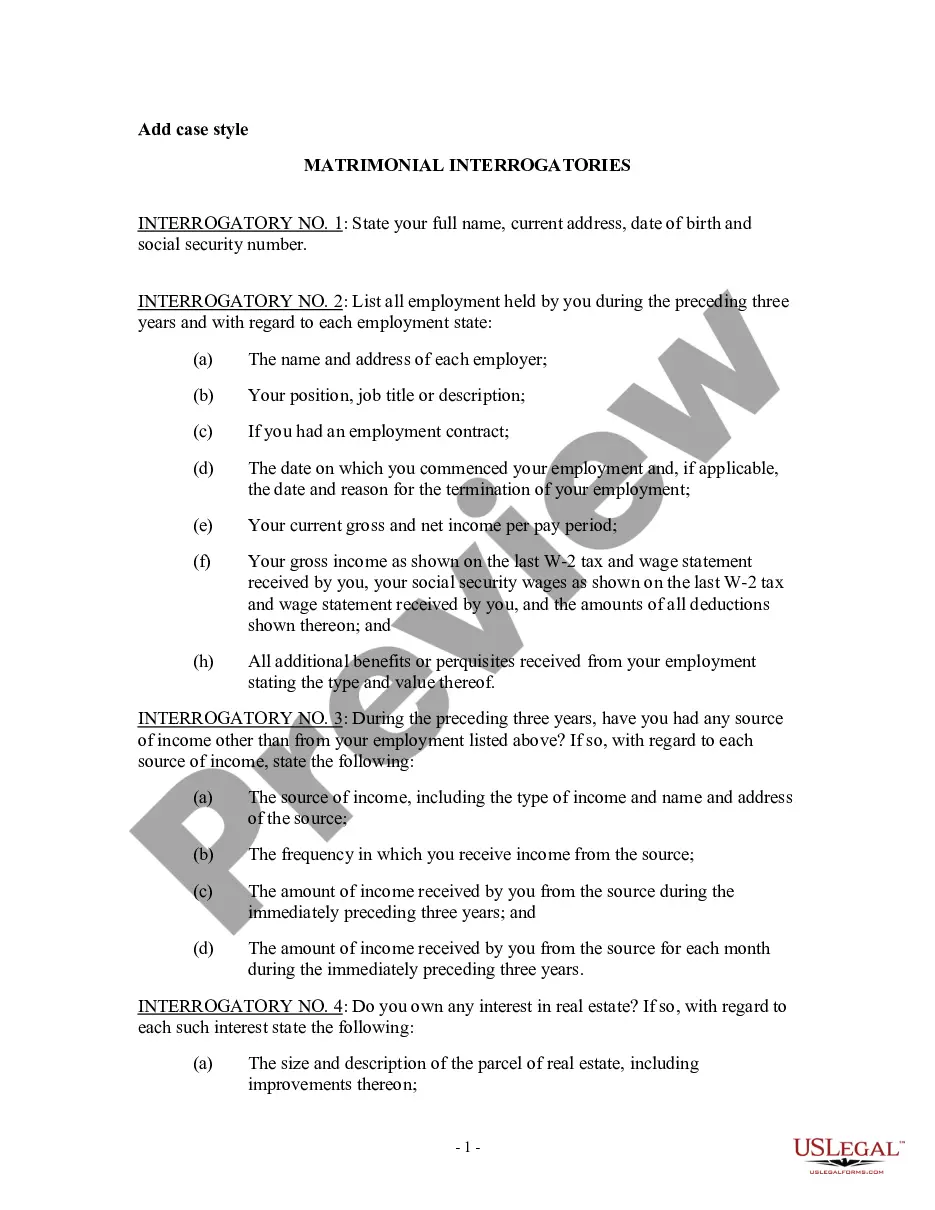






How to fill out Contractor's Summary Of An Estimate?
When you need to file a Construction Bid Bond Form that adheres to your local state's statutes, there may be numerous options to choose from.
There's no need to scrutinize every form to ensure it meets all legal requirements if you are a US Legal Forms subscriber.
It is a reliable source that can assist you in obtaining a reusable and current template on any subject.
Review the suggested page and ensure it meets your needs.
- US Legal Forms is the most extensive online repository with an archive of over 85,000 ready-to-use documents for business and personal legal situations.
- All templates are verified to comply with each state's regulations.
- Therefore, when downloading the Construction Bid Bond Form from our website, you can be assured that you possess a valid and current document.
- Acquiring the necessary template from our platform is quite simple.
- If you already have an account, simply Log In to the system, ensure your subscription is valid, and save the chosen file.
- Subsequently, you can access the My documents section in your profile and retrieve the Construction Bid Bond Form at any time.
- If this is your first time using our library, please follow the guidelines below.
Form popularity
FAQ
Premiums for construction bonds are calculated as a percentage of the bond value, and usually quoted in dollars per thousand: Bond Amount X Rate/1,000. Percentages are typically tiered given the size of the bond and average in the . 7 2.5% range but can go as high as 3% or more, depending on a variety of factors.
A bid bond typically involves three parties: the obligee, the principal, and the surety. The obligee is the owner or developer of the construction project under bid. The principal is the bidder or proposed contractor. The surety is the agency that issues the bid bond to the principal.
The function of the bid bond is to provide a guarantee to the project owner that the bidder will complete the work if selected. The existence of a bid bond gives the owner assurance that the bidder has the financial means to accept the job for the price quoted in the bid.
You'll likely need to get a bid surety bond that's a specific percentage of the total estimated contract amount (most commonly about 5-10% of the total contract cost). This means if the project you're bidding on is estimated to cost $500,000 and you're required to get a 10% bid bond, you need to get a $50,000 bid bond.
The bids are very different, but keep in mind the labor-only bid does not include the cost of materials, which you'd still need to account for separately.