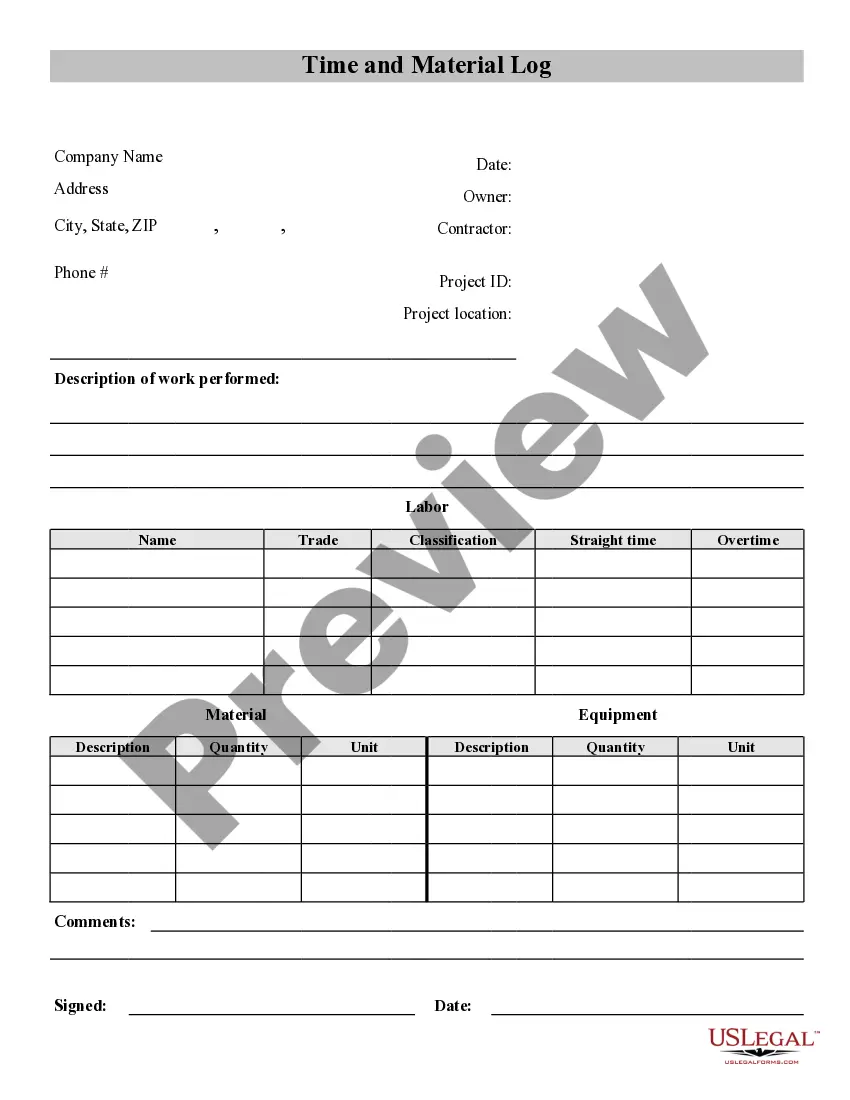
Contractor Time And Materials Contract
Description
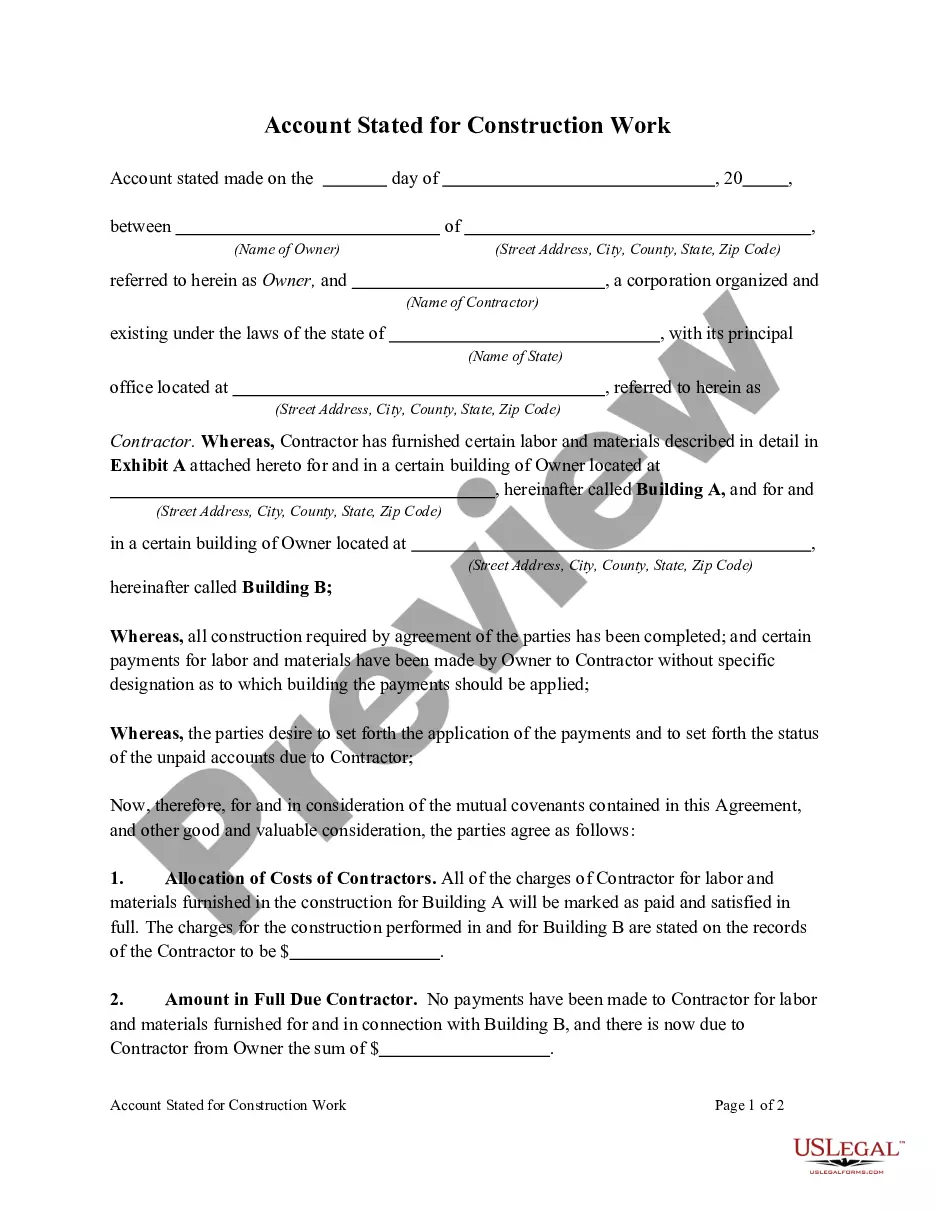
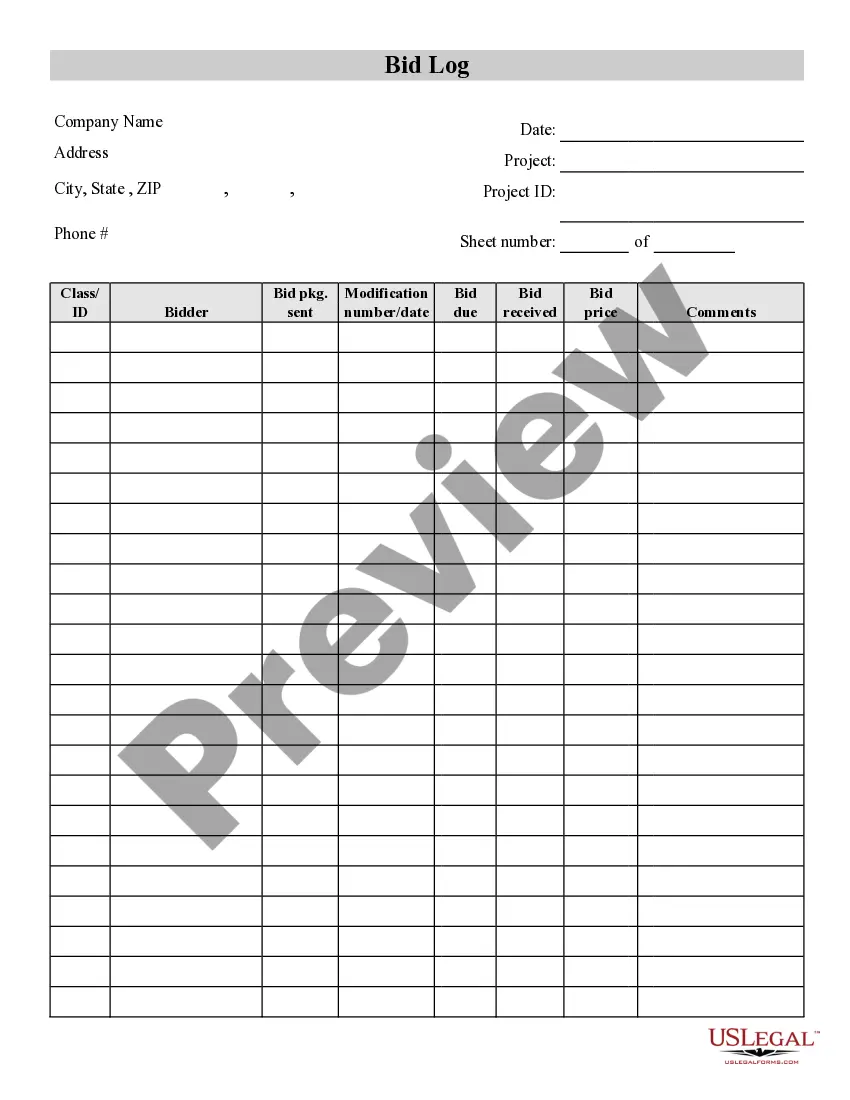
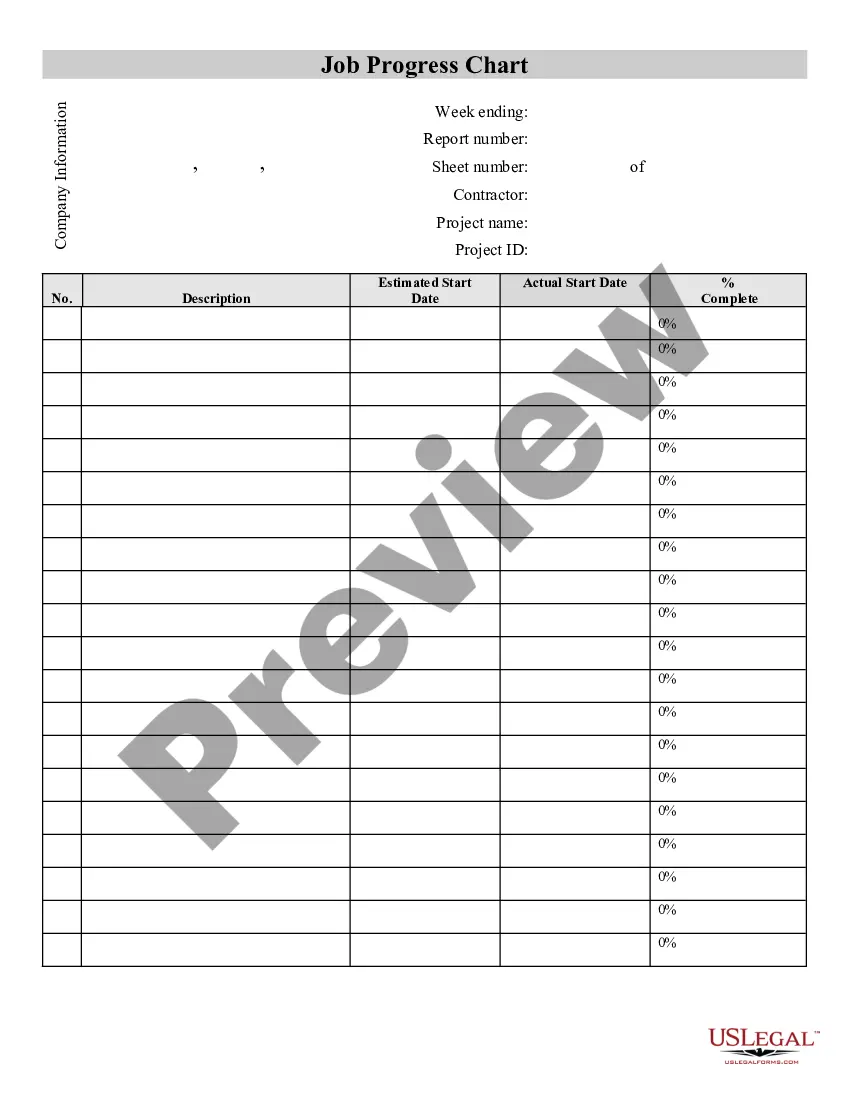
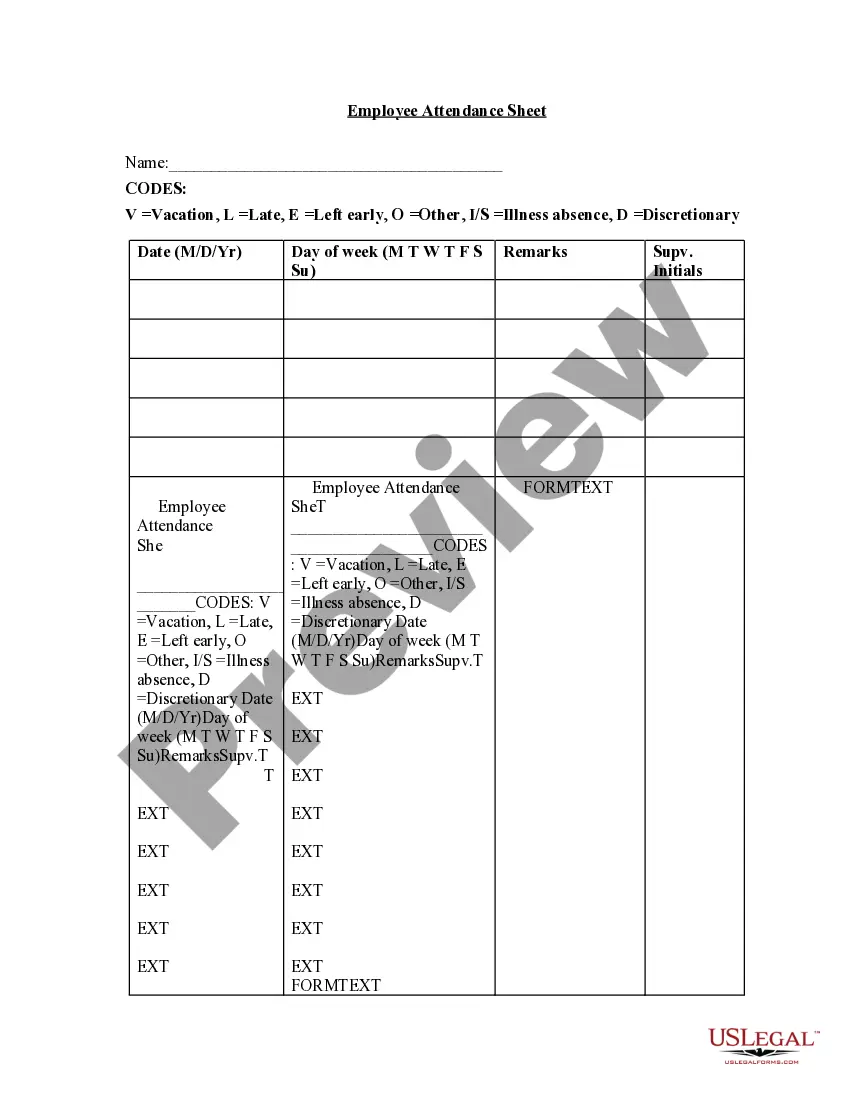
How to fill out Contractor's Time And Materials Log?
Locating a reliable source to obtain the latest and suitable legal templates is a significant part of dealing with bureaucracy.
Identifying the correct legal documents requires accuracy and meticulousness, which is why it's crucial to acquire samples of Contractor Time And Materials Contract solely from reputable providers, such as US Legal Forms. An incorrect template will squander your time and hinder your progress in the current situation. With US Legal Forms, you can rest easy. You can access and review all the information regarding the document’s application and appropriateness for your context and locality.
Eliminate the hassle associated with your legal paperwork. Explore the extensive collection at US Legal Forms where you can discover legal templates, assess their relevance to your circumstance, and download them immediately.
- Utilize the library navigation or search bar to find your template.
- Examine the document’s details to confirm it meets the specifications of your state and region.
- Check the document preview, if available, to ensure the template is indeed what you need.
- If the Contractor Time And Materials Contract does not meet your requirements, continue searching for the right document.
- Once you are confident about the document’s suitability, download it.
- If you are a registered user, click Log in to verify your identity and access your selected forms in My documents.
- If you do not have an account yet, click Buy now to acquire the template.
- Choose the pricing option that fits your needs.
- Proceed with the registration to complete your purchase.
- Finalize your purchase by selecting a payment option (credit card or PayPal).
- Choose the document format for downloading the Contractor Time And Materials Contract.
- After obtaining the form on your device, you can modify it with the editor or print it and complete it manually.
Form popularity
FAQ
Examples of a time and materials contract A time and materials contract is commonly utilized in the construction industry. For example, a client may wish to redo their kitchen. The contractor will look into the scope of the project, the materials needed to complete the job, and the time it will take to do so.
The time and materials billing format involves the contractor charging the customer for, quite literally, time and materials. The contractor bills for every man-hour spent on the project, as well as any materials purchased for that job.
Time and Materials Not-to-Exceed Clause: Generally a not-to-exceed clause is added to a T&M contract as a means to ensure that a project's cost will not exceed an agreed-upon maximum cost by the time the agreed-upon scope of work is completed.
An example of a time and materials contract is a contract that stipulates a $30 hourly rate plus an additional 10% on any items purchased. It also states that buyers will not pay more than $1,000 in materials and in excess of 80 hours of labor.
A time and materials contract should outline the project's objectives and contain a fixed price for labor that accounts for wages, overhead, general and administrative expenses, as well as a profit margin. Freight, taxes, and markup should be included in the materials cost.