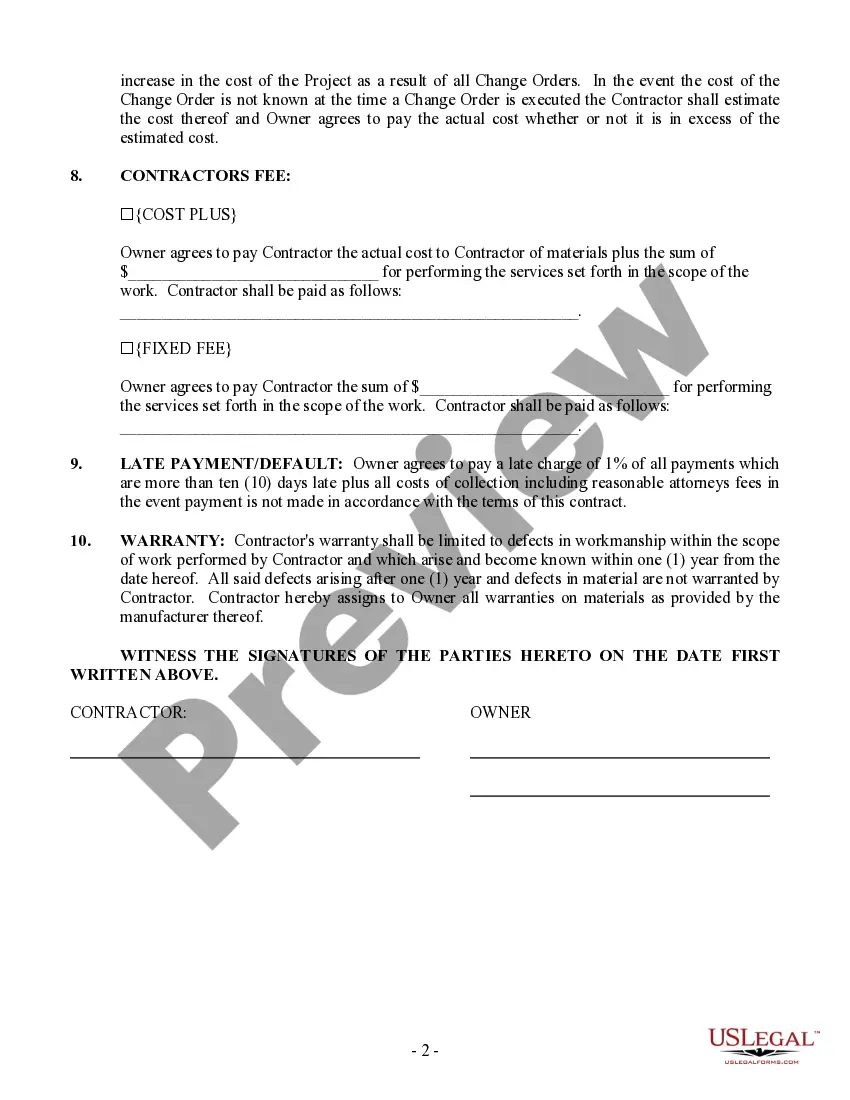
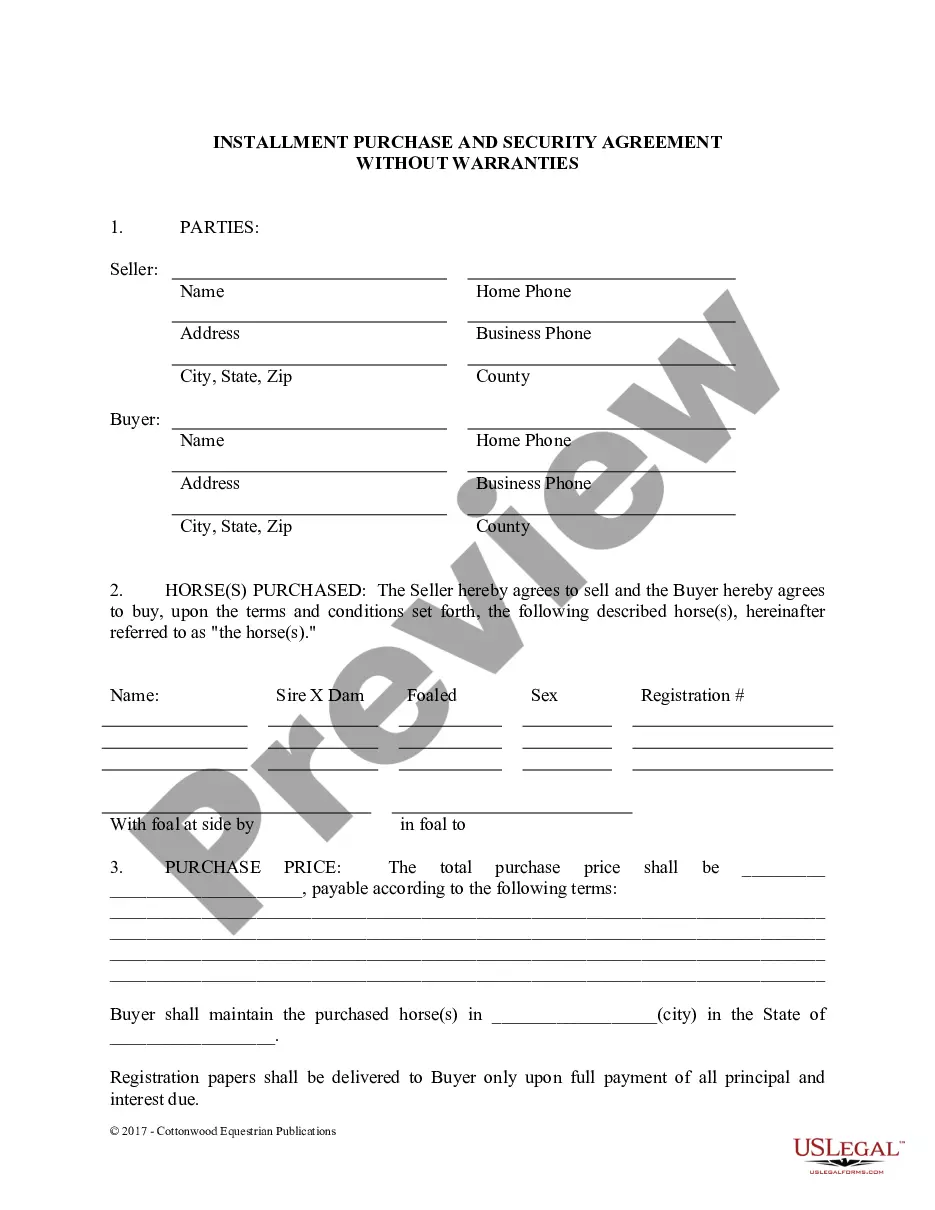
Contract Form For Construction In North Carolina
Description

Get your form ready online
Our built-in tools help you complete, sign, share, and store your documents in one place.
Make edits, fill in missing information, and update formatting in US Legal Forms—just like you would in MS Word.
Download a copy, print it, send it by email, or mail it via USPS—whatever works best for your next step.
Sign and collect signatures with our SignNow integration. Send to multiple recipients, set reminders, and more. Go Premium to unlock E-Sign.
If this form requires notarization, complete it online through a secure video call—no need to meet a notary in person or wait for an appointment.
We protect your documents and personal data by following strict security and privacy standards.

Make edits, fill in missing information, and update formatting in US Legal Forms—just like you would in MS Word.

Download a copy, print it, send it by email, or mail it via USPS—whatever works best for your next step.

Sign and collect signatures with our SignNow integration. Send to multiple recipients, set reminders, and more. Go Premium to unlock E-Sign.

If this form requires notarization, complete it online through a secure video call—no need to meet a notary in person or wait for an appointment.

We protect your documents and personal data by following strict security and privacy standards.
Looking for another form?







Form popularity
FAQ
What is a standard form contract? While many contracts are entirely purpose made, standard form contracts consist of standardised, pre-written terms and conditions. Because standard form contracts are familiar to people in an industry, they often function effectively without the need for much negotiation.
Bilateral contracts are agreements in which both parties exchange mutual promises to perform certain obligations, making this type of contract the most common in business transactions.
The 'main contract' is generally that which is awarded by the client (sometimes referred to as the employer) to the general contractor, or main contractor, whose tender has been accepted.
The (), ConsensusDocs, Design Build Institute of America (DBIA) and Engineers Joint Contract Documents Committee publish the most common forms used in the United States, while international projects often use forms available from the International Federation of Consulting Engineers ( ...
How To Write A Construction Contract With 7 Steps Step 1: Define the Parties Involved. Step 2: Outline the Scope of Work. Step 3: Establish the Timeline. Step 4: Determine the Payment Terms. Step 5: Include Necessary Legal Clauses. Step 6: Address Change Orders and Modifications. Step 7: Sign and Execute the Contract.
The State of North Carolina licensing boards and the General Statutes allows a homeowner to obtain a permit to perform the work on their home by meeting certain criteria.
In order to have a valid contract in North Carolina, there must be an offer, an acceptance, along with consideration. The parties must also have the capacity to enter into the contract.
No. North Carolina statutes do not require a Notice of Commencement or a Notice of Completion as in some other States. Does this State permit a person with an interest in property to deny responsibility for improvements? No.
The Notice of Contract must follow the statutory form and be filed with the Office of the Clerk of Court in the county where the property is located. It also must be posted at the jobsite – in a location adjacent to the building permit.
The primary requirements for licensing include, completing the application, be at least 18 years of age, possess good moral character, meet the minimum financial requirement based on the limitation of license you are applying for, and successfully completing an examination based on the desired classification of license ...
