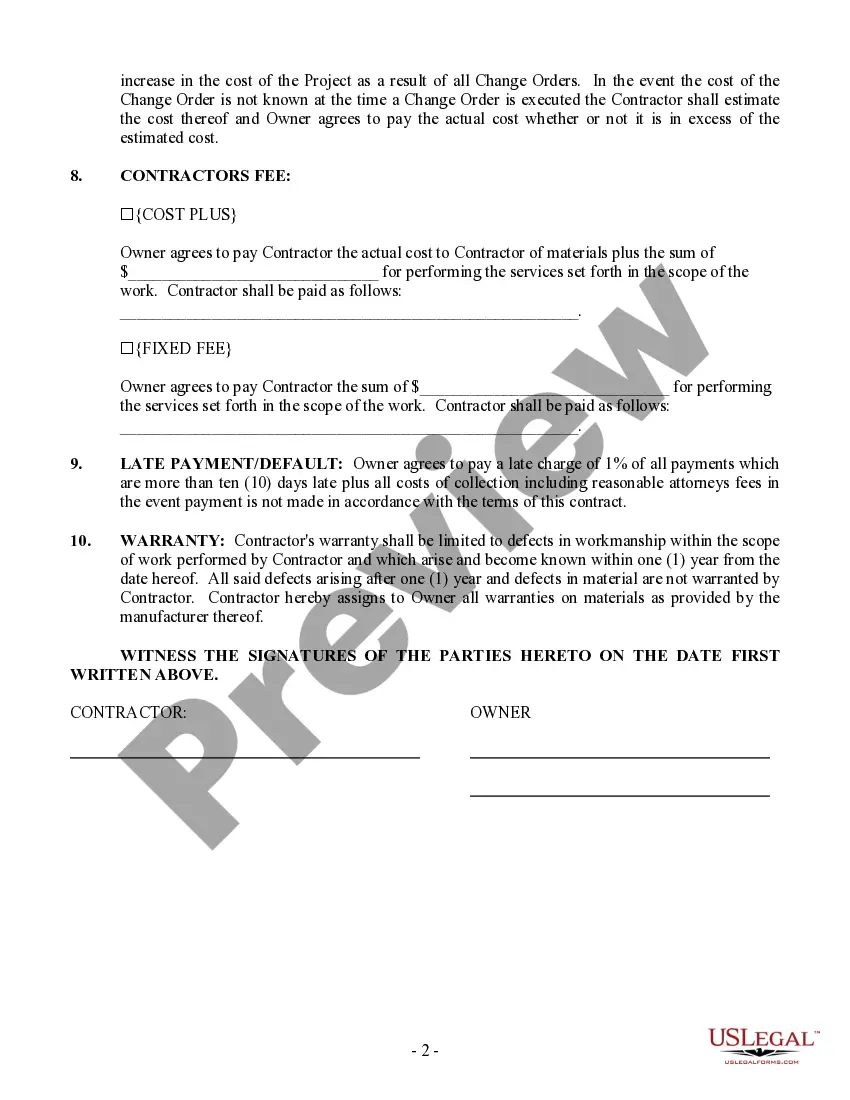
Fee Cost Plus With 20
Description

Get your form ready online
Our built-in tools help you complete, sign, share, and store your documents in one place.
Make edits, fill in missing information, and update formatting in US Legal Forms—just like you would in MS Word.
Download a copy, print it, send it by email, or mail it via USPS—whatever works best for your next step.
Sign and collect signatures with our SignNow integration. Send to multiple recipients, set reminders, and more. Go Premium to unlock E-Sign.
If this form requires notarization, complete it online through a secure video call—no need to meet a notary in person or wait for an appointment.
We protect your documents and personal data by following strict security and privacy standards.

Make edits, fill in missing information, and update formatting in US Legal Forms—just like you would in MS Word.

Download a copy, print it, send it by email, or mail it via USPS—whatever works best for your next step.

Sign and collect signatures with our SignNow integration. Send to multiple recipients, set reminders, and more. Go Premium to unlock E-Sign.

If this form requires notarization, complete it online through a secure video call—no need to meet a notary in person or wait for an appointment.

We protect your documents and personal data by following strict security and privacy standards.
Looking for another form?


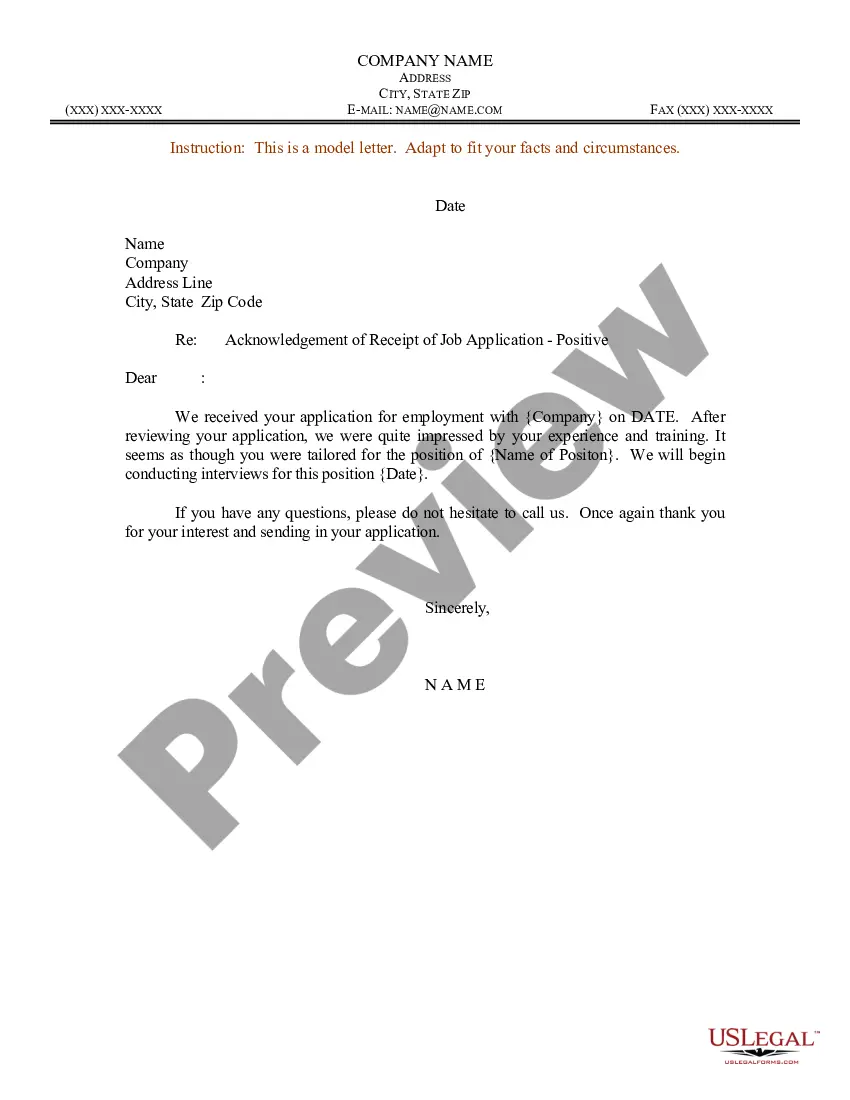

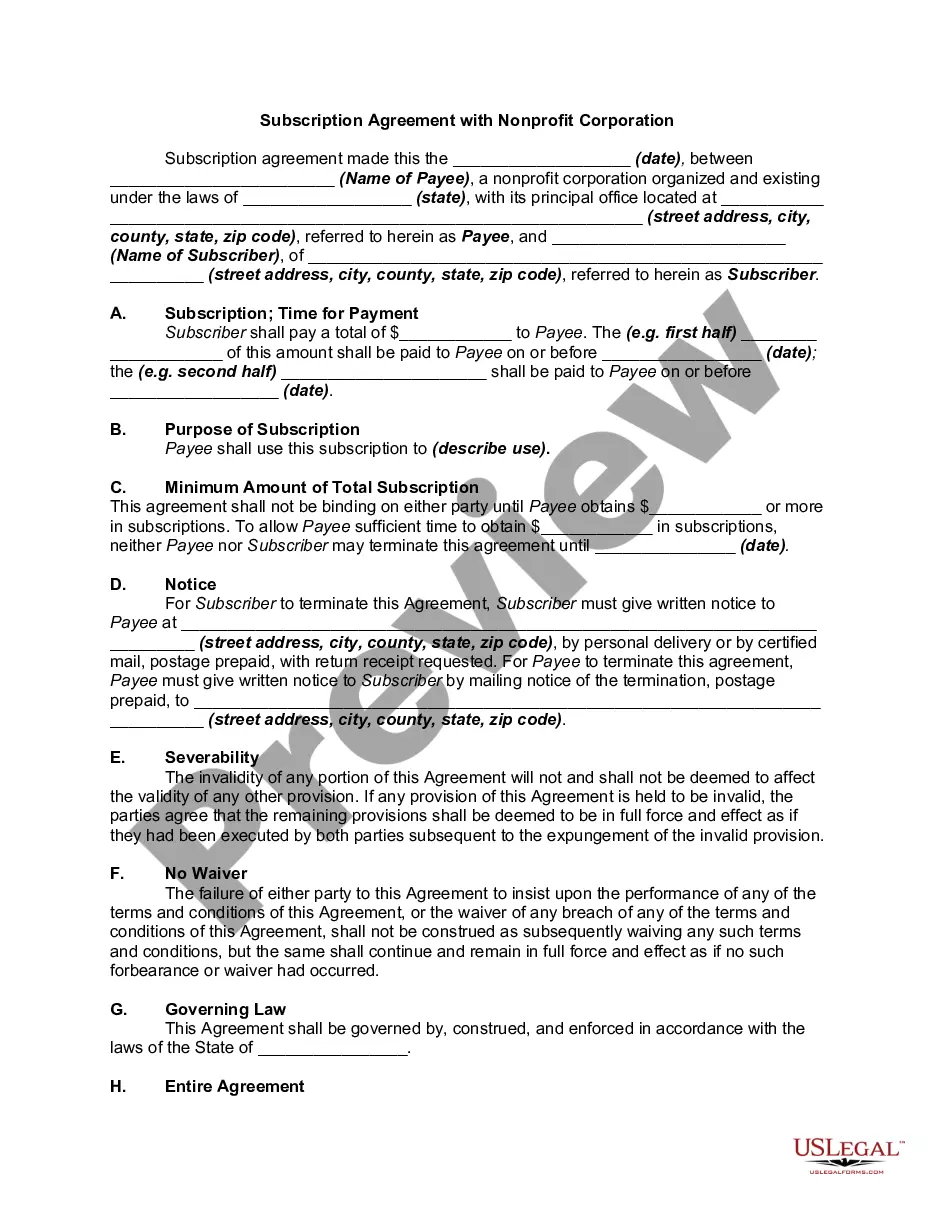


How to fill out Construction Contract For Home - Fixed Fee Or Cost Plus?
Managing legal documents and procedures can be a lengthy addition to your entire day.
Fees Cost Plus With 20 and similar forms usually necessitate you to locate them and comprehend how to fill them out correctly.
For that purpose, whether you are dealing with financial, legal, or personal affairs, having an extensive and user-friendly online directory of forms readily available will significantly help.
US Legal Forms is the premier online resource for legal templates, providing over 85,000 state-specific forms and various tools to help you fill out your documents efficiently.
Is it your first time using US Legal Forms? Register and create a free account in a few minutes and you'll be able to access the form library and Fee Cost Plus With 20. Then, follow the steps below to complete your document.
- Browse the collection of pertinent paperwork available to you with just one click.
- US Legal Forms provides state- and county-specific documents accessible at any time for downloading.
- Protect your document management processes by utilizing a high-quality service that enables you to complete any form in minutes without extra or undisclosed fees.
- Simply Log In to your account, locate Fee Cost Plus With 20, and download it instantly from the My documents section.
- You can also access previously downloaded documents.
Form popularity
FAQ
Calculating cost plus 20% is straightforward. First, identify the total project costs, which cover all relevant expenses. Then, take 20% of that total by multiplying it by 0.20. Adding this percentage to the original costs will give you the final fee cost plus with 20.
To calculate the fee cost plus with 20 percent, start by determining the total cost of the project. This includes materials, labor, and overhead. Next, multiply the total cost by 0.20 to find the additional fee. Finally, add this fee to the total cost to arrive at the final amount.
A good cost-plus percentage can vary depending on the industry, but generally, 20% is considered reasonable for many projects. It strikes a balance between ensuring contractors are compensated for their time and maintaining cost-effectiveness for clients. By using a fee cost plus with 20 model, clients often find they receive value without overspending. Ultimately, the right percentage should align with project specifics and the risks involved.
Calculating cost-plus 20% follows a clear process. Start by determining the total expenses incurred for the project. Next, multiply that total by 20%. Finally, sum the 20% fee with the initial cost to find the overall total. This helps you understand the complete financial commitment you are making under a fee cost plus with 20 agreement.
To calculate cost plus 20 percent, first identify the total project costs. Once you have the total, simply multiply that cost by 0.20 to determine the additional fee. Then, add this fee to the original cost to get the final amount. This straightforward method makes budgeting simpler, especially when using the fee cost plus with 20 structure.
Billing for cost-plus projects involves documenting all direct costs incurred during the project. After calculating these costs, add the base fee, such as the fee cost plus with 20, to your invoice. It's crucial to keep detailed records and submit periodic billings if the contract specifies this. USLegalForms can help you prepare the necessary documents and templates, ensuring your billing process remains efficient and compliant.
To calculate a cost-plus-incentive-fee, start by determining the total costs of the project, including labor, materials, and overhead expenses. Then, you can add a base fee that is agreed upon in advance, such as the fee cost plus with 20. Finally, any additional incentive fees can be calculated based on performance metrics or milestones achieved throughout the project. By utilizing this method, you ensure transparency and align the interests of both parties involved.