Consignment Form Template With Prices
Description

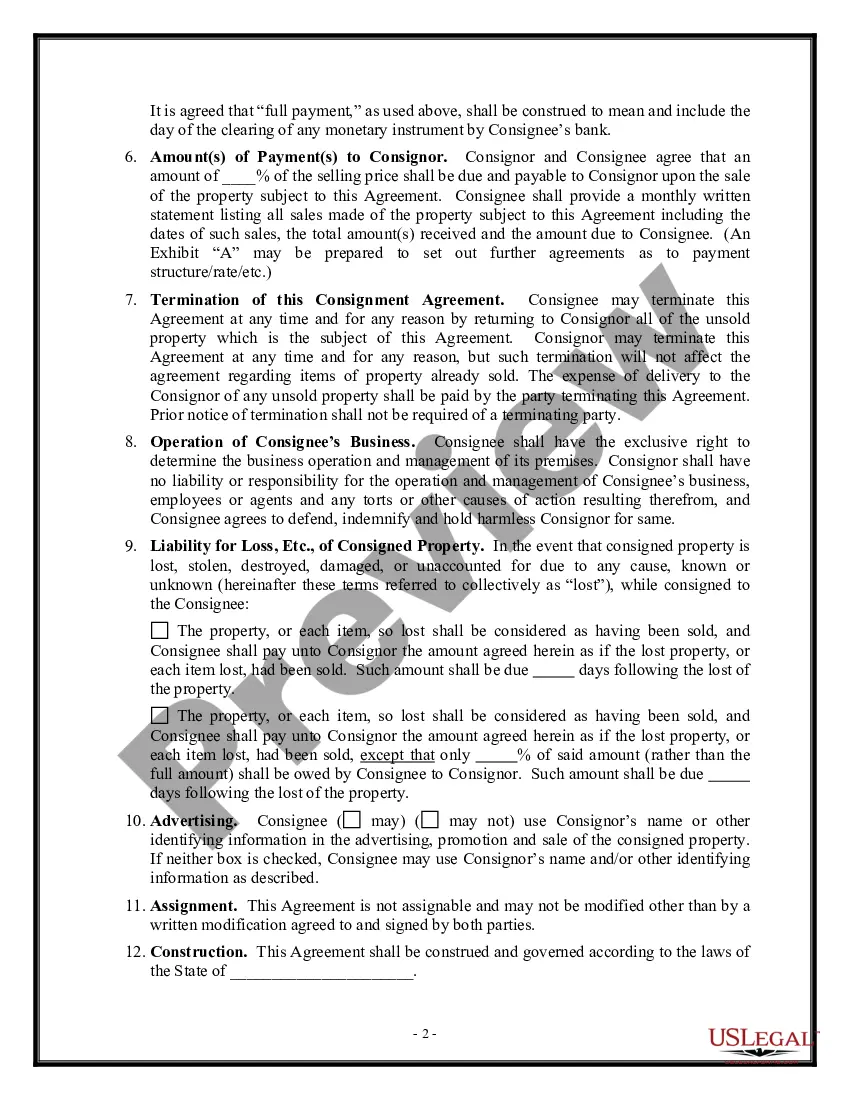
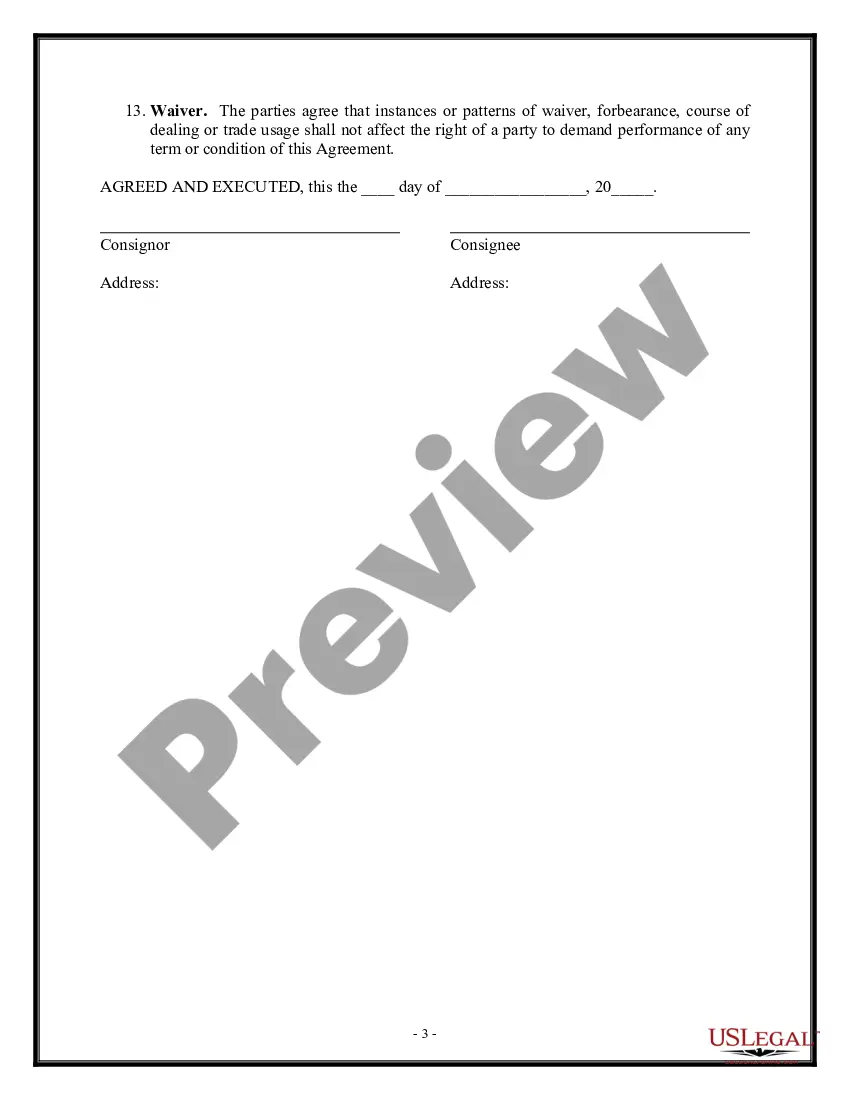
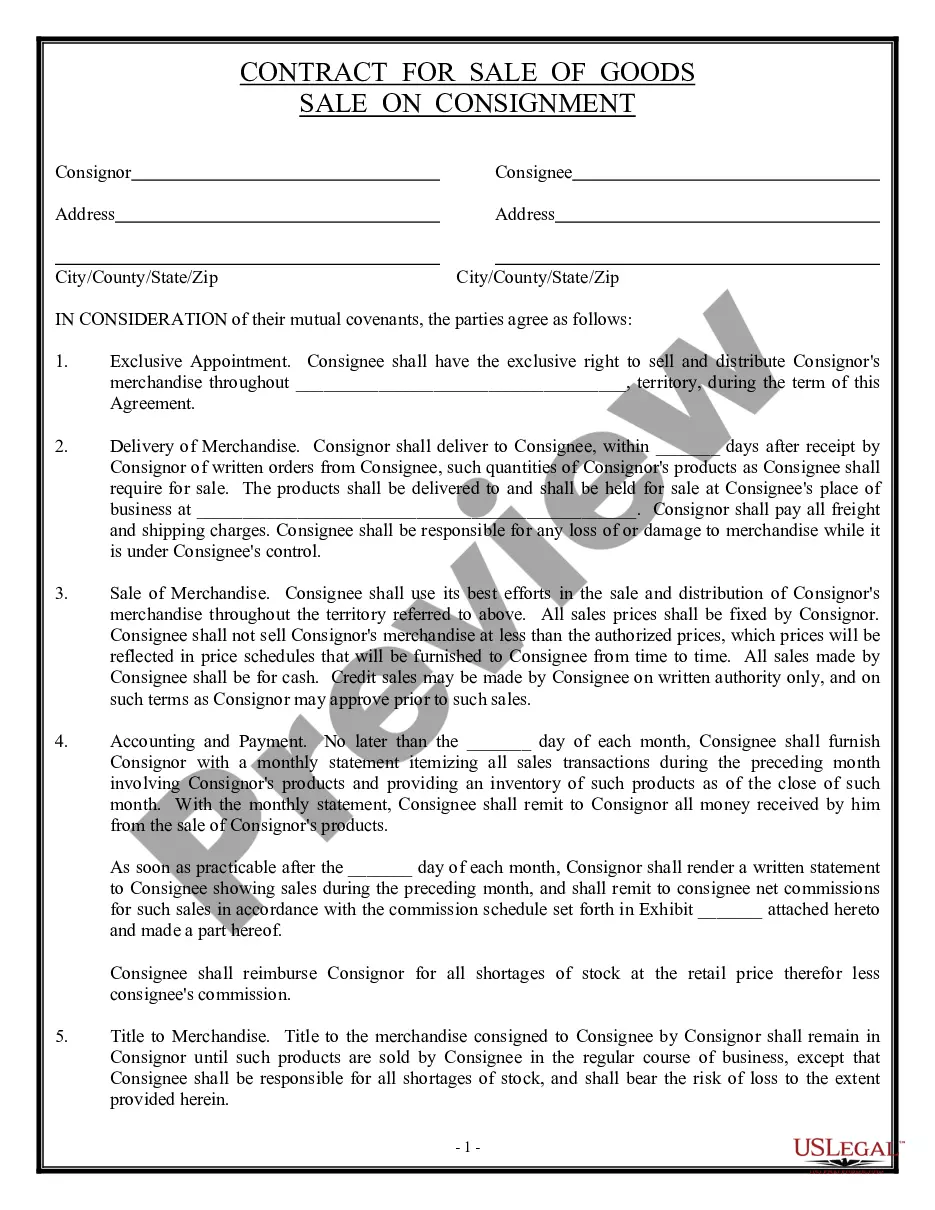
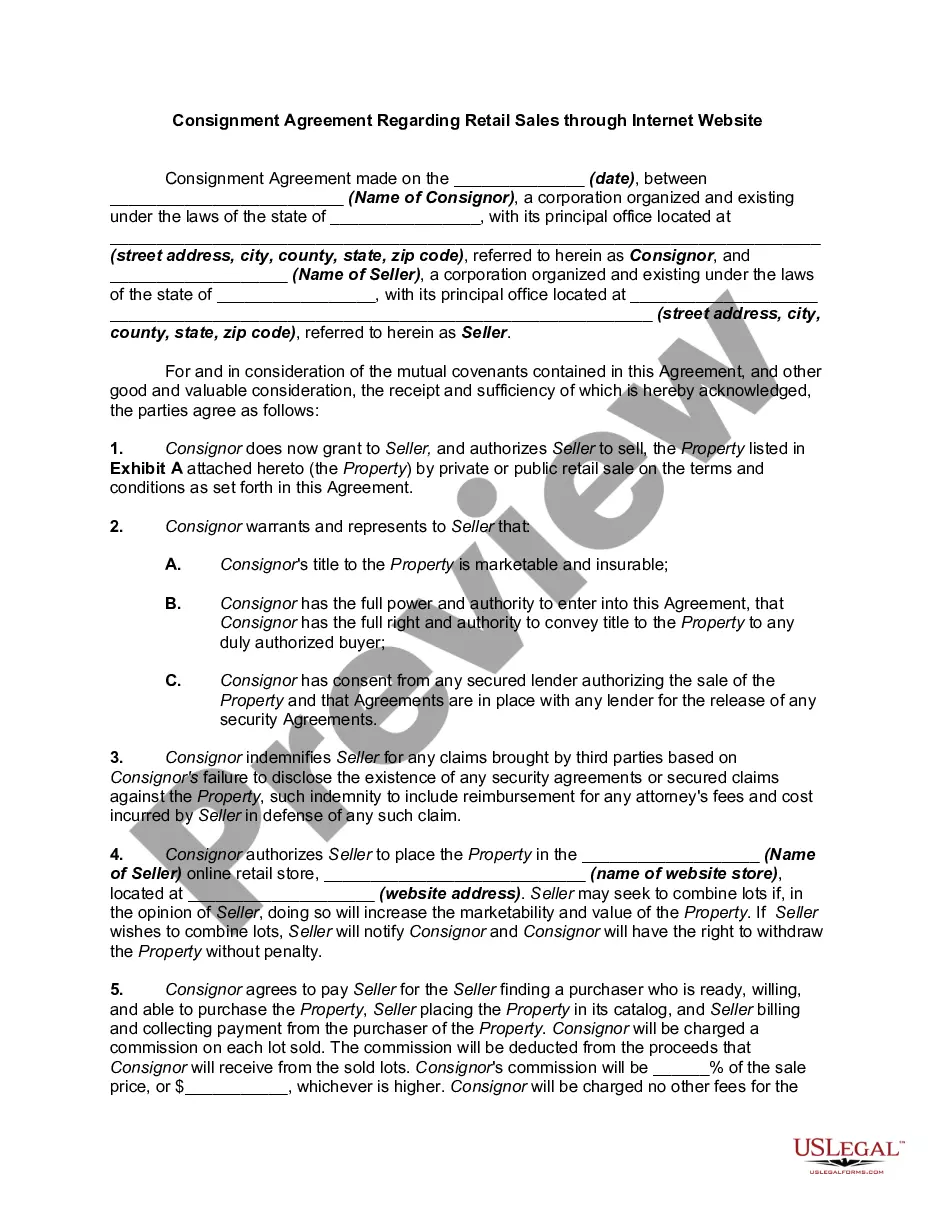
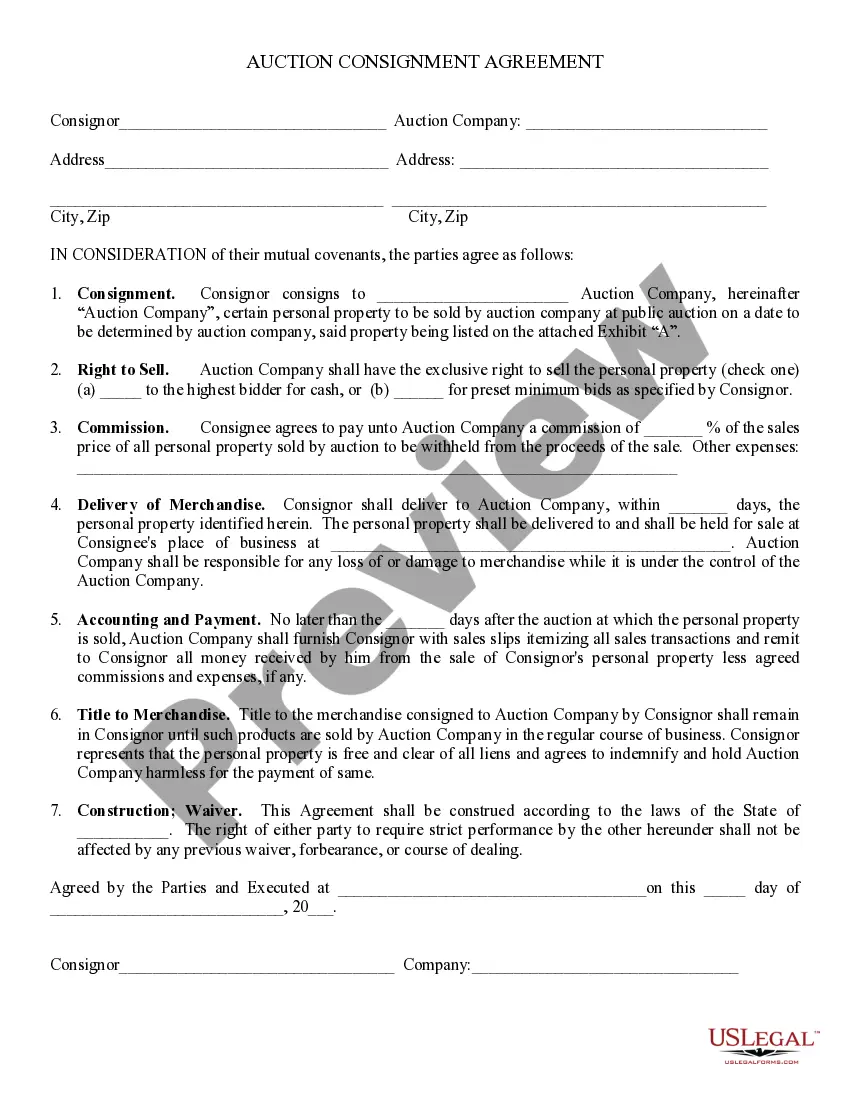
How to fill out Consignment Agreement?
The Consignment Form Template With Prices presented on this page is a versatile legal document created by expert attorneys in accordance with federal and local regulations.
For over 25 years, US Legal Forms has supplied individuals, businesses, and lawyers with more than 85,000 authenticated, state-specific documents for any commercial and personal circumstance. It’s the fastest, easiest, and most reliable method to acquire the necessary paperwork, as the service ensures bank-level data protection and anti-malware safeguards.
Subscribe to US Legal Forms to have verified legal templates for all of life's circumstances at your fingertips.
- Search for the document you require and examine it. Browse through the file you searched and preview it or review the form details to confirm it meets your needs. If it doesn’t, use the search bar to locate the appropriate one. Click Buy Now when you have located the template you need.
- Subscribe and sign in. Choose the pricing plan that fits your needs and create an account. Use PayPal or a credit card to make a quick payment. If you already possess an account, Log In and verify your subscription to continue.
- Obtain the fillable template. Select the format you desire for your Consignment Form Template With Prices (PDF, DOCX, RTF) and download the sample onto your device.
- Fill out and sign the documents. Print the template to complete it by hand. Alternatively, use an online multifunctional PDF editor to swiftly and accurately fill out and sign your form with a legally-binding electronic signature.
- Download your documents again. Reuse the same document anytime needed. Access the My documents tab in your profile to redownload any previously acquired forms.
Form popularity
FAQ
Selling on consignment can lead to several challenges that might outweigh the benefits. First, you often face delayed payments, as you only receive funds after the item sells. Additionally, managing inventory can become complicated, leading to potential losses. Instead, consider using our consignment form template with prices available on US Legal Forms, which helps streamline the process and ensures you have clear agreements in place.
To write a consignment agreement, begin by clearly outlining the terms of the consignment, including the responsibilities of both the consignor and the consignee. You should specify the duration of the agreement, payment terms, and what happens if items do not sell. Utilizing a consignment form template with prices can help you create a comprehensive agreement, ensuring that all necessary details are included for a smooth transaction. With user-friendly tools available on the Uslegalforms platform, drafting your agreement becomes an effortless task.
The process of filling up a consignment form typically begins with gathering essential information about the items being consigned. You will need to provide details such as descriptions, quantities, and prices for each item. Using a well-structured consignment form template with prices can simplify this process and ensure that you do not miss any critical details. Additionally, you can easily track the status of your consignment, making the entire process more efficient.
To create a consignment agreement, start by defining the terms clearly. Use a consignment form template with prices that outlines the responsibilities of both parties, including the payment terms and duration of the consignment. Next, include details about the items being consigned, their value, and how profits will be split. Utilizing a platform like US Legal Forms can simplify this process, providing you with customizable templates that ensure all necessary elements are included.
Now that you know what consignment is, here's how to calculate consignment inventory. Step 1: Establish a Listing of Your Inventory of Consignment Products. ... Step 2: Subtract the Seller's or Shipper's Portion of the Consignment Product Sold. ... Step 3: Update the Inventory After the Sale.
There are two types of consignment: Outward consignment. Inward consignment.
3. Consignment agreement instructions Introduction of Parties. Identifies the parties and the date of the agreement. ... Recitals. ... Section 1: Consigned property. ... Section 2: Delivery of goods. ... Section 3: Consignment period. ... Section 4: Efforts to sell. ... Section 5: Title to products. ... Section 6: Payment; commission.
Consignment is an arrangement in which goods are left with a third party to sell. The party that sells the goods on consignment receives a portion of the profits, either as a flat rate fee or commission. Selling via a consignment arrangement can be a low-commission, low-time-investment way of selling items or services.
The dealer has no risk and you have your merchandise before the public. Examples of goods often sold on consignment include light bulbs, produce, eggs, poultry, magazines, newspapers, Christmas decorations, garden seeds, batteries for flashlights and potted plants such as those found in supermarkets.