Roommate Agreement Rules In California
Description

Get your form ready online
Our built-in tools help you complete, sign, share, and store your documents in one place.
Make edits, fill in missing information, and update formatting in US Legal Forms—just like you would in MS Word.
Download a copy, print it, send it by email, or mail it via USPS—whatever works best for your next step.
Sign and collect signatures with our SignNow integration. Send to multiple recipients, set reminders, and more. Go Premium to unlock E-Sign.
If this form requires notarization, complete it online through a secure video call—no need to meet a notary in person or wait for an appointment.
We protect your documents and personal data by following strict security and privacy standards.

Make edits, fill in missing information, and update formatting in US Legal Forms—just like you would in MS Word.

Download a copy, print it, send it by email, or mail it via USPS—whatever works best for your next step.

Sign and collect signatures with our SignNow integration. Send to multiple recipients, set reminders, and more. Go Premium to unlock E-Sign.

If this form requires notarization, complete it online through a secure video call—no need to meet a notary in person or wait for an appointment.

We protect your documents and personal data by following strict security and privacy standards.
Looking for another form?










Form popularity
FAQ
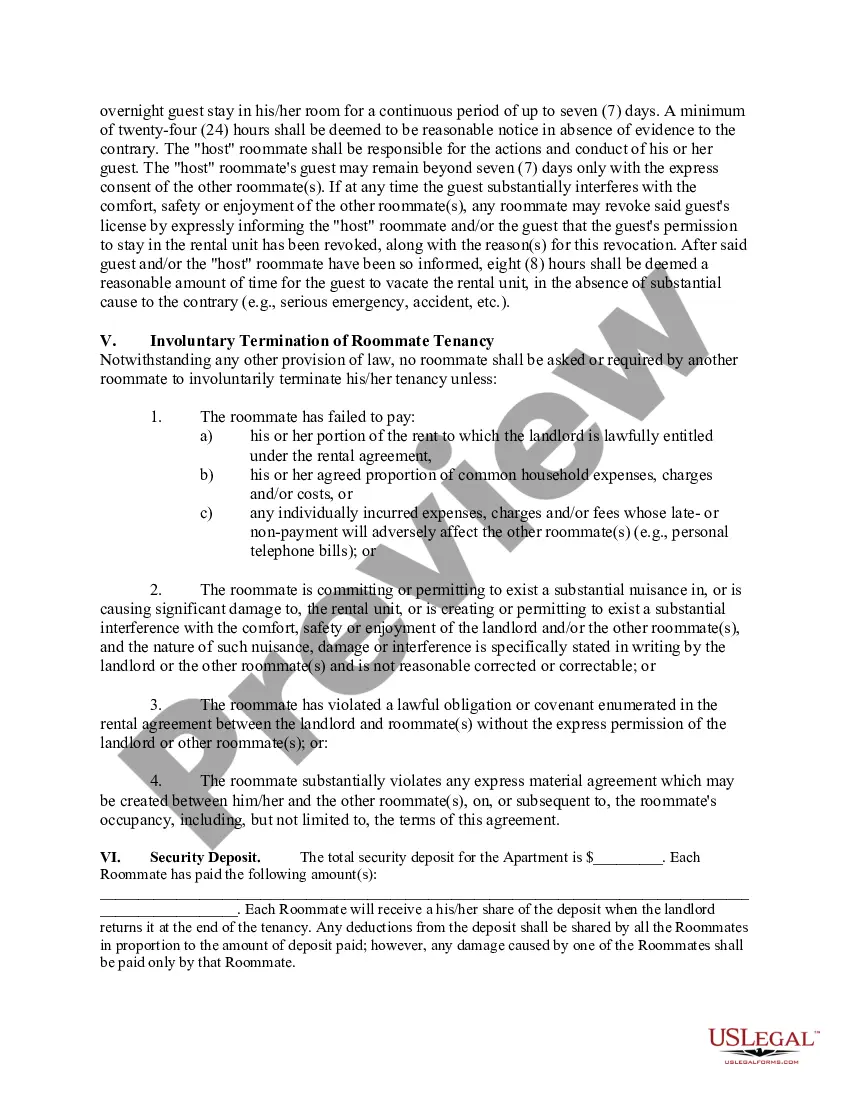
Here are the states that do explicitly state when guests are considered tenants: StateWhen guests become tenants California After 14 days within 6 months or 7 consecutive nights Colorado After 14 days, within 6 months Connecticut After 14 days, within 6 months Florida After 14 days within 6 months or 7 consecutive nights19 more rows •
Understanding Roommate Laws in California Co-tenant: If your roommate signed the lease with you, they have equal rights to the property. Evicting them often requires coordination with the landlord.
The law is Civil Code section 1946.5. In general, you first give the lodger written notice. Then, if they don't move out by the end of the notice period, they are considered trespassing. You can ask law enforcement to remove them.
Legally, all tenants do not have to be on a lease agreement in California. However, landlords should definitely consider including all tenants of legal age on the lease. There are some exceptions to this rule, though, depending on the situation of your tenant.
30-Day or 60-Day Notice: For month-to-month agreements, provide a 30-day notice if they've lived in the property for less than a year, or a 60-day notice if they've stayed longer. Notice to Vacate for Unlisted Occupants: For roommates not on the lease, use a general notice to vacate as the first step.
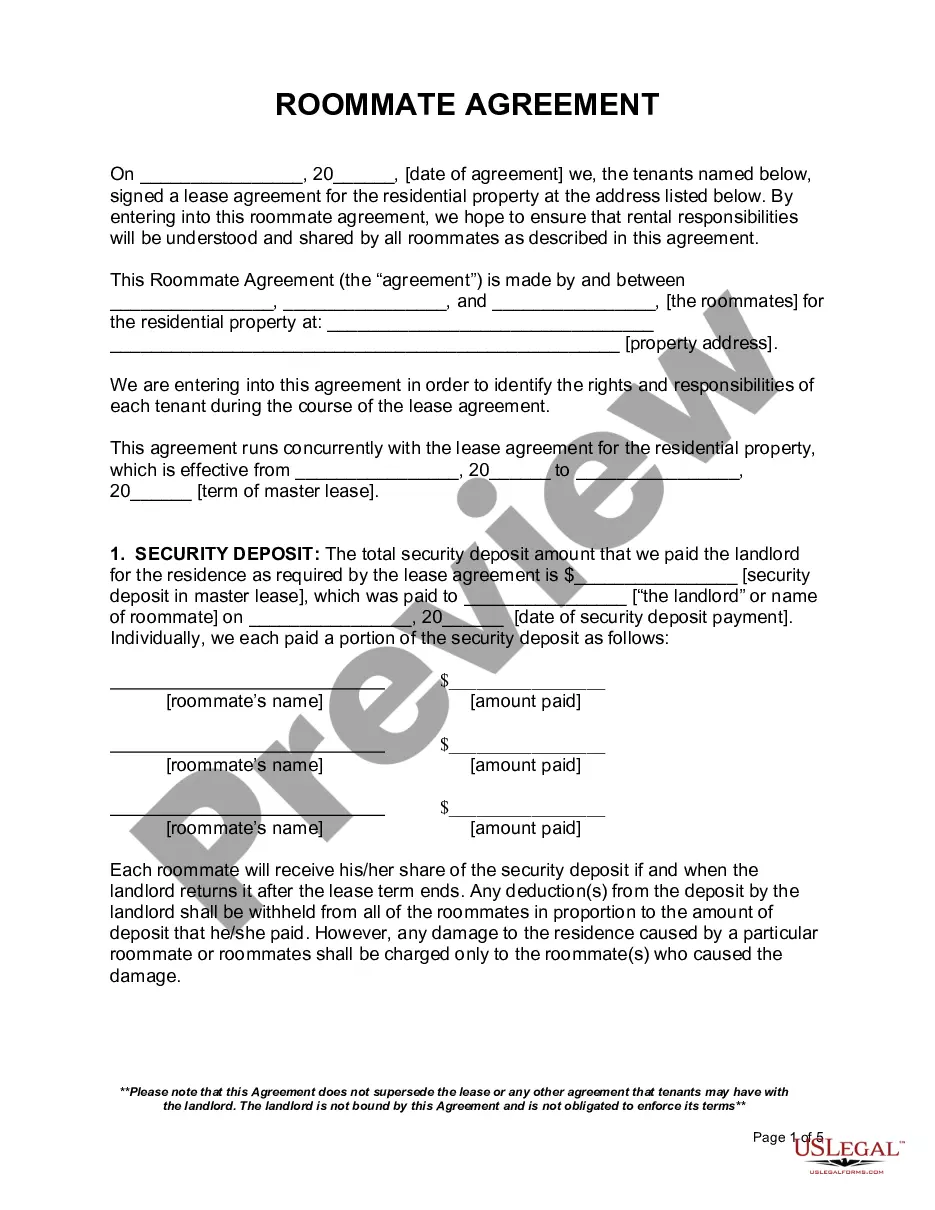
Agreements that are over a year should be in writing to be enforceable in court. Agreements that are a year or less can be verbal or written.
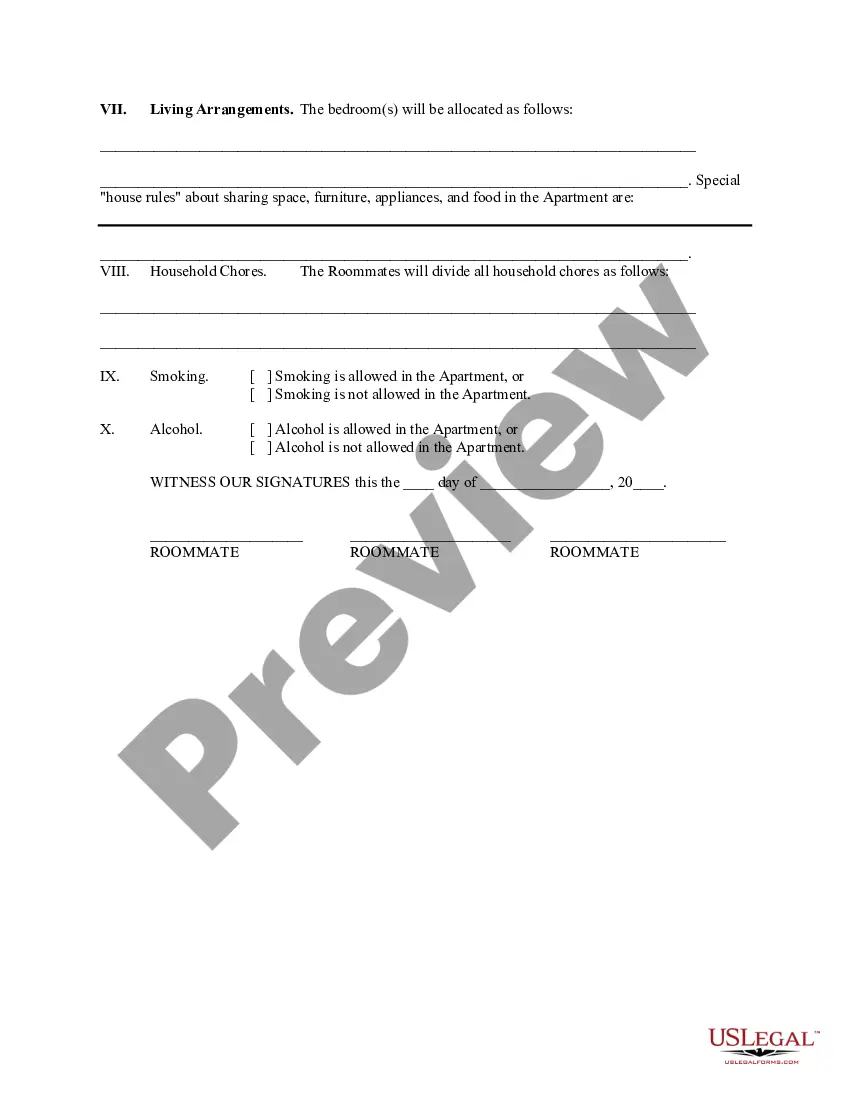
Respect privacy and boundaries. Don't look through your roommates belongings or private things. Don't borrow or use without asking permission. If it's not yours, leave it. Don't discuss private matters about the roommate (and their social life,) with others. Be polite and considerate.
Breaking a lease in California with a roommate happens. If you or a roommate moves out, you're both still responsible for paying rent as per your lease. If the person not making the payment (breaking the lease) has a co-signer, the co-signer will be contacted for the remaining rent.
