Roommate Agreement Rules In Alameda
Description

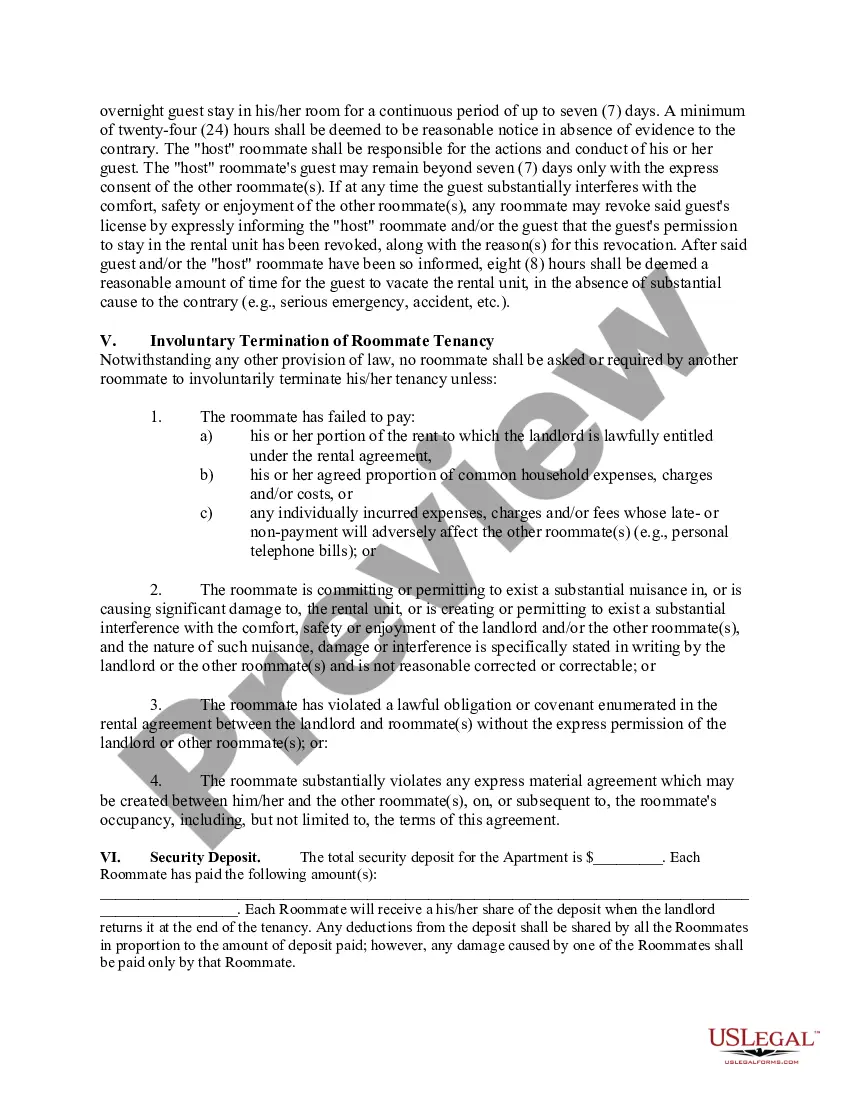
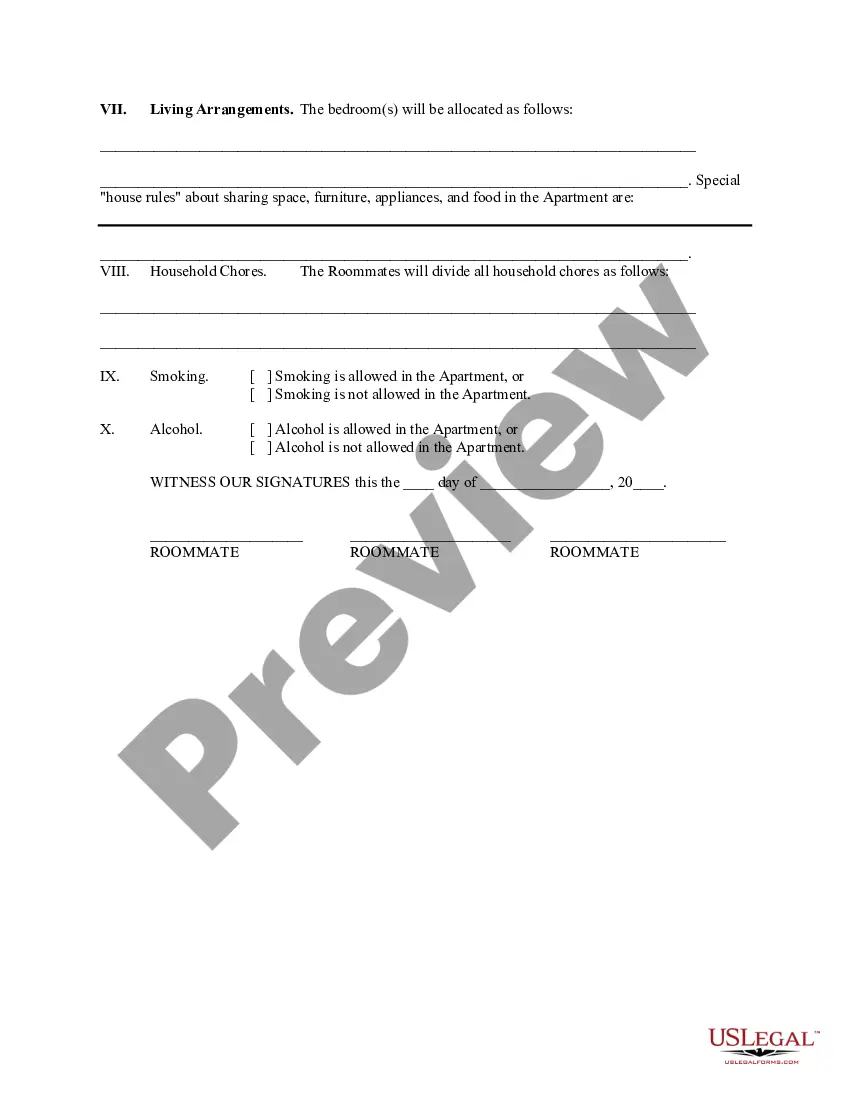
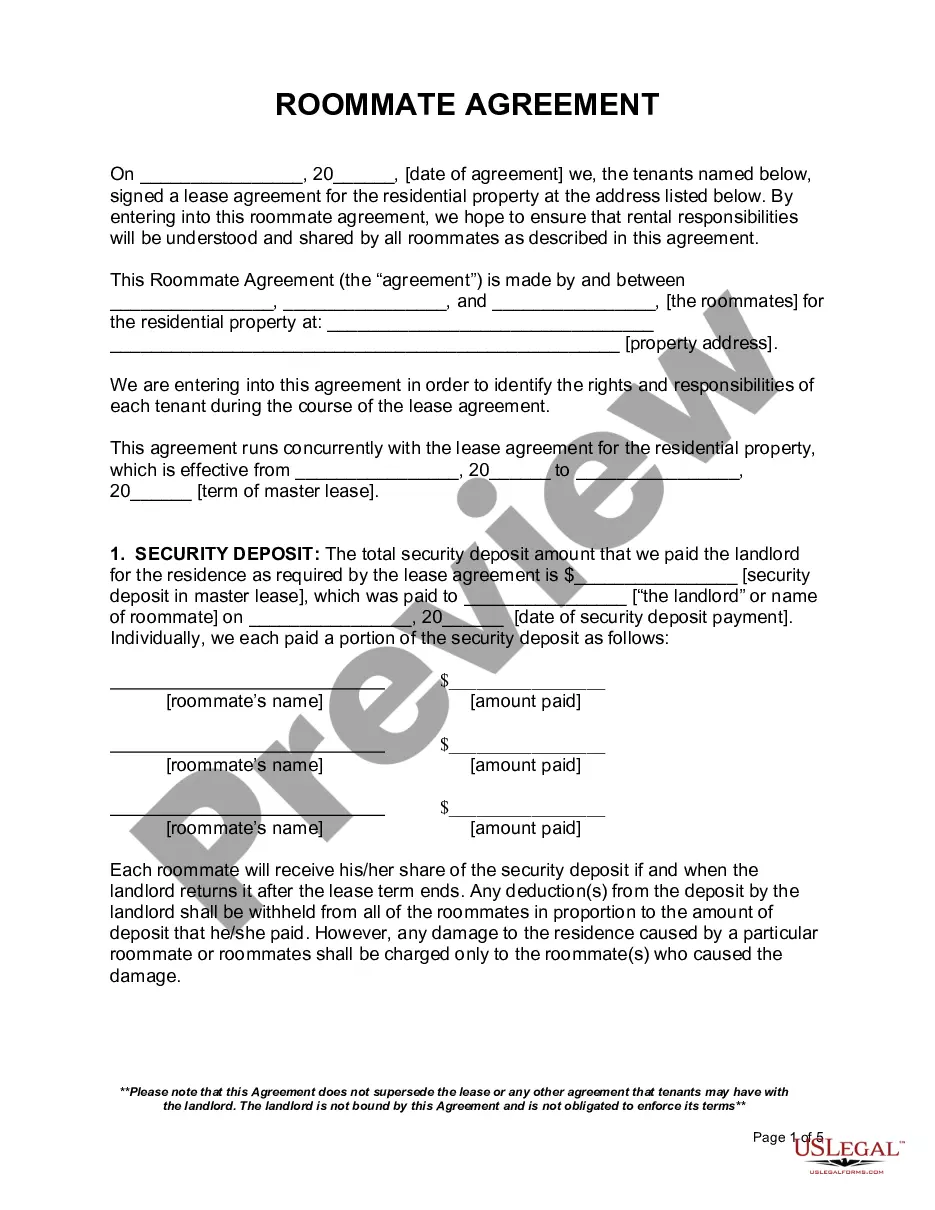
Get your form ready online
Our built-in tools help you complete, sign, share, and store your documents in one place.
Make edits, fill in missing information, and update formatting in US Legal Forms—just like you would in MS Word.
Download a copy, print it, send it by email, or mail it via USPS—whatever works best for your next step.
Sign and collect signatures with our SignNow integration. Send to multiple recipients, set reminders, and more. Go Premium to unlock E-Sign.
If this form requires notarization, complete it online through a secure video call—no need to meet a notary in person or wait for an appointment.
We protect your documents and personal data by following strict security and privacy standards.

Make edits, fill in missing information, and update formatting in US Legal Forms—just like you would in MS Word.

Download a copy, print it, send it by email, or mail it via USPS—whatever works best for your next step.

Sign and collect signatures with our SignNow integration. Send to multiple recipients, set reminders, and more. Go Premium to unlock E-Sign.

If this form requires notarization, complete it online through a secure video call—no need to meet a notary in person or wait for an appointment.

We protect your documents and personal data by following strict security and privacy standards.
Looking for another form?





Form popularity
FAQ
Here are the states that do explicitly state when guests are considered tenants: StateWhen guests become tenants California After 14 days within 6 months or 7 consecutive nights Colorado After 14 days, within 6 months Connecticut After 14 days, within 6 months Florida After 14 days within 6 months or 7 consecutive nights19 more rows •
Under a state law called the Ellis Act (CA Gov. Code Sec. 7060 et seq.), an owner can evict tenants in order to withdraw a rental property from the rental housing market.
30-Day or 60-Day Notice: For month-to-month agreements, provide a 30-day notice if they've lived in the property for less than a year, or a 60-day notice if they've stayed longer. Notice to Vacate for Unlisted Occupants: For roommates not on the lease, use a general notice to vacate as the first step.
Yes, a landlord can evict a tenant without a written lease in California, but they must still follow the proper legal procedures. This includes providing adequate notice, filing an eviction lawsuit if the tenant fails to vacate, and obtaining a court judgment before physically removing the tenant from the property.
A tenant in California renting a room has the right to a habitable living space, timely repairs and maintenance, privacy, and protection against unlawful eviction under tenant rights laws.
In California, normal wear and tear refers to the natural aging of a property caused by regular use. Think of it as the natural aging process of a rental unit that happens regardless of how careful a tenant is. These are expected and unavoidable effects of living in a space over time.
Remember that as a tenant, you are typically responsible for returning the property in the same condition you received it. If you do decide to paint without permission, consider keeping the original paint colors and consulting with your landlord about the color choices.
In California, tenants are responsible for cleaning the unit before moving in, removing their property from the unit, providing 30 days written notice before moving out, and paying rent up to and including the 30 days' notice.
Renting a room rights in California In California, as a tenant renting a room, you have rights to a habitable living space, privacy in your private space or tenant's space, and adherence to the rental agreements. You also have a say in the tenant's roommate selection if it's part of your agreement.
