Louisiana Motion for Bond Reduction and Order
What this document covers
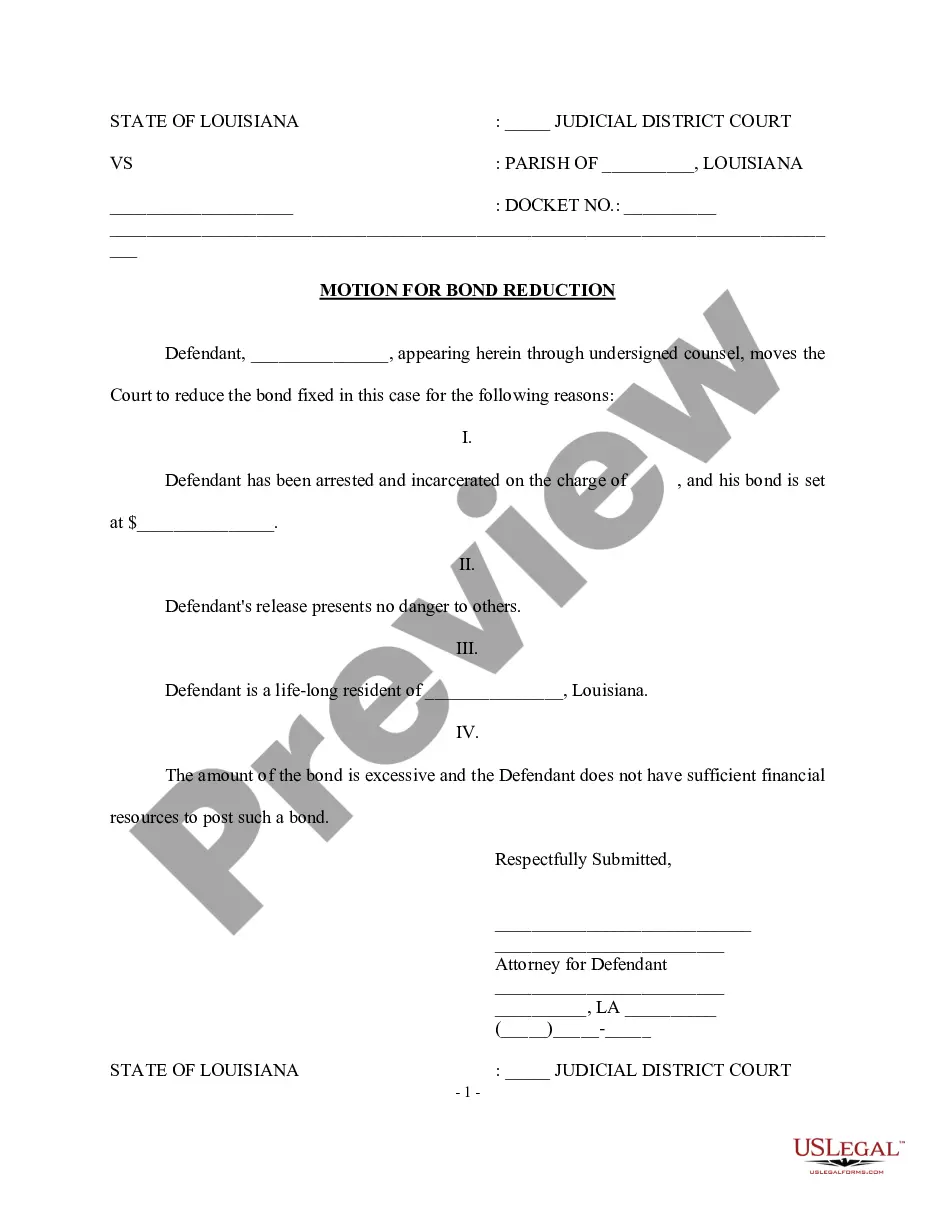
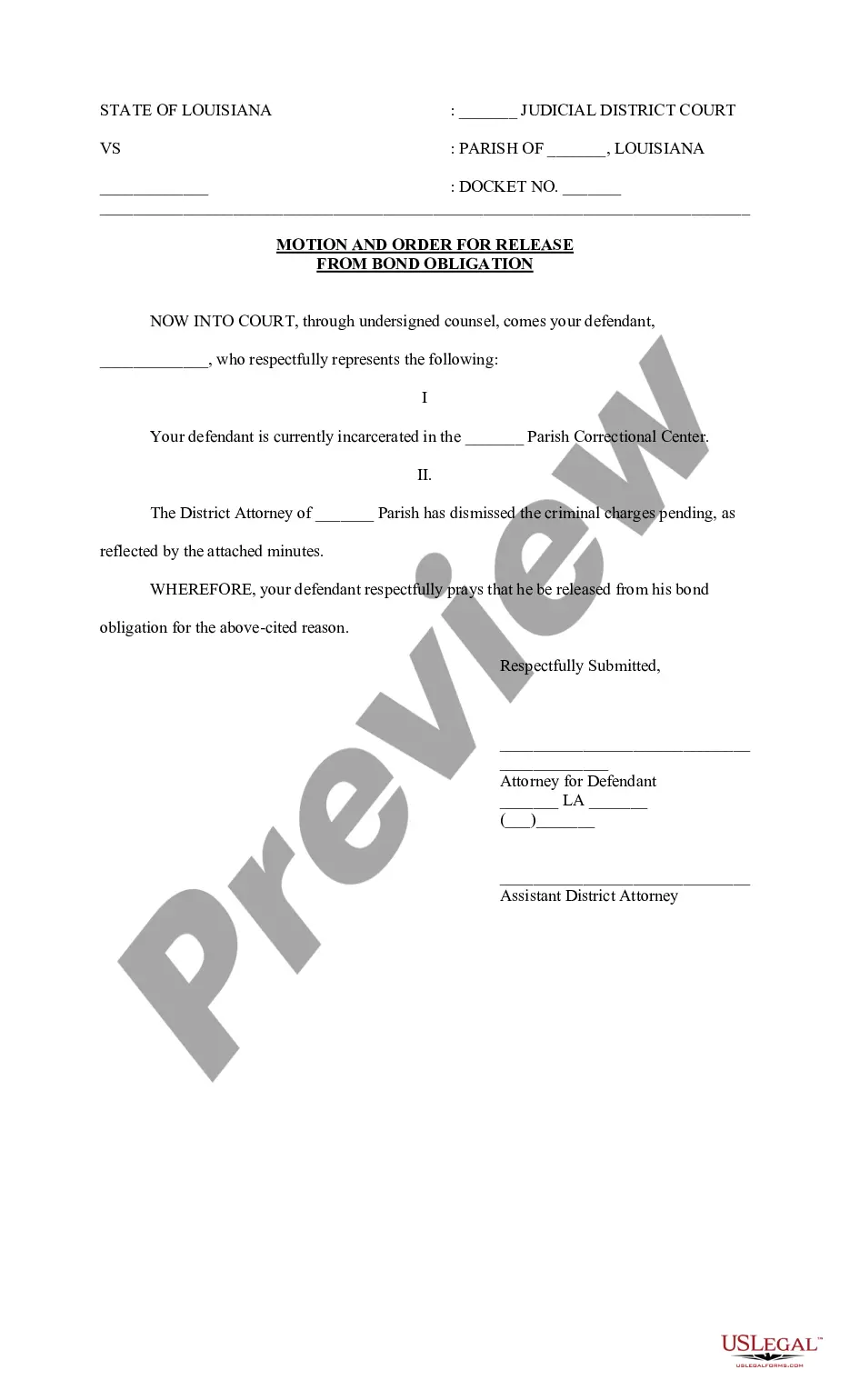
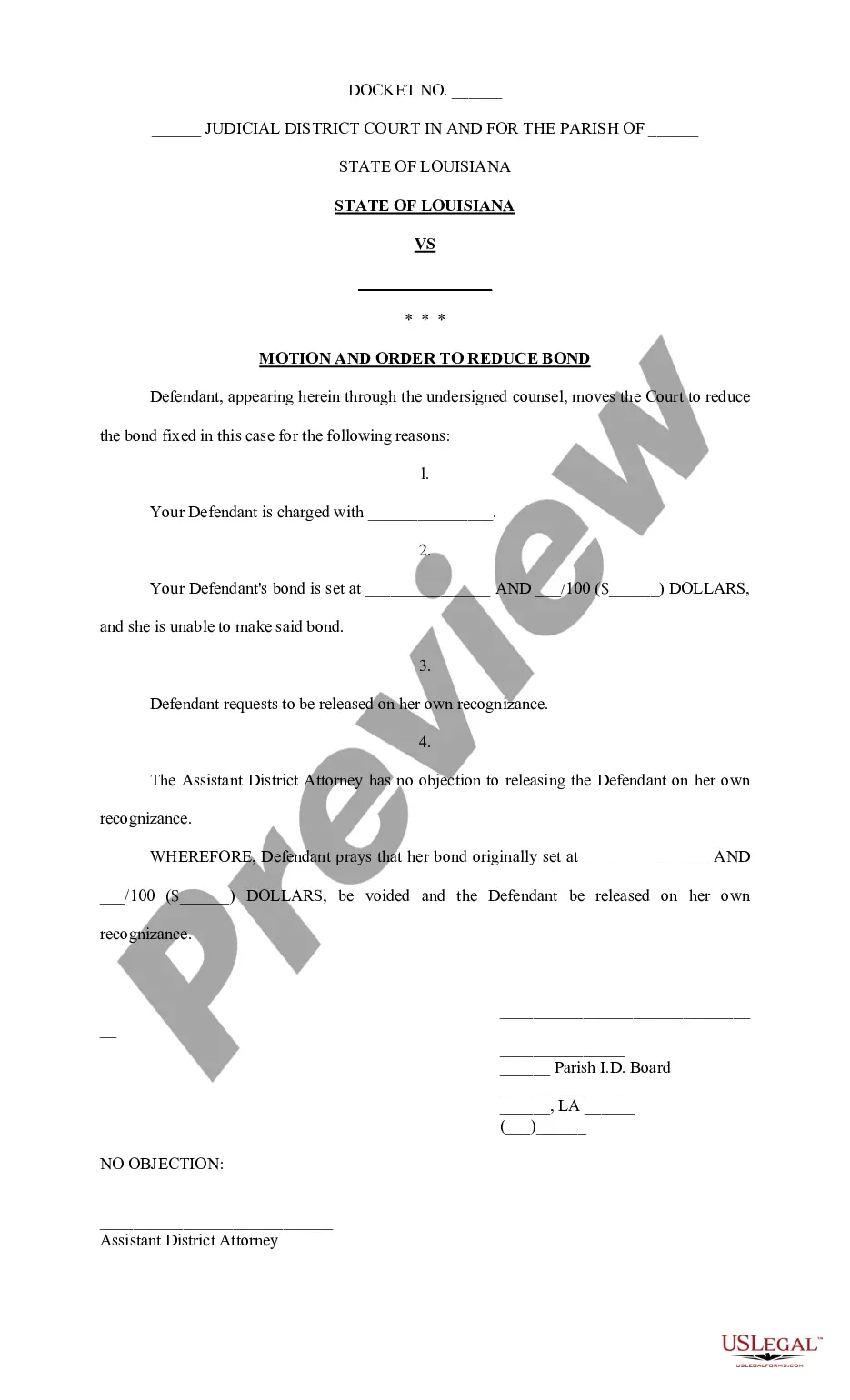
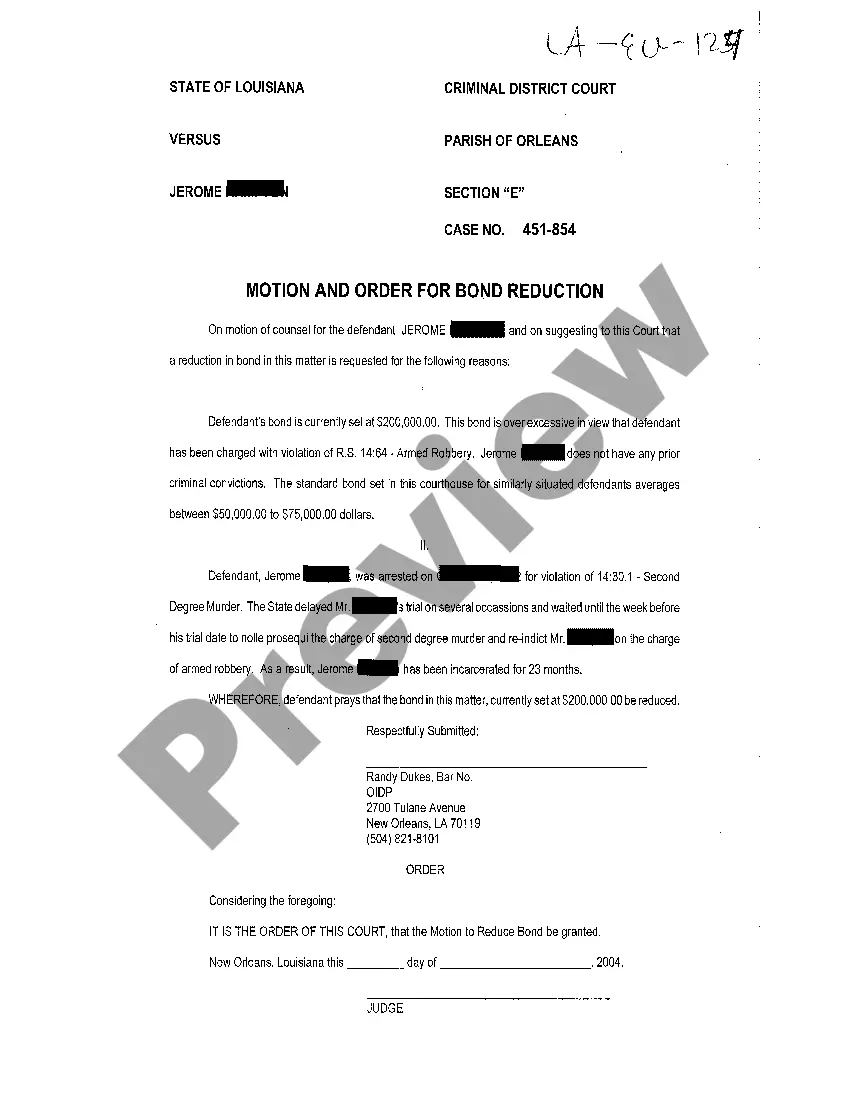
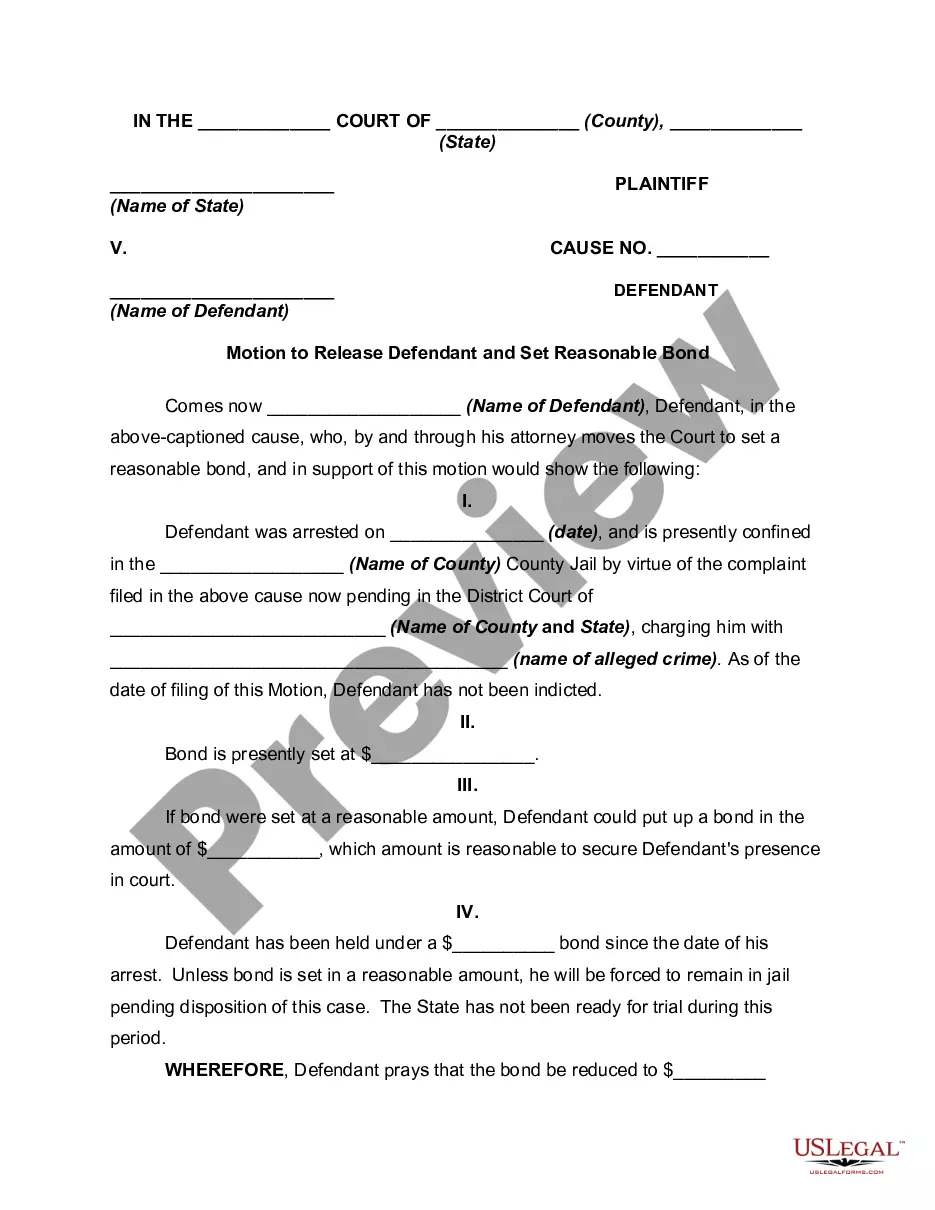
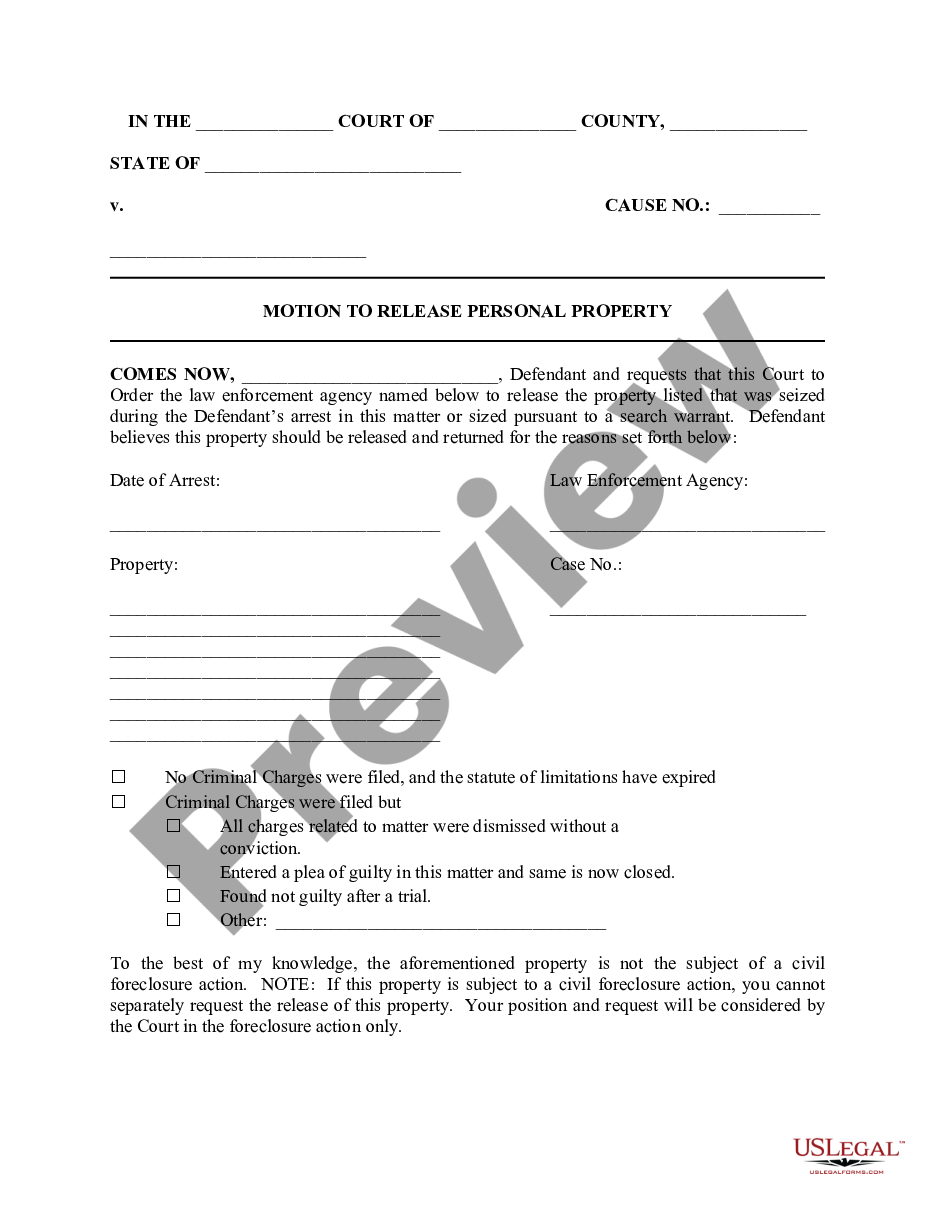
The Motion for Bond Reduction is a legal document filed by the defendant's attorney in a criminal case. Its primary purpose is to request a reduction in the bond amount set by the court, arguing that the bond is excessive and that the defendant cannot afford to pay it. This motion also asserts that the defendant does not pose a danger to others, making them eligible for a lower bond. This form differs from other motions in that it specifically addresses the financial circumstances and personal safety assessments relevant to bond amounts.
What’s included in this form
- Defendant's Information: Name and representation details of the defendant.
- Reasons for Motion: A declaration stating why the bond is excessive and unaffordable.
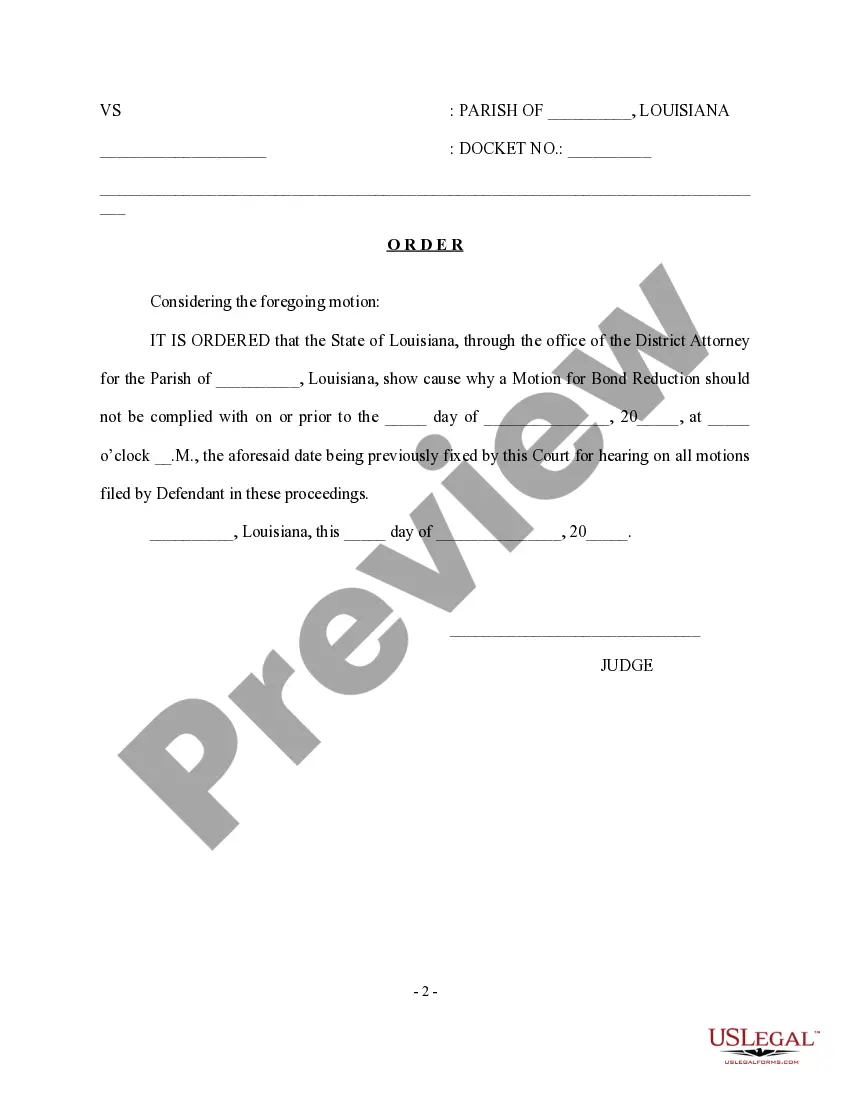
- Request for Court Order: An order requiring the State to show cause for the existing bond amount.
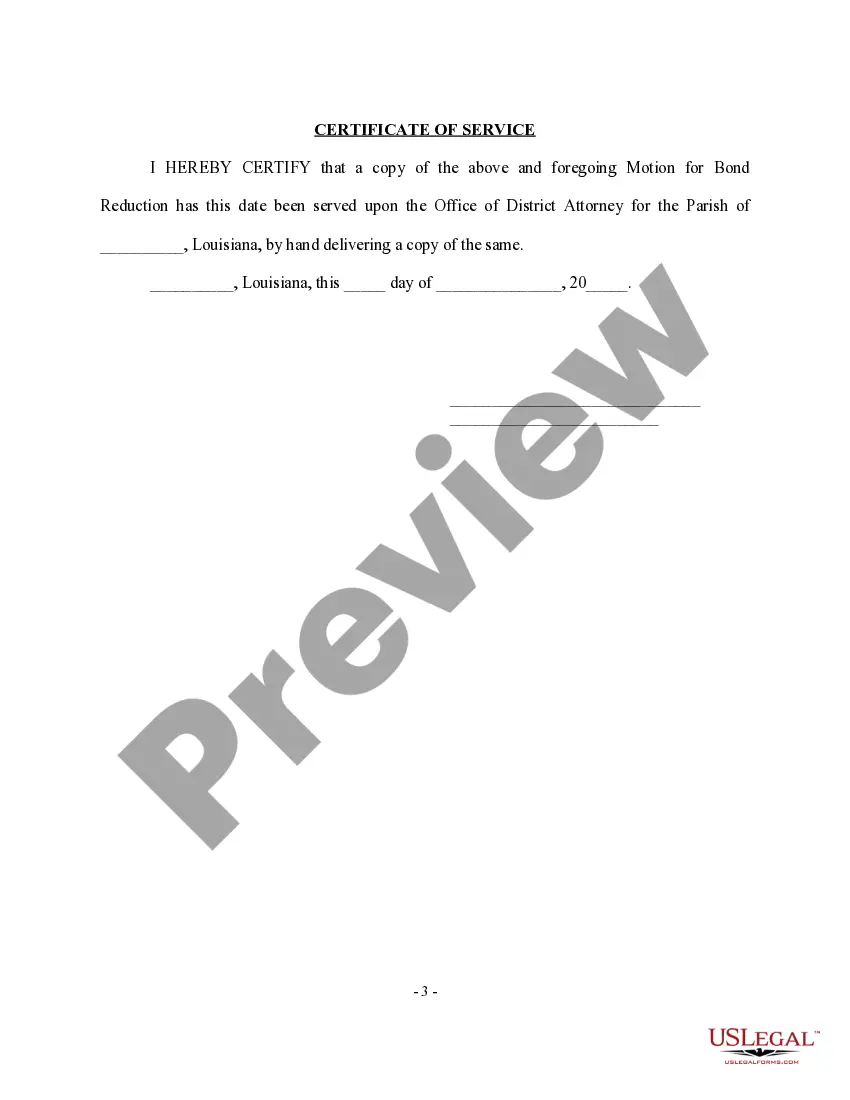
- Certification of Service: A section confirming that the motion has been delivered to the District Attorney.
When to use this document
This form is used in scenarios where a defendant in a criminal case is unable to afford the bond set by the court. It is appropriate when there is a belief that the bond amount exceeds what is reasonable based on the defendant's financial condition, or when the defendant's release poses no threat to public safety. A motion should be filed promptly, typically after the initial bond hearing or if circumstances change that affect the defendant's ability to post bond.
Who can use this document
This form is intended for:
- Defendants in criminal cases who have been assigned a bond they cannot afford.
- Attorneys representing defendants seeking to lower bond amounts.
- Individuals who believe their financial situation warrants a bond reduction.
How to complete this form
- Identify the defendant: Enter the full name and details of the defendant in the appropriate section.
- State the reasons for the motion: Clearly articulate why the bond is excessive and why the defendant cannot afford it.
- Complete the court order section: Fill out the required information about the district court and hearing dates.
- Certify service: Include a statement confirming that the motion has been served to the District Attorney's office.
- Sign the motion: The attorney representing the defendant must sign and date the final document before submission.
Does this document require notarization?
This form does not typically require notarization unless specified by local law. However, it is important to check for any unique local requirements that may necessitate notarization. Legal procedures can vary widely, so ensure compliance with local regulations to avoid issues in the filing process.
Get your form ready online
Our built-in tools help you complete, sign, share, and store your documents in one place.
Make edits, fill in missing information, and update formatting in US Legal Forms—just like you would in MS Word.
Download a copy, print it, send it by email, or mail it via USPS—whatever works best for your next step.
Sign and collect signatures with our SignNow integration. Send to multiple recipients, set reminders, and more. Go Premium to unlock E-Sign.
If this form requires notarization, complete it online through a secure video call—no need to meet a notary in person or wait for an appointment.
We protect your documents and personal data by following strict security and privacy standards.

Make edits, fill in missing information, and update formatting in US Legal Forms—just like you would in MS Word.

Download a copy, print it, send it by email, or mail it via USPS—whatever works best for your next step.

Sign and collect signatures with our SignNow integration. Send to multiple recipients, set reminders, and more. Go Premium to unlock E-Sign.

If this form requires notarization, complete it online through a secure video call—no need to meet a notary in person or wait for an appointment.

We protect your documents and personal data by following strict security and privacy standards.
Common mistakes to avoid
- Failing to provide adequate justification for the bond reduction request.
- Missing the deadline for filing the motion, which could result in delays.
- Neglecting to serve the District Attorney's office properly.
- Not signing the form, which can render it invalid.
Benefits of completing this form online
- Convenience: Easily access and download the form from anywhere.
- Editability: Customize the document to suit your specific needs before printing.
- Reliability: Ensure you are using a legally sound template, drafted by licensed attorneys.
What to keep in mind
- The Motion for Bond Reduction is vital for defendants unable to meet excessive bail amounts.
- Completing the form accurately is crucial for effective legal representation.
- The form must be served to the District Attorney's office promptly after completion.
Looking for another form?
Form popularity
FAQ
The 60-day law in Louisiana allows defendants to request a hearing for a bond reduction within 60 days of their arrest. This legislation aims to ensure that individuals have the opportunity to contest excessive bail amounts promptly. Understanding and leveraging this law can significantly impact your case, making it worthwhile to consult an attorney specializing in Louisiana Motion for Bond Reduction and Order.
California law also permits courts to reduce bail following a change in circumstances. Specifically, Penal Code § 1289 authorizes a court to reduce the bail if good cause is shown. succeeds in having some charges dismissed, he or she may also be able to reduce your bail.
A bail reduction hearing usually takes place within 48 hours of the request and sometimes the next day.
Hiring a private criminal defense attorney may get you a court hearing quicker. It's a hearing where your lawyer asks the judge for a lower bond amount.Hiring an attorney for bond reductions, is often less expensive than paying a bondsman. For example, to get out of jail for a DUI, you might have to pay $500.
California law also permits courts to reduce bail following a change in circumstances. Specifically, Penal Code § 1289 authorizes a court to reduce the bail if good cause is shown. succeeds in having some charges dismissed, he or she may also be able to reduce your bail.
There is no rule that allows a bond reduction every 10 days. He can do a bond reduction hearing after the initial appearance in front of the assigned judge. However, after that, most judges will strike any future motions unless there is some sort of change in circumstances.
Bail, however, is not excessive merely because a defendant cannot afford it. In a Nutshell: One can request that a judge reduce bail by explaining the individual's ties to community through employment and family, history of never failing to appear and, if applicable, tendering one's passport or visa to the court clerk.
A bail reduction hearing usually takes place within 48 hours of the request and sometimes the next day.
If you want your bail reduced, however, you will need to ask a judge to lower it. Your first arraignment usually takes place within 24 to 48 hours of the arrest. The court will advise you of your rights and set bail at this initial appearance, and your lawyer can make an argument about your bail.