Roommate Agreement For Couples With Trust Issues In Collin
Description

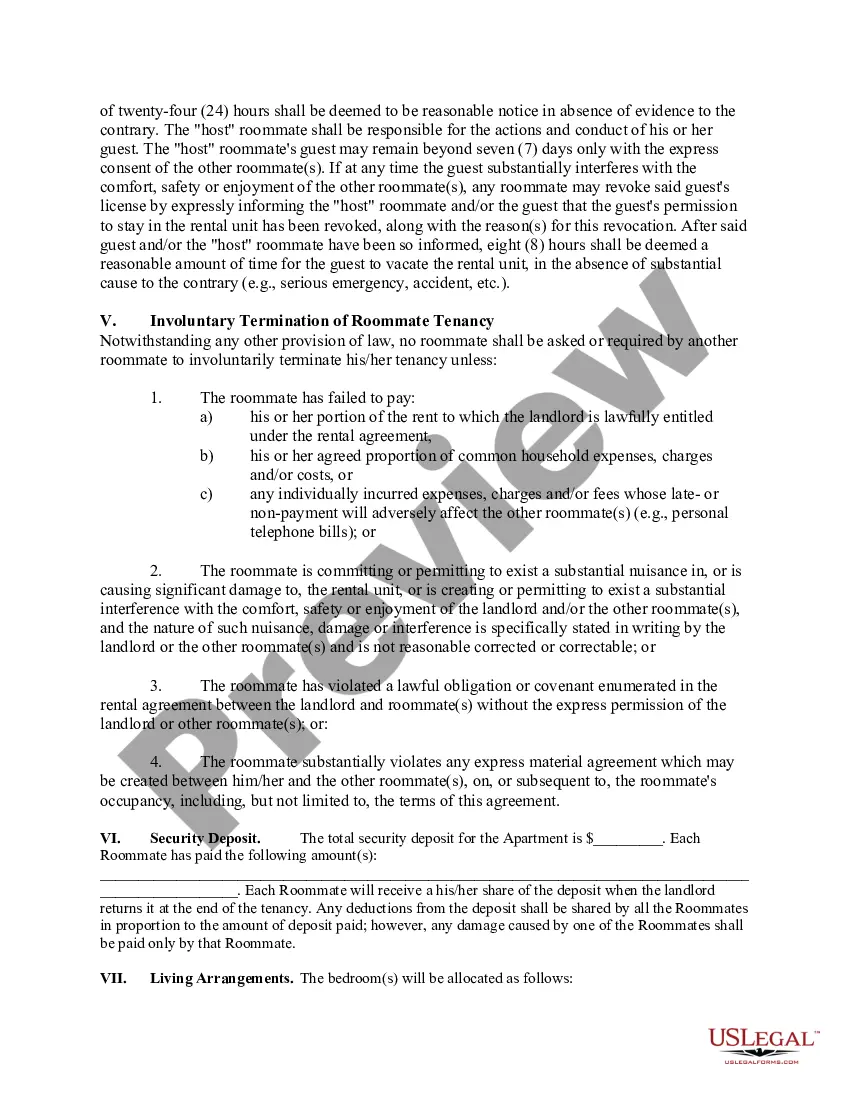
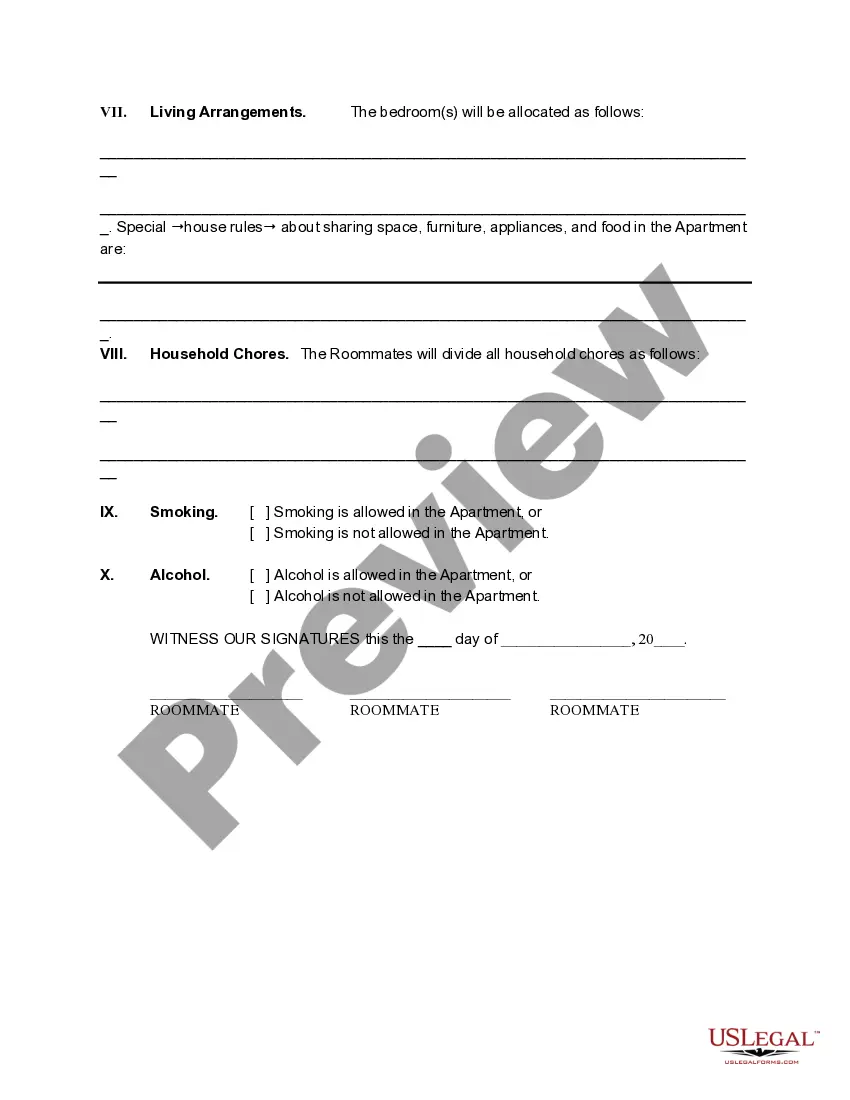

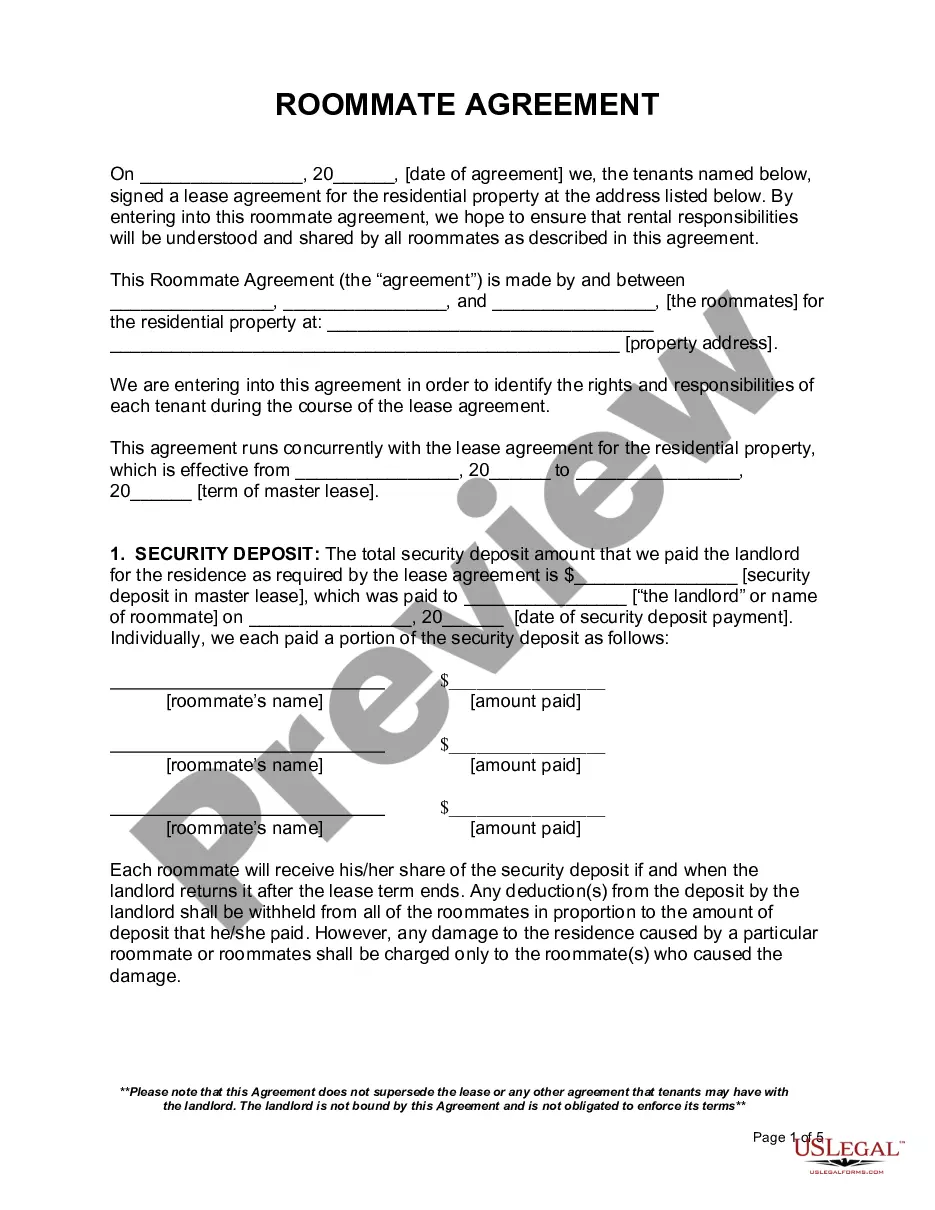
Get your form ready online
Our built-in tools help you complete, sign, share, and store your documents in one place.
Make edits, fill in missing information, and update formatting in US Legal Forms—just like you would in MS Word.
Download a copy, print it, send it by email, or mail it via USPS—whatever works best for your next step.
Sign and collect signatures with our SignNow integration. Send to multiple recipients, set reminders, and more. Go Premium to unlock E-Sign.
If this form requires notarization, complete it online through a secure video call—no need to meet a notary in person or wait for an appointment.
We protect your documents and personal data by following strict security and privacy standards.

Make edits, fill in missing information, and update formatting in US Legal Forms—just like you would in MS Word.

Download a copy, print it, send it by email, or mail it via USPS—whatever works best for your next step.

Sign and collect signatures with our SignNow integration. Send to multiple recipients, set reminders, and more. Go Premium to unlock E-Sign.

If this form requires notarization, complete it online through a secure video call—no need to meet a notary in person or wait for an appointment.

We protect your documents and personal data by following strict security and privacy standards.
Looking for another form?








Form popularity
FAQ
Respect personal space. One of the key things to remember when living with roommates, or anyone for that matter, is to respect their personal space. Even if you and your roommate are very good friends or have very outgoing personalities, you'll still need to be alone sometimes.
A roommate agreement will include how you will split the utility bills, rules for the use of common areas, and whether you share food and supplies. By signing the roommate contract, everyone agrees to abide by the rules and begin a discussion if something isn't working out.
Include what kind of apartment or home it is, shared or private room, number of rooms, how many roommates, and the amount of rent, utilities, and fees per month. A description of the apartment and complex including amenities – Really sell it! Just like your landlord did when they showed you the apartment or home.
A legally binding agreement with your roommate, which is carefully drawn out to eliminate problems in the future, is signed between the tenants and has nothing to do with the property owner. An agreement should include your basic details. For example, your name, permanent address, and workplace details.
Each person's share of the rent, utilities and how much they contributed to the security deposit. The space that will be occupied by each person... A plan for how to divide things such as chores, shopping, cooking and other duties... Storage/parking... Guest/company policy.
All parties agree to discuss frankly and unemotionally all concerns with their roommates before problems occur. All parties agree to negotiate in good faith, should the need arise. All parties will respect one another's privacy, sleep schedules, and other requests that are not unreasonably burdensome.
Roommate agreements are typically considered legally binding when both a valid offer and acceptance exist, and there's a clear intention to enter into the contract from all parties.
How to write a roommate agreement Names of both tenants. The property address. The dates the lease begins and ends. The amount of rent each person pays. Who pays for utilities. Who pays the security deposit. Which bedroom each person occupies. Who buys food, or if you're each buying your own food.
A: A roommate agreement is a contract made between the residents of a rental unit. The agreement outlines the terms, conditions and responsibilities agreed to by each of the residents. Roommate agreements are sometimes referred to as roommate contracts.
To write a simple contract, title it clearly, identify all parties and specify terms (services or payments). Include an offer, acceptance, consideration, and intent. Add a signature and date for enforceability. Written contracts reduce disputes and offer better legal security than verbal ones.
