Lease Agreement Form For Roommate In Alameda
Description

Get your form ready online
Our built-in tools help you complete, sign, share, and store your documents in one place.
Make edits, fill in missing information, and update formatting in US Legal Forms—just like you would in MS Word.
Download a copy, print it, send it by email, or mail it via USPS—whatever works best for your next step.
Sign and collect signatures with our SignNow integration. Send to multiple recipients, set reminders, and more. Go Premium to unlock E-Sign.
If this form requires notarization, complete it online through a secure video call—no need to meet a notary in person or wait for an appointment.
We protect your documents and personal data by following strict security and privacy standards.

Make edits, fill in missing information, and update formatting in US Legal Forms—just like you would in MS Word.

Download a copy, print it, send it by email, or mail it via USPS—whatever works best for your next step.

Sign and collect signatures with our SignNow integration. Send to multiple recipients, set reminders, and more. Go Premium to unlock E-Sign.

If this form requires notarization, complete it online through a secure video call—no need to meet a notary in person or wait for an appointment.

We protect your documents and personal data by following strict security and privacy standards.
Looking for another form?





Form popularity
FAQ
How to write a California lease agreement Identify the parties involved. Clearly state the names and contact information of both the landlord and the prospective tenant. Define the rental property. Specify the lease term. Outline rent and payment terms. Include important provisions. Comply with legal requirements.
Under California law, residential tenants are protected from certain rent increases and may be protected from certain types of evictions. It is important to act quickly if your landlord serves you with an eviction notice, tells you to move out, increases your rent illegally, or if you know cannot afford your rent.
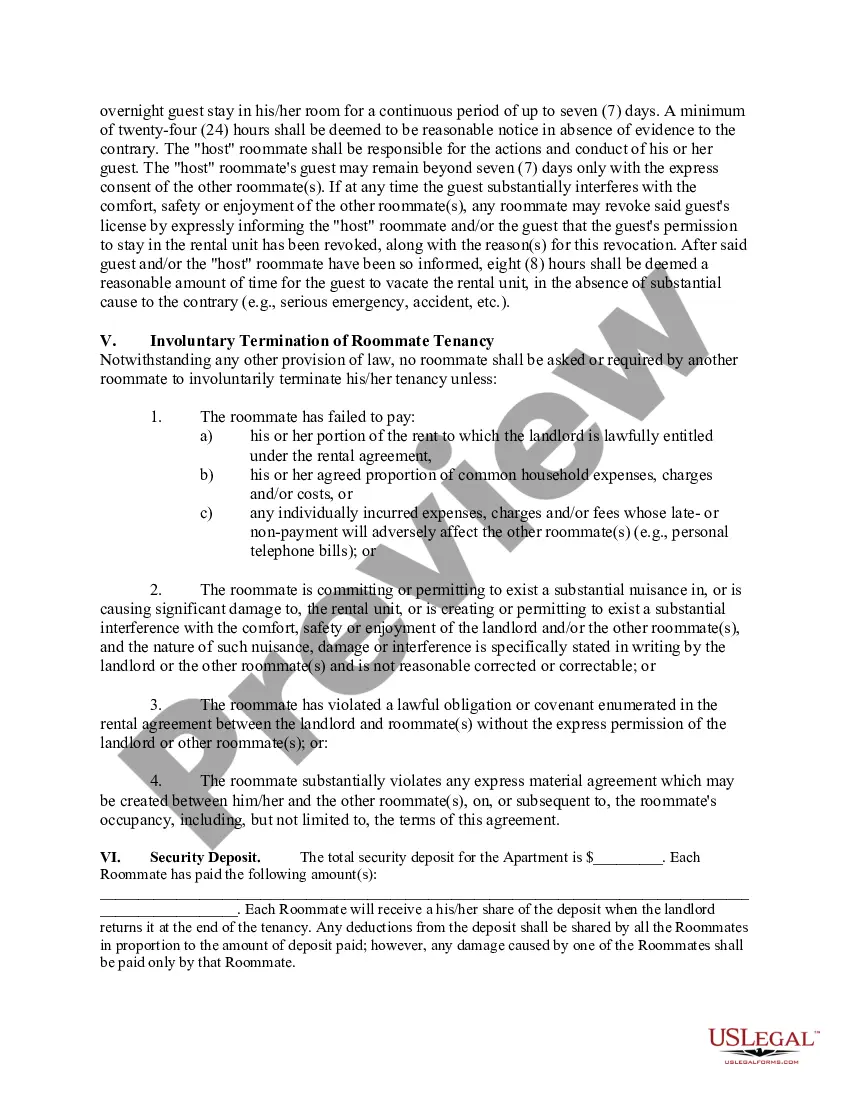
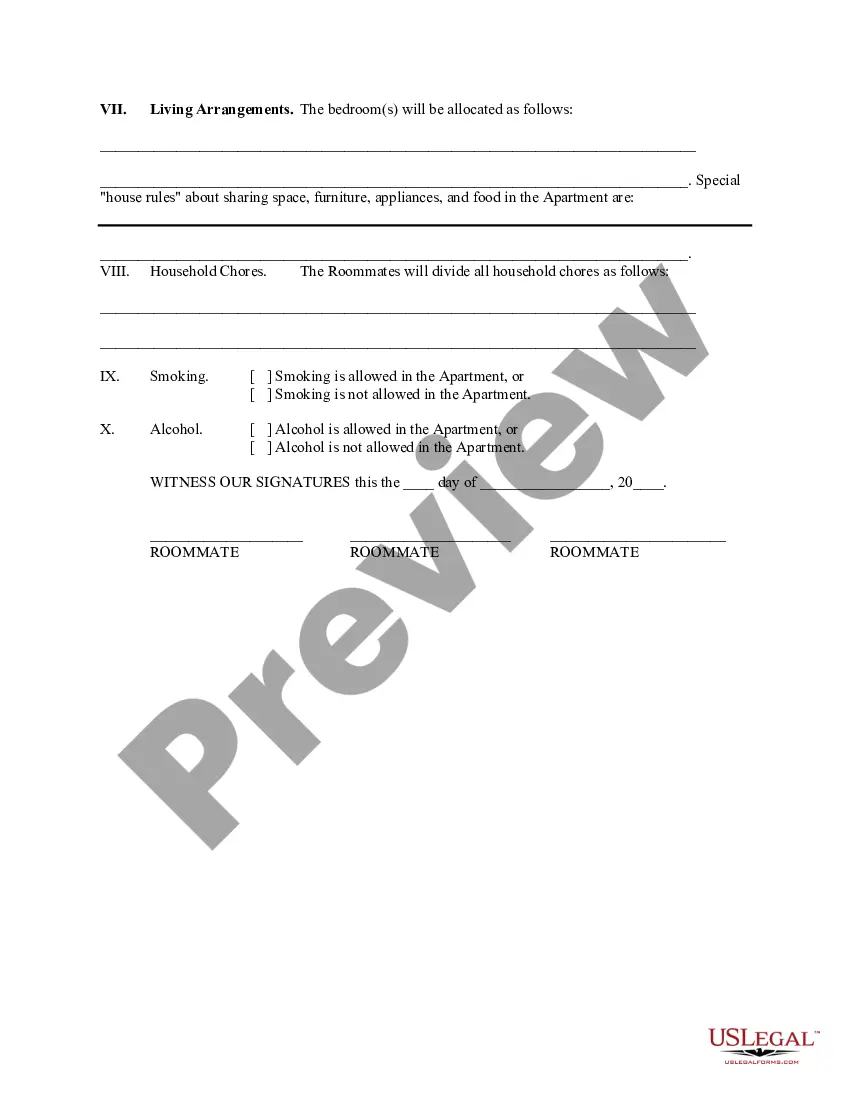
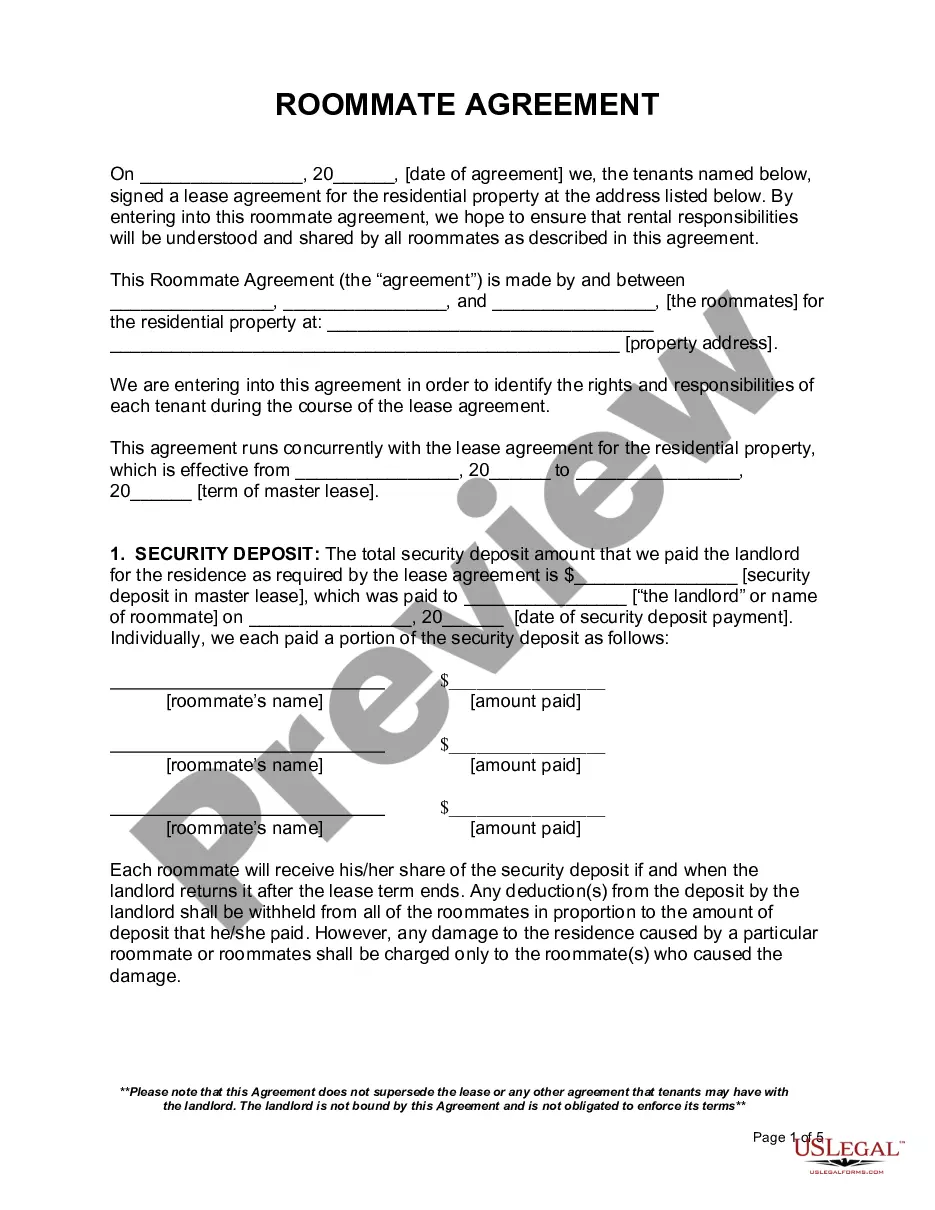
How to write a roommate agreement Names of both tenants. The property address. The dates the lease begins and ends. The amount of rent each person pays. Who pays for utilities. Who pays the security deposit. Which bedroom each person occupies. Who buys food, or if you're each buying your own food.
In California, it is possible to evict a tenant even if there is no written lease agreement. However, landlords must follow the proper legal procedures to avoid potential lawsuits or criminal charges.
Agreements that are over a year should be in writing to be enforceable in court. Agreements that are a year or less can be verbal or written.
Under California civil code, tenants without leases maintain rights like limits on rent increases, proper notice before eviction, and requiring the landlord to maintain habitable living conditions. Be aware that without a lease, landlords only need to provide 30 days' notice to increase rent or terminate tenancy.
30-Day or 60-Day Notice: For month-to-month agreements, provide a 30-day notice if they've lived in the property for less than a year, or a 60-day notice if they've stayed longer. Notice to Vacate for Unlisted Occupants: For roommates not on the lease, use a general notice to vacate as the first step.
Understanding Roommate Laws in California Co-tenant: If your roommate signed the lease with you, they have equal rights to the property. Evicting them often requires coordination with the landlord.
The law is Civil Code section 1946.5. In general, you first give the lodger written notice. Then, if they don't move out by the end of the notice period, they are considered trespassing. You can ask law enforcement to remove them.
What do I include in a Roommate Agreement? Information about the property, roommates, and original lease. Term or length of the agreement. Rent responsibilities. Security deposit details. Responsibilities for utilities and household costs. House rules, roommate duties, and restrictions. Rules for termination of tenancy.
