Condo Common Elements For Sale In Fulton
Description



Get your form ready online
Our built-in tools help you complete, sign, share, and store your documents in one place.
Make edits, fill in missing information, and update formatting in US Legal Forms—just like you would in MS Word.
Download a copy, print it, send it by email, or mail it via USPS—whatever works best for your next step.
Sign and collect signatures with our SignNow integration. Send to multiple recipients, set reminders, and more. Go Premium to unlock E-Sign.
If this form requires notarization, complete it online through a secure video call—no need to meet a notary in person or wait for an appointment.
We protect your documents and personal data by following strict security and privacy standards.

Make edits, fill in missing information, and update formatting in US Legal Forms—just like you would in MS Word.

Download a copy, print it, send it by email, or mail it via USPS—whatever works best for your next step.

Sign and collect signatures with our SignNow integration. Send to multiple recipients, set reminders, and more. Go Premium to unlock E-Sign.

If this form requires notarization, complete it online through a secure video call—no need to meet a notary in person or wait for an appointment.

We protect your documents and personal data by following strict security and privacy standards.
Looking for another form?









Form popularity
FAQ
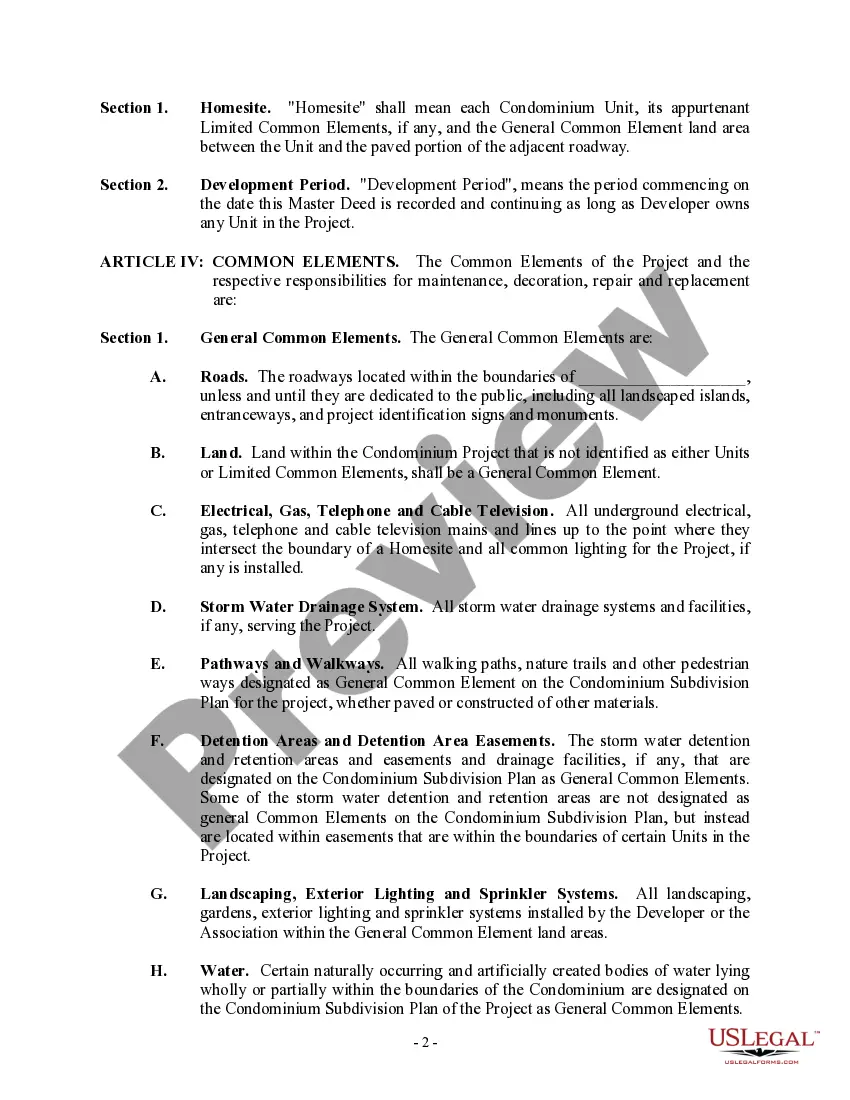
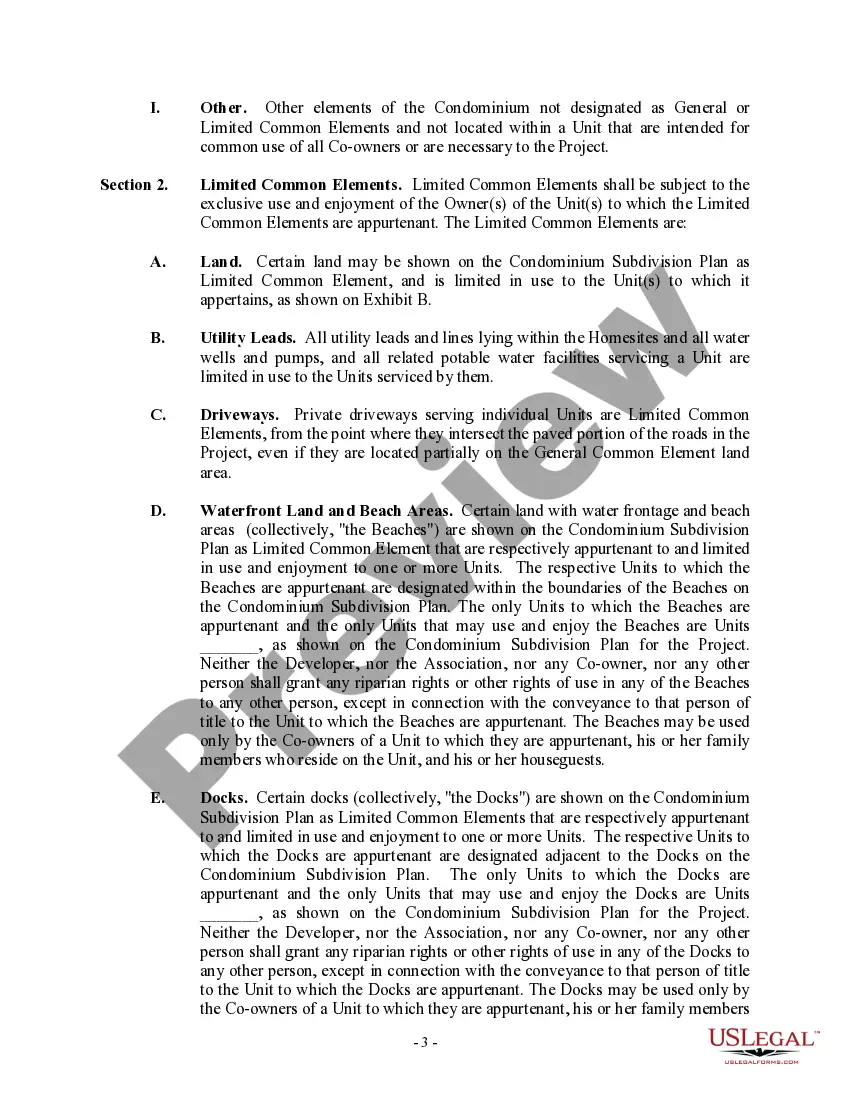
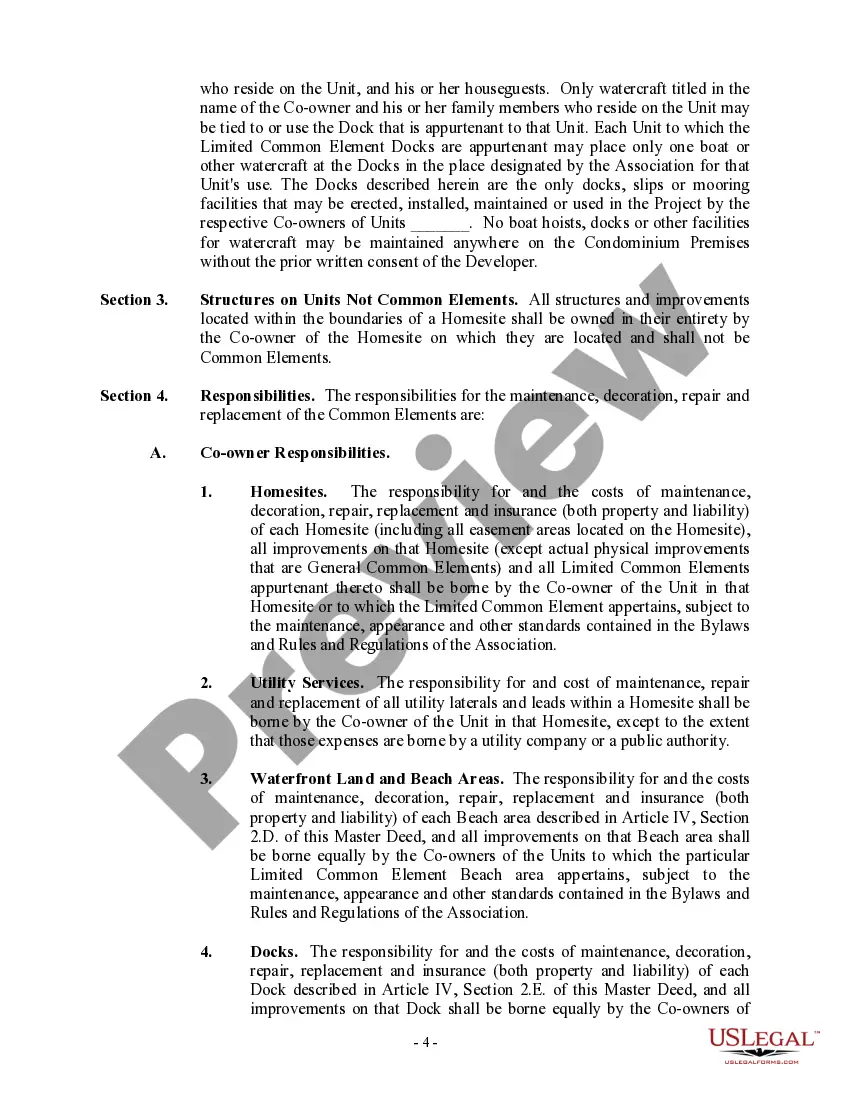
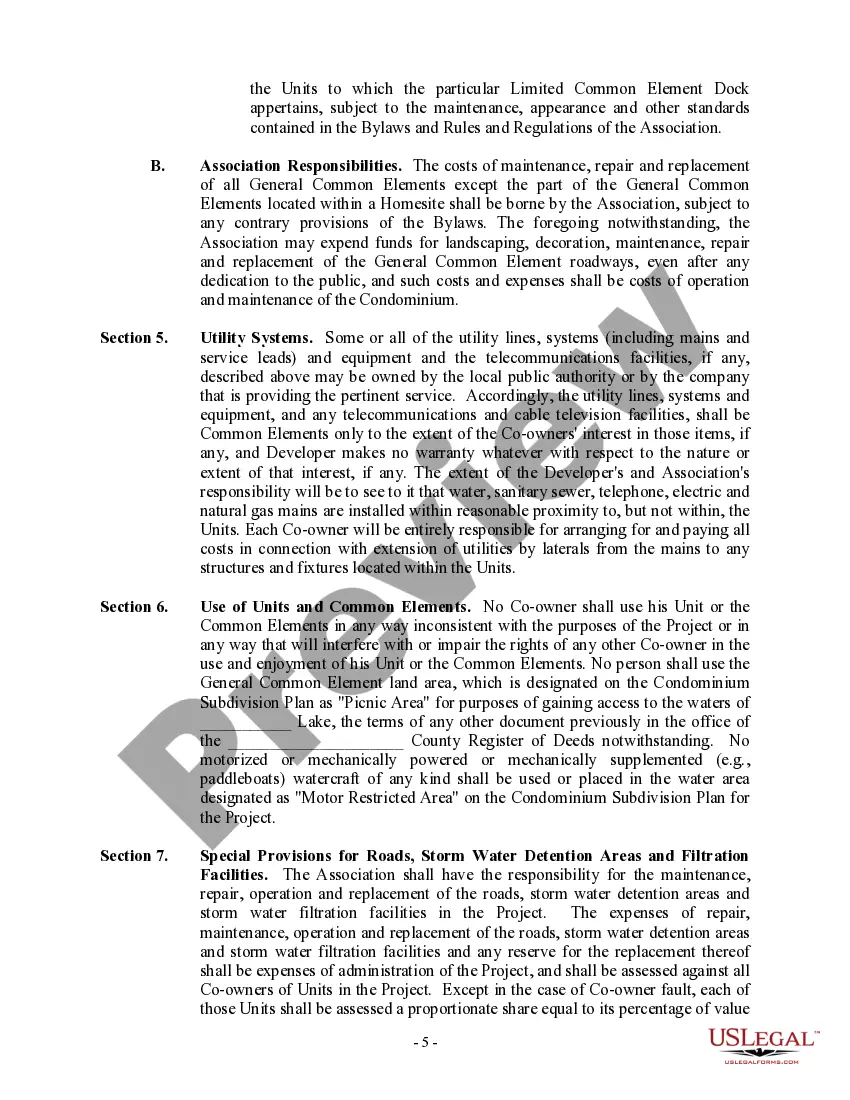
As explained by Florida Second District Court of Appeal in Randolph Farms v Otto, 365 So. 3d 1259 (Fla. 2d DCA 2023), a common element are those inium elements that are no peculiar to a particular inium unit, while limited common elements are peculiar to a particular unit.
Common elements are owned in undivided shares by all inium unit owners as tenants in common and include portions of the inium shared or used in common by the inium's residents. Examples of common elements are: Building structural components and systems. Lobbies.
Definition of common elements in a inium, those portions of the property not owned individually by unit owners but in which an indivisible interest is held by all unit owners. Generally includes the grounds, parking areas, recreational facilities, and external structure of the building.
If there are shared amenities such as private roads, a clubhouse, pool, and an entrance gate these amenities are often common elements of the inium and are owned in common by all of the unit owners.
A common element is defined as all portions of the property except the units. Examples of common elements include fitness centers, elevators, lobbies, walkways, lighting in common hallways, garbage collection areas, swimming pools, landscaping, club houses, and more.
With regular iniums, the unit owner usually owns the internal unit space and a share of the corporation; the corporation owns the exterior of the building land and common area; in the case of a freehold inium the owner owns the land and building and the corporation owns common shared roadways and amenities.
Common Elements of the inium Corporation are the land and structures in the inium Corporation other than the units themselves, such as the exterior landscaped areas, recreational facilities, parking garage, hallways, elevators, corridors, public washrooms, lobby areas, driveways, garbage rooms, electrical ...
Views: Higher floors generally offer better views. If you enjoy scenic landscapes or city skylines, a floor above the 5th or 6th might be ideal. Noise: Lower floors may experience more street noise, while higher floors can be quieter. If noise is a concern, you might prefer a floor above the 3rd or 4th.
In this guide, we'll walk you through the key factors to consider when selecting the ideal condo for your needs and lifestyle. Location, Location, Location. Assess the Condo Building. Understand the Condo Fees. Evaluate the Condo Rules and Regulations. Consider the Unit Layout and Features. Check the Condo's Financial Health.
The popular number ing to Feng Shui are 5 th , 8 th , and 9 th as they represent wealth and accomplishment. The 13 th floor is rarely chosen as considered unlucky in the belief of Western. That's why most condos change No. 13 th to 12A.
