Delaware Lead Based Paint Disclosure for Sales Transaction
About this form
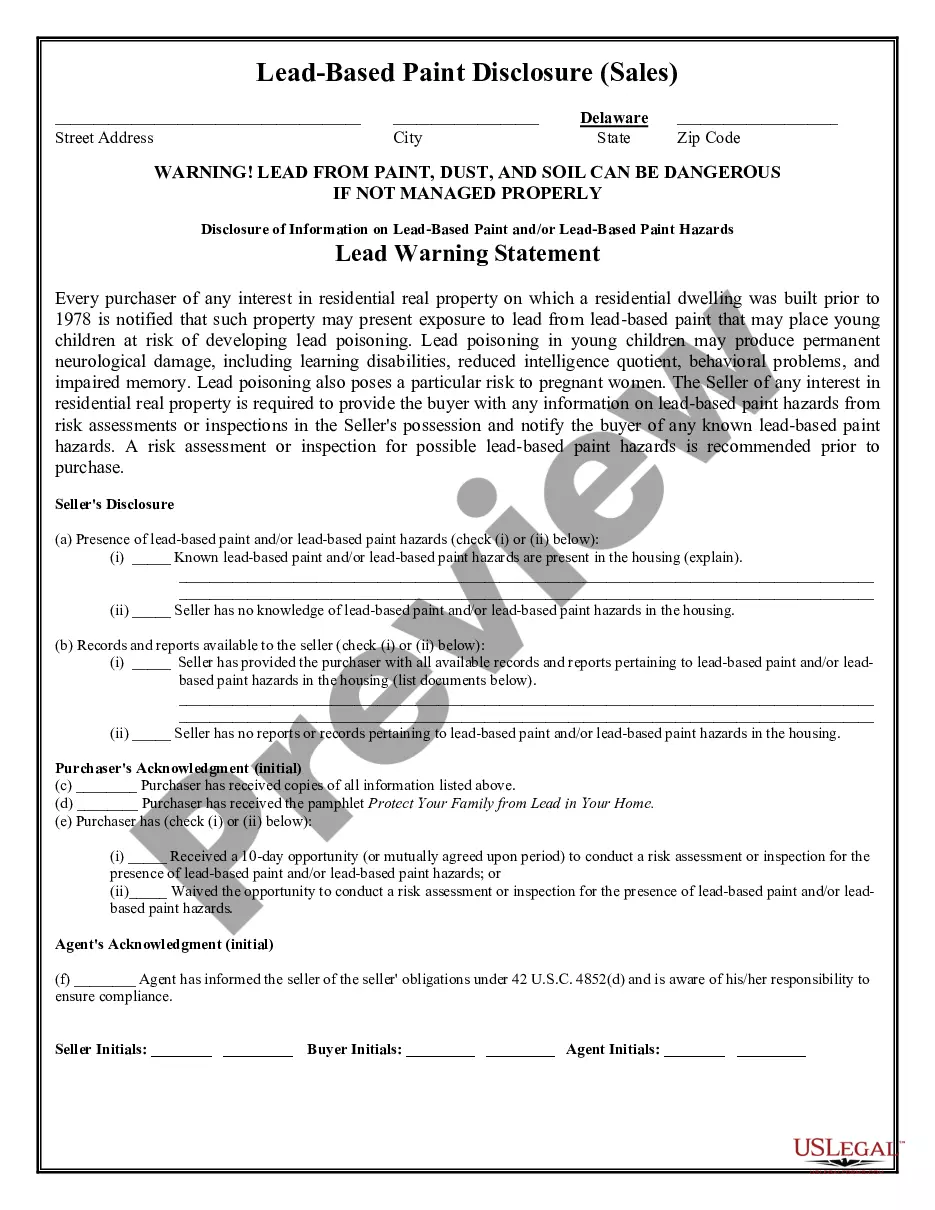
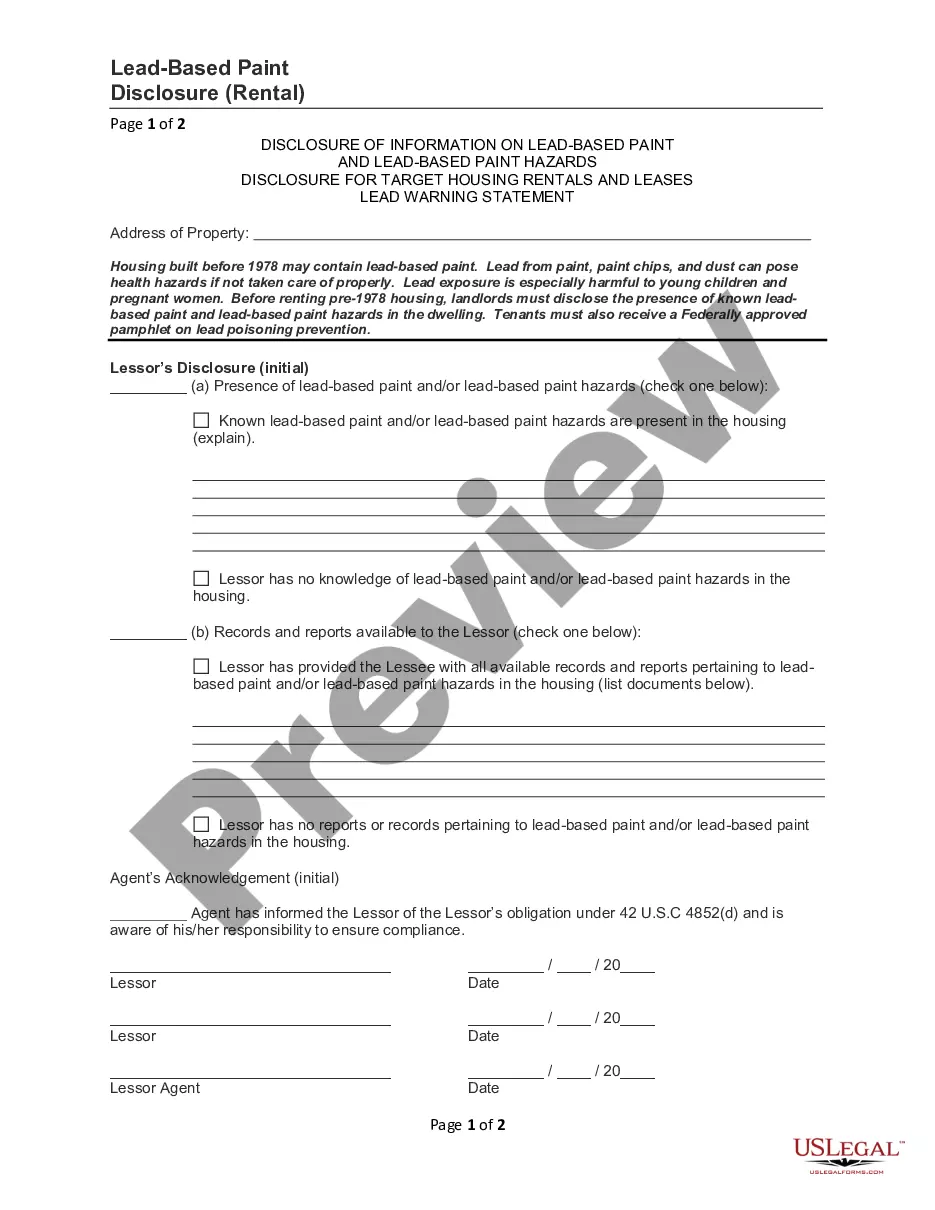
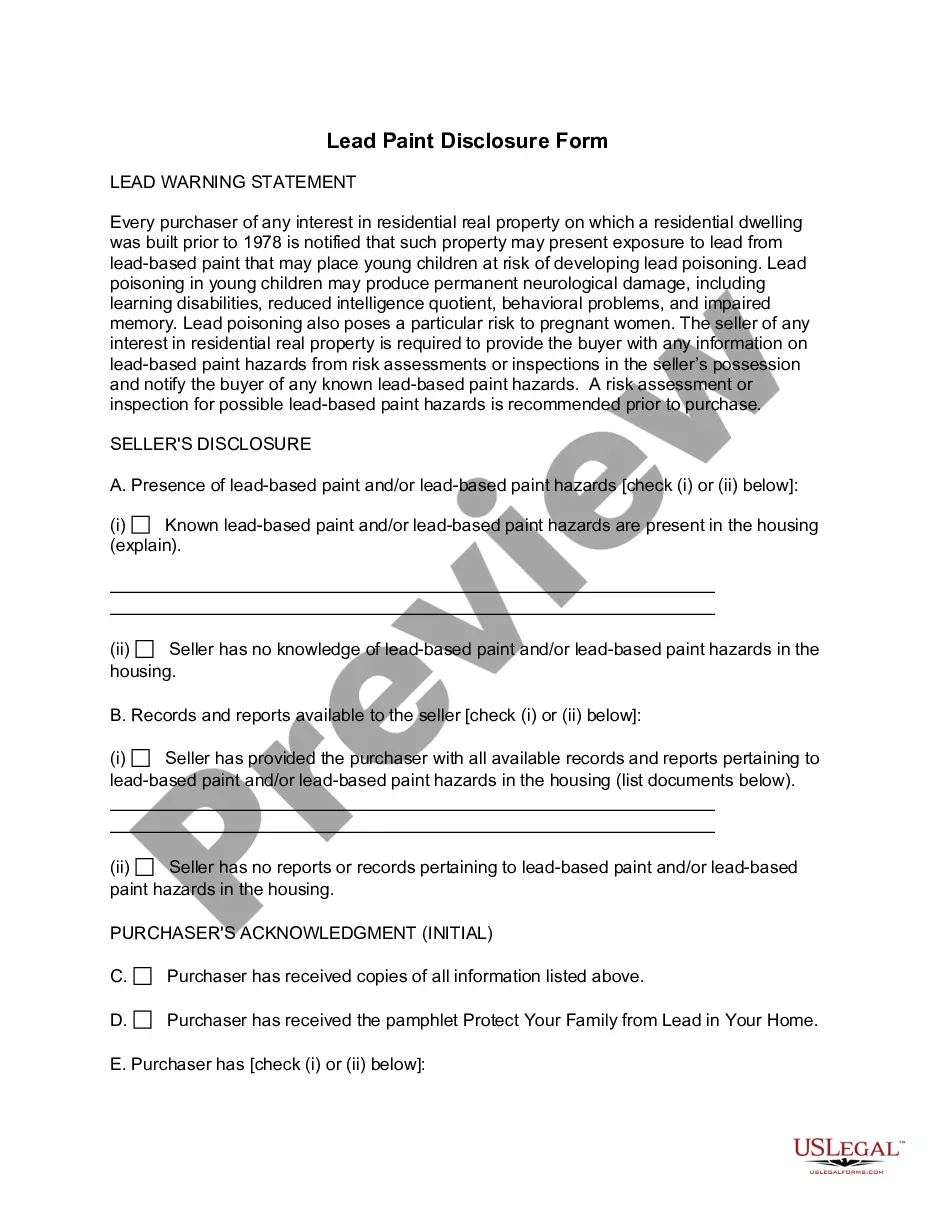
The Lead Based Paint Disclosure for Sales Transaction is a legal document required by federal law when selling residential properties built before 1978. This form serves as a notice to buyers about the potential risks of lead-based paint hazards, ensuring they are informed before finalizing a sale. It is crucial for protecting both the seller and buyer, as failure to disclose such information can lead to significant penalties.
Main sections of this form
- Lead Warning Statement: Informs buyers about lead-based paint risks.
- Sellers Disclosure: Requires sellers to indicate known lead hazards or state no knowledge.
- Records and Reports: Sellers must disclose any available lead-related documentation.
- Purchasers Acknowledgment: Buyers confirm receipt of information and pamphlet.
- Agent Acknowledgment: Confirms that real estate agents have informed sellers of their obligations.
When to use this document
This form is necessary when selling or purchasing residential property constructed prior to 1978. It should be used whenever a property owner wants to provide full disclosure regarding potential lead-based paint hazards as part of the sales transaction. Buyers should receive this information before making an offer or completing the purchase.
Who should use this form
- Homeowners selling residential properties built before 1978.
- Real estate agents representing sellers in transactions involving older homes.
- Buyers interested in acquiring homes constructed prior to 1978.
Steps to complete this form
- Identify the property by entering the street address, city, state, and zip code.
- Check the appropriate boxes under the Sellers Disclosure to indicate knowledge of lead hazards.
- List any records or reports related to lead hazards if available.
- Obtain the buyer's initials to acknowledge receipt of the form and the accompanying pamphlet.
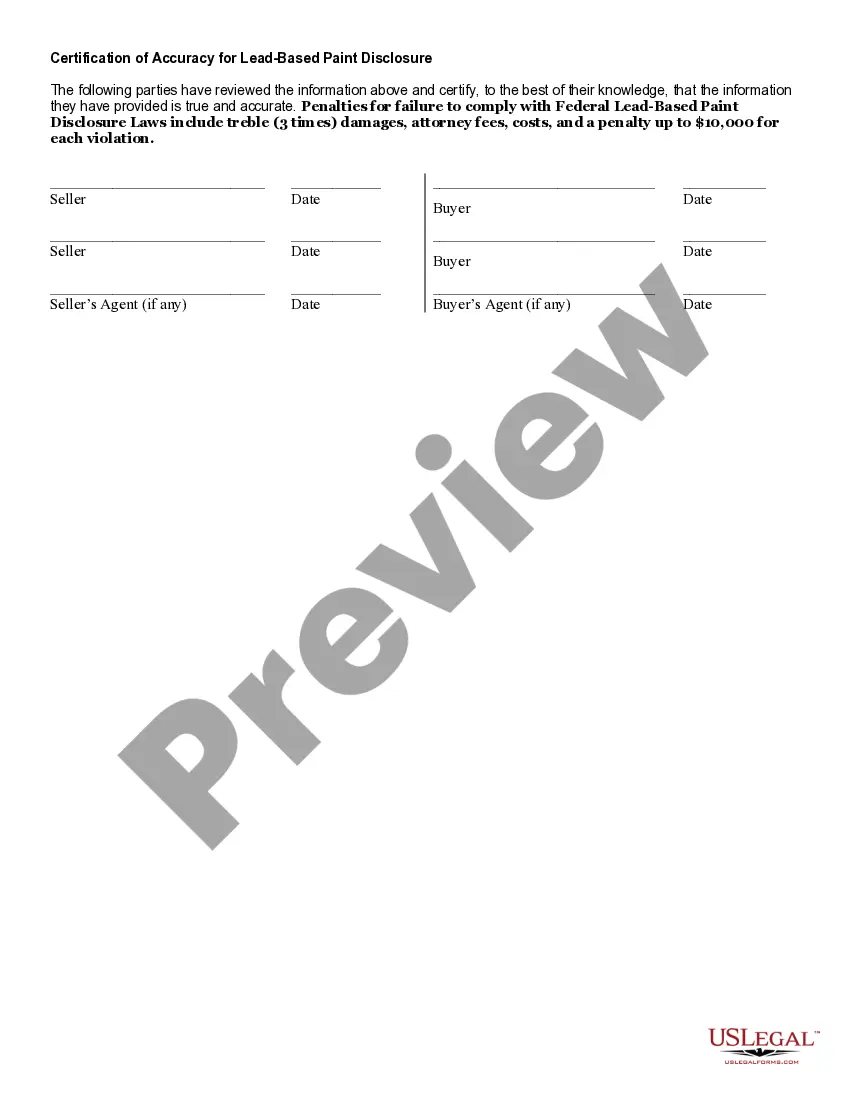
- Ensure all parties, including real estate agents, sign and date the document to verify its accuracy.
Notarization requirements for this form
This form does not typically require notarization unless specified by local law.
Get your form ready online
Our built-in tools help you complete, sign, share, and store your documents in one place.
Make edits, fill in missing information, and update formatting in US Legal Forms—just like you would in MS Word.
Download a copy, print it, send it by email, or mail it via USPS—whatever works best for your next step.
Sign and collect signatures with our SignNow integration. Send to multiple recipients, set reminders, and more. Go Premium to unlock E-Sign.
If this form requires notarization, complete it online through a secure video call—no need to meet a notary in person or wait for an appointment.
We protect your documents and personal data by following strict security and privacy standards.

Make edits, fill in missing information, and update formatting in US Legal Forms—just like you would in MS Word.

Download a copy, print it, send it by email, or mail it via USPS—whatever works best for your next step.

Sign and collect signatures with our SignNow integration. Send to multiple recipients, set reminders, and more. Go Premium to unlock E-Sign.

If this form requires notarization, complete it online through a secure video call—no need to meet a notary in person or wait for an appointment.

We protect your documents and personal data by following strict security and privacy standards.
Avoid these common issues
- Failing to complete the form if the property was built prior to 1978.
- Not providing the required pamphlet on lead hazards to the buyer.
- Inaccurate disclosures about the presence of lead-based paint.
Why use this form online
- Immediate access to legally compliant templates drafted by licensed attorneys.
- Convenient download and print options from the comfort of your home.
- Editable forms to tailor the content to your specific sales transaction needs.
Legal use & context
- Compliance with federal law is mandatory to avoid penalties for non-disclosure.
- Ensures buyers are informed about lead-based paint hazards in older properties.
- Utilizing this form protects sellers from potential legal liabilities regarding lead contamination.
What to keep in mind
- Utilize the Lead Based Paint Disclosure for properties built before 1978 to comply with federal law.
- Ensure all parties are informed about lead-based paint risks to reduce liability.
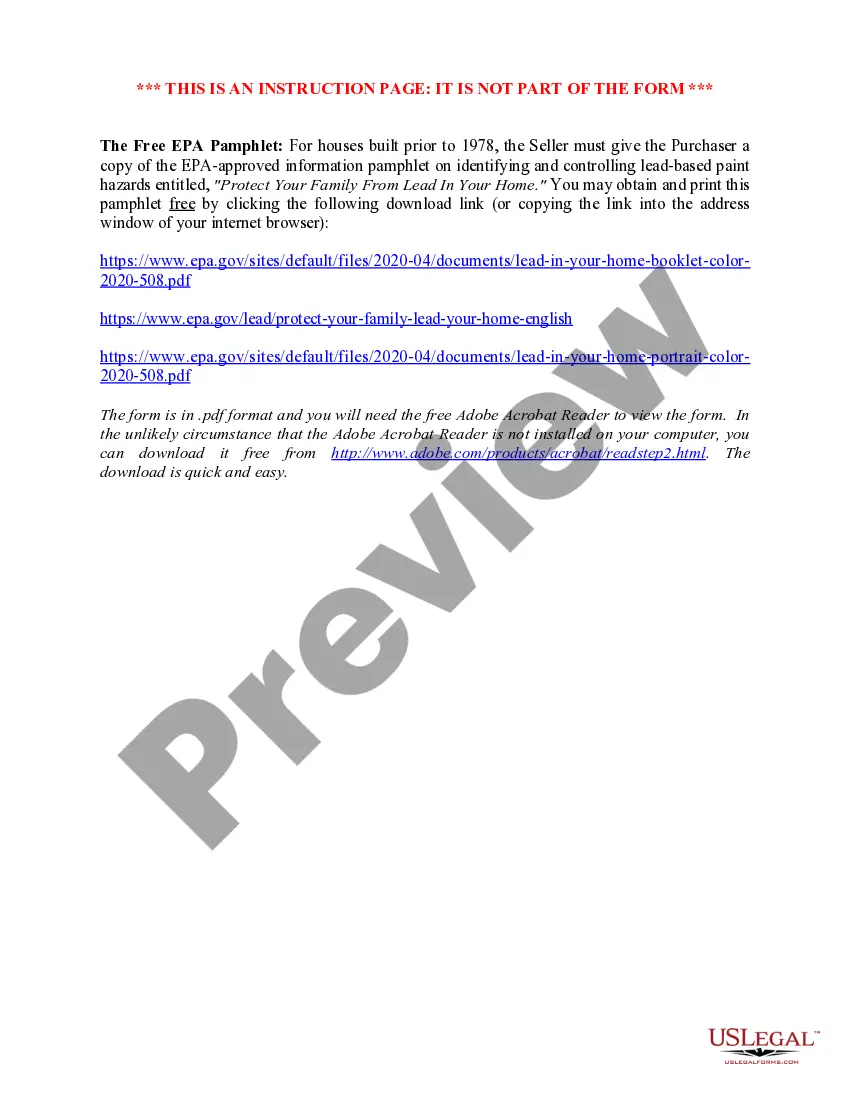
- Promptly provide buyers with the required EPA pamphlet alongside the disclosure form.
Looking for another form?
Form popularity
FAQ
Lead hazard disclosure must occur before the sale agreement is finalized. According to the Delaware Lead Based Paint Disclosure for Sales Transaction, sellers must provide disclosures to buyers during the buying process. This requirement is crucial to protect individuals from health risks associated with lead exposure. To ensure compliance, consider using tools offered by platforms like US Legal Forms.
Properties built before 1978 generally require a lead-based paint disclosure. This includes single-family homes, apartments, and any residential properties undergoing sale or rental. To comply with the Delaware Lead Based Paint Disclosure for Sales Transaction, sellers must provide documented disclosures that inform buyers of potential hazards. Utilizing resources like US Legal Forms can simplify this process.
Yes, lead paint must be disclosed in residential sales transactions. The Delaware Lead Based Paint Disclosure for Sales Transaction requires sellers to inform buyers about the presence of lead-based paint in properties built before 1978. This regulation helps ensure safety and transparency during the sale process. Always consult experienced professionals to navigate compliance requirements effectively.
Filling out a seller's property disclosure involves several straightforward steps. First, gather all necessary information about your property, including its condition, repairs, and any known issues. Next, when addressing lead-based paint, ensure you include the Delaware Lead Based Paint Disclosure for Sales Transaction, as it is crucial for properties built before 1978. This disclosure not only protects you legally but also provides transparency for potential buyers, making the sale process smoother.
The seller's disclosure of lead-based paint is a formal document detailing any known information about lead hazards in the property. This disclosure is necessary for compliance with both state and federal regulations, especially for homes built before 1978. It protects buyers by providing them with vital information to make informed decisions. Using platforms like USLegalForms can simplify this process and ensure all disclosures are correctly completed.
The disclosure law in Delaware requires sellers to provide a written disclosure about lead-based paint hazards for homes built before 1978. Failure to comply can lead to legal consequences for sellers, as buyers may seek damages for undisclosed hazards. It is vital to understand these laws when engaging in a real estate transaction. The Delaware Lead Based Paint Disclosure for Sales Transaction forms are essential tools for this purpose.
The lead-based paint addendum is typically filled out by the seller during the Delaware Lead Based Paint Disclosure for Sales Transaction. This addendum provides additional details about lead paint risks and protections for buyers. It is an important document that ensures both transparency and compliance. By utilizing comprehensive forms, sellers can mitigate complications later in the sales process.
It is the seller's obligation to disclose potential lead-based paint to buyers for homes built before 1978, according to federal law. This requirement exists because homes constructed prior to this year may contain lead-based paint, which poses health risks. By fulfilling this duty, sellers protect themselves from future liability. Therefore, understanding your responsibilities regarding the Delaware Lead Based Paint Disclosure for Sales Transaction is crucial.
The seller must sign the Delaware Lead Based Paint Disclosure for Sales Transaction to confirm that they have disclosed all known lead hazards. Buyers should also sign to acknowledge that they have received this important information. This signature process ensures clarity and acceptance of the disclosure. Legal compliance depends on both parties completing this step.
In a Delaware Lead Based Paint Disclosure for Sales Transaction, the seller is responsible for filling out the disclosure form. This includes providing information regarding any known lead-based paint hazards in the home. Sellers must take this obligation seriously to ensure they are transparent about the property’s history. Accurate completion helps protect both parties and complies with federal and state laws.