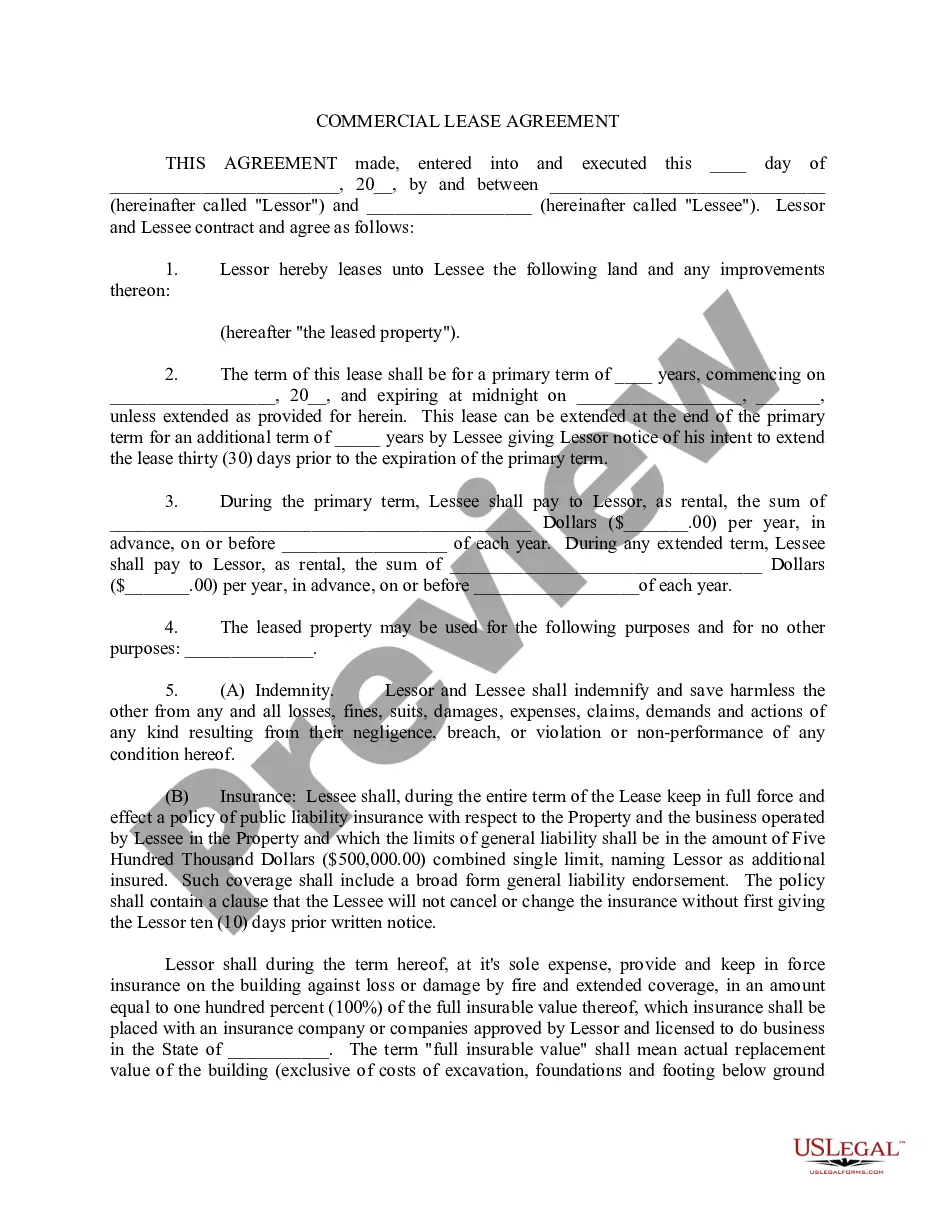
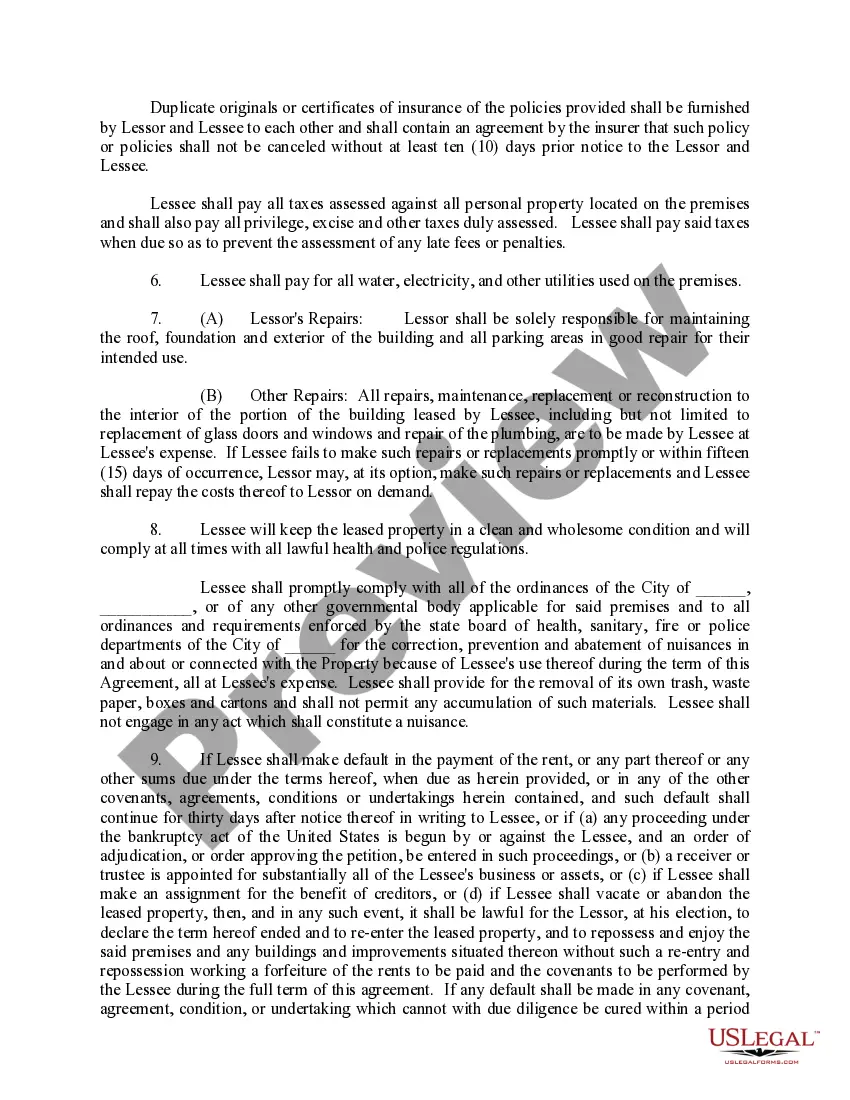
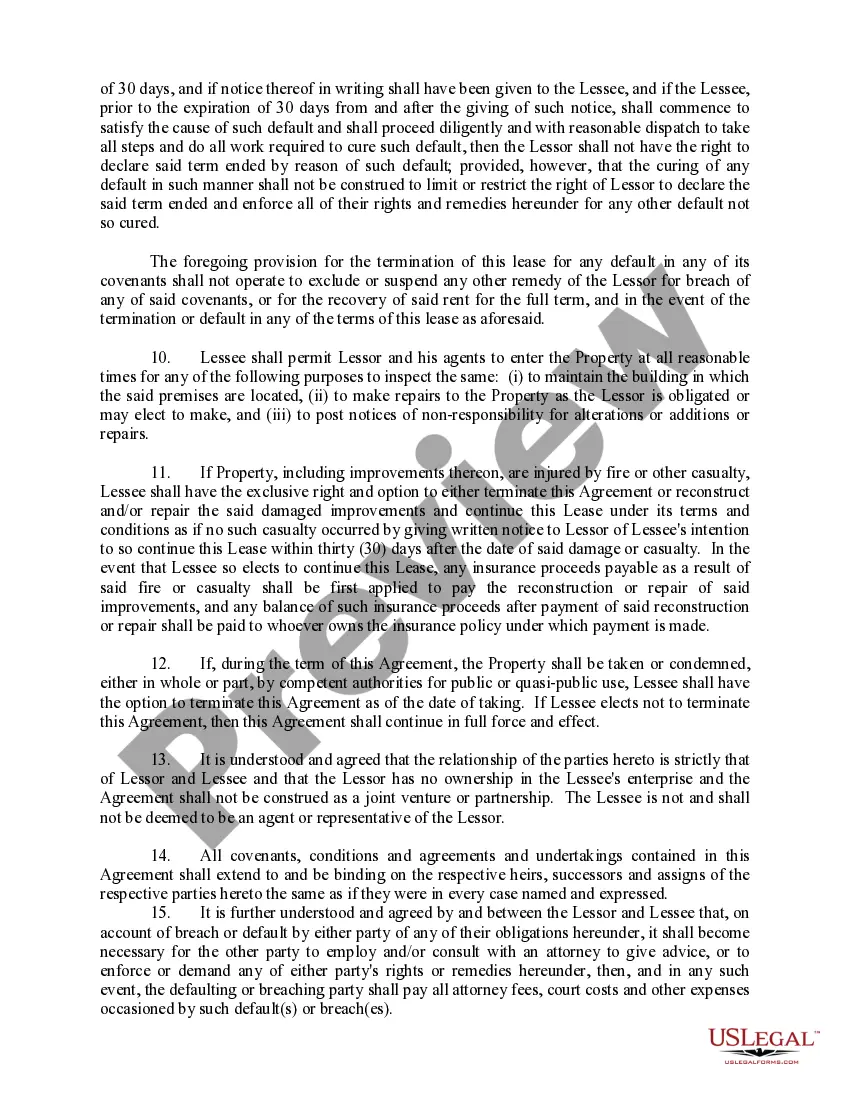
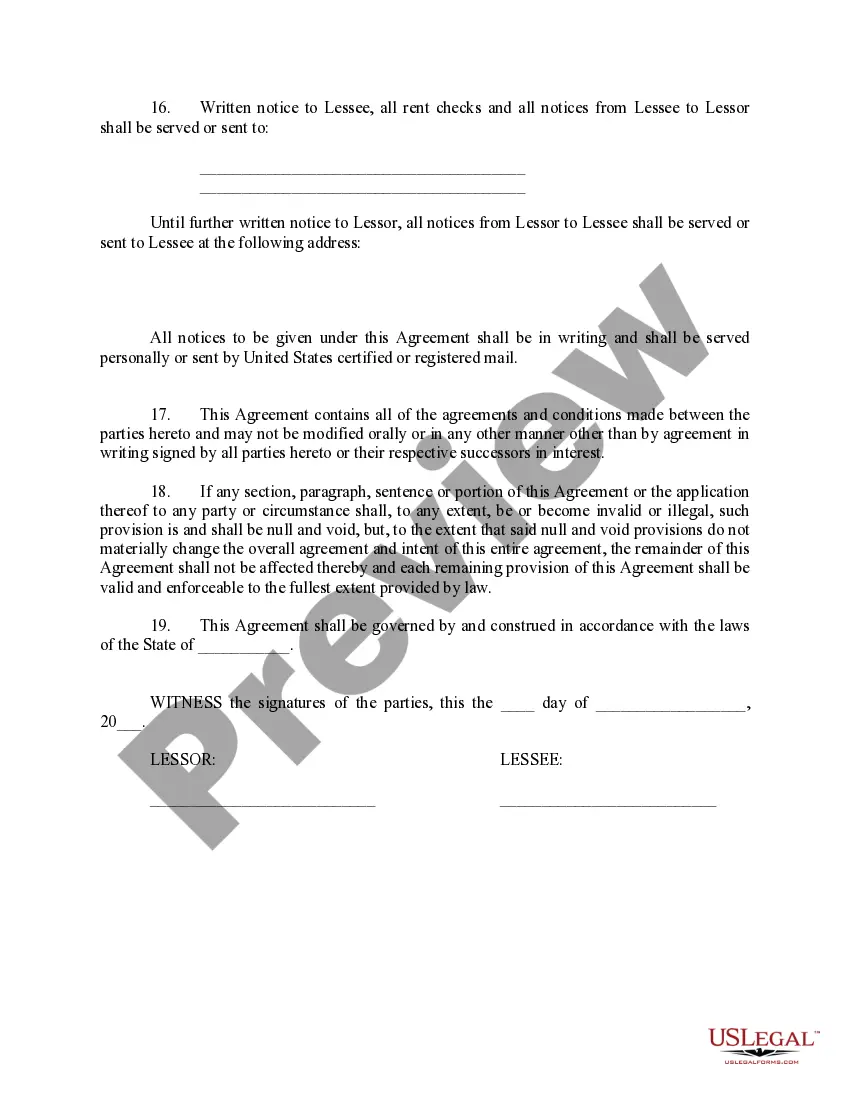
Commercial Lease Agreement Application With Option To Buy In Tarrant
Description

Get your form ready online
Our built-in tools help you complete, sign, share, and store your documents in one place.
Make edits, fill in missing information, and update formatting in US Legal Forms—just like you would in MS Word.
Download a copy, print it, send it by email, or mail it via USPS—whatever works best for your next step.
Sign and collect signatures with our SignNow integration. Send to multiple recipients, set reminders, and more. Go Premium to unlock E-Sign.
If this form requires notarization, complete it online through a secure video call—no need to meet a notary in person or wait for an appointment.
We protect your documents and personal data by following strict security and privacy standards.

Make edits, fill in missing information, and update formatting in US Legal Forms—just like you would in MS Word.

Download a copy, print it, send it by email, or mail it via USPS—whatever works best for your next step.

Sign and collect signatures with our SignNow integration. Send to multiple recipients, set reminders, and more. Go Premium to unlock E-Sign.

If this form requires notarization, complete it online through a secure video call—no need to meet a notary in person or wait for an appointment.

We protect your documents and personal data by following strict security and privacy standards.
Looking for another form?








Form popularity
FAQ
If the landlord sells, dies, or transfers the property, the new owner has to honor your lease and any other agreement you made with the original owner or management, unless the lease agreement specifically states that the lease will terminate in such case.
There are many reasons why a Landlord and Tenant may choose to include an “option” in a commercial lease. The most common type of option is one that gives the Tenant the right to extend the lease term, usually for additional — sometimes two or more — terms of equal length to the original term.
One can still do an executory contract (such as a long-term lease-option) but there are extensive requirements: the landlord-seller must provide the buyer with a recent survey or a current plat; copies of liens, restrictive covenants, and easements; a statutory disclosure; a disclosure for non-subdivision properties ...
An option clause is a term in a commercial lease that allows a tenant to renew their lease at the end of the original lease period, if they meet certain conditions. Landlords are not obliged to offer a renewal option.
An option clause is a term in a commercial or retail lease, permitting a tenant to renew their lease at the end of the initial lease period.
For example, a tenant and landlord may agree to a five-year lease with a five-year option to renew. At the end of the first five years, the tenant is given the chance to continue the lease for another five years. If you think you may renew, be sure to bring up extension provisions with your landlord.
At the bare minimum, a rental agreement or lease should identify the leased property, state the names of all parties to the lease, the names of all occupants, the beginning date, when the contract expires, the amount of rent, when rent is due, when rent is late, and what happens if the tenant stays in the property ...
A lease is a contract between a landlord and a tenant. As with any contract, both parties have the right to negotiate the terms before entering into it. If the lease is in writing, Texas law requires a landlord to provide the tenant with a copy of the lease within 3 business days of signing.
