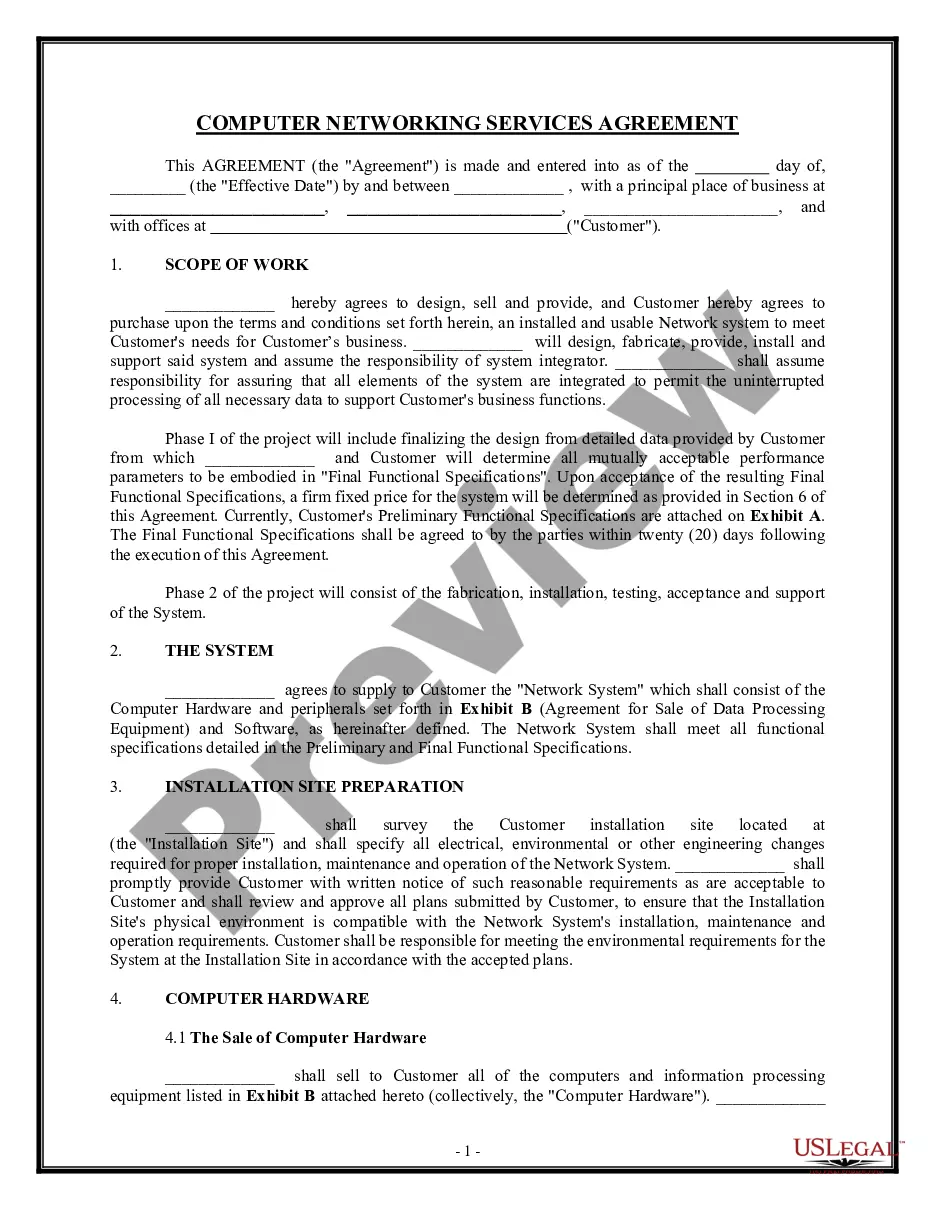
Service Agreement Provider Contract With Insurance Company In Travis
Description


Form popularity
FAQ
Service contracts and lease contracts have different rights and responsibilities. In a lease, the lessor provides the asset to the lessee, who benefits from it throughout the lease term. In a service contract, the customer receives economic benefit from the service provided by the lessor.
Key elements like offer, acceptance, consideration, mutual intent, and legality are its pillars. A service agreement, on the other hand, is a specific type of contract. It's all about services - not goods, not real estate. Think of it as a contract specialized in services like consulting, marketing, maintenance.
A service agreement is a company contract between a service provider and your company, outlining the terms and conditions and covering various aspects such as quality, availability and responsibility of services.
This is a summary of the major promises of the insurance company and states what is covered. In the Insuring Agreement, the insurer agrees to do certain things such as paying losses for covered perils, providing certain services, or agreeing to defend the insured in a liability lawsuit.
A service agreement is a type of contract that outlines the terms and conditions covering the provision of services between two parties and acts as a reference point for both parties should any questions arise.
A service agreement is a legal document that outlines the terms and conditions of a specific service, while a contract is a more complex legal document that can cover a wider range of transactions. Services agreements are frequently less formal and might include a wide range of terms and conditions.
What is typically included in a contract for services. Description of services. This lays out what professional services you and your company will receive. Payment terms. Ownership rights. Confidentiality clause. Indemnification clause. Amendment. Termination. Dispute resolution.
Follow the steps below to write a service-level agreement: Define the service. Your SLA will need to define and outline the service clearly. Verify service levels. Determine performance metrics. Prepare the service level agreement document. Review the SLA with all stakeholders.
To write a simple contract, title it clearly, identify all parties and specify terms (services or payments). Include an offer, acceptance, consideration, and intent. Add a signature and date for enforceability. Written contracts reduce disputes and offer better legal security than verbal ones.
What is typically included in a contract for services. Description of services. This lays out what professional services you and your company will receive. Payment terms. Ownership rights. Confidentiality clause. Indemnification clause. Amendment. Termination. Dispute resolution.
