Bylaws Draft Withdrawal In Wake
Description

Get your form ready online
Our built-in tools help you complete, sign, share, and store your documents in one place.
Make edits, fill in missing information, and update formatting in US Legal Forms—just like you would in MS Word.
Download a copy, print it, send it by email, or mail it via USPS—whatever works best for your next step.
Sign and collect signatures with our SignNow integration. Send to multiple recipients, set reminders, and more. Go Premium to unlock E-Sign.
If this form requires notarization, complete it online through a secure video call—no need to meet a notary in person or wait for an appointment.
We protect your documents and personal data by following strict security and privacy standards.

Make edits, fill in missing information, and update formatting in US Legal Forms—just like you would in MS Word.

Download a copy, print it, send it by email, or mail it via USPS—whatever works best for your next step.

Sign and collect signatures with our SignNow integration. Send to multiple recipients, set reminders, and more. Go Premium to unlock E-Sign.

If this form requires notarization, complete it online through a secure video call—no need to meet a notary in person or wait for an appointment.

We protect your documents and personal data by following strict security and privacy standards.
Looking for another form?




Form popularity
FAQ
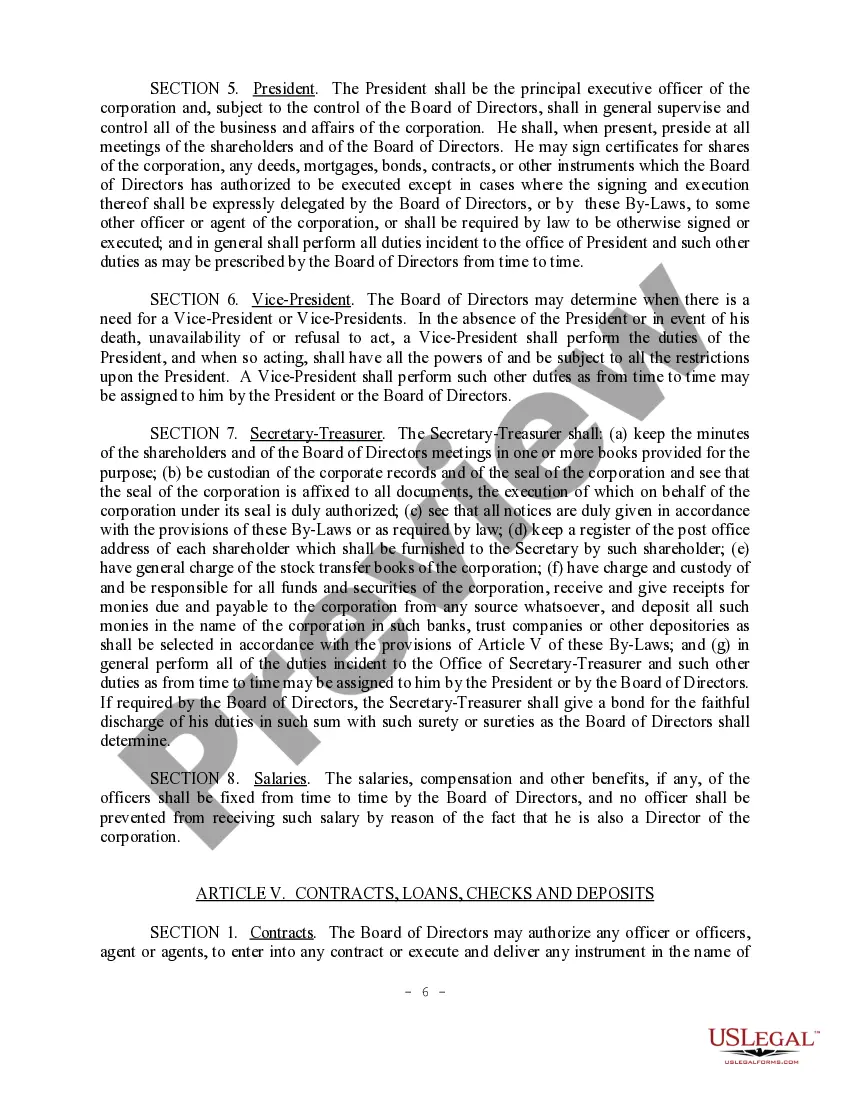
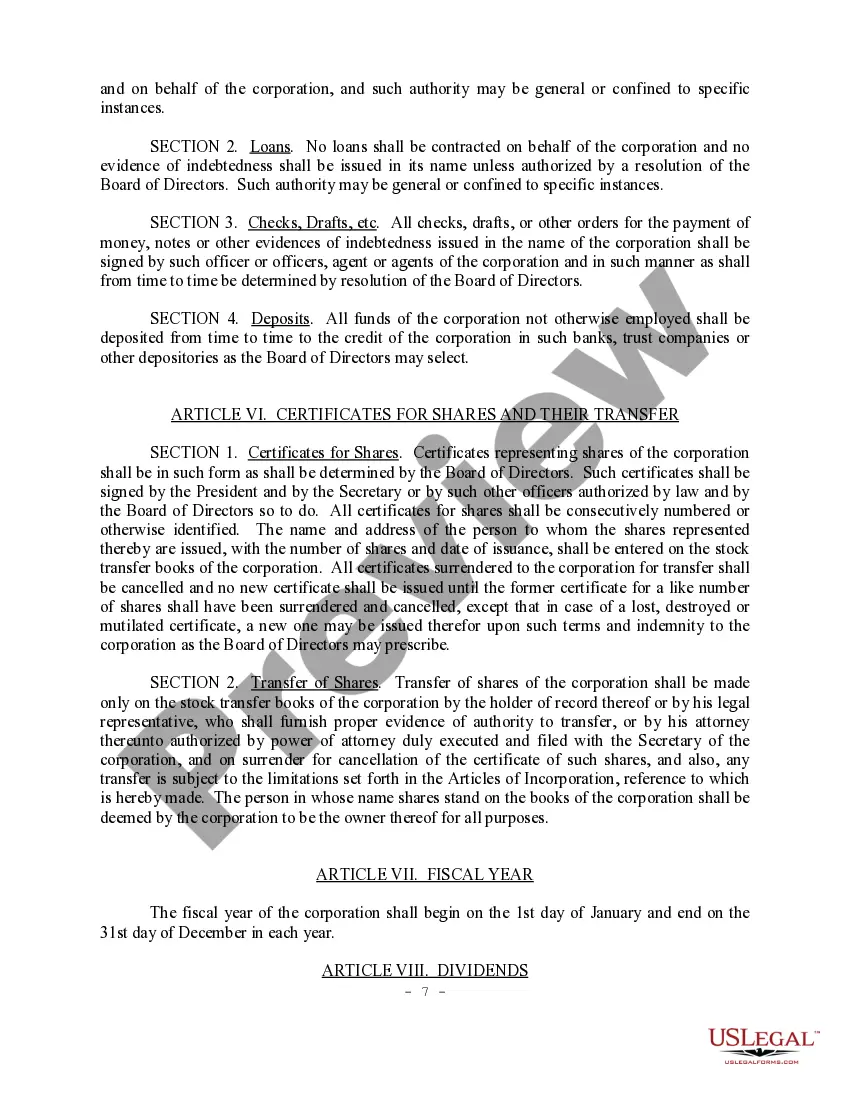
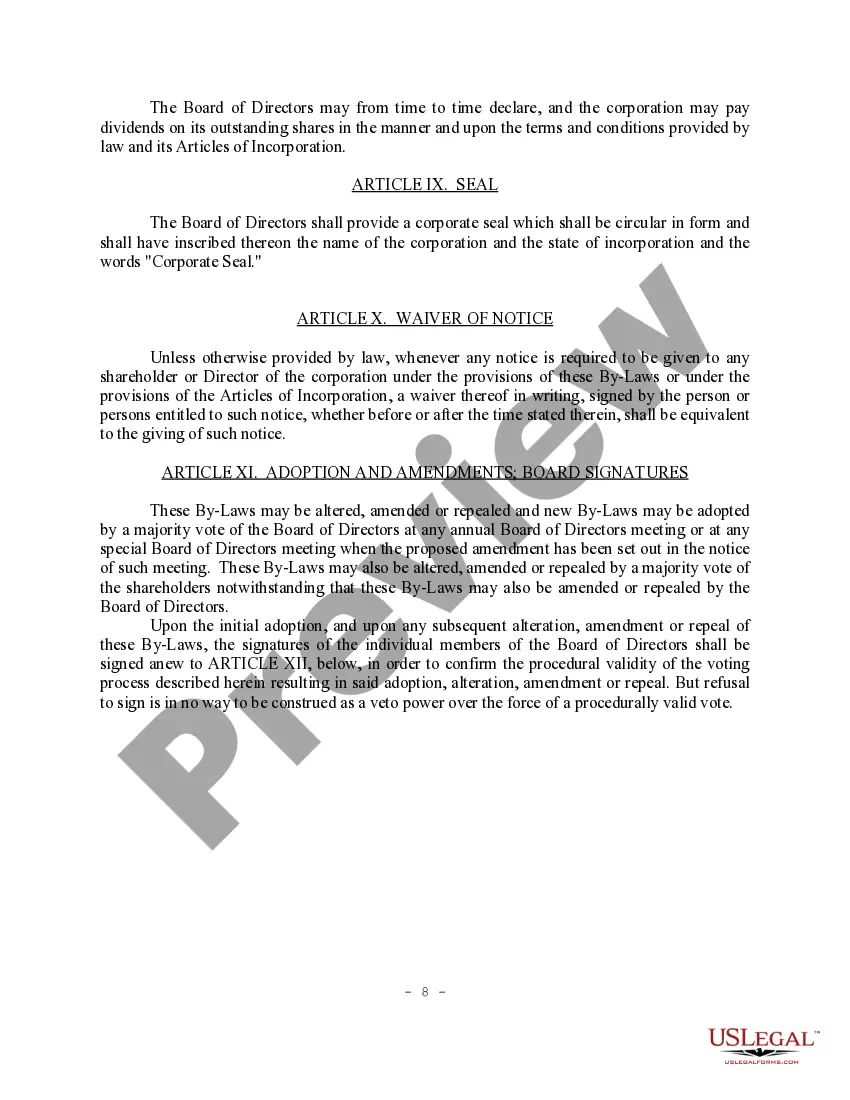
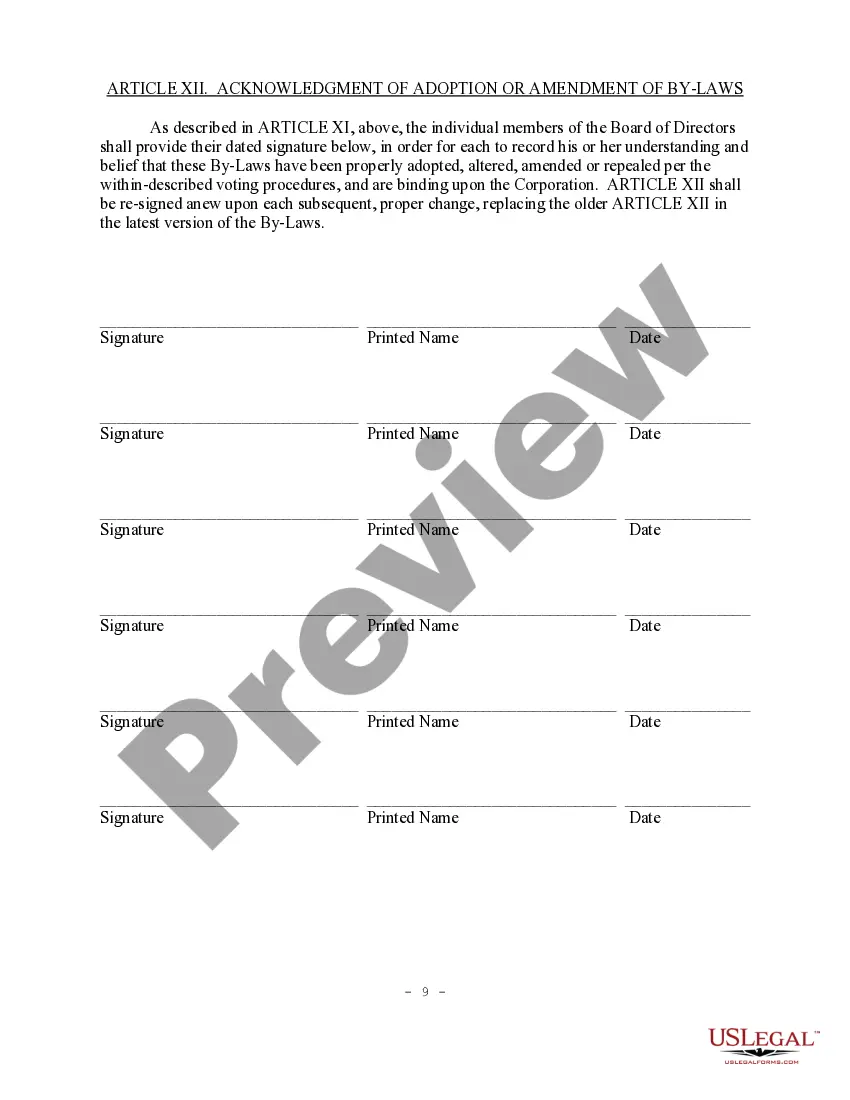
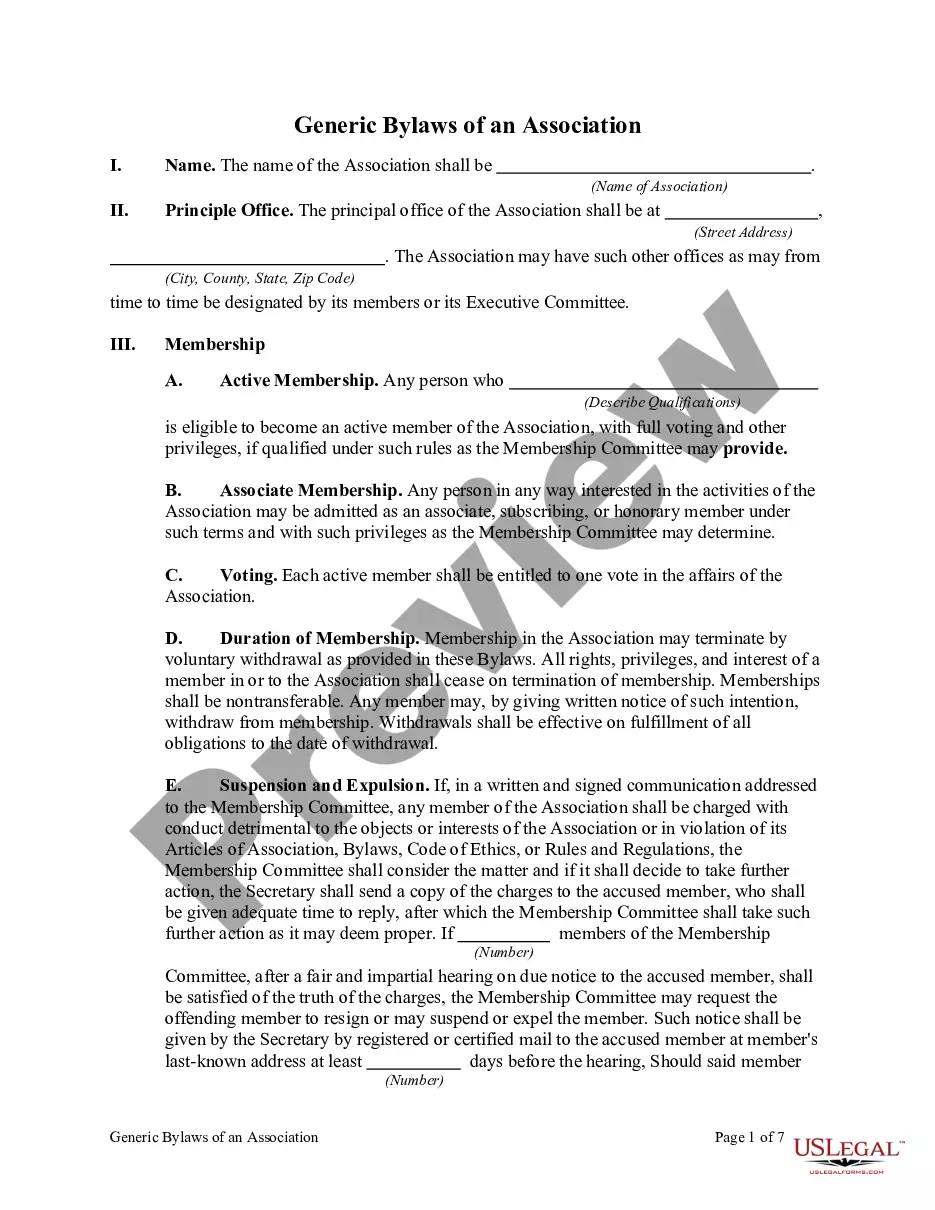
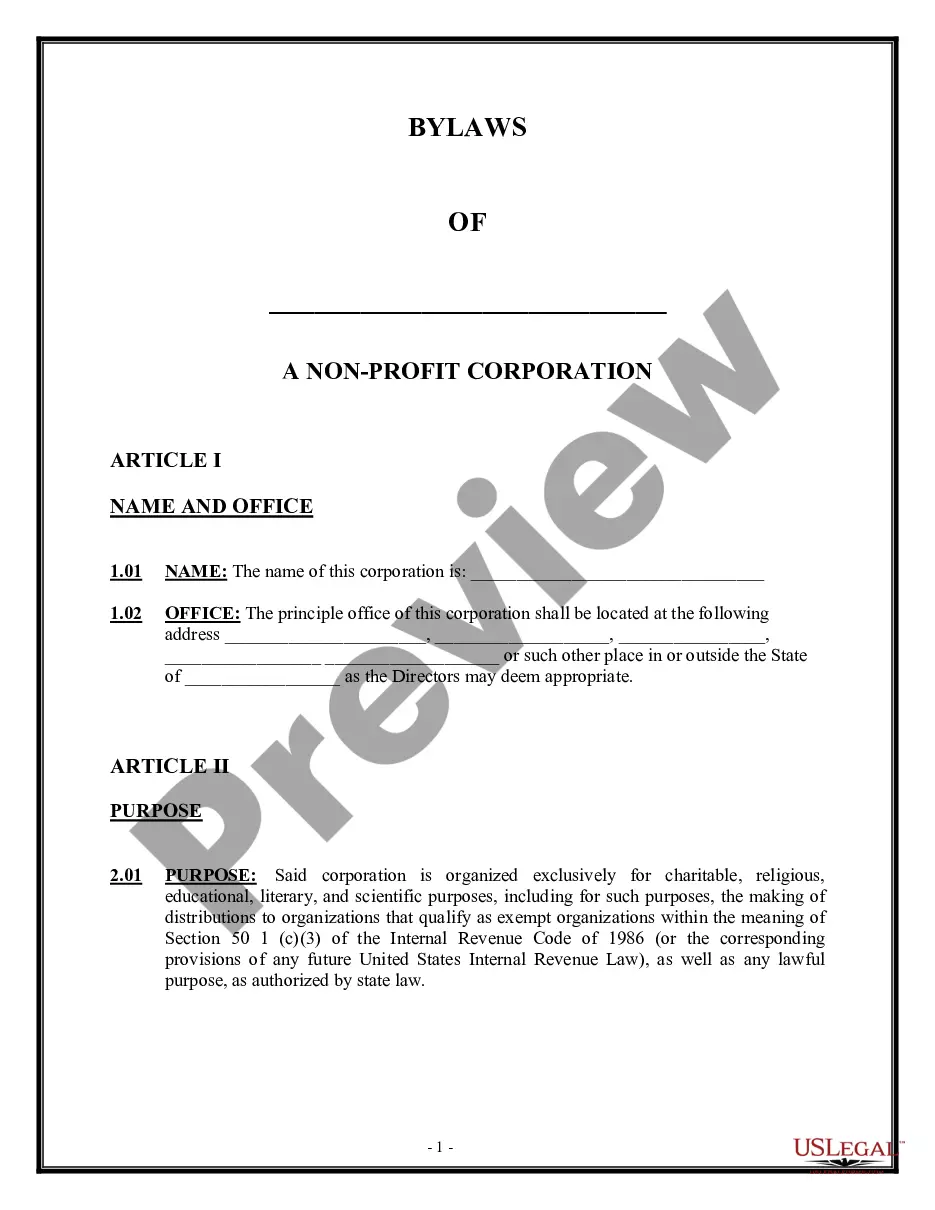
Make a draft bylaw Some of the most essential elements that need to be included in a draft bylaw are your organization's name and purpose, information about memberships, the roles and duties of board members, how to handle financial information, and an outline of how to keep the bylaws up to date or amended.
How do I write Corporate Bylaws? Step 1: Select your corporation type. This is where you will list your company as a for-profit or a nonprofit. Step 2: Describe your incorporation status. Step 3: State your location. Step 4: Provide your corporation's registered name. Step 5: Outline shareholder meeting rules.
Bylaws can be easy to write and even easier to change if you are well-organized and have a good plan in place for how to go about it.
Here are some examples of provisions that nonprofit organizations should avoid including in their bylaws. Organizational Policies and Procedures. Specifically Targeted Policies that Adversely Affect Future Boards. Provisions that Violate State Laws. Inconsistencies with the Articles of Incorporation.
