Property Owners Association Bylaws For Nonprofit In San Antonio
Description

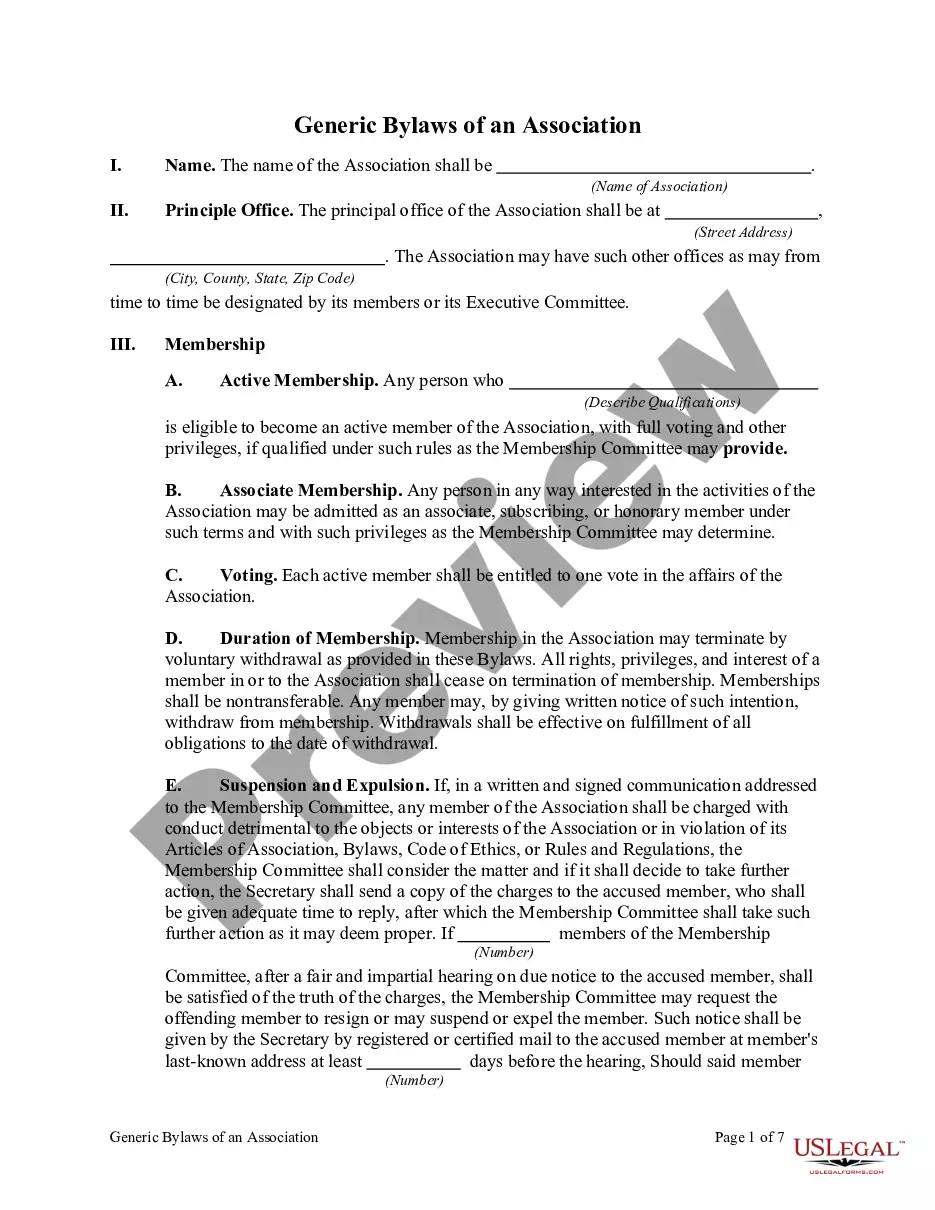

Get your form ready online
Our built-in tools help you complete, sign, share, and store your documents in one place.
Make edits, fill in missing information, and update formatting in US Legal Forms—just like you would in MS Word.
Download a copy, print it, send it by email, or mail it via USPS—whatever works best for your next step.
Sign and collect signatures with our SignNow integration. Send to multiple recipients, set reminders, and more. Go Premium to unlock E-Sign.
If this form requires notarization, complete it online through a secure video call—no need to meet a notary in person or wait for an appointment.
We protect your documents and personal data by following strict security and privacy standards.

Make edits, fill in missing information, and update formatting in US Legal Forms—just like you would in MS Word.

Download a copy, print it, send it by email, or mail it via USPS—whatever works best for your next step.

Sign and collect signatures with our SignNow integration. Send to multiple recipients, set reminders, and more. Go Premium to unlock E-Sign.

If this form requires notarization, complete it online through a secure video call—no need to meet a notary in person or wait for an appointment.

We protect your documents and personal data by following strict security and privacy standards.
Looking for another form?





Form popularity
FAQ
While HOAs and condo associations establish themselves as nonprofits, they are not tax-exempt organizations under 501(c)(3). The requirements for 501(c)(3) are very strict. To qualify, an organization must serve a broad public interest.
In Florida, Homeowners Associations (HOA)s and inium Owners Associations (COA)s are not for profit corporations and therefore are governed partly by Florida Statutes Chapter 617 (the Not for Profit Act).
Exploring the Public Record Status of HOA Bylaws In some states, such as California, HOA bylaws are considered public record and must be made available upon request.
A property owners association, or POA, is formed to protect the undeveloped areas of a community. A homeowners association, or HOA, is formed to protect and manage a collection of homes.
Disclosure Requirements Disclosure is mandated by law, often through public records and real property records. Before purchasing a home, buyers must receive a set of documents detailing the HOA's health, such as its covenants, conditions, restrictions, bylaws, rules, and financial statements.
Board of Directors and Officers The Board of Directors is the cornerstone of an HOA's governance structure. They hold the responsibility for overseeing the association's affairs in ance with Texas law and the association's own governing documents.
House Bill 614 guarantees your right to a hearing before the HOA board to contest the violation or the proposed fine. This ensures a fair and transparent process where you can voice your concerns and advocate for your interests.
In Texas, all homeowners' associations are governed by the Texas Residential Property Owners Protection Act. This document lists out all the rules and regulations that all HOAs must follow. inium associations are governed by a separate law called the Uniform inium Act.
Notably, Texas HOA's with 60 or more lots are legally required to have an HOA Website, ensuring transparency and accessibility for all members. The HOA Website Law in Texas is designed to facilitate better communication and provide a centralized location for important association information.
