Buy Sell Agreement Purchase Formula In Fairfax
Description

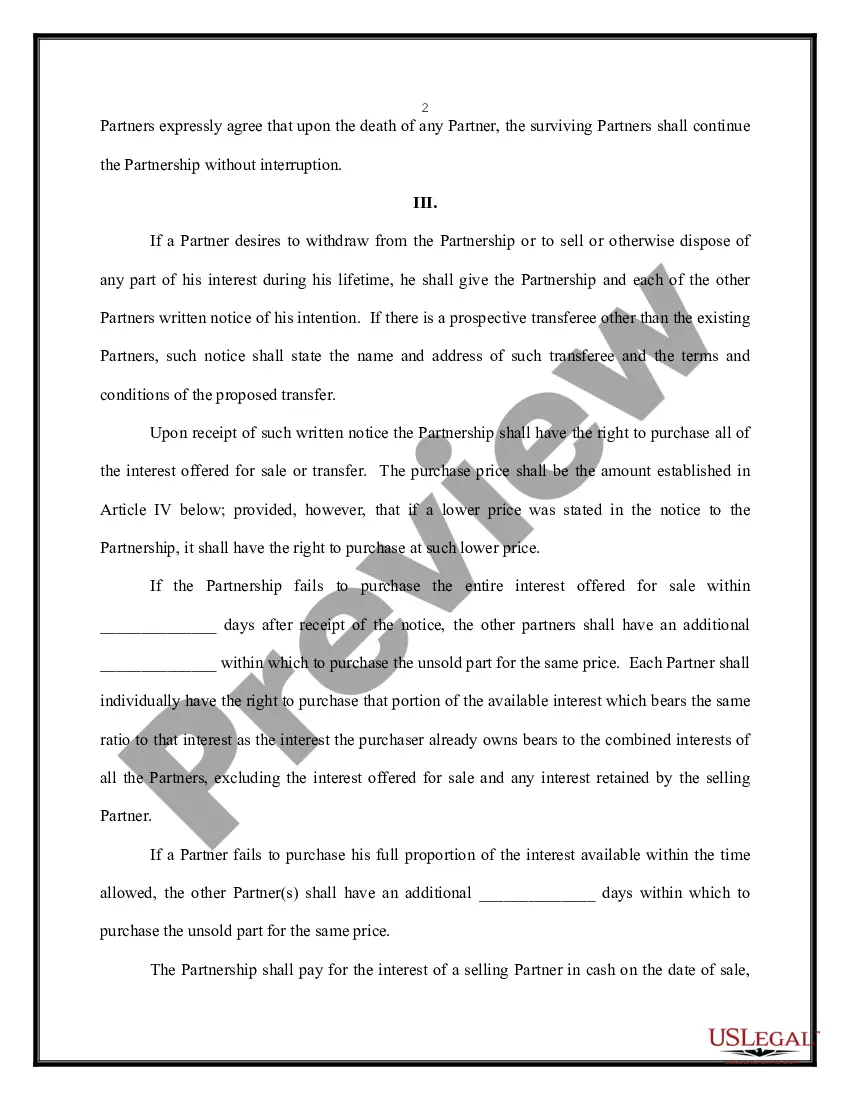
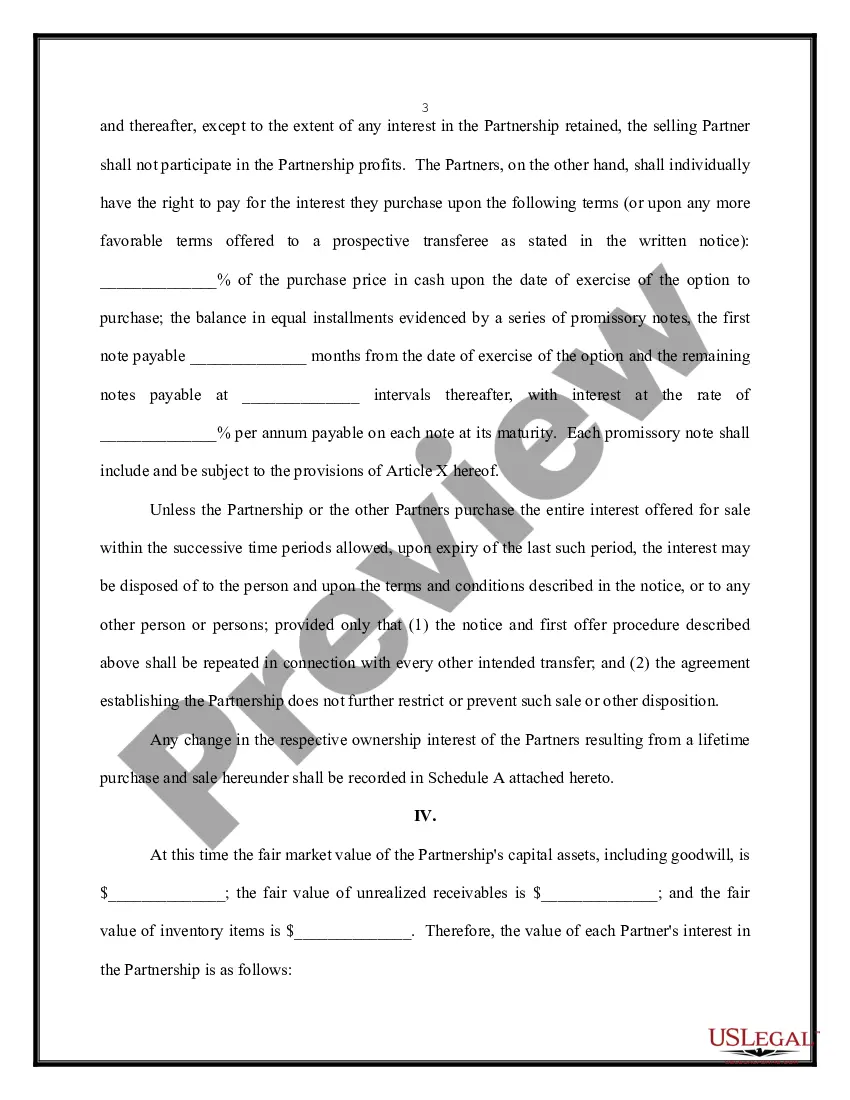
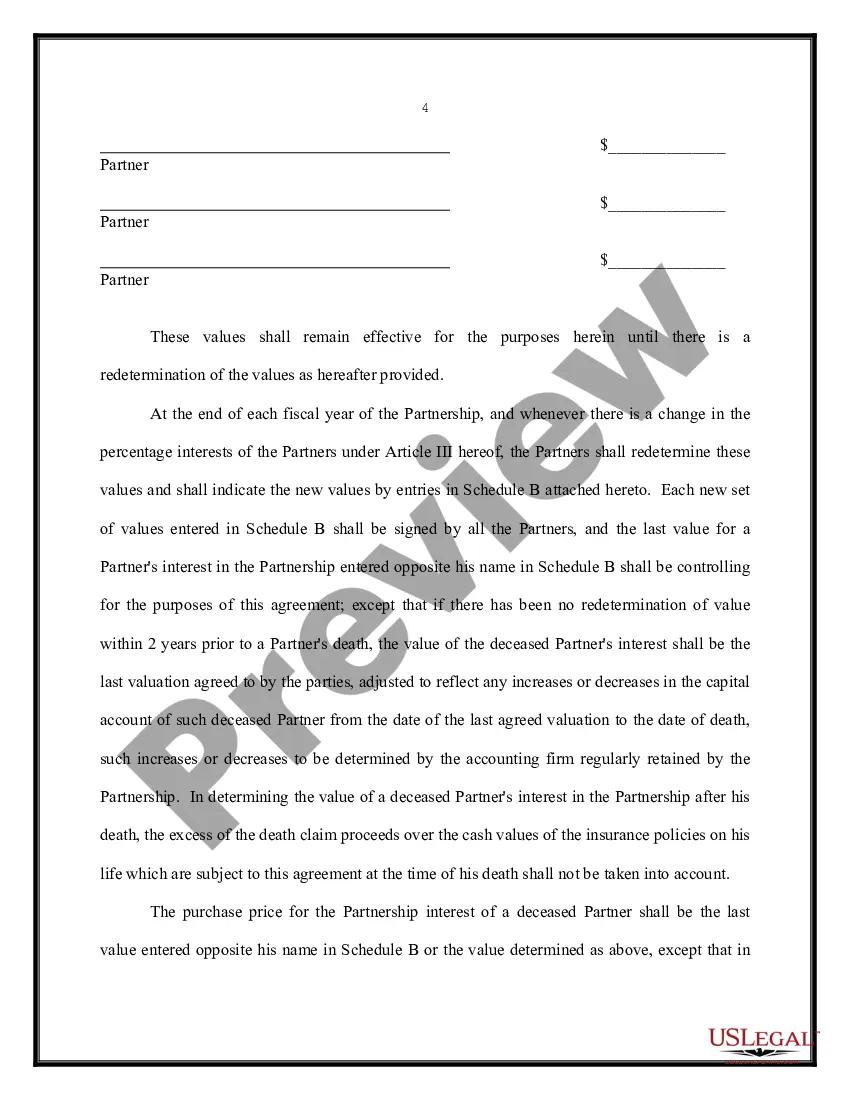
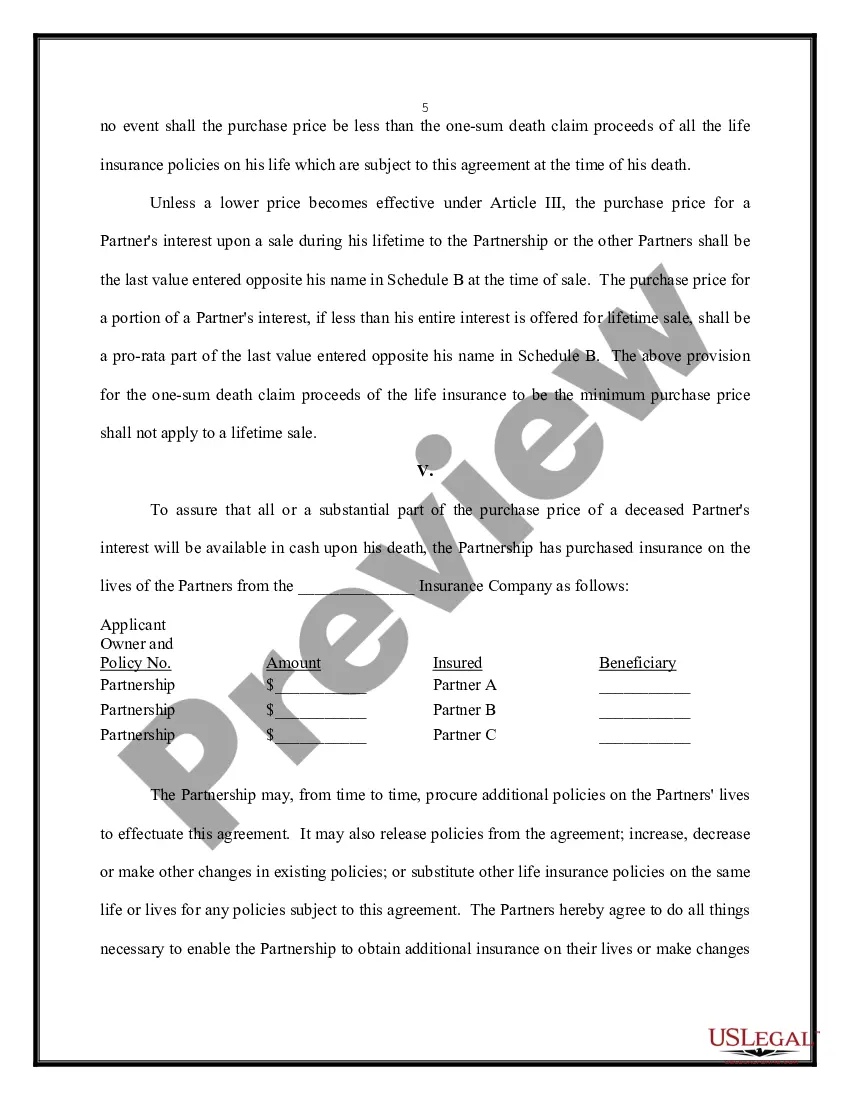


Get your form ready online
Our built-in tools help you complete, sign, share, and store your documents in one place.
Make edits, fill in missing information, and update formatting in US Legal Forms—just like you would in MS Word.
Download a copy, print it, send it by email, or mail it via USPS—whatever works best for your next step.
Sign and collect signatures with our SignNow integration. Send to multiple recipients, set reminders, and more. Go Premium to unlock E-Sign.
If this form requires notarization, complete it online through a secure video call—no need to meet a notary in person or wait for an appointment.
We protect your documents and personal data by following strict security and privacy standards.

Make edits, fill in missing information, and update formatting in US Legal Forms—just like you would in MS Word.

Download a copy, print it, send it by email, or mail it via USPS—whatever works best for your next step.

Sign and collect signatures with our SignNow integration. Send to multiple recipients, set reminders, and more. Go Premium to unlock E-Sign.

If this form requires notarization, complete it online through a secure video call—no need to meet a notary in person or wait for an appointment.

We protect your documents and personal data by following strict security and privacy standards.
Looking for another form?

Form popularity
FAQ
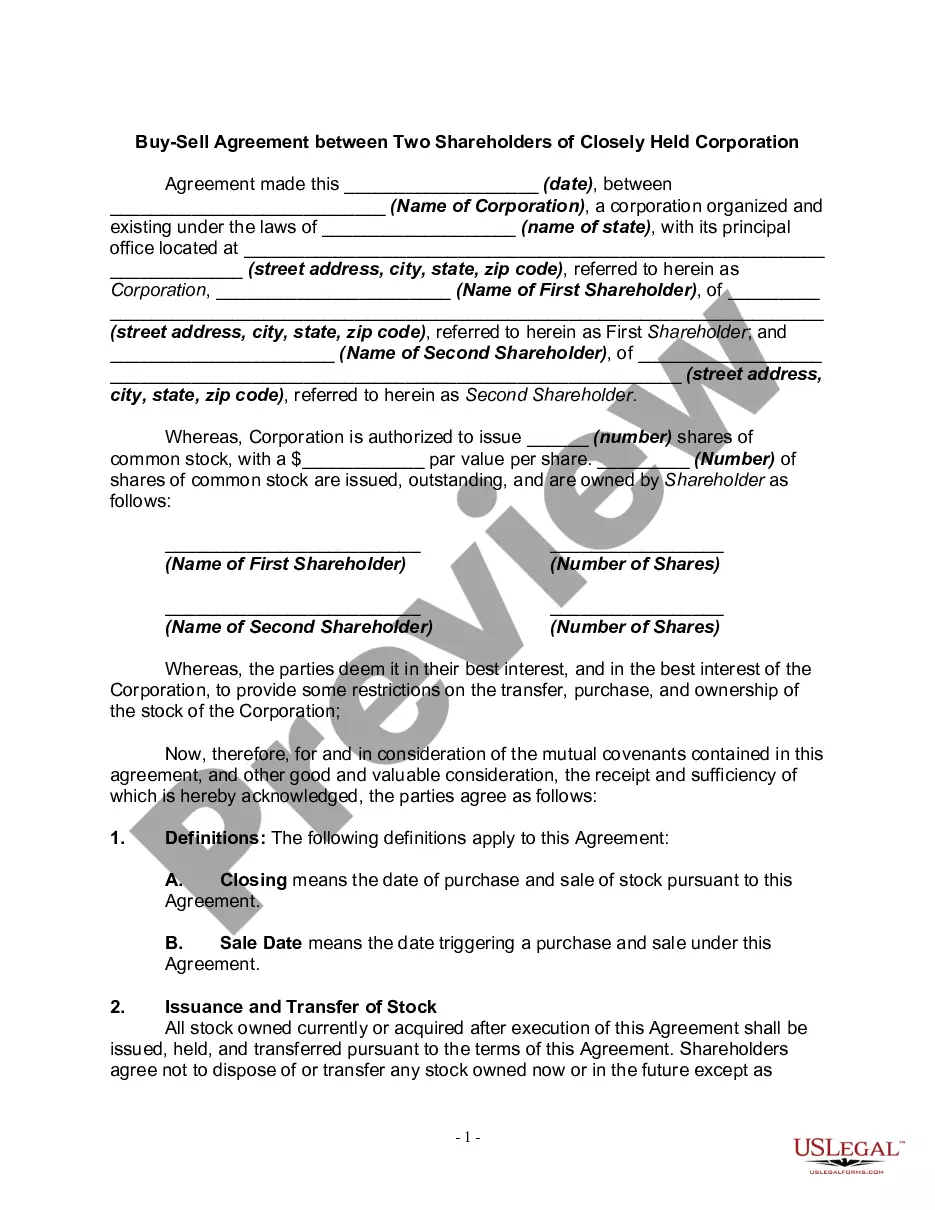
Therefore, shareholder agreements are often called buy/sell agreements. The agreement should define persons to whom stock may be transferred without triggering any implications.
While a buy-sell agreement typically addresses the sale of shares among co-owners of a business, a shareholder agreement may address a wider range of issues, including the management and control of the business , the distribution of profits, and the appointment of directors and officers.
While Shareholder Agreements might touch on provisions related to the transfer of shares or prohibiting transfers, a Buy-Sell Agreement is more specific and effective. It ensures that transitions are handled in a way that aligns with the owners' expectations and the business's financial stability.
A buy and sell agreement may also be called a buyout agreement, a business will, or a business prenup.
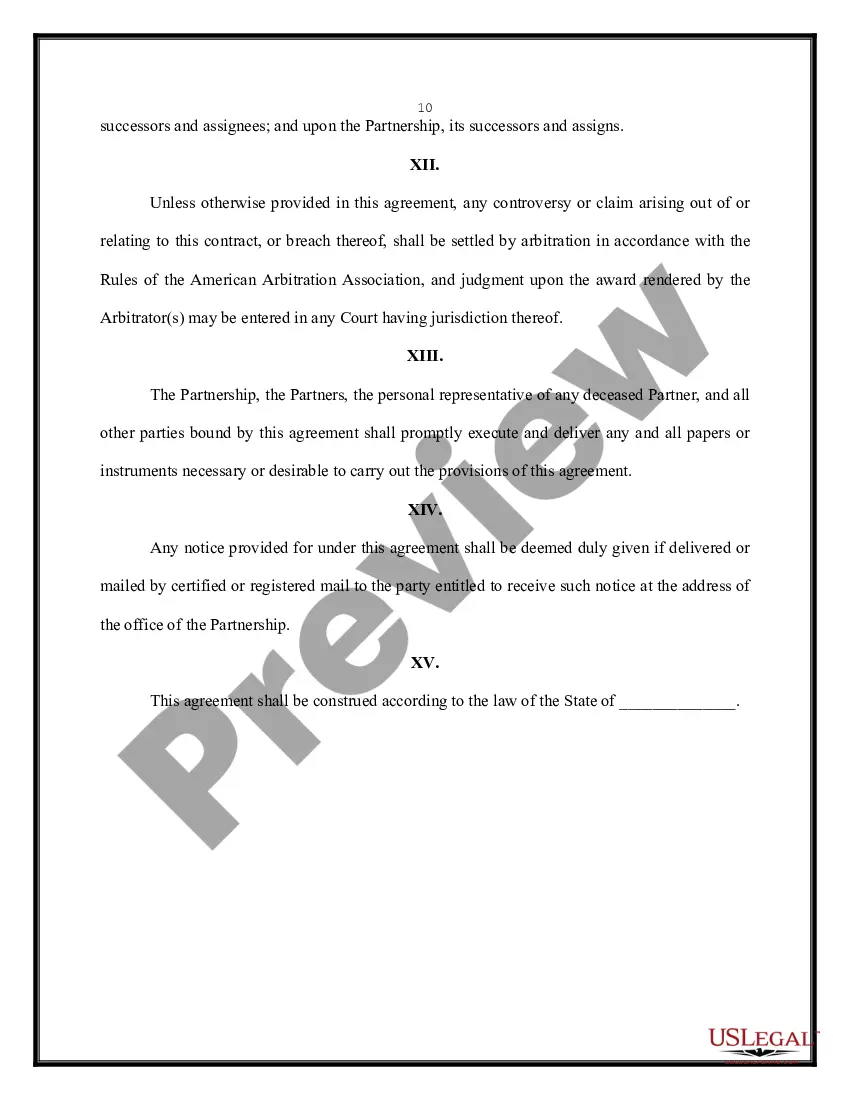
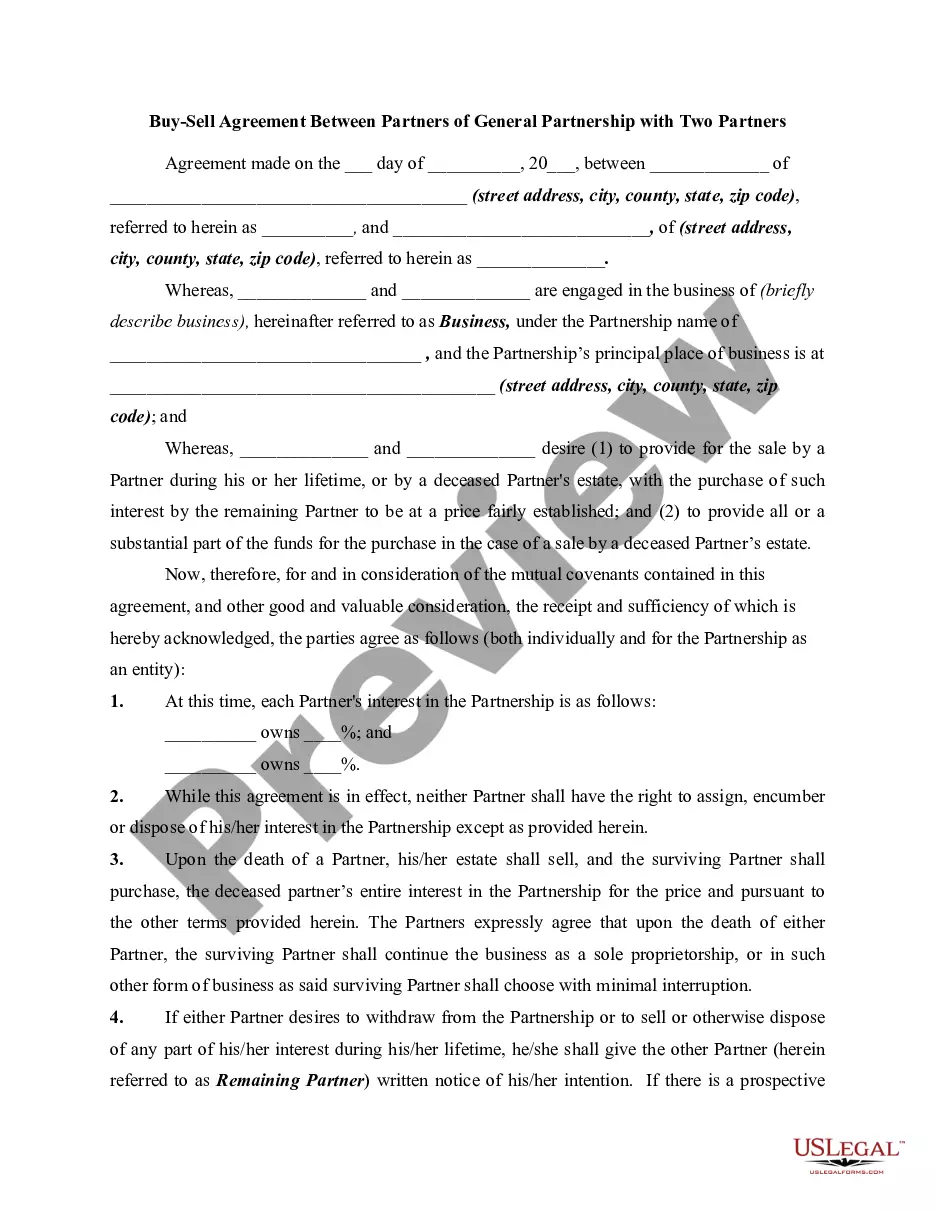
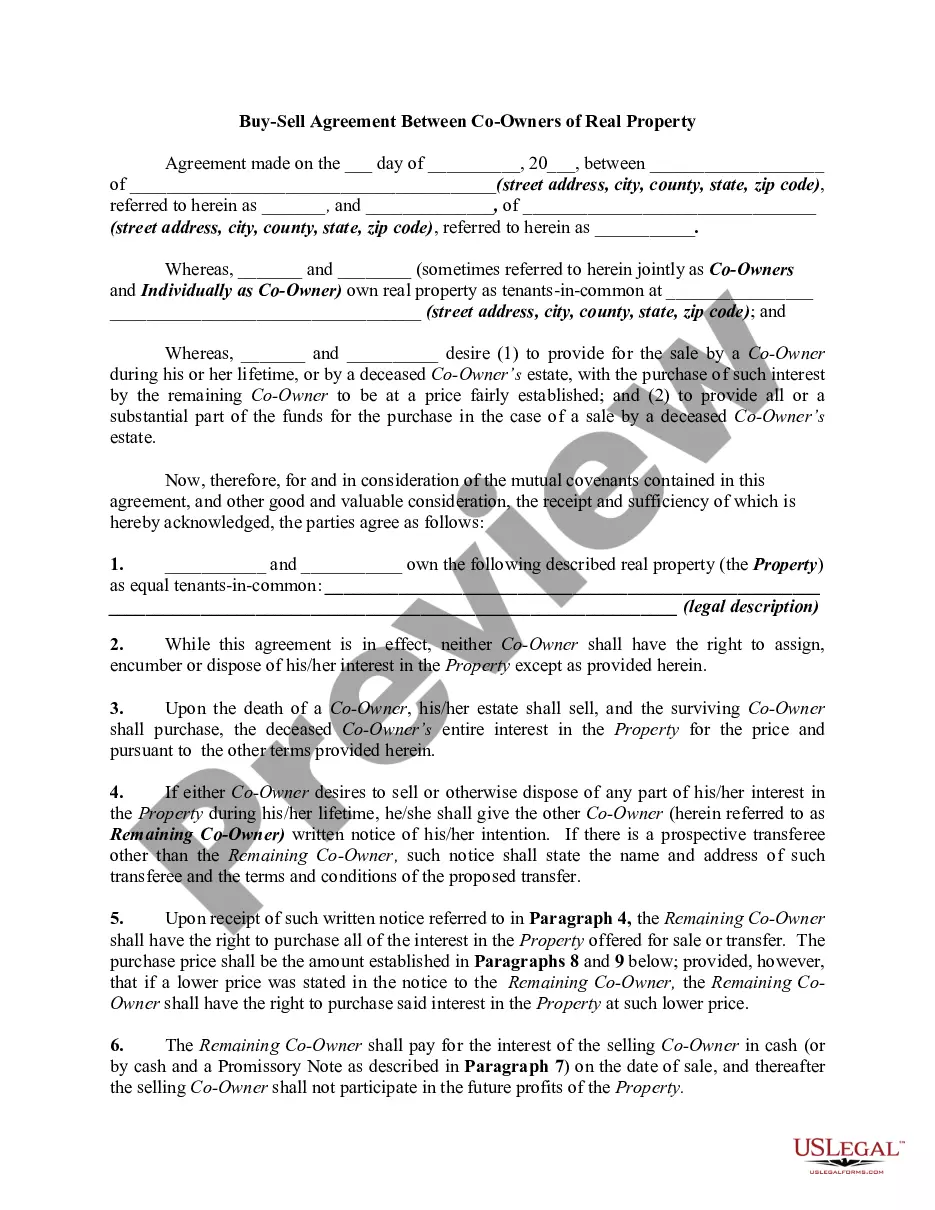
sell agreement is a written contract between two or more owners of a business, or among owners of the business and the entity.
Below are four critical topics you and your lawyer should consider when drafting your company's buy-sell agreement. Identify the Parties Involved. Agree on the Trigger Events. Agree on a Valuation Method. Set Realistic Expectations and Frequently Review the Agreement Terms.
Insurance is often a very efficient method of funding a buy-sell arrangement. If insurance is not possible, other options include planning to borrow the necessary funds and/or installment buyouts.
How do you write a contract for sale? Title the document appropriately. List all parties involved in the agreement. Detail the product or service, including all rights, warranties, and limitations. Specify the duration of the contract and any important deadlines.
What should be included in a buy-sell agreement? Any stakeholders, including partners or owners, and their current stake in the business' equity. Events that would trigger a buyout, such as death, disability, divorce, retirement, or bankruptcy. A recent business valuation.
