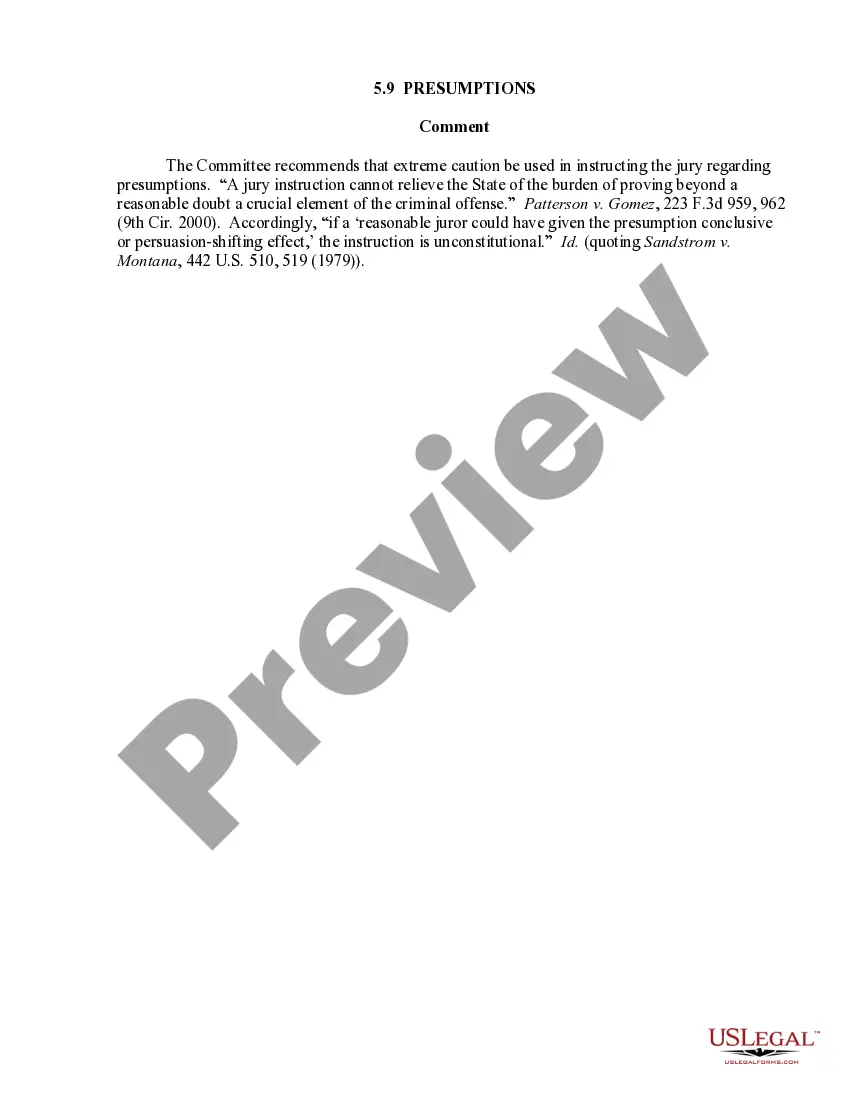
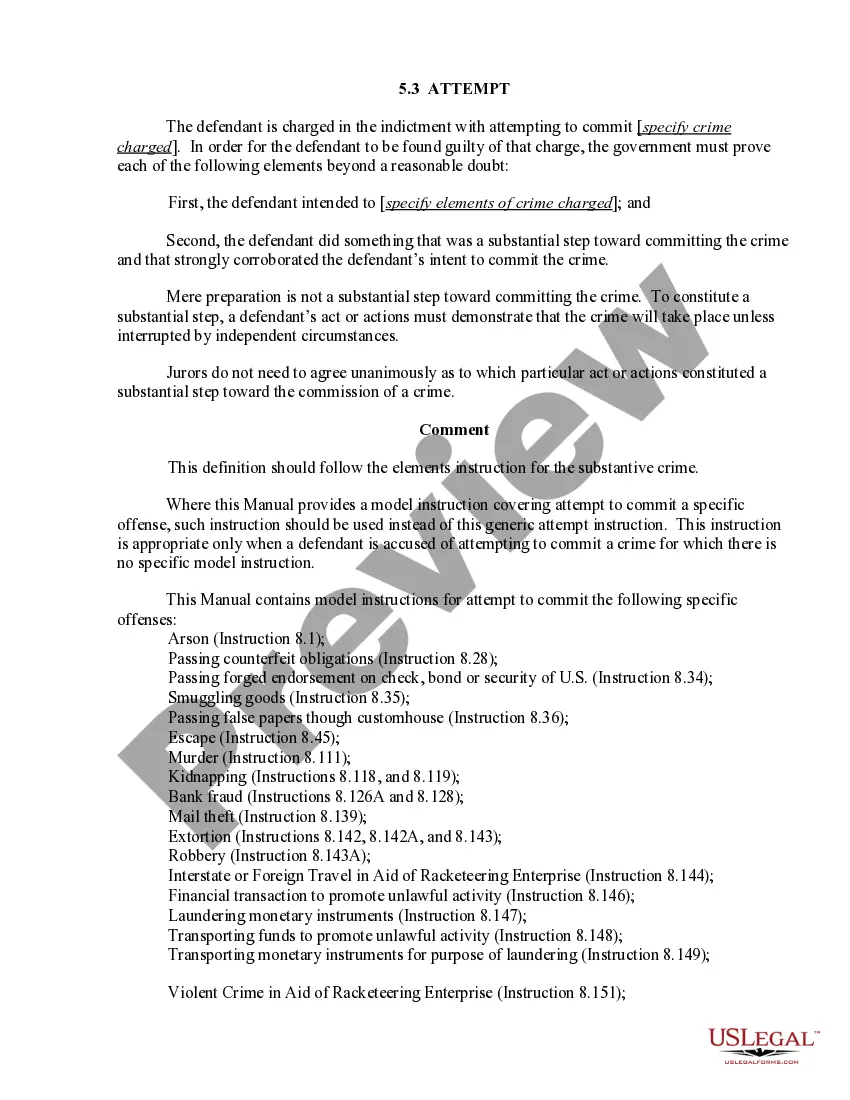
5.9 Presumptions.
Notarization requirements for this form
In most cases, this form does not require notarization. However, some jurisdictions or signing circumstances might. US Legal Forms offers online notarization powered by Notarize, accessible 24/7 for a quick, remote process.
Get your form ready online
Our built-in tools help you complete, sign, share, and store your documents in one place.
Make edits, fill in missing information, and update formatting in US Legal Forms—just like you would in MS Word.
Download a copy, print it, send it by email, or mail it via USPS—whatever works best for your next step.
Sign and collect signatures with our SignNow integration. Send to multiple recipients, set reminders, and more. Go Premium to unlock E-Sign.
If this form requires notarization, complete it online through a secure video call—no need to meet a notary in person or wait for an appointment.
We protect your documents and personal data by following strict security and privacy standards.

Make edits, fill in missing information, and update formatting in US Legal Forms—just like you would in MS Word.

Download a copy, print it, send it by email, or mail it via USPS—whatever works best for your next step.

Sign and collect signatures with our SignNow integration. Send to multiple recipients, set reminders, and more. Go Premium to unlock E-Sign.

If this form requires notarization, complete it online through a secure video call—no need to meet a notary in person or wait for an appointment.

We protect your documents and personal data by following strict security and privacy standards.
Looking for another form?
Form popularity
FAQ
In asserting the advice-of-counsel defense a defendant is not saying it did not perform the act. Rather, it asserts that it acted in good faith, and therefore without mens rea (criminal) or knowledge (civil), due to reasonable reliance on advice from counsel.
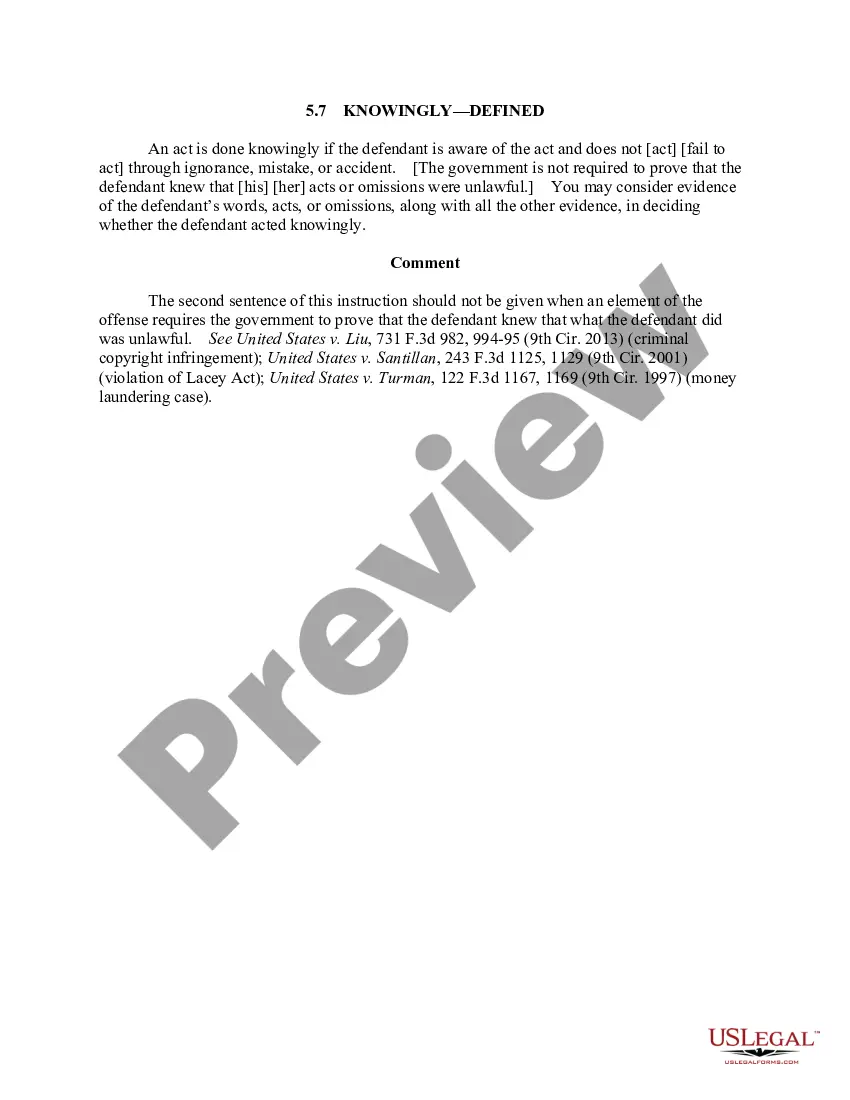
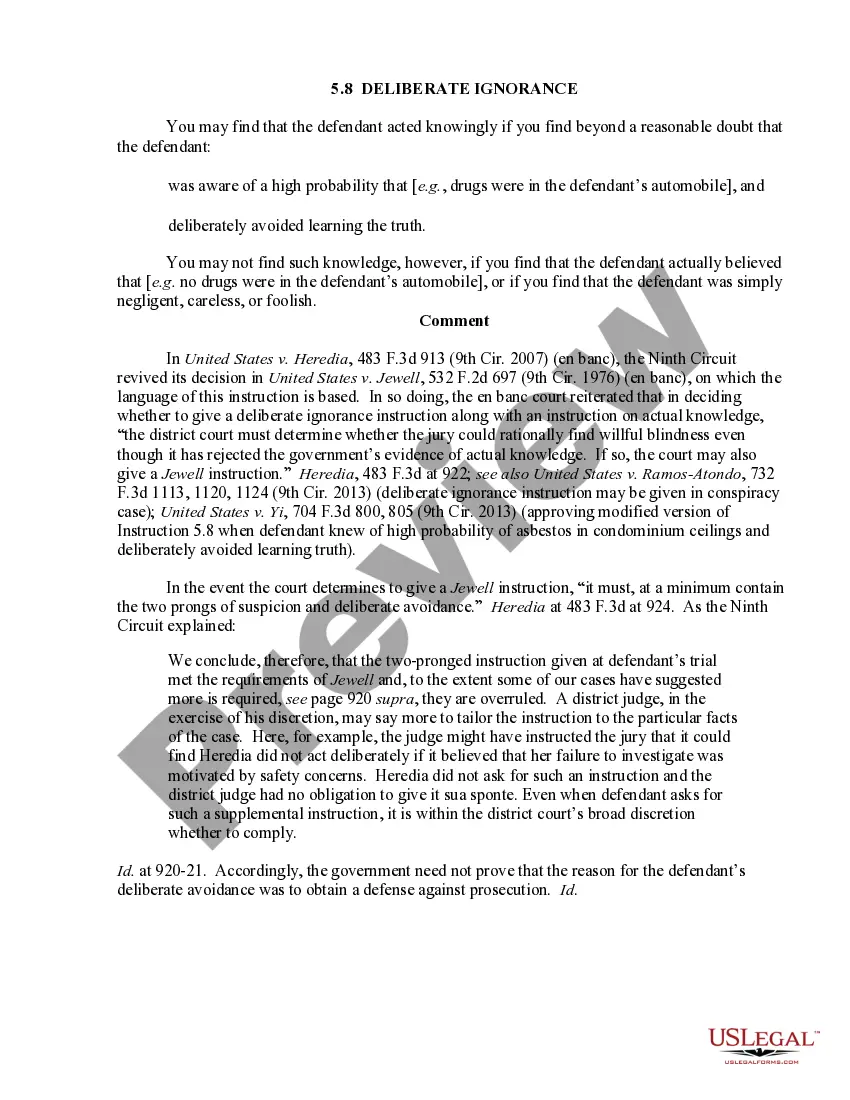
The Ninth Circuit explained: A deliberate ignorance?or "willful blindness"?instruction is only relevant if the jury rejects the government's evidence of actual knowledge. United States v. Heredia, 483 F.
The deliberate ignorance instruction should be given only when evidence has been presented showing the defendant purposely contrived to avoid learning the truth. The defendant must deny knowledge and must engage in conduct which includes deliberate acts to avoid actual knowledge of the operant fact.
Reliance on counsel is but a means of establishing "good faith" or "due care." If a problem requires the use of professional advice of a nonlegal nature, obtaining and relying on such advice should also satisfy these requirements.
The ?advice of counsel defense? is typically raised as an Affirmative Defense to refute the allegation that the insurer acted in ?bad-faith? by showing that it retained expert legal counsel to specifically address the issues regarding the coverage of a property claim or settlement of a liability action.
The advice of counsel defense is based on the substance of legal advice provided by counsel: the defendant argues that there was no fraudulent intent because counsel advised that the disclosure in question was lawful.
2d 968, 973 (9th Cir. 1987). In order to assert advice of counsel, a defendant must have made a full disclosure of all material facts to his or her attorney, received advice as to the specific course of conduct that he or she followed, and relied on the advice in good faith.