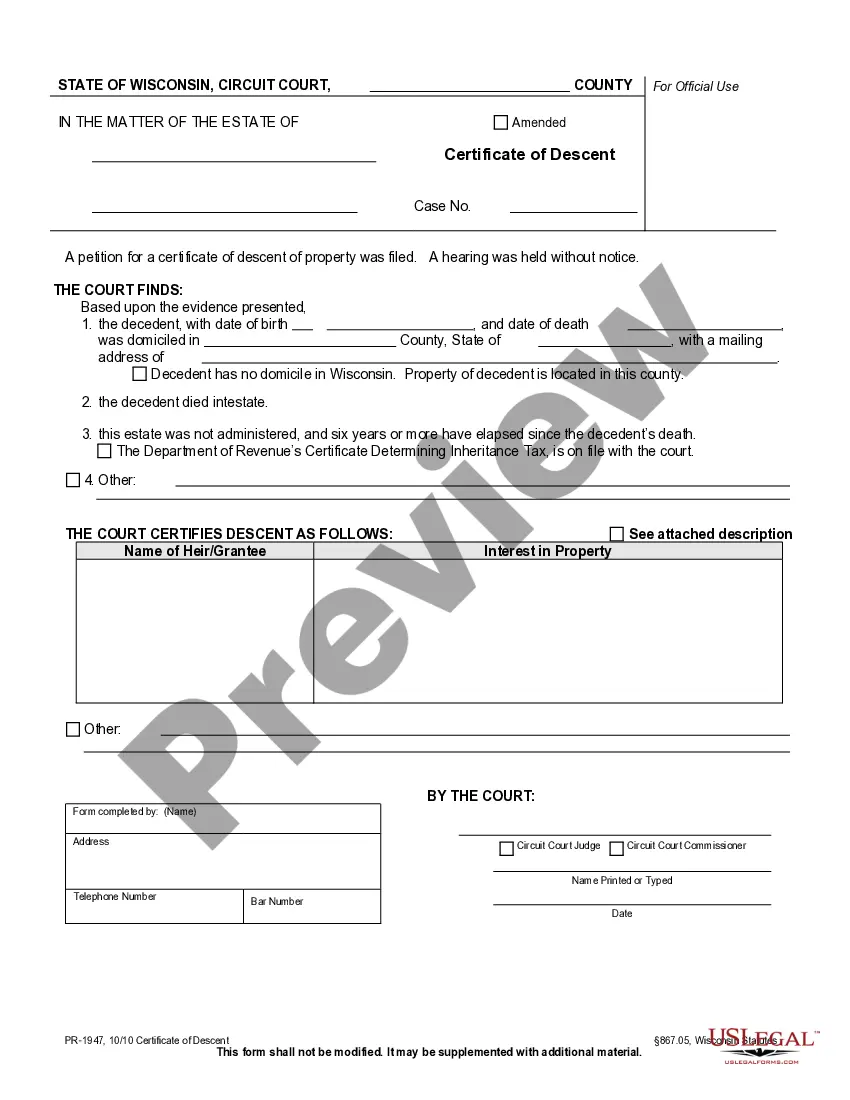
Executor Of Estate Form After Death Without Will In Franklin
Description


Get your form ready online
Our built-in tools help you complete, sign, share, and store your documents in one place.
Make edits, fill in missing information, and update formatting in US Legal Forms—just like you would in MS Word.
Download a copy, print it, send it by email, or mail it via USPS—whatever works best for your next step.
Sign and collect signatures with our SignNow integration. Send to multiple recipients, set reminders, and more. Go Premium to unlock E-Sign.
If this form requires notarization, complete it online through a secure video call—no need to meet a notary in person or wait for an appointment.
We protect your documents and personal data by following strict security and privacy standards.

Make edits, fill in missing information, and update formatting in US Legal Forms—just like you would in MS Word.

Download a copy, print it, send it by email, or mail it via USPS—whatever works best for your next step.

Sign and collect signatures with our SignNow integration. Send to multiple recipients, set reminders, and more. Go Premium to unlock E-Sign.

If this form requires notarization, complete it online through a secure video call—no need to meet a notary in person or wait for an appointment.

We protect your documents and personal data by following strict security and privacy standards.
Looking for another form?



Form popularity
FAQ
Ohio. Ohio imposes a six-month deadline from the date of death. Probate filings beyond this period may face hurdles, including court dismissal.
In Ohio, the estate must typically be valued at $100,000 or less for surviving spouses and $35,000 or less for other heirs. The affidavit streamlines the transfer of assets like bank accounts, vehicles or personal property, which might otherwise require probate court involvement.
To ensure the process is done correctly and in ance with Ohio's probate statutes, we strongly recommend hiring a probate attorney. They will oversee the process and provide valuable insight into asset appraisals, the payment of debts, and final asset distribution.
Decedent's Estate 1.0: Surviving Spouse, Children, Next of Kin, Legatees, and Devisees. 2.0: Application to Probate Will. 2.1: Waiver of Notice of Probate of Will. 2.2: Notice of Probate of Will. 2.3: Entry Admitting Will to Probate. 2.4: Certificate of Service of Notice of Probate of Will. 3.0: Appointment of Appraiser.
Inventory the Assets Bank accounts. Retirement accounts. Stocks and bonds. Some life insurance policies. Real estate. Motor vehicles, such as cars, motorcycles, and RVs. Personal property, such as jewelry and household furnishings.
Under Ohio law, if you are the beneficiary of a will, and you know of the will's existence and have the power to do so, you are obligated to have it submitted for probate within a year.
Given the magnitude of the responsibilities and the intimacy of the role, you may want to name a close friend or relative as executor, someone who fully understands and respects your wishes, as well as those of your beneficiaries, and who might handle your sentimental heirlooms and other property more sensitively than ...
Tips for choosing your executor Objectivity. It's important to choose someone who can be diplomatic and handle family dynamics, particularly when you're transferring wealth from one generation to another, says Woo. Location. Flexible schedule. Age and health.
Who are the most common choices for executors? Family members- often people choose a spouse, adult child, or other close relative. Close Friends- a close and trusted friend can be a good choice, provided they possess the necessary qualities and are willing to take on the responsibility.
