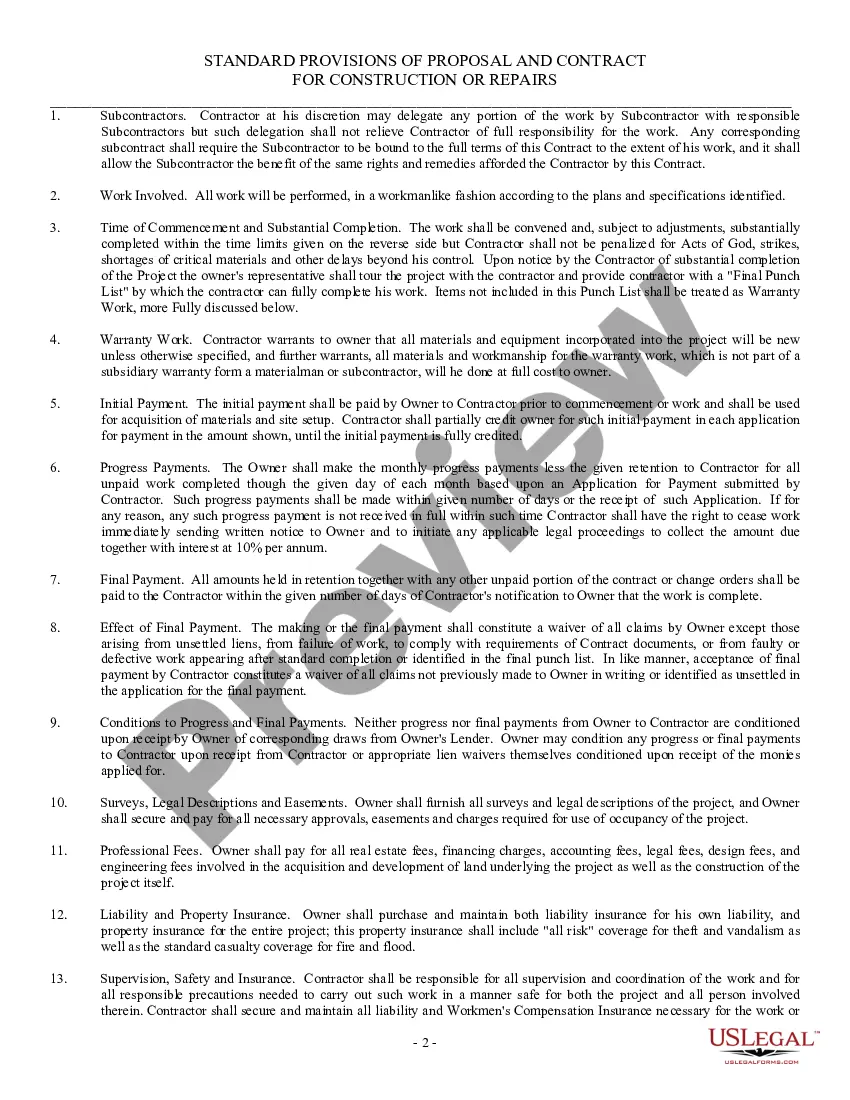
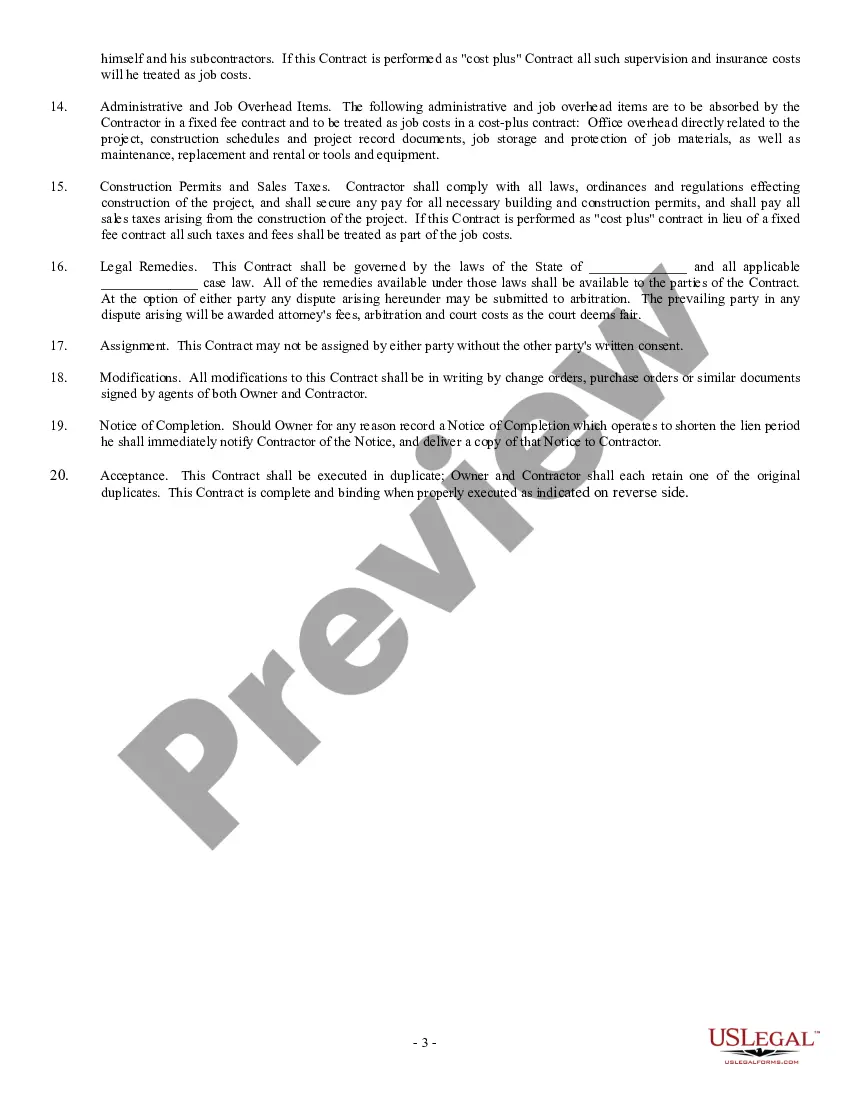
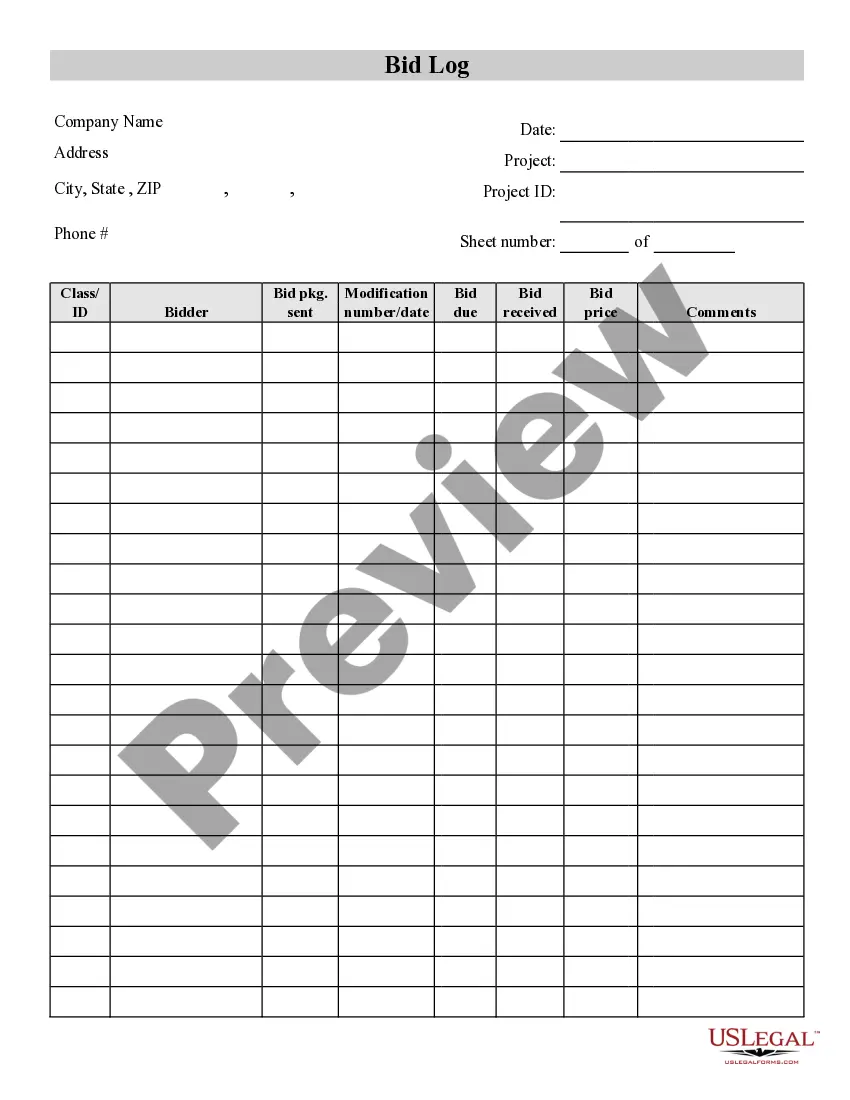
Bid Proposal Contract With Client In Maricopa
Description


Get your form ready online
Our built-in tools help you complete, sign, share, and store your documents in one place.
Make edits, fill in missing information, and update formatting in US Legal Forms—just like you would in MS Word.
Download a copy, print it, send it by email, or mail it via USPS—whatever works best for your next step.
Sign and collect signatures with our SignNow integration. Send to multiple recipients, set reminders, and more. Go Premium to unlock E-Sign.
If this form requires notarization, complete it online through a secure video call—no need to meet a notary in person or wait for an appointment.
We protect your documents and personal data by following strict security and privacy standards.

Make edits, fill in missing information, and update formatting in US Legal Forms—just like you would in MS Word.

Download a copy, print it, send it by email, or mail it via USPS—whatever works best for your next step.

Sign and collect signatures with our SignNow integration. Send to multiple recipients, set reminders, and more. Go Premium to unlock E-Sign.

If this form requires notarization, complete it online through a secure video call—no need to meet a notary in person or wait for an appointment.

We protect your documents and personal data by following strict security and privacy standards.
Looking for another form?










Form popularity
FAQ
Every project requires bidders to submit supporting documents, which vary with the project type. Review the bid package to see which documents the client requests. In most cases, they'd request financial documents to prove the bidder's liquidity. They'd also request licenses, certificates, and insurance documents.
Bid solicitation. Bid submission. Bid selection. Contract formation. Project delivery.
How to write a bid weigh up the decision. Different organisations have different priorities, so this process will be different for everyone. understand the buying organisation. answer the question and provide relevant examples. use plain English and simple formatting. get someone to sense check. ask for feedback.
A bid submission is a response by a bidder to an invitation to bid (ITB) or request for proposal (RFP) made by a client. A client first creates a bid package highlighting the project's scope, qualifications, and deadlines to solicit bids from qualified bidders.
Including key elements like an executive summary, company profile, customer testimonials, scope of work, project methodology, timeline, budget overview, and terms and conditions ensure that bid proposals are thorough, professional, and persuasive.
Your bid/proposal needs to show how 'in tune' you are with the customer. It's essential to plan your bid/proposal before you write it. Make sure you understand your organisation's win themes, and the features, benefits and discriminators of your solution.
The RFP process allows more flexibility than the sealed bid process in the evaluation process. The evaluation committee first evaluates proposals for compliance to the specifications and requirements in the RFP and creates a list of those firms whose proposals meet mandatory requirements.
It includes a method for evaluating and scoring proposals to ensure a fair and competitive outcome, as well as a competitively priced supply of the products or services. Before preparing the RFP or Tender, the procurement department will take proactive steps to position themselves for success.
How to write a bid weigh up the decision. Different organisations have different priorities, so this process will be different for everyone. understand the buying organisation. answer the question and provide relevant examples. use plain English and simple formatting. get someone to sense check. ask for feedback.