Unsecured Promissory Note With Balloon Payment In Harris
Description

Get your form ready online
Our built-in tools help you complete, sign, share, and store your documents in one place.
Make edits, fill in missing information, and update formatting in US Legal Forms—just like you would in MS Word.
Download a copy, print it, send it by email, or mail it via USPS—whatever works best for your next step.
Sign and collect signatures with our SignNow integration. Send to multiple recipients, set reminders, and more. Go Premium to unlock E-Sign.
If this form requires notarization, complete it online through a secure video call—no need to meet a notary in person or wait for an appointment.
We protect your documents and personal data by following strict security and privacy standards.

Make edits, fill in missing information, and update formatting in US Legal Forms—just like you would in MS Word.

Download a copy, print it, send it by email, or mail it via USPS—whatever works best for your next step.

Sign and collect signatures with our SignNow integration. Send to multiple recipients, set reminders, and more. Go Premium to unlock E-Sign.

If this form requires notarization, complete it online through a secure video call—no need to meet a notary in person or wait for an appointment.

We protect your documents and personal data by following strict security and privacy standards.
Looking for another form?







Form popularity
FAQ
Notes payable appear as liabilities on a balance sheet. Additionally, they are classified as current liabilities when the amounts are due within a year. When a note's maturity is more than one year in the future, it is classified with long-term liabilities.
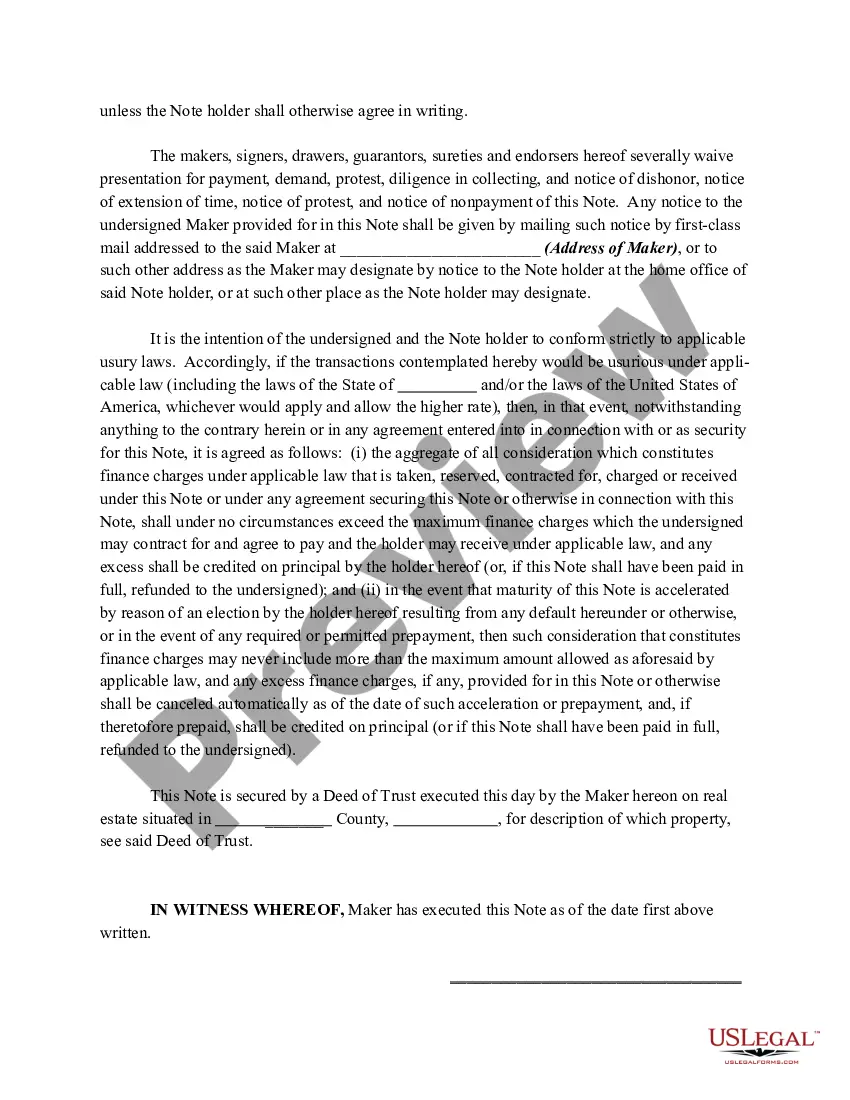
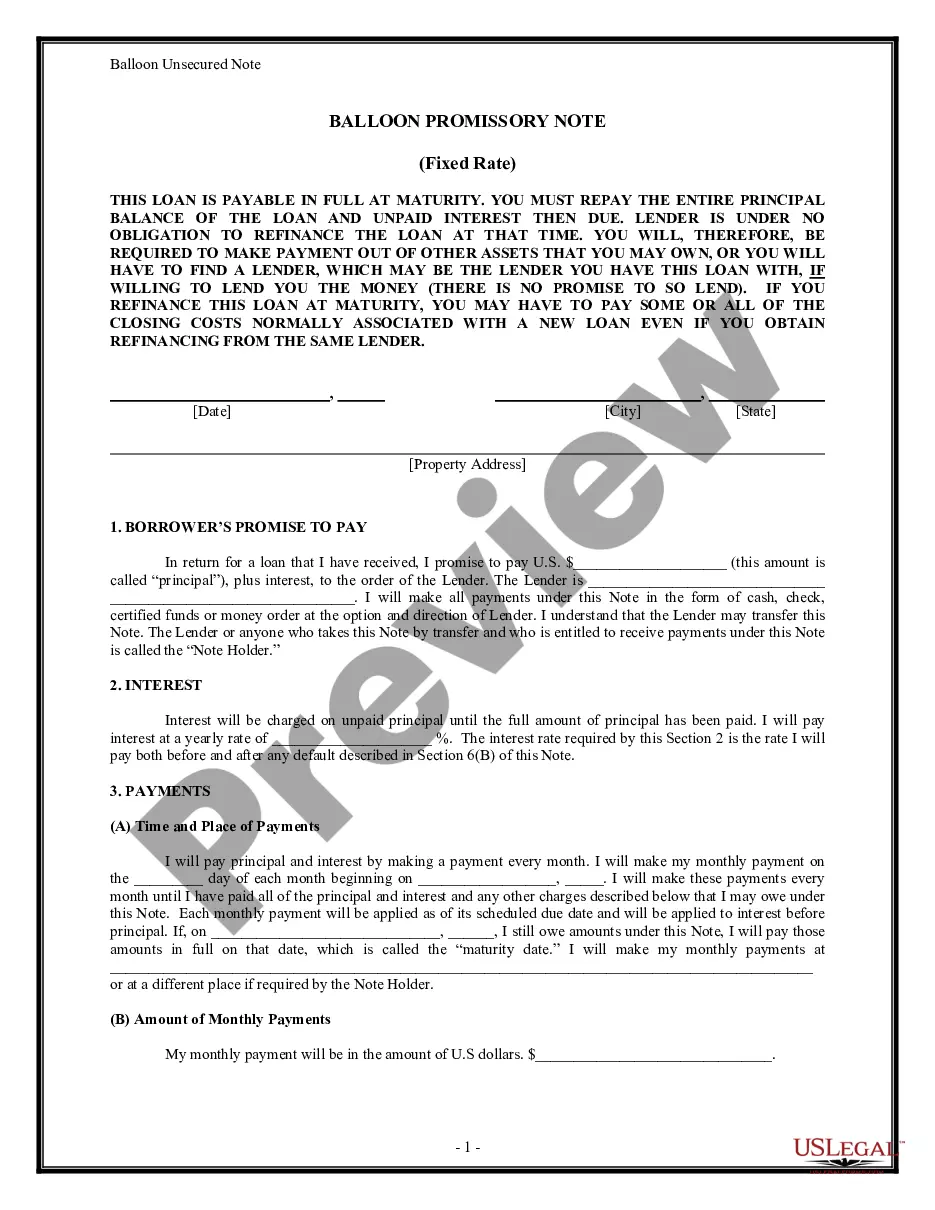
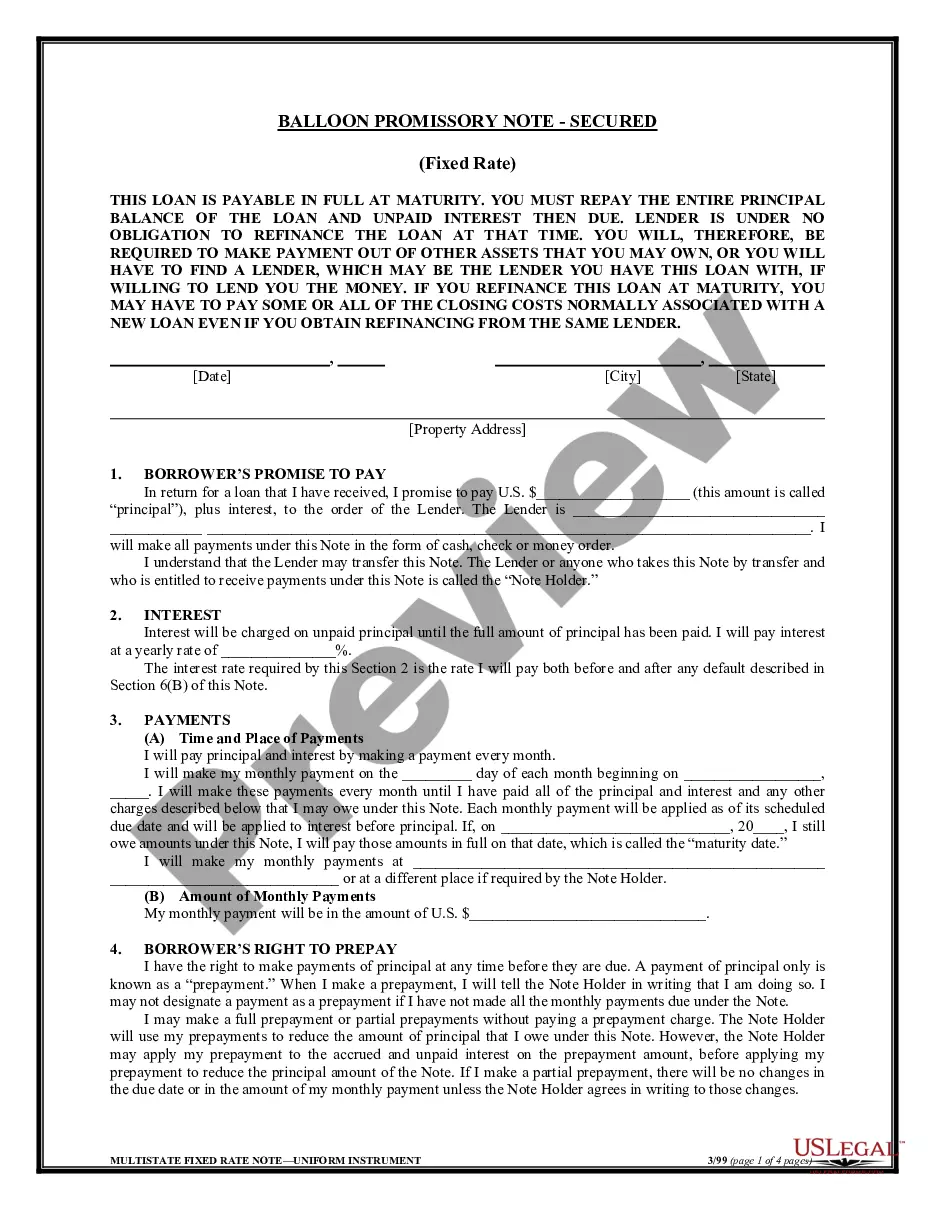
Promissory notes with balloon payments are a financing option you may be considering for your business. These types of loans may be secured by collateral or not, but they always end their repayment schedule with a big payment, known as the balloon payment.
Borrowers: Generally, the payment of interest on a promissory note is not taxable to the borrower. Yet, it often qualifies as a tax deductible expense, particularly in business contexts or qualified personal scenarios like mortgage interest deductions.
The purpose of a balloon is to make your monthly payments more affordable, taking pressure off your budget.
Promissory notes with balloon payments are a financing option you may be considering for your business. These types of loans may be secured by collateral or not, but they always end their repayment schedule with a big payment, known as the balloon payment.
Disadvantages of a Balloon Payment Usage Restrictions. Car finance with a final balloon payment typically requires usage restrictions. Not Ideal for Those With Lower Credit Scores. Not Optional for Lease Agreements. Expensive Final Payment.