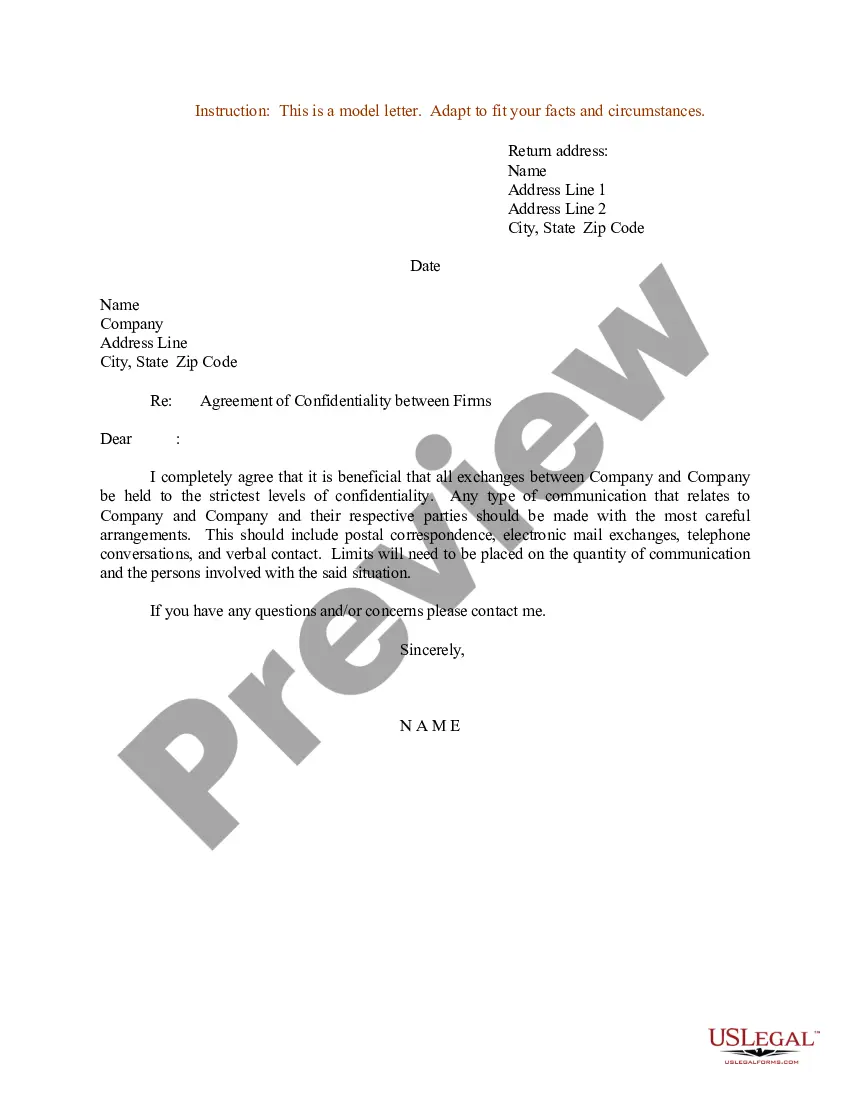
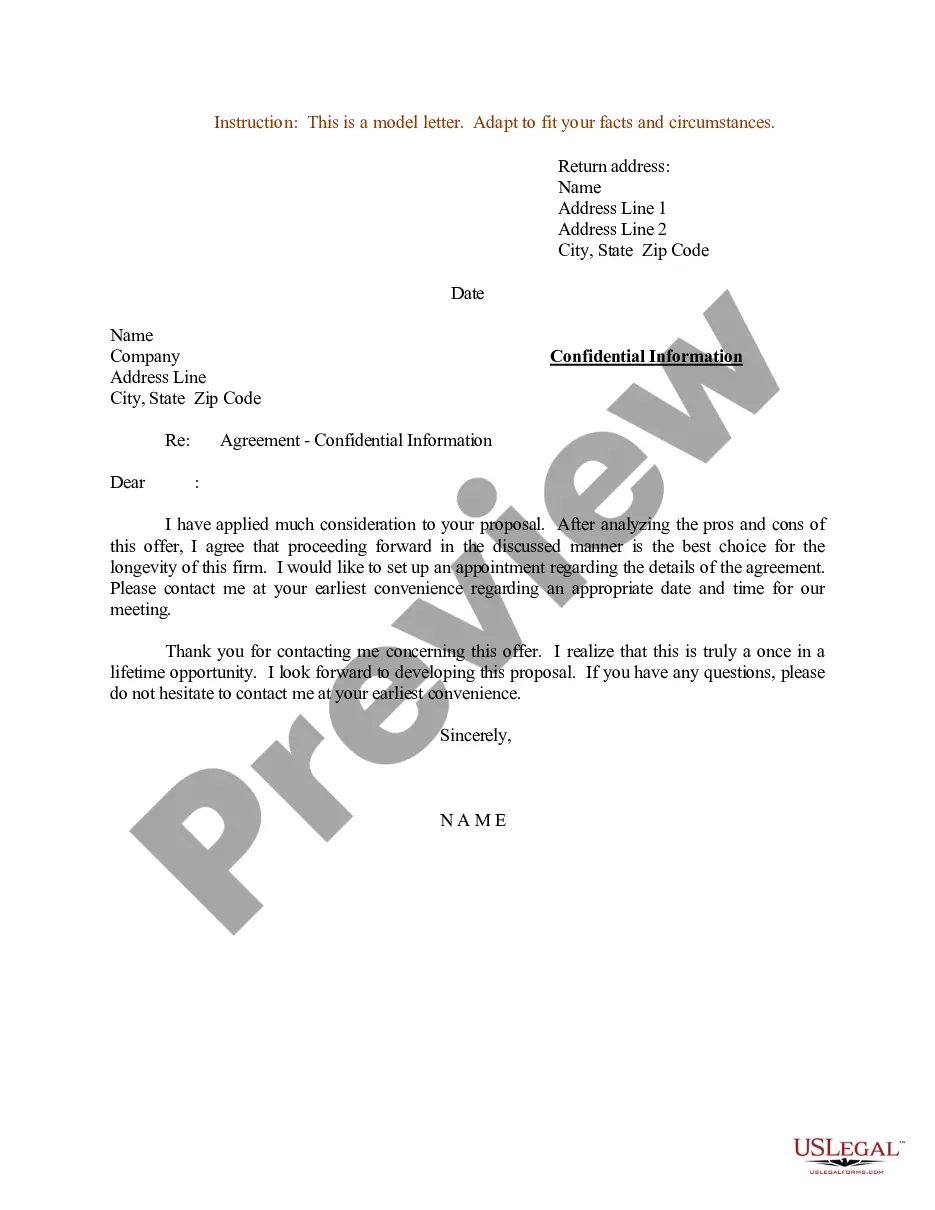
Agreement Confidentiality Between With It Company In Florida
Description

Get your form ready online
Our built-in tools help you complete, sign, share, and store your documents in one place.
Make edits, fill in missing information, and update formatting in US Legal Forms—just like you would in MS Word.
Download a copy, print it, send it by email, or mail it via USPS—whatever works best for your next step.
Sign and collect signatures with our SignNow integration. Send to multiple recipients, set reminders, and more. Go Premium to unlock E-Sign.
If this form requires notarization, complete it online through a secure video call—no need to meet a notary in person or wait for an appointment.
We protect your documents and personal data by following strict security and privacy standards.

Make edits, fill in missing information, and update formatting in US Legal Forms—just like you would in MS Word.

Download a copy, print it, send it by email, or mail it via USPS—whatever works best for your next step.

Sign and collect signatures with our SignNow integration. Send to multiple recipients, set reminders, and more. Go Premium to unlock E-Sign.

If this form requires notarization, complete it online through a secure video call—no need to meet a notary in person or wait for an appointment.

We protect your documents and personal data by following strict security and privacy standards.
Looking for another form?








Form popularity
FAQ
An NDA acknowledges a confidential relationship between two or more parties and protects the information they share from disclosure to outsiders. The NDA is common before discussions between businesses about potential joint ventures.
NDAs are enforceable when they are signed — if they are properly drafted and executed. NDAs are enforceable once signed, provided they have been drafted and executed properly. Unilateral NDAs need only the signature of the receiving party, whereas mutual non-disclosure agreements need the signatures of both parties.
By law, a nondisclosure contract must be reasonable and necessary for protecting a legitimate business interest. It must also be limited in scope and duration, in terms of timing, geography, and other relevant factors. While not required, you should put any confidentiality agreement in writing.
Special Considerations on Florida Confidentiality Agreements By law, a nondisclosure contract must be reasonable and necessary for protecting a legitimate business interest. It must also be limited in scope and duration, in terms of timing, geography, and other relevant factors.
The confidentiality rule applies not merely to matters communicated in confidence by the client but also to all information relating to the representation, whatever its source. A lawyer may not disclose confidential information except as authorized or required by the Rules Regulating The Florida Bar or by law.
The principal statute governing NDAs in Florida is the Florida Uniform Trade Secrets Act (FUTSA), codified in Chapter 688 of the Florida Statutes. FUTSA provides legal remedies for misappropriating trade secrets, including unauthorized disclosure of confidential information protected by an NDA.
Non-disclosure agreements help employers by protecting valuable, sensitive business information. Workers may need access to such information to do their jobs, and NDAs make it clear that they can use such information for work purposes but cannot share it outside the organization.
A confidentiality agreement should include the names and addresses of the parties to the contract. Consider also including: Reason for the agreement: Explain why you're sharing this information. The information disclosed: Be specific about the subject matter and what exactly is included in the agreement.