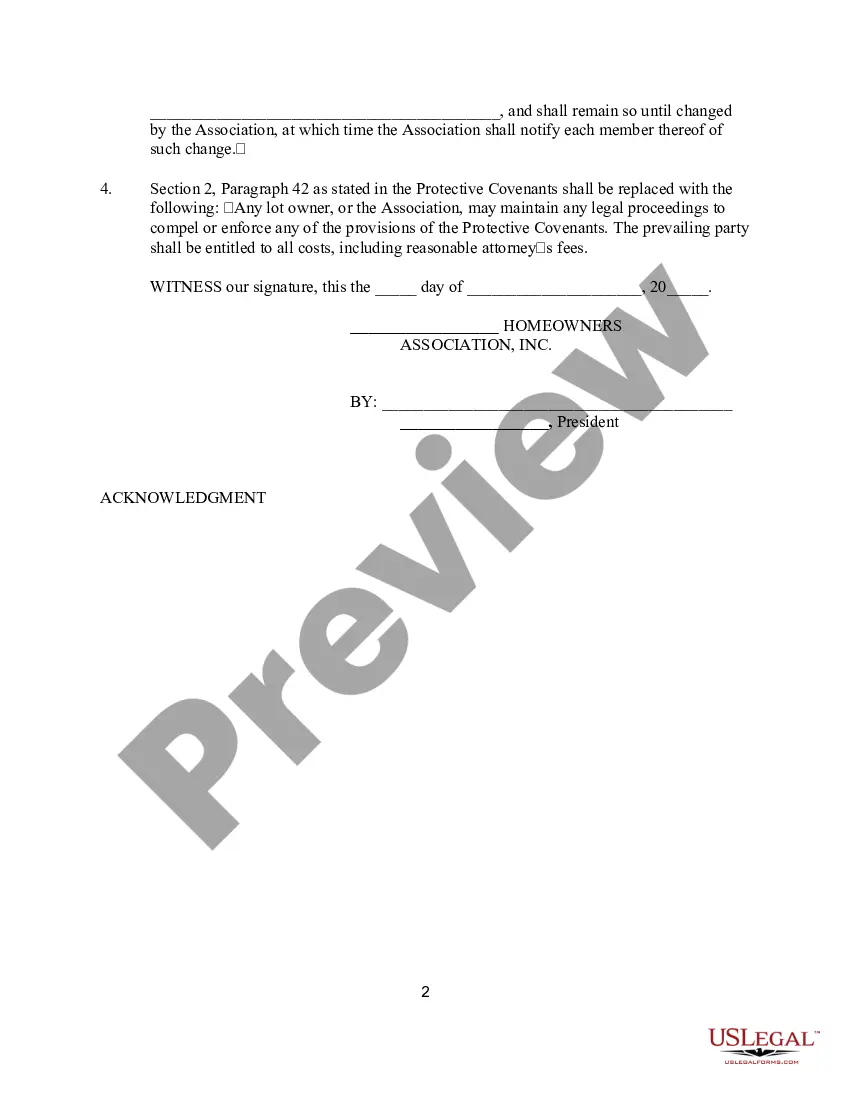
A Protective Covenant With Water In Virginia
Description

Get your form ready online
Our built-in tools help you complete, sign, share, and store your documents in one place.
Make edits, fill in missing information, and update formatting in US Legal Forms—just like you would in MS Word.
Download a copy, print it, send it by email, or mail it via USPS—whatever works best for your next step.
Sign and collect signatures with our SignNow integration. Send to multiple recipients, set reminders, and more. Go Premium to unlock E-Sign.
If this form requires notarization, complete it online through a secure video call—no need to meet a notary in person or wait for an appointment.
We protect your documents and personal data by following strict security and privacy standards.

Make edits, fill in missing information, and update formatting in US Legal Forms—just like you would in MS Word.

Download a copy, print it, send it by email, or mail it via USPS—whatever works best for your next step.

Sign and collect signatures with our SignNow integration. Send to multiple recipients, set reminders, and more. Go Premium to unlock E-Sign.

If this form requires notarization, complete it online through a secure video call—no need to meet a notary in person or wait for an appointment.

We protect your documents and personal data by following strict security and privacy standards.
Looking for another form?







Form popularity
FAQ
Restrictive Covenants, Explained This restricts how homeowners can manage and modify their land. Examples include restrictions on fence options, the type of animals allowed and the use of outbuildings, such as sheds.
In Virginia, property owners with land adjacent to a river or lake (riparian landowners) are entitled to withdraw water from the water body. The water must be used on the riparian property; it cannot be exported to land away from the river's edge and owned by different people.
Local & State: Tidal Wetlands Act Virginia's Wetlands Act, initially adopted in 1972, recognizes the environmental value of tidal wetlands, establishes a permitting system for their protection, and authorizes localities to establish a local wetlands board and adopt a wetlands ordinance.
Restrictive covenants in employment agreements (like non-compete and non-soliciation provisions) are disfavored in Virginia and only enforced when narrowly crafted so that the restrictions are no broader than necessary to protect the employer's legitimate business interests.
It is the policy of the Commonwealth of Virginia and the purpose of this law to: (1) protect existing high quality state waters and restore all other state waters to such condition of quality that any such waters will permit all reasonable public uses and will support the propagation and growth of all aquatic life, ...
Employers often include in employment contracts what are referred to as “restrictive covenants.” This term is generally used to describe two main types of contractual clause: the non-solicitation clause and the non-compete clause.
Restrictive covenants in employment agreements (like non-compete and non-soliciation provisions) are disfavored in Virginia and only enforced when narrowly crafted so that the restrictions are no broader than necessary to protect the employer's legitimate business interests.
Generally speaking, deed restrictions do not expire unless there is a specified, written expiration date. If there is a specific expiration date, it is possible for an HOA to vote to extend the time limit on the restriction.
7 ways to protect water resources in honor of Earth Day Stop litter from polluting waterways. Help keep storm drains clear. Use waterwise plants on your property. Visit Utah's wetlands. Shift toward drought resilience. Use and dispose of harmful materials properly. Raise water consciousness by sharing the message.
Tips for Conserving Water Repair all leaky faucets, especially hot water faucets, as quickly as possible. a flow restrictor in your shower. Be sure your dishwasher is full but not overloaded when you turn it on. Don't let the water run while you shave. Use your washing machine only when you have a full load.