Make A Resolution Or Take A Resolution In Pennsylvania
Description



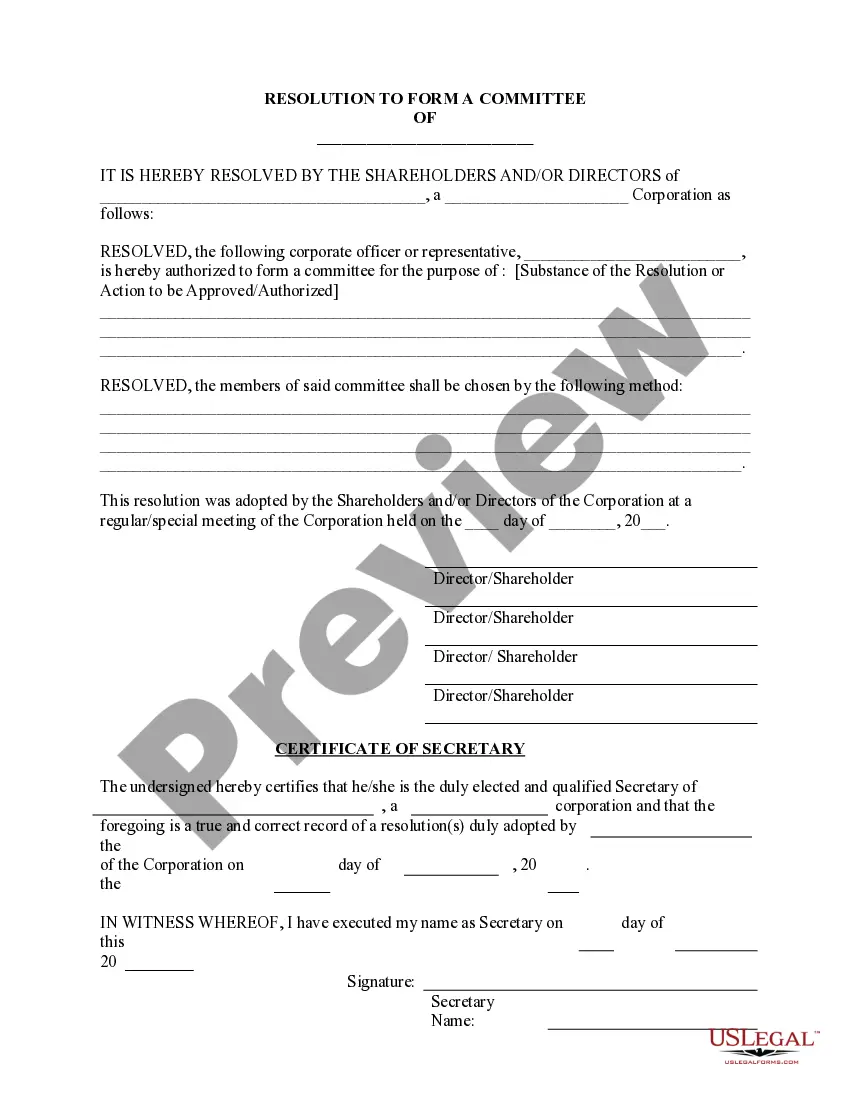
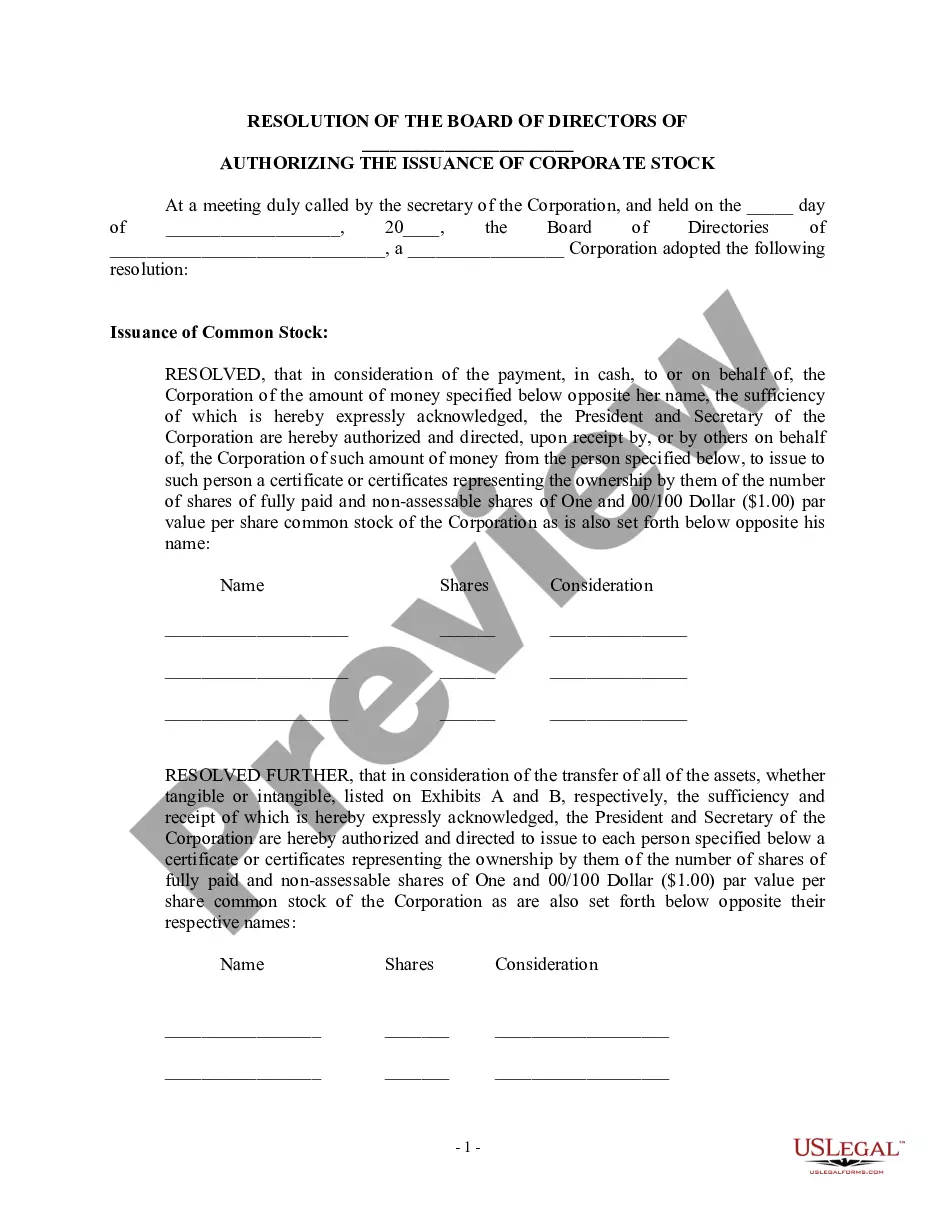
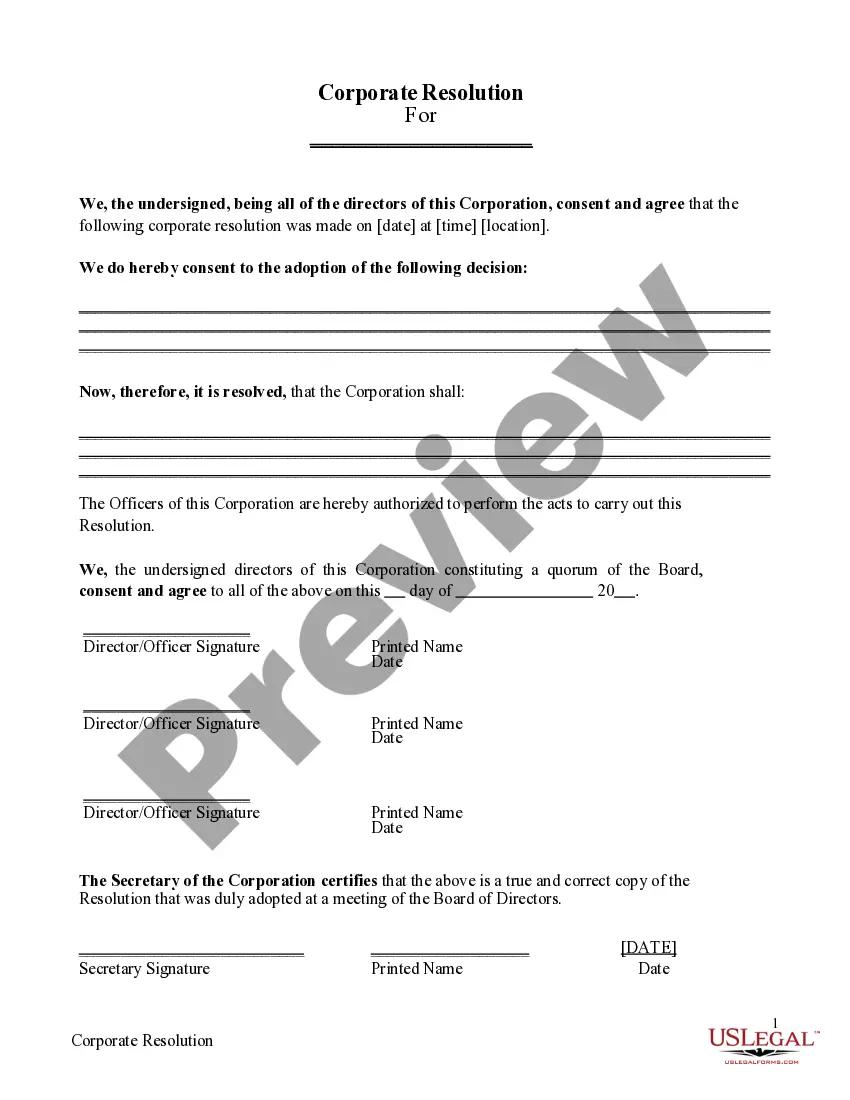
Get your form ready online
Our built-in tools help you complete, sign, share, and store your documents in one place.
Make edits, fill in missing information, and update formatting in US Legal Forms—just like you would in MS Word.
Download a copy, print it, send it by email, or mail it via USPS—whatever works best for your next step.
Sign and collect signatures with our SignNow integration. Send to multiple recipients, set reminders, and more. Go Premium to unlock E-Sign.
If this form requires notarization, complete it online through a secure video call—no need to meet a notary in person or wait for an appointment.
We protect your documents and personal data by following strict security and privacy standards.

Make edits, fill in missing information, and update formatting in US Legal Forms—just like you would in MS Word.

Download a copy, print it, send it by email, or mail it via USPS—whatever works best for your next step.

Sign and collect signatures with our SignNow integration. Send to multiple recipients, set reminders, and more. Go Premium to unlock E-Sign.

If this form requires notarization, complete it online through a secure video call—no need to meet a notary in person or wait for an appointment.

We protect your documents and personal data by following strict security and privacy standards.
Looking for another form?








Form popularity
FAQ
BILLS CONFINED TO ONE SUBJECT No bill shall be passed containing more than one subject, which shall be clearly expressed in its title, except a general appropriation bill or a bill codifying or compiling the law or a part thereof. (Constitution, Article III, Section 3).
Tips for Writing and Passing an Effective Resolution Build a Broad Coalition. Study legislative processes in your town or city. Focus on using mandatory language (“shall” “must” “will”, etc.) ... Be textually accurate. Allow for revisions. Maintain your community network.
A resolution is a formal statement of opinion or a decision to take an action. In judicial proceedings, “resolution” means a judgment or decision of the court.
The majority of ordinances deal with maintaining public health and safety, zoning, public morals, behavior and general welfare. Examples of ordinances would be those related to noise, snow removal, pet restrictions, and building and zoning regulations, to name a few.
An ordinance is a local law of general or permanent nature. An ordinance stays on the books until it is amended or repealed by another ordinance enacted by a later board or council. A resolution is an official statement of the will of the governing body.
Non-binding The resolution is often used to express the body's approval or disapproval of something which they cannot otherwise vote on, due to the matter being handled by another jurisdiction, or being protected by a constitution.
An ordinance is a law created by a local government, such as a city council or county board of supervisors. Local governments can only create laws on matters that the state government says they can. Ordinances can cover a variety of topics, including things like zoning and rental building requirements.
The title of the resolution must appropriately reflect the intent. Resolutions begin with "Whereas" statements, which provides the basic facts and reasons for the resolution, and conclude with "Resolved" statements which, identifies the specific proposal for the requestor's course of action.
Resolution noun (DECISION) a promise to yourself to do or to not do something: + to infinitive I made a resolution to give up chocolate. The resolution calls for a durable peace settlement. The resolution was carried by 210 votes to 160.
The body of a resolution is written as a long sentence, and starts with the name of the committee, followed by a comma. The remainder of the body of a resolution is divided into two parts: preambulatory clauses and operative clauses.
