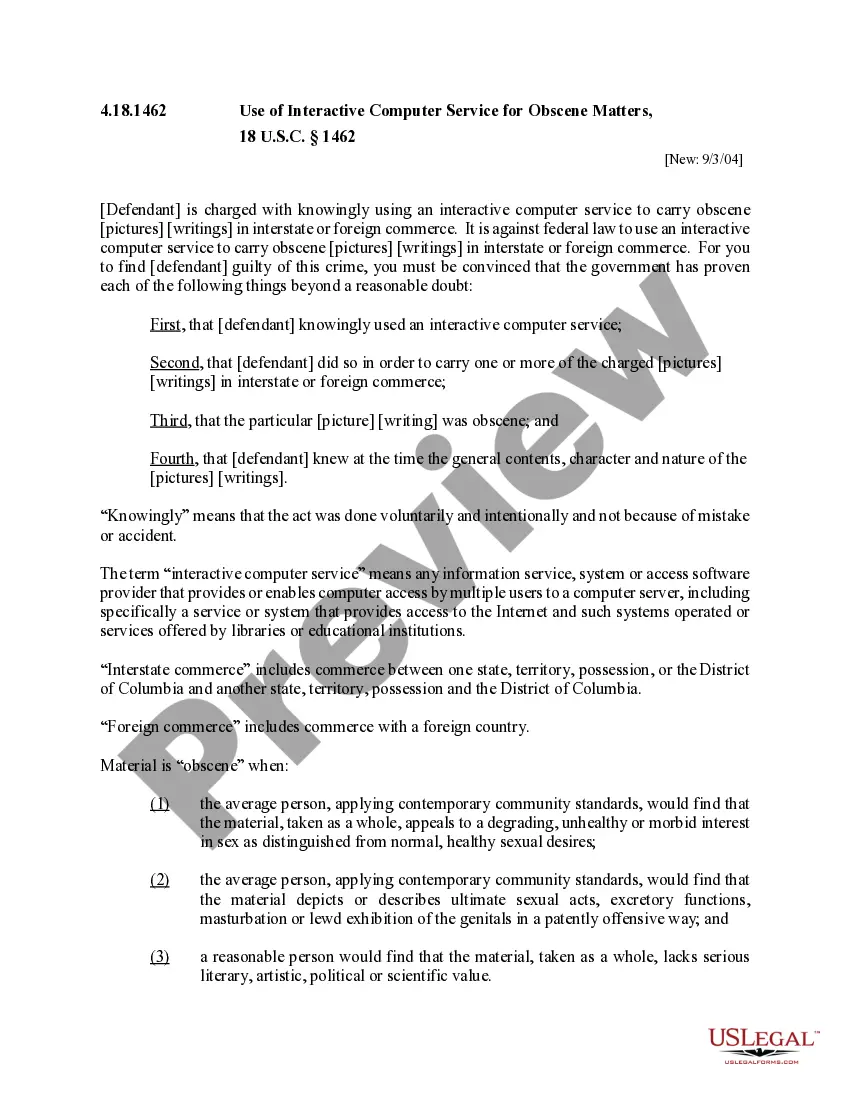
Transporting Aliens into or Within the United States
About this form
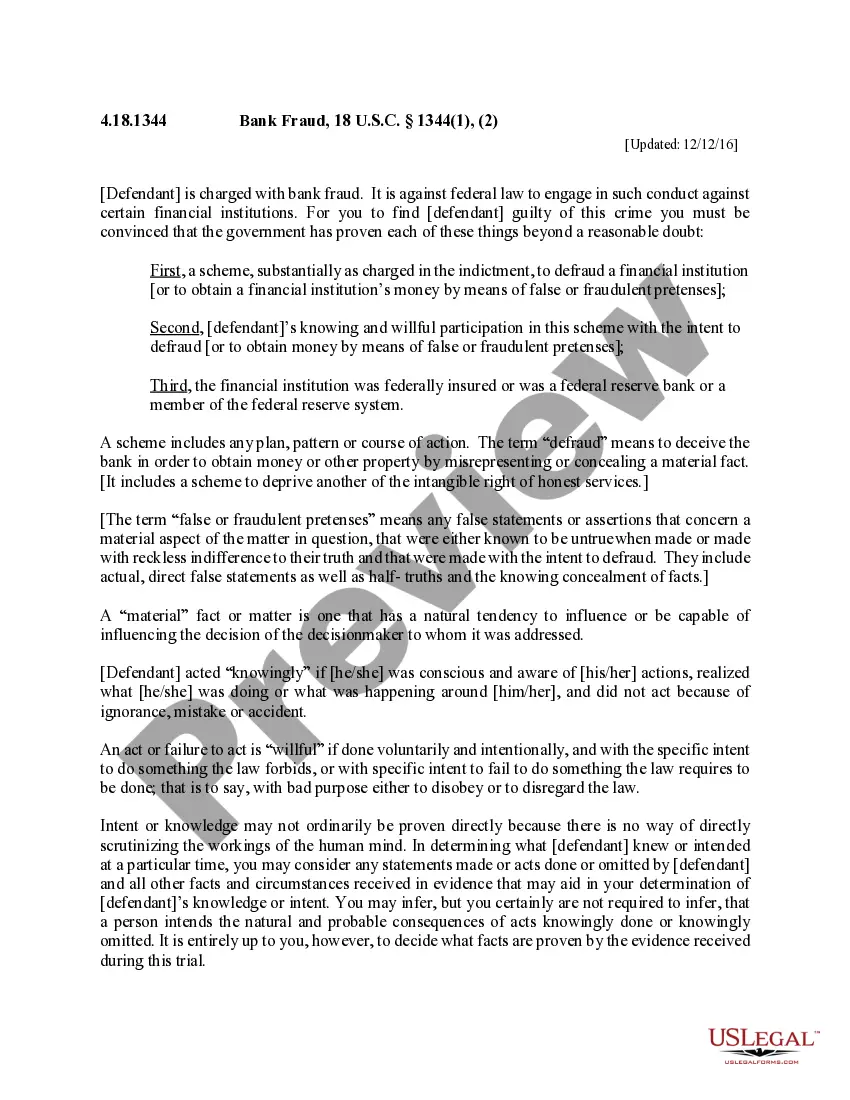
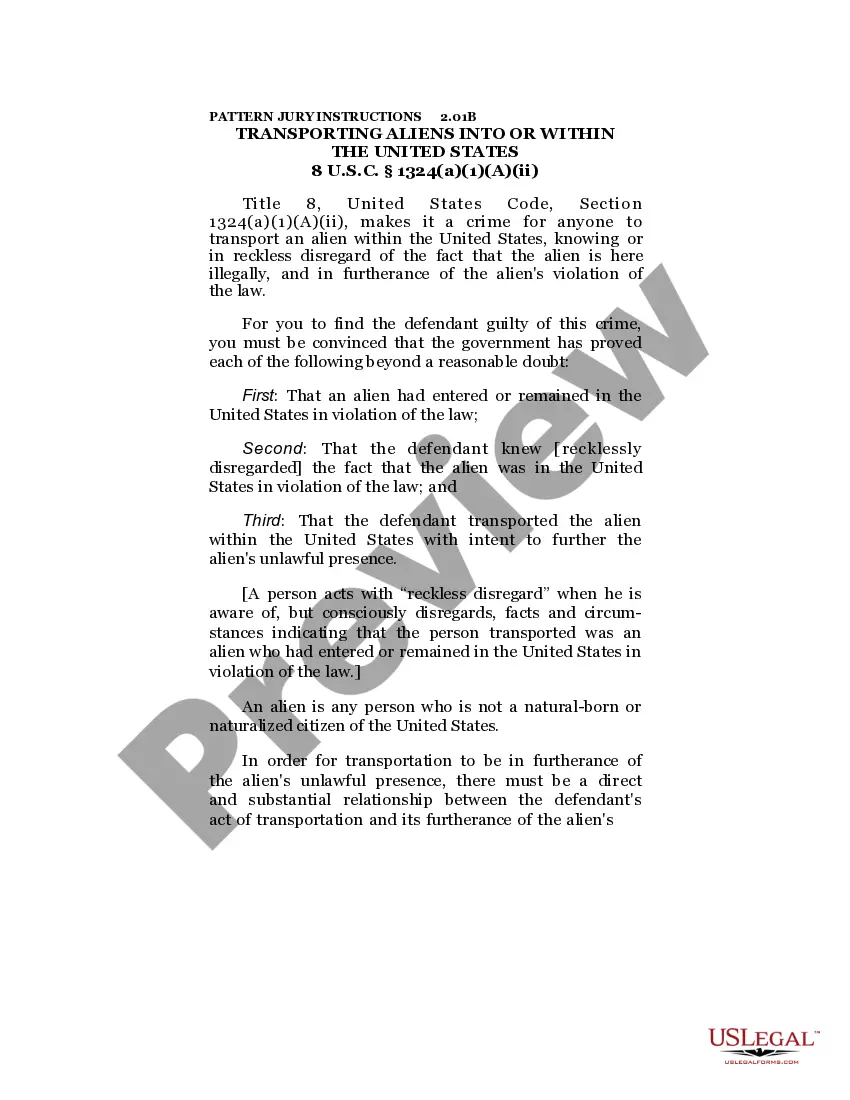
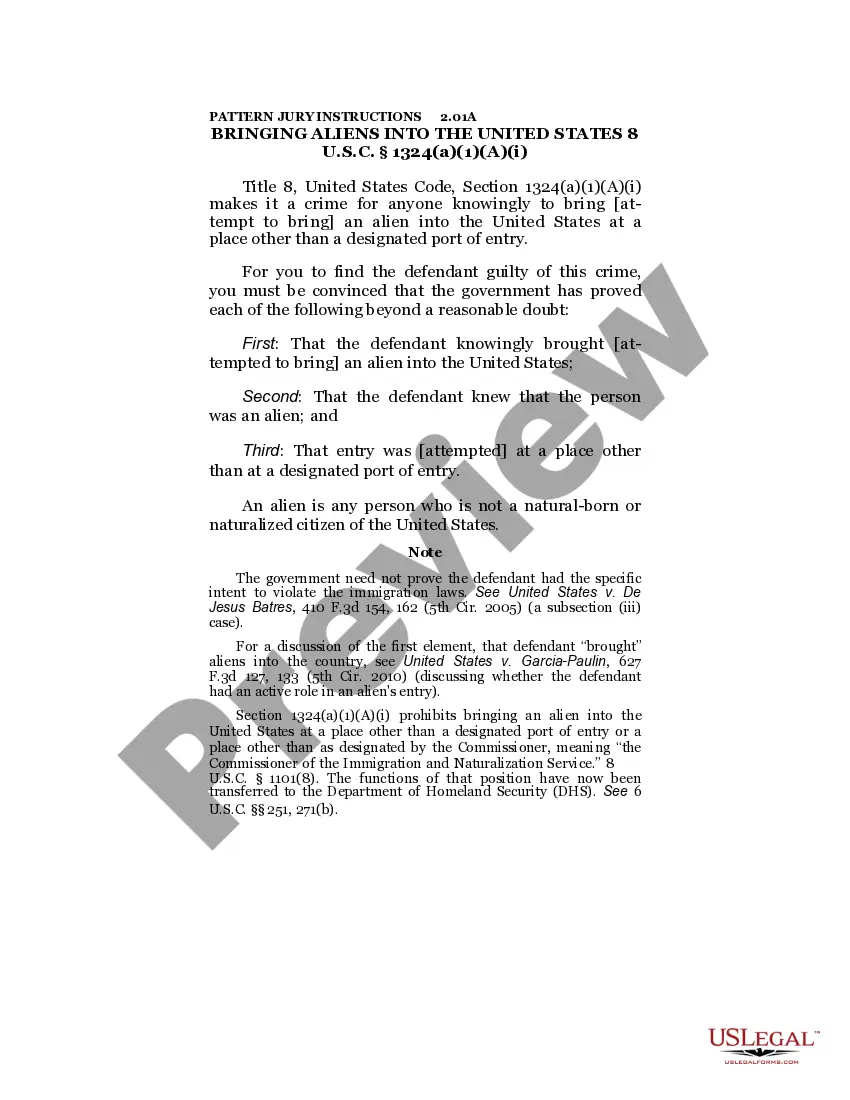
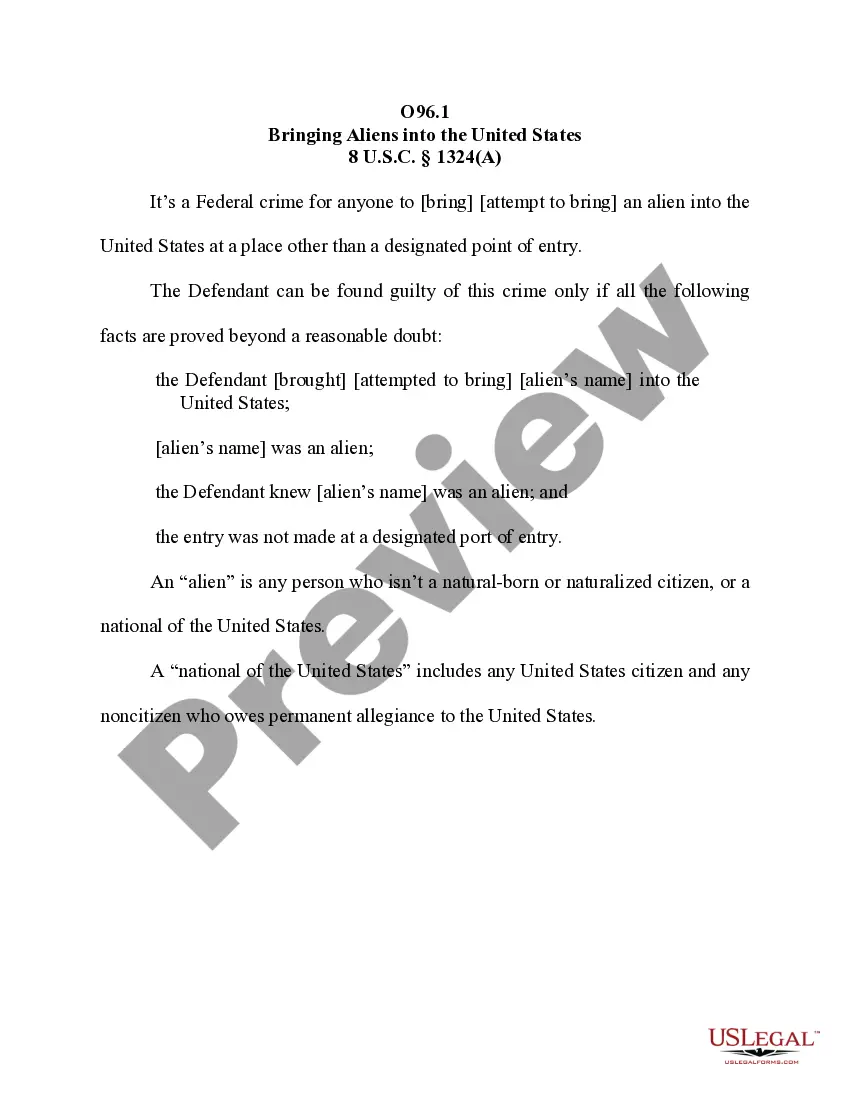
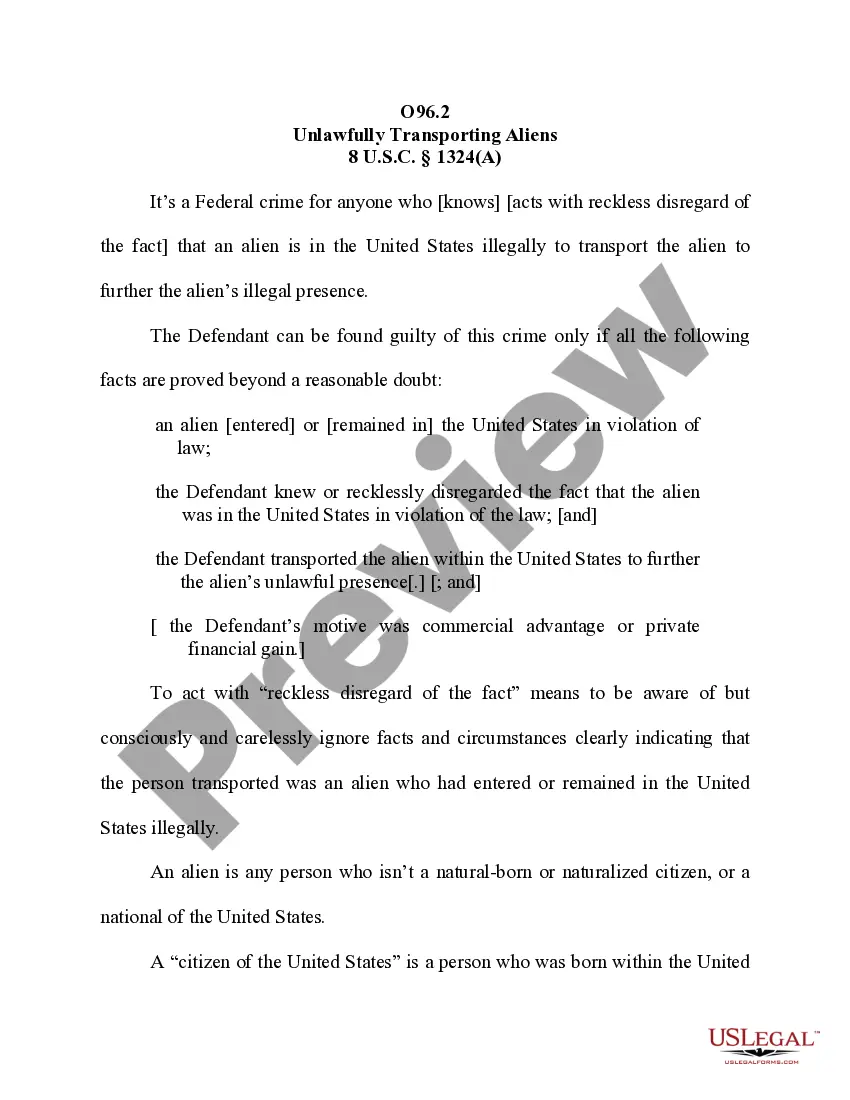
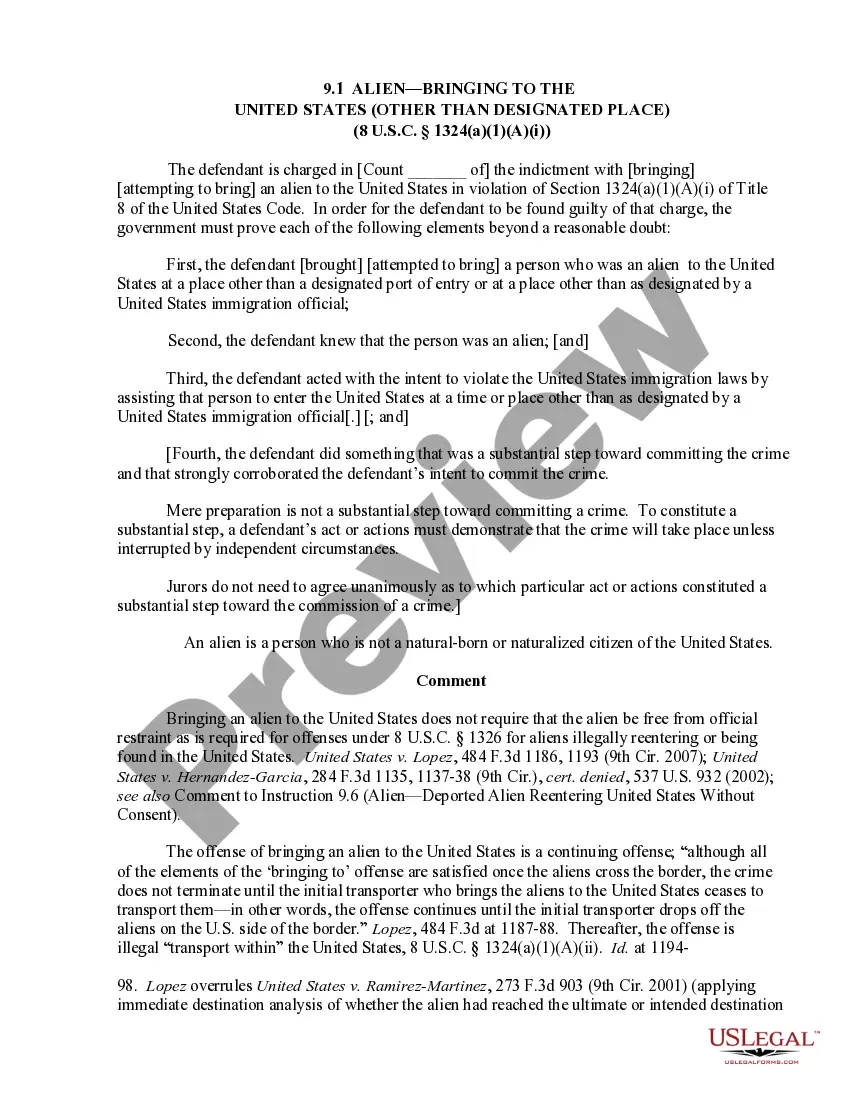
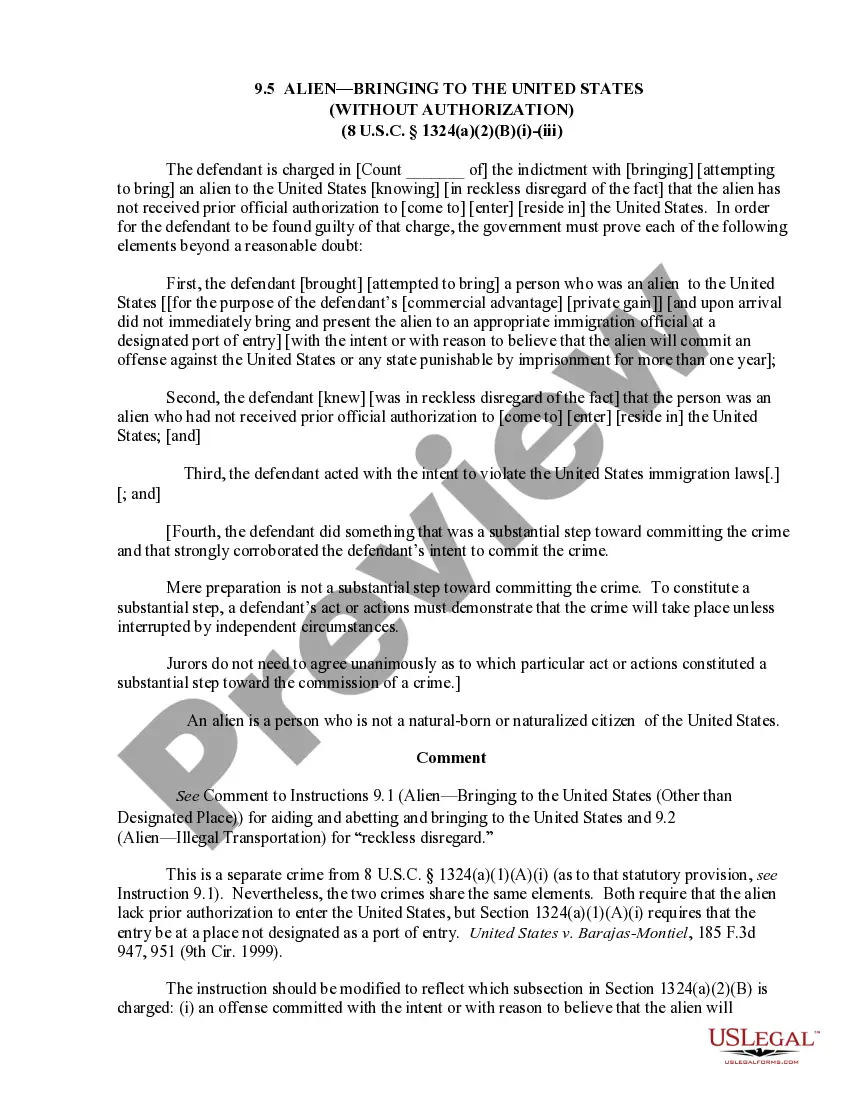
The Transporting Aliens into or Within the United States form is a legal document related to the crime defined under Title 8, United States Code, Section 1324(a)(1)(A)(ii). This form outlines the legal criteria for establishing culpability in cases where an individual transports an alien within the United States, knowing or recklessly disregarding that the alien is present unlawfully. It differs from similar forms by emphasizing the intent behind the transportation and the legal obligations specified by federal law.
Main sections of this form
- Legal citation: References Title 8, U.S.C. Section 1324(a)(1)(A)(ii).
- Definition of terms: Clarifies what constitutes an "alien" and "transportation."
- Criteria for guilt: Outlines the elements required to establish guilt in transportation cases.
- Clarification of intent: Addresses the necessity of demonstrating intent to further an alien's unlawful presence.
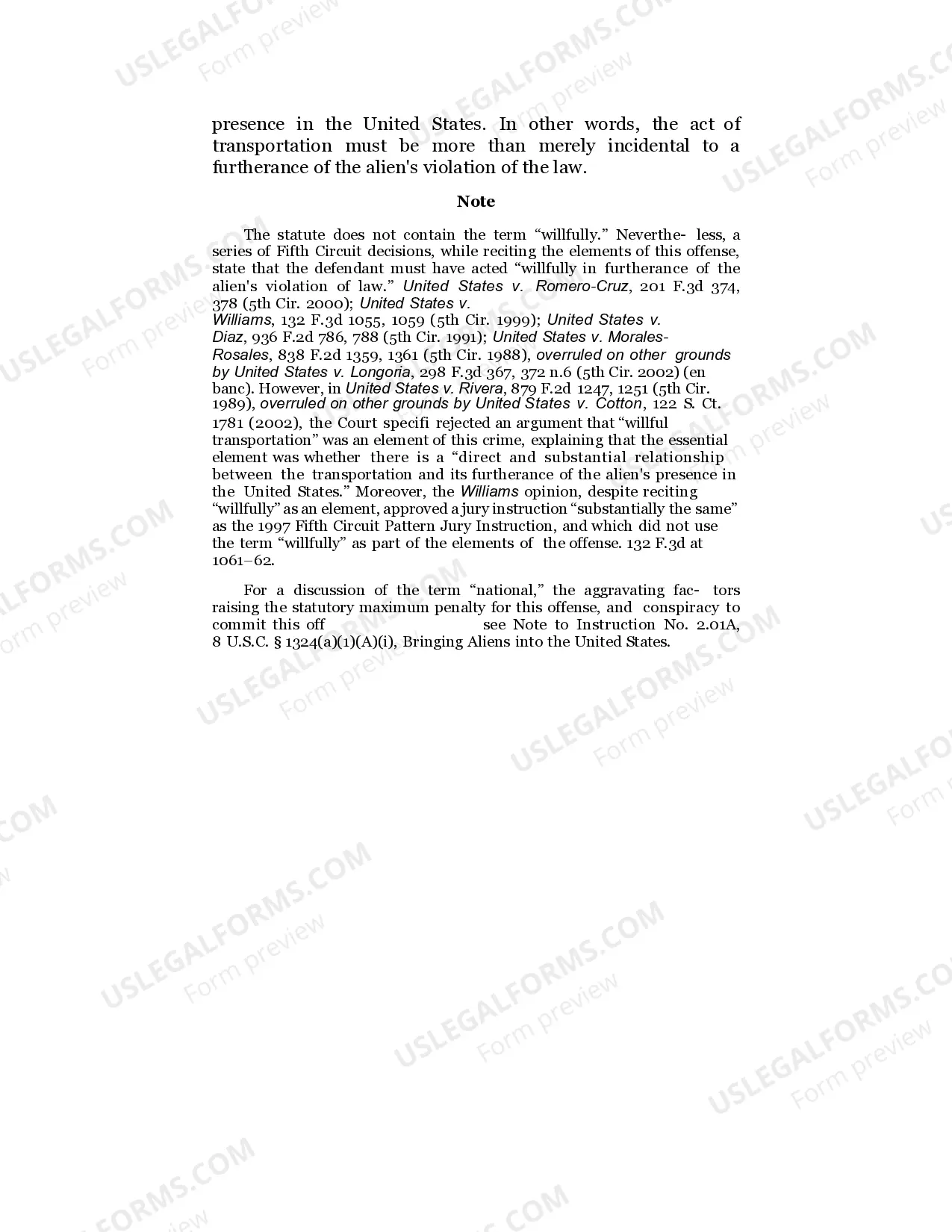
- Legal precedents: Discusses related case law that impacts interpretations of the statute.

Common use cases
This form is applicable in scenarios where there might be a criminal charge related to transporting someone who is in the United States illegally. It is essential for individuals accused of this crime or for legal representatives who need to navigate the complexities of federal immigration law. You may need this form when preparing a defense, understanding legal obligations, or reviewing potential culpability in related cases.
Who this form is for
- Individuals facing charges of transporting aliens unlawfully.
- Legal professionals defending clients in immigration-related cases.
- Anyone involved in legal proceedings concerning immigration laws.
- Law enforcement officers seeking to understand the legal ramifications of their actions.
How to complete this form
- Review the legally defined terms to understand the implications of the law.
- Assess the facts of the case against the elements listed in the form.
- Gather relevant evidence that supports the transportation claim or defense.
- Consult with a legal professional to ensure proper interpretations of the law.
- File the necessary documentation with the appropriate legal counsel or law enforcement as required.
Is notarization required?
This form does not typically require notarization unless specified by local law. It is advisable to double-check local legal requirements to ensure compliance.
Get your form ready online
Our built-in tools help you complete, sign, share, and store your documents in one place.
Make edits, fill in missing information, and update formatting in US Legal Forms—just like you would in MS Word.
Download a copy, print it, send it by email, or mail it via USPS—whatever works best for your next step.
Sign and collect signatures with our SignNow integration. Send to multiple recipients, set reminders, and more. Go Premium to unlock E-Sign.
If this form requires notarization, complete it online through a secure video call—no need to meet a notary in person or wait for an appointment.
We protect your documents and personal data by following strict security and privacy standards.

Make edits, fill in missing information, and update formatting in US Legal Forms—just like you would in MS Word.

Download a copy, print it, send it by email, or mail it via USPS—whatever works best for your next step.

Sign and collect signatures with our SignNow integration. Send to multiple recipients, set reminders, and more. Go Premium to unlock E-Sign.

If this form requires notarization, complete it online through a secure video call—no need to meet a notary in person or wait for an appointment.

We protect your documents and personal data by following strict security and privacy standards.
Common mistakes to avoid
- Failing to understand the legal definition of "alien" under federal law.
- Overlooking the importance of intent in the transportation of the alien.
- Neglecting to consider applicable case law that influences the interpretation of the statute.
- Assuming the form is only relevant in certain states when it is federal law.
Advantages of online completion
- Easy access to legal forms drafted by licensed attorneys.
- Convenient downloadable format for immediate use and editing.
- Reliable resource, ensuring adherence to current legal standards and requirements.
- Secure storage of documents for future reference.
Summary of main points
- The form is crucial for understanding legal repercussions related to transporting undocumented individuals.
- Key elements for conviction include the alienâs illegal status and the defendant's knowledge or intent.
- Consultation with legal counsel is advisable to navigate the complexities of the law effectively.
Looking for another form?
Form popularity
FAQ
The average guideline minimum was 19 months in fiscal year 2018, down two months from fiscal year 2014. The average sentence was 16 months in fiscal year 2018, down two months from fiscal year 2014. §§2L1. 1 (Smuggling, Transporting or Harboring an Unlawful Alien), 2L1.
Smuggling illegal immigrants is a federal crime in the United States. Here, we will review the consequences of the person found smuggling immigrants. For more information about removal proceedings and unlawful entry penalties for noncitizens, click on the links.
At a minimum, human smuggling is a felony in the third-degree, carrying fines up to $10,000 and a prison term between two and 10 years.
In addition, a conviction for alien smuggling will subject the alien to removal from the United States and will be considered an aggravated felony unless the conviction is for the alien's first offense and the smuggling involved the transportation of the alien's spouse, parent, or child to the United States.
Alien Smuggling: If you are convicted of illegal alien smuggling in federal court, you face a maximum of 10 years in federal prison. If, during and in relation to the offense, you cause serious bodily injury or put in jeopardy the life of any person, the penalty can be increased to a maximum of 20 years.
Generally, you are unlikely to have a problem if you travel by car, bus, or train unless you visit an area near a land border. For example, the Southern parts of California, Texas, Arizona, or in the North in places like Niagra Falls, NY near the Canadian border.
At a minimum, human smuggling is a felony in the third-degree, carrying fines up to $10,000 and a prison term between two and 10 years.