Sample Letter Release Contract For Installment Payment In San Antonio
Description

Get your form ready online
Our built-in tools help you complete, sign, share, and store your documents in one place.
Make edits, fill in missing information, and update formatting in US Legal Forms—just like you would in MS Word.
Download a copy, print it, send it by email, or mail it via USPS—whatever works best for your next step.
Sign and collect signatures with our SignNow integration. Send to multiple recipients, set reminders, and more. Go Premium to unlock E-Sign.
If this form requires notarization, complete it online through a secure video call—no need to meet a notary in person or wait for an appointment.
We protect your documents and personal data by following strict security and privacy standards.

Make edits, fill in missing information, and update formatting in US Legal Forms—just like you would in MS Word.

Download a copy, print it, send it by email, or mail it via USPS—whatever works best for your next step.

Sign and collect signatures with our SignNow integration. Send to multiple recipients, set reminders, and more. Go Premium to unlock E-Sign.

If this form requires notarization, complete it online through a secure video call—no need to meet a notary in person or wait for an appointment.

We protect your documents and personal data by following strict security and privacy standards.
Looking for another form?







Form popularity
FAQ
Contract payment terms often include details on how invoices should be submitted, the payment due date, and any late payment penalties or interest charges. It's also important to include provisions for confirming the receipt of payments, such as receipts, acknowledgment of invoices, or other forms of documentation.
How to write an agreement letter Title your document. Provide your personal information and the date. Include the recipient's information. Address the recipient and write your introductory paragraph. Write a detailed body. Conclude your letter with a paragraph, closing remarks, and a signature. Sign your letter.
Write the contract in six steps Start with a contract template. Open with the basic information. Describe in detail what you have agreed to. Include a description of how the contract will be ended. Write into the contract which laws apply and how disputes will be resolved. Include space for signatures.
A contract should clearly identify the parties, detail obligations, specify payment terms, outline duration and deadlines, include termination conditions, address dispute resolution, and provide signature lines for all parties.
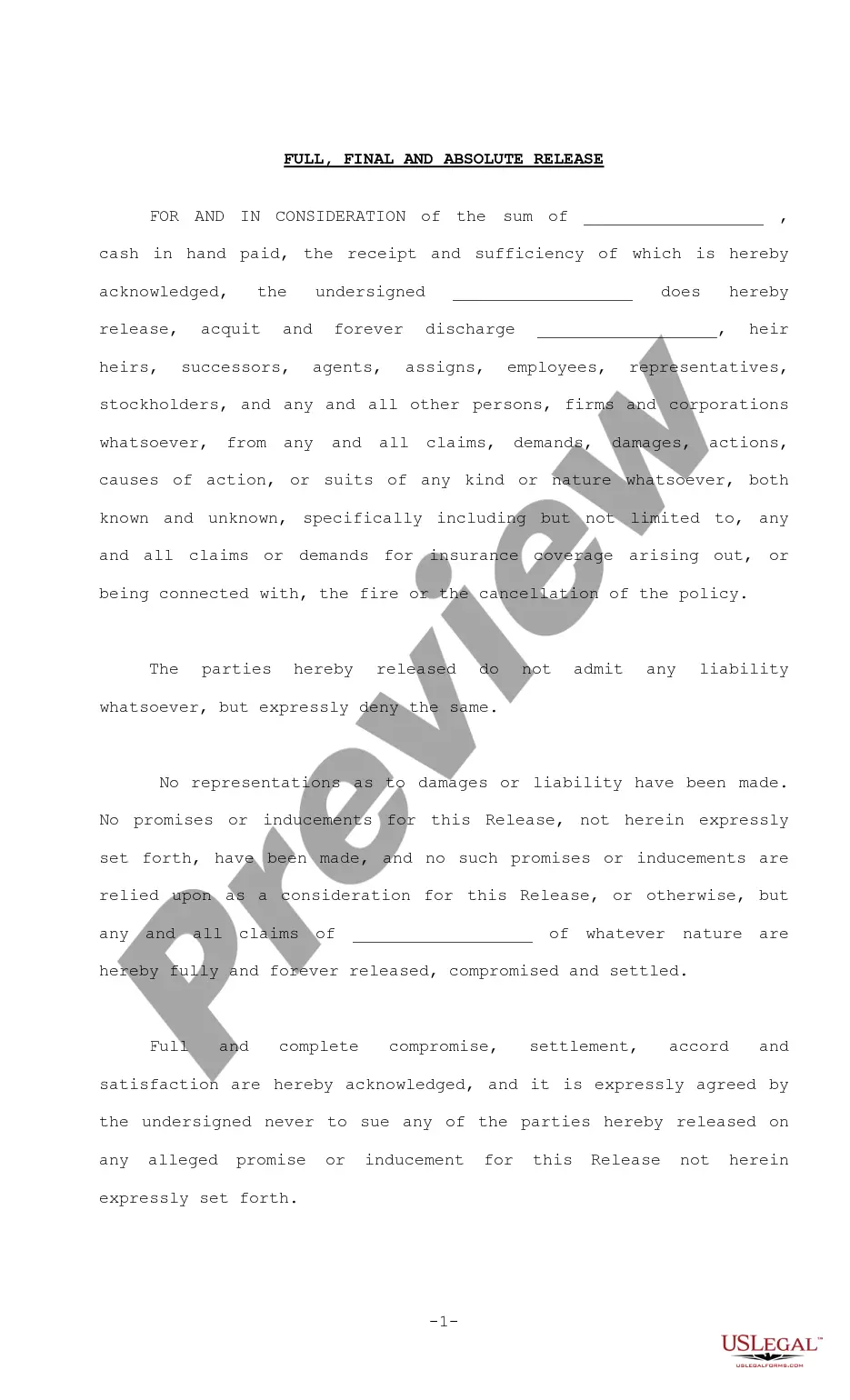
A release is a legal document that records an employee's agreement to relinquish their right to make any future claims against their employer relating to their employment or the termination of their employment. A release is essentially a contract between the terminated employee and the employer.
You can get out of a binding contract under certain circumstances. There are seven key ways you can get out of contracts: mutual consent, breach of contract, contract rescission, unconscionability, impossibility of performance, contract expiration, and voiding a contract.
How Can I Legally Get Out of a Contract Without Penalty? Review the Contract Terms. The first step in attempting to exit a contract without penalty is to thoroughly review the contract itself. Mutual Agreement. Breach of Contract. Impossibility or Impracticability. Misrepresentation or Fraud. Legal Defenses.
