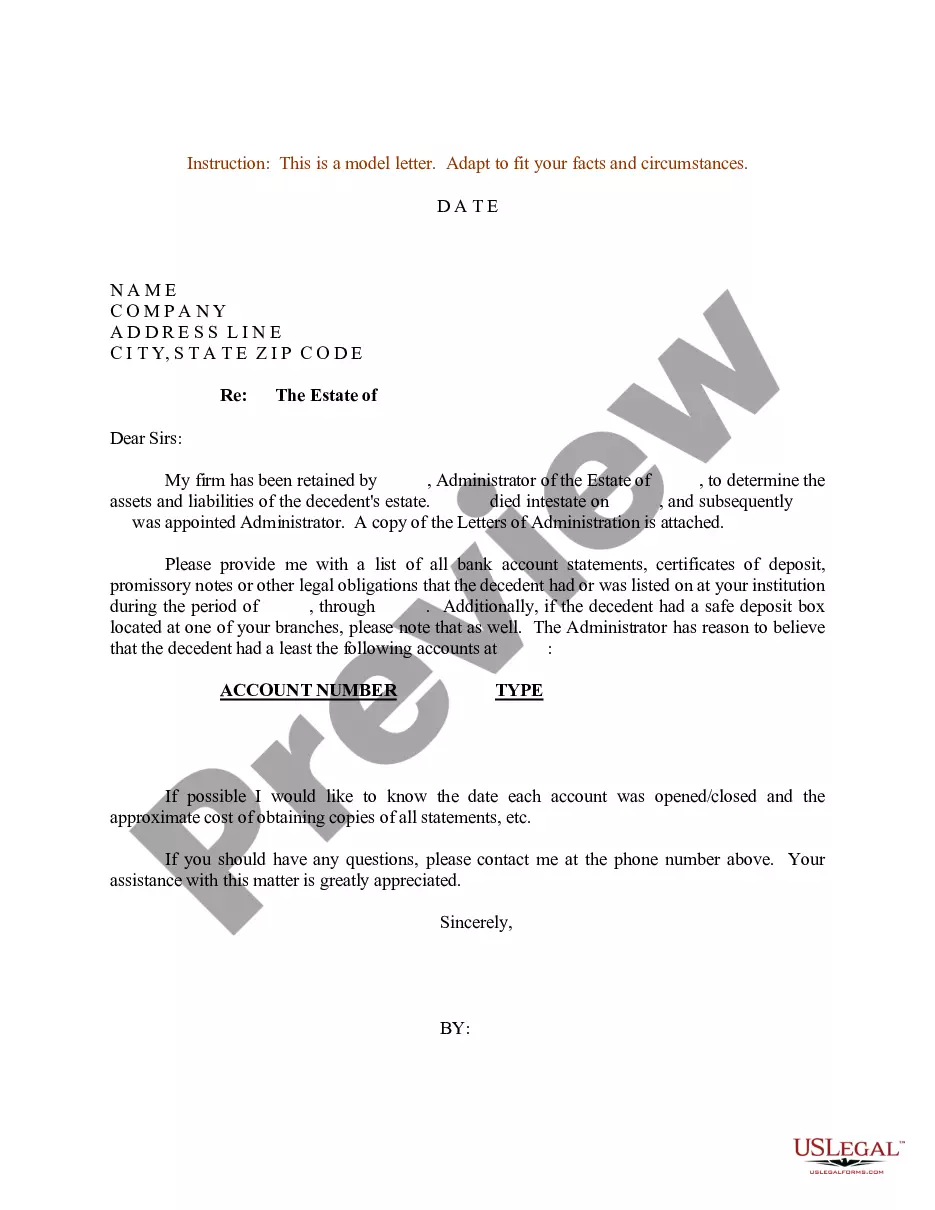
Sample Letter To Close Trust Account With Bank In Los Angeles
Description




Get your form ready online
Our built-in tools help you complete, sign, share, and store your documents in one place.
Make edits, fill in missing information, and update formatting in US Legal Forms—just like you would in MS Word.
Download a copy, print it, send it by email, or mail it via USPS—whatever works best for your next step.
Sign and collect signatures with our SignNow integration. Send to multiple recipients, set reminders, and more. Go Premium to unlock E-Sign.
If this form requires notarization, complete it online through a secure video call—no need to meet a notary in person or wait for an appointment.
We protect your documents and personal data by following strict security and privacy standards.

Make edits, fill in missing information, and update formatting in US Legal Forms—just like you would in MS Word.

Download a copy, print it, send it by email, or mail it via USPS—whatever works best for your next step.

Sign and collect signatures with our SignNow integration. Send to multiple recipients, set reminders, and more. Go Premium to unlock E-Sign.

If this form requires notarization, complete it online through a secure video call—no need to meet a notary in person or wait for an appointment.

We protect your documents and personal data by following strict security and privacy standards.
Looking for another form?


Form popularity
FAQ
A trust dissolution form is a legal document used to dissolve a trust. It outlines the terms of the trust and states that all trust assets will be distributed ing to the trust provisions. The form is typically signed by all parties involved in creating the trust, including the trustee, beneficiaries, and settlor.
To terminate an active trust, a party with standing must petition the court and provide evidence that persuades a judge to issue an order dissolving the trust or all beneficiaries of the trust must agree to its termination.
Only the trustee can close the trust account. Check the bank's requirements for closing accounts to see what documentation you need to bring with you, usually personal identification and any papers you received when you first set up the trust account.
IF YOU DO MAKE AN OBJECTION TO THE TRUSTEE, THE THREE-YEAR PERIOD PROVIDED IN SECTION 16460 OF THE PROBATE CODE FOR COMMENCEMENT OF LITIGATION WILL APPLY TO CLAIMS BASED ON YOUR OBJECTION AND WILL BEGIN TO RUN ON THE DATE THAT YOU RECEIVE THIS ACCOUNT OR REPORT.
Under California Probate Code §16062, trustees are obligated to account to each beneficiary annually, upon trust termination, and following a change in trustee. Additionally, if a beneficiary requests an accounting in writing, the trustee must provide it within 60 days.
Bank Accounts Held in Trust After your death, when the person you chose to be your successor trustee takes over, the funds will be transferred to the beneficiary you named in your trust document. No probate will be necessary. To transfer the account to your trust, tell the bank what you want to do.
Contesting Trusts The deadline to contest a trust is 120 days from the date the notice under Probate Code 16061.7 is mailed. This notice provides specific, required information to be provided to the heirs at law and beneficiaries of the trust.