Authorized Shares Formula In Virginia
Description


Get your form ready online
Our built-in tools help you complete, sign, share, and store your documents in one place.
Make edits, fill in missing information, and update formatting in US Legal Forms—just like you would in MS Word.
Download a copy, print it, send it by email, or mail it via USPS—whatever works best for your next step.
Sign and collect signatures with our SignNow integration. Send to multiple recipients, set reminders, and more. Go Premium to unlock E-Sign.
If this form requires notarization, complete it online through a secure video call—no need to meet a notary in person or wait for an appointment.
We protect your documents and personal data by following strict security and privacy standards.

Make edits, fill in missing information, and update formatting in US Legal Forms—just like you would in MS Word.

Download a copy, print it, send it by email, or mail it via USPS—whatever works best for your next step.

Sign and collect signatures with our SignNow integration. Send to multiple recipients, set reminders, and more. Go Premium to unlock E-Sign.

If this form requires notarization, complete it online through a secure video call—no need to meet a notary in person or wait for an appointment.

We protect your documents and personal data by following strict security and privacy standards.
Looking for another form?







Form popularity
FAQ
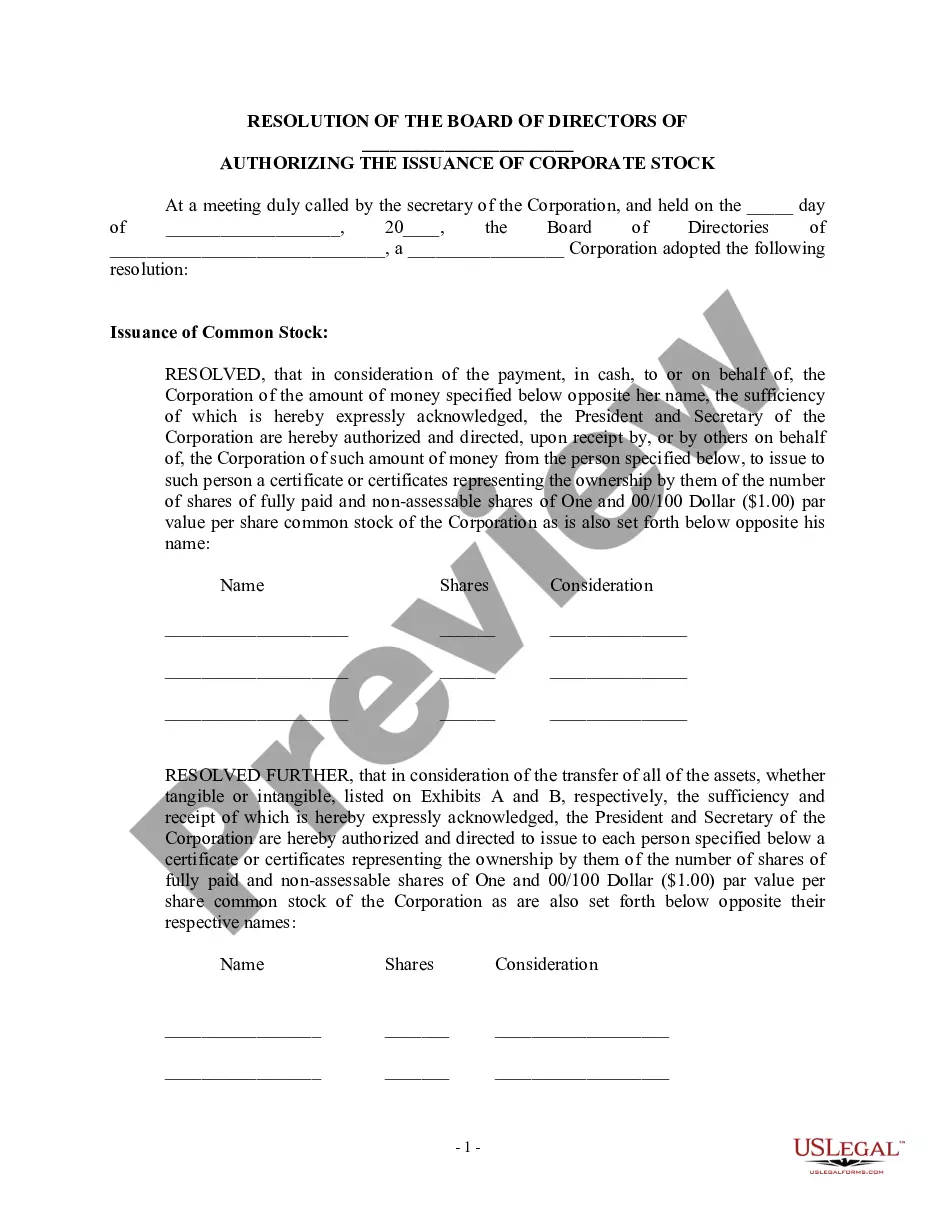
Key Takeaways. Authorized stock refers to the maximum number of shares a publicly-traded company can issue, as specified in its articles of incorporation or charter. Those shares which have already been issued to the public, known as outstanding shares, make up some portion of a company's authorized stock.
To calculate the authorised capital, you need two components: Authorised Shares and Par Value Per Share. Once you have these two values, multiply the number of authorised shares by the par value per share to calculate the nominal capital.
The calculation There should be a "common stock" section, which can tell you the number of issued shares as well as the number of authorized shares. Divide the number of issued shares by the number of authorized shares, and then multiply by 100 to convert to a percentage.
Each corporation other than a public service company, a banking corporation, an insurance corporation, a savings institution, or a credit union shall have power to enter into partnership agreements, joint ventures, or other associations of any kind with any person or persons.
The calculation There should be a "common stock" section, which can tell you the number of issued shares as well as the number of authorized shares. Divide the number of issued shares by the number of authorized shares, and then multiply by 100 to convert to a percentage.
When we talk about the total number of issued and outstanding shares for a security, we are referring to the total number of shares that have been issued by a company and are currently held by investors. These shares represent ownership in the company and can be bought and sold on the stock market.
Authorized stock refers to the maximum number of shares a publicly-traded company can issue, as specified in its articles of incorporation or charter. Those shares which have already been issued to the public, known as outstanding shares, make up some portion of a company's authorized stock.
When the need arises, a majority of shareholders or the Board of Directors can vote in favor of allowing new shares. How Many Shares Should We Authorize? Regardless of your initial funding, a new startup's sweet spot is usually 10 million authorized shares.
Authorised shares are the number of shares that a company is allowed to issue ing to its Memorandum of Incorporation (MOI).
