Shareholders Resolution Vs Board Resolution In Philadelphia
Description

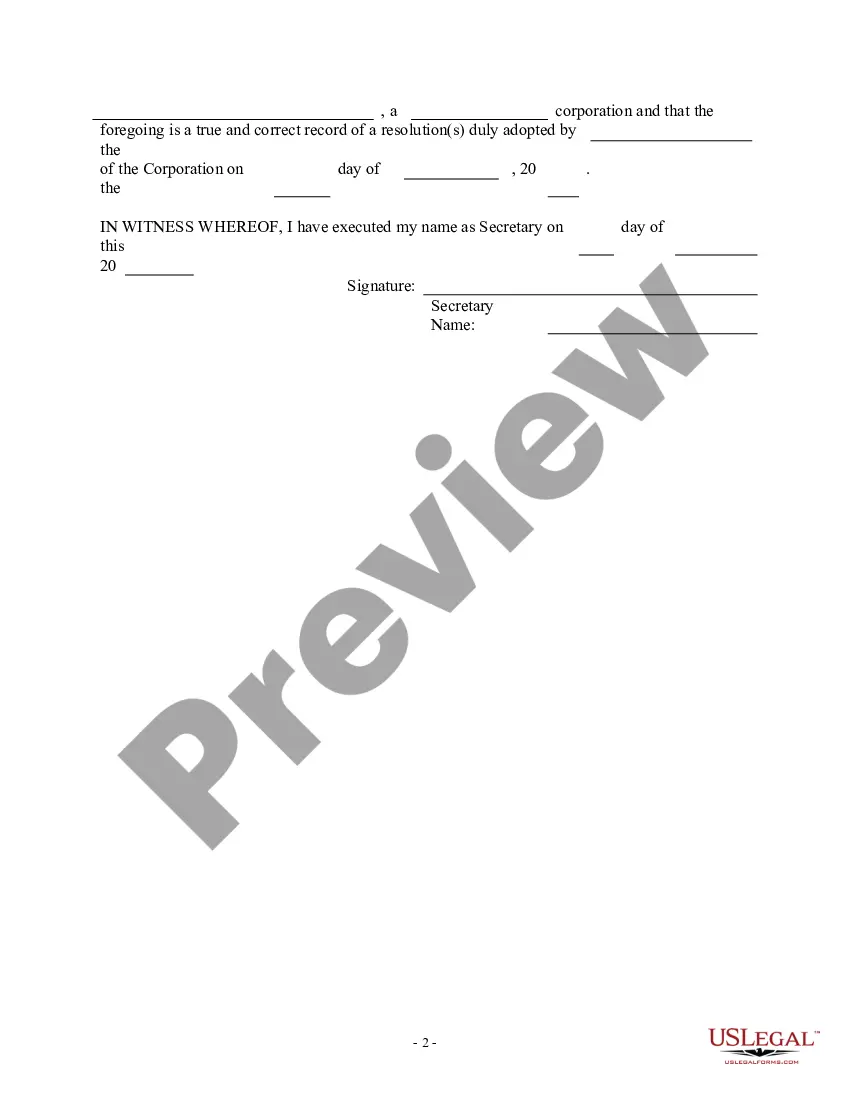

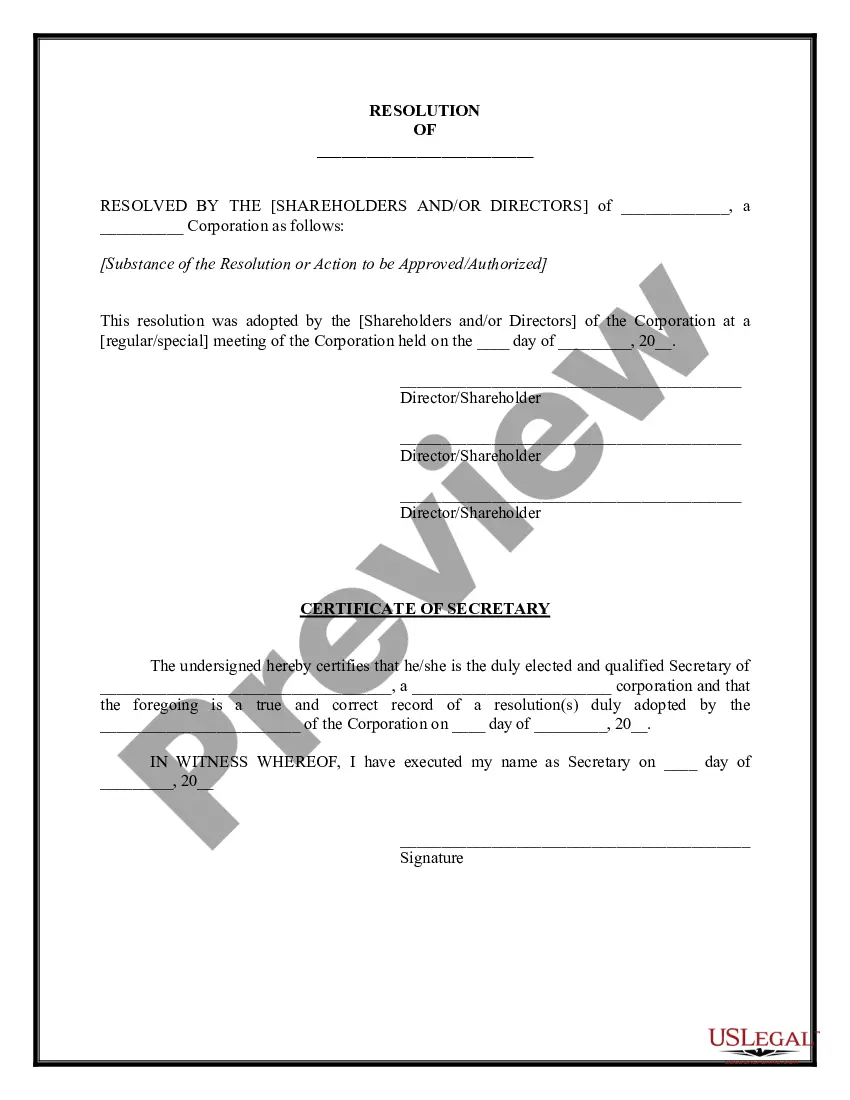
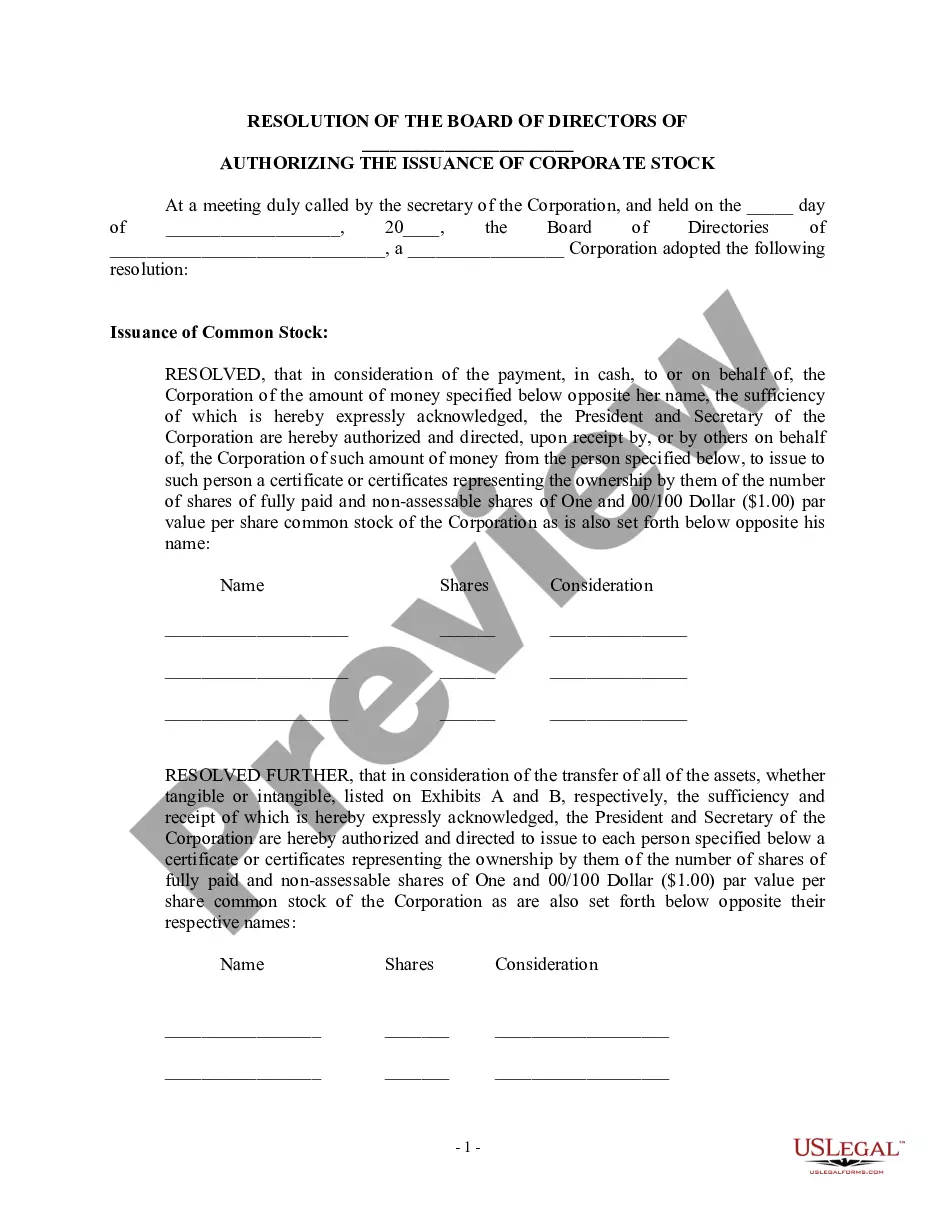
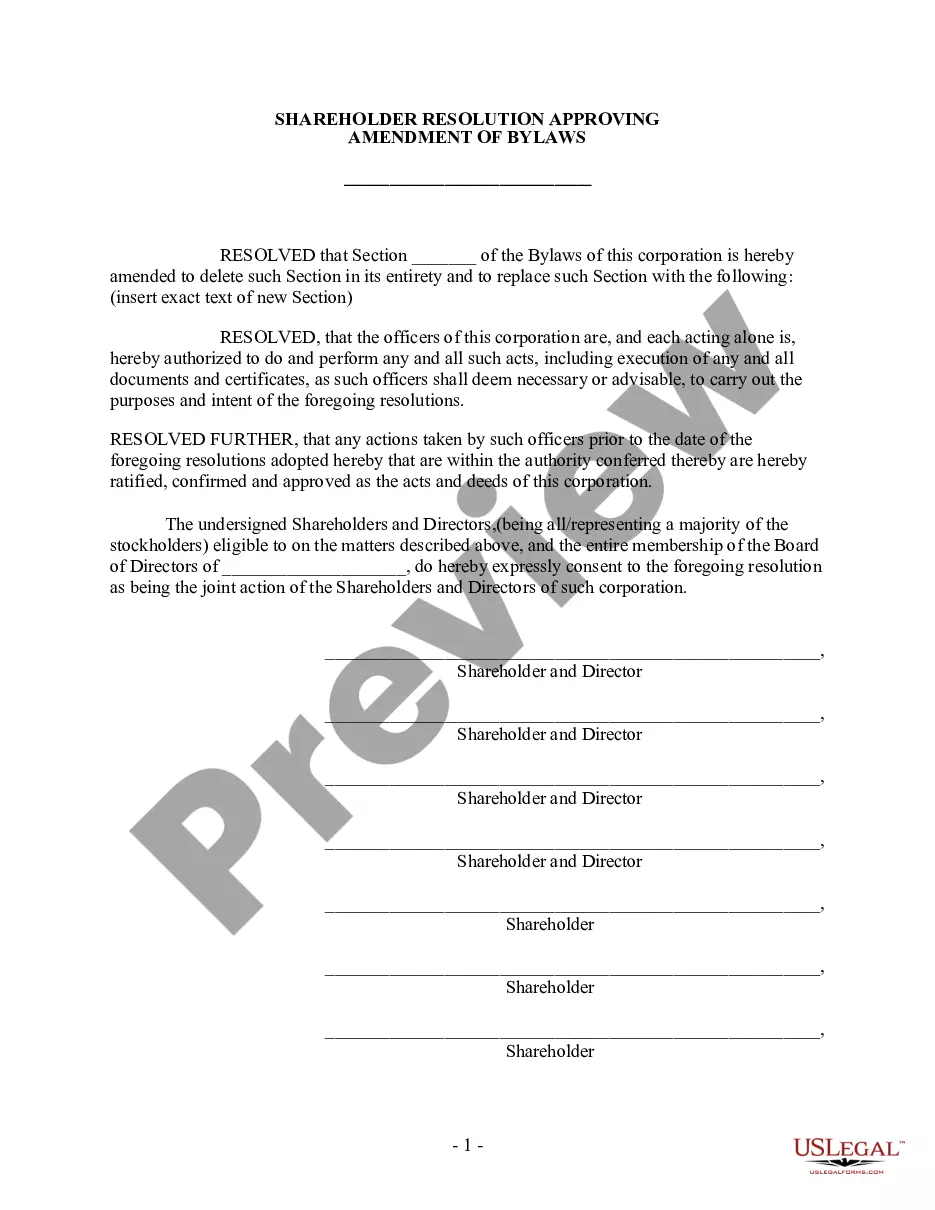
Get your form ready online
Our built-in tools help you complete, sign, share, and store your documents in one place.
Make edits, fill in missing information, and update formatting in US Legal Forms—just like you would in MS Word.
Download a copy, print it, send it by email, or mail it via USPS—whatever works best for your next step.
Sign and collect signatures with our SignNow integration. Send to multiple recipients, set reminders, and more. Go Premium to unlock E-Sign.
If this form requires notarization, complete it online through a secure video call—no need to meet a notary in person or wait for an appointment.
We protect your documents and personal data by following strict security and privacy standards.

Make edits, fill in missing information, and update formatting in US Legal Forms—just like you would in MS Word.

Download a copy, print it, send it by email, or mail it via USPS—whatever works best for your next step.

Sign and collect signatures with our SignNow integration. Send to multiple recipients, set reminders, and more. Go Premium to unlock E-Sign.

If this form requires notarization, complete it online through a secure video call—no need to meet a notary in person or wait for an appointment.

We protect your documents and personal data by following strict security and privacy standards.
Looking for another form?



Form popularity
FAQ
There are three types of Shareholders' Meetings. Ordinary Shareholders' Meeting (OSM) ... Extraordinary Shareholders' Meeting (ESM) ... Combined Shareholders' Meeting (OSM and ESM)
The resolutions can also be found in the relevant sections of our Corporate folder to which they relate and reference should be made to that specific section for more detailed information. Each document in the Special and Ordinary Shareholders' Resolutions folder is compliant with the Companies Act 2006.
There are two main types of shareholders' resolution: 'ordinary' and 'special'. An ordinary resolution is passed by a simple majority of members, while a special resolution requires not less than 75% of the total voting rights of eligible members.
Shareholders holding at least $2,000 worth of stock in a publicly-traded company for at least three years prior to the filing deadline can introduce a resolution to company management to be voted on at the next annual meeting.
Board directors and shareholders are the only members of the company that can make company resolutions. When the board of directors make a formal decision, it is referred to as a board resolution, whereas when the company shareholders make a formal decision, it is referred to as a shareholder resolution.
Two options that shareholders have when they have suffered harm due to a director breach are direct suits and derivative suits.
There are basically two types of shareholders: the common shareholders and the preferred shareholders. Common shareholders are those that own a company's common stock. They are the more prevalent type of stockholders and they have the right to vote on matters concerning the company.
Ordinary and special resolutions are two types of resolutions that a company can pass to make important decisions. The main difference between the two is the level of support required for them to pass.
