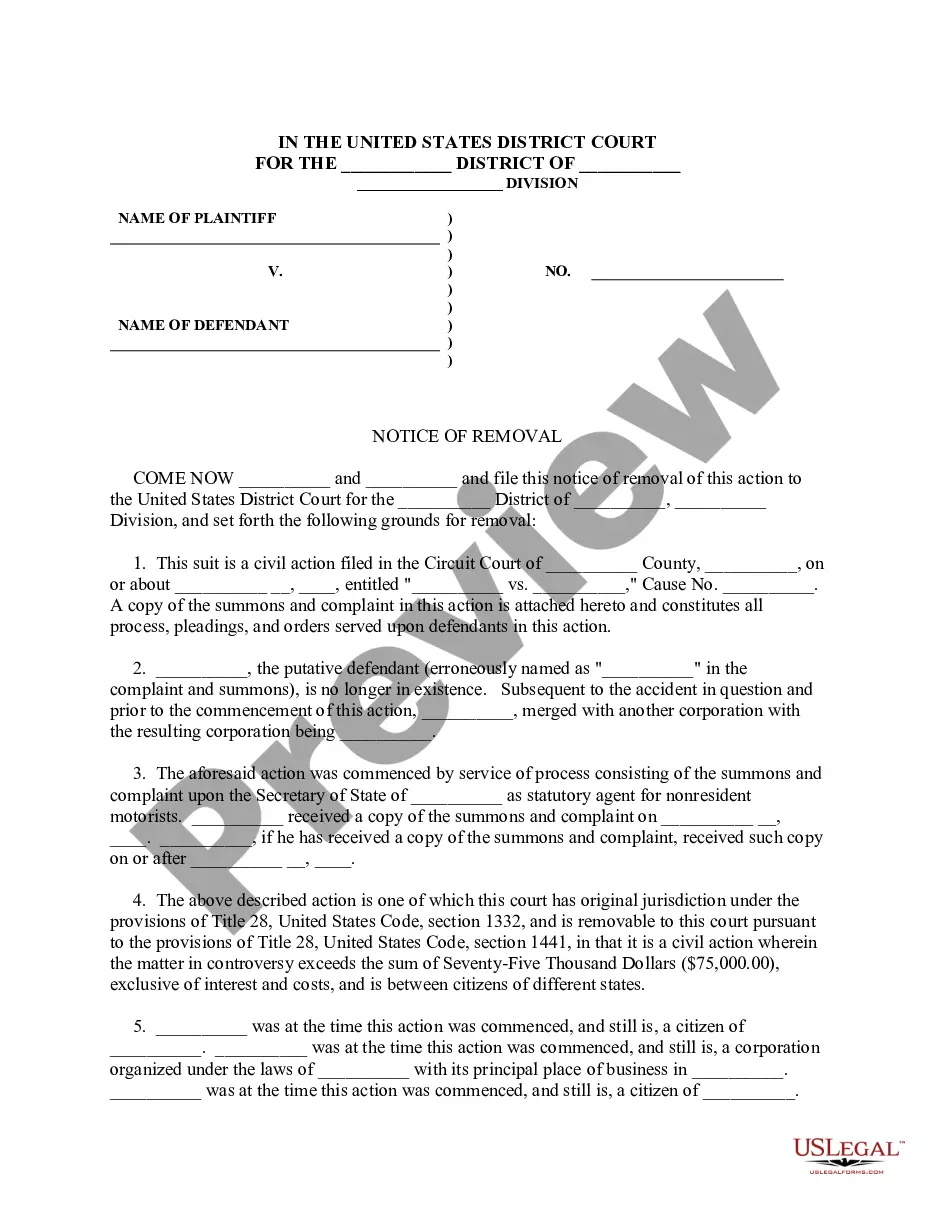
Notice Of Removal Template Format In Virginia
Description
Get your form ready online
Our built-in tools help you complete, sign, share, and store your documents in one place.
Make edits, fill in missing information, and update formatting in US Legal Forms—just like you would in MS Word.
Download a copy, print it, send it by email, or mail it via USPS—whatever works best for your next step.
Sign and collect signatures with our SignNow integration. Send to multiple recipients, set reminders, and more. Go Premium to unlock E-Sign.
If this form requires notarization, complete it online through a secure video call—no need to meet a notary in person or wait for an appointment.
We protect your documents and personal data by following strict security and privacy standards.

Make edits, fill in missing information, and update formatting in US Legal Forms—just like you would in MS Word.

Download a copy, print it, send it by email, or mail it via USPS—whatever works best for your next step.

Sign and collect signatures with our SignNow integration. Send to multiple recipients, set reminders, and more. Go Premium to unlock E-Sign.

If this form requires notarization, complete it online through a secure video call—no need to meet a notary in person or wait for an appointment.

We protect your documents and personal data by following strict security and privacy standards.
Looking for another form?



Form popularity
FAQ
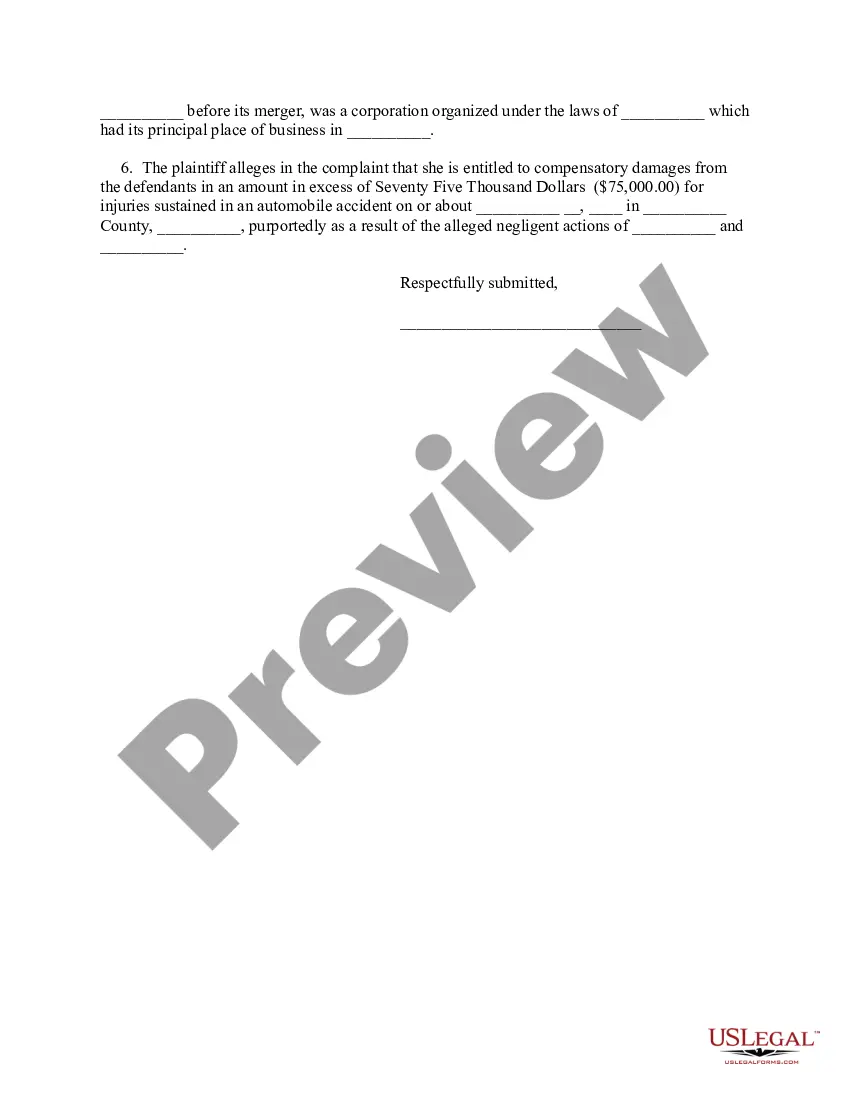
A notice of removal is a legal document filed by a defendant to move a case from a state court to a federal court. The notice must be filed in the federal district court where the case is pending and must include a brief statement explaining the reasons for the removal.
The Court of Appeals hears appeals of decisions of Circuit Courts and cases from certain state agencies. The Supreme Court of Virginia eviews decisions of the Court of Appeals and lower courts and handles matters related to the operation of Virginia's judicial system.
Curing statute A party, whether an individual or a corporation, who is not properly served may move to "quash" service of process, which will result in the court treating the case as though service had not been effected.
(1) Unless the court upon motion, for the convenience of parties and witnesses and in the interests of justice, orders otherwise, methods of discovery may be used in any sequence and the fact that a party is conducting discovery, whether by deposition or otherwise, shall not operate to delay any other party's discovery ...
The document is a legal form titled 'Bill of Particulars' used in the Commonwealth of Virginia, requiring the plaintiff to outline specific reasons for their claim against the defendant.
Virginia's unified district court system consists of the general district and the juvenile and domestic relations district courts. Within the 32 districts of the state, there are general district courts and juvenile and domestic relations district courts in every city and county.
Procedurally, it is simple. The defendant files a motion to remove in federal court, a notice to the same effect in state court, and gives notice to all the parties. The case is then docketed in federal court and proceeds there.
Procedurally, it is simple. The defendant files a motion to remove in federal court, a notice to the same effect in state court, and gives notice to all the parties. The case is then docketed in federal court and proceeds there.
Summary. Defendants often seek to move their cases to federal court after being sued in state court for reasons such as procedural consistency, efficient docket management, and reduced liability.