Termination With Severance Letter In Los Angeles
Description





Form popularity
FAQ
While no mandate requires employers to provide severance under California law, SB 331, signed into law in October 2021, introduced important provisions: Time to Review: You have a minimum of five days to review the severance agreement.
Non-waivable claims: Certain claims, such as workers' compensation and unemployment insurance claims, cannot be waived by the employee. No prevailing party and attorney's fees: Ensure that the agreement does not include provisions that would allow either party to claim attorney's fees if legal disputes arise.
On February 21, 2023, the NLRB issued a decision stating that the language of typical Confidentiality Clauses and Non-disparagement Clauses are illegal because they infringe on an employee's right to organize (form a union) or help other employees organize.
Yes, in the state of California, employers must provide immediate notice to all terminated employees. Beginning with the January 1, 2022 enactment of California Senate Bill No. 657, employers have the option to distribute these notices electronically.
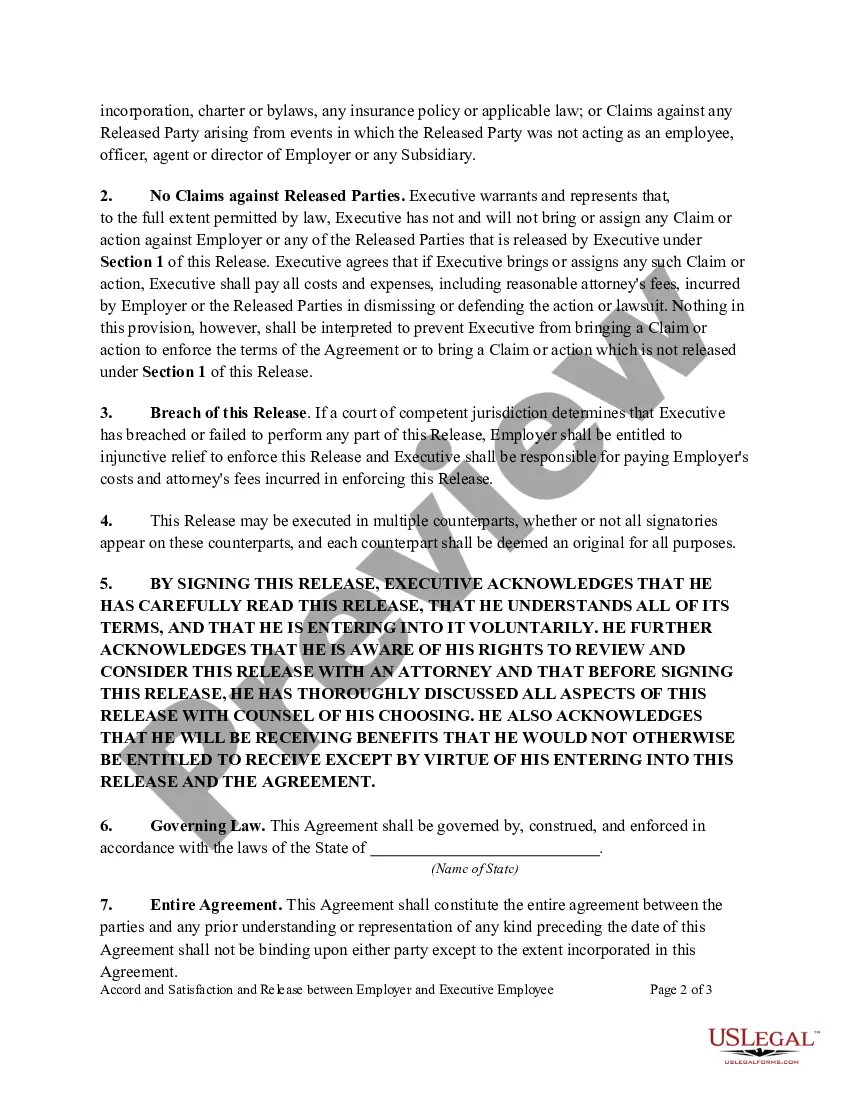
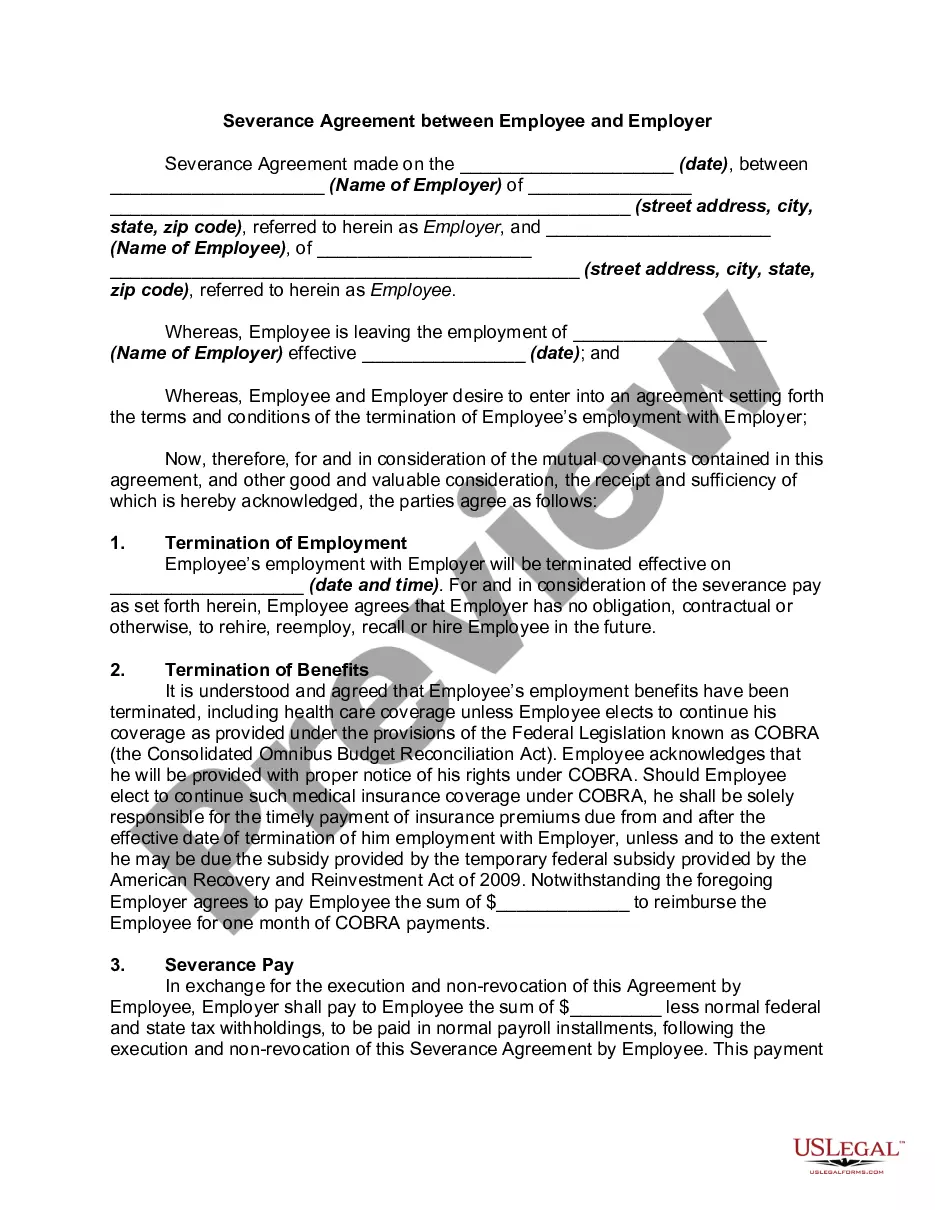
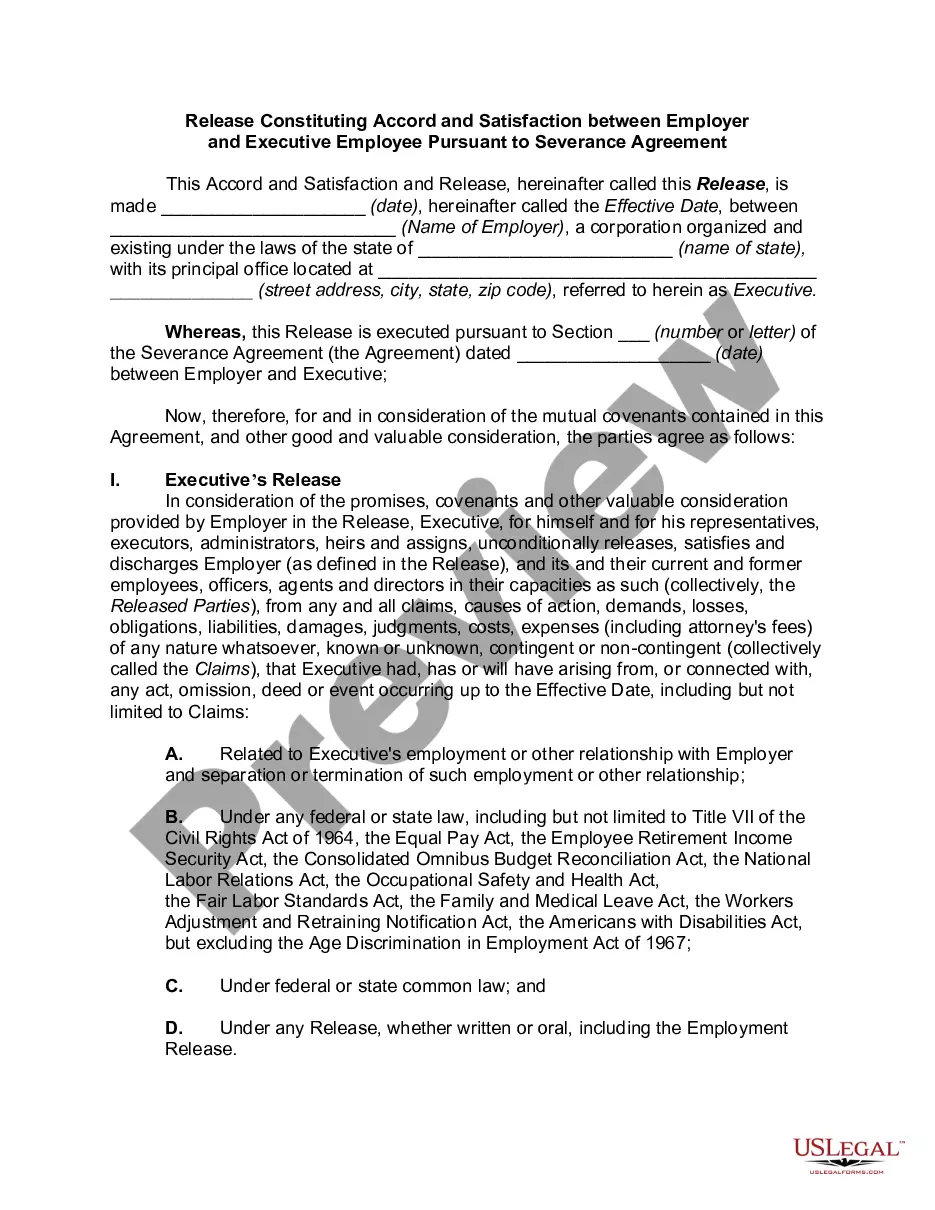
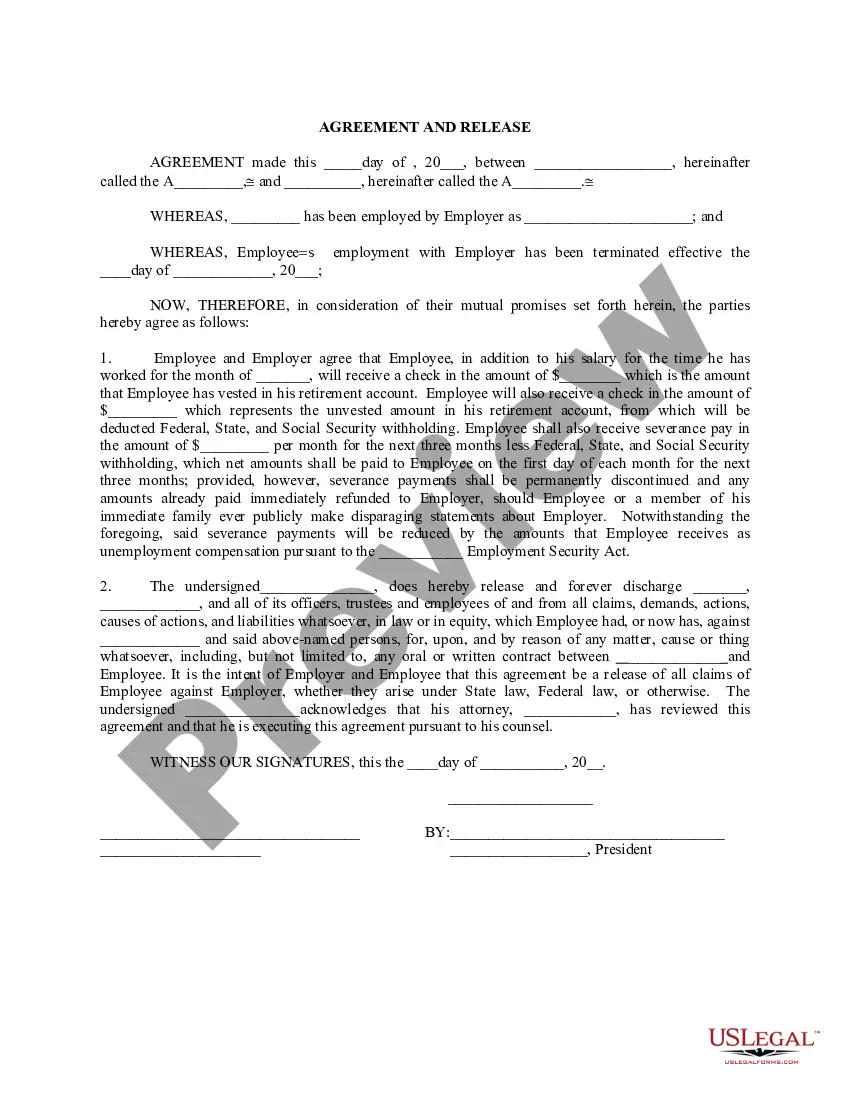
Basically, a severance agreement is a waiver or release of liability that the outgoing employee signs, protecting the business from lawsuits. These agreements are usually part of a larger severance package that includes compensation, outplacement services, and other benefits in exchange for the employee's signature.
Extension of Benefits Under Rule of 70 To be eligible to retire, you must be at least age 55 with 10 years of service or age 65. Years of service for the “Rule of 70” eligibility purposes, means total years of employment from date of hire to date of termination.