Labor Laws For Salaried Employees In Texas In Wake
Description















Get your form ready online
Our built-in tools help you complete, sign, share, and store your documents in one place.
Make edits, fill in missing information, and update formatting in US Legal Forms—just like you would in MS Word.
Download a copy, print it, send it by email, or mail it via USPS—whatever works best for your next step.
Sign and collect signatures with our SignNow integration. Send to multiple recipients, set reminders, and more. Go Premium to unlock E-Sign.
If this form requires notarization, complete it online through a secure video call—no need to meet a notary in person or wait for an appointment.
We protect your documents and personal data by following strict security and privacy standards.

Make edits, fill in missing information, and update formatting in US Legal Forms—just like you would in MS Word.

Download a copy, print it, send it by email, or mail it via USPS—whatever works best for your next step.

Sign and collect signatures with our SignNow integration. Send to multiple recipients, set reminders, and more. Go Premium to unlock E-Sign.

If this form requires notarization, complete it online through a secure video call—no need to meet a notary in person or wait for an appointment.

We protect your documents and personal data by following strict security and privacy standards.
Looking for another form?
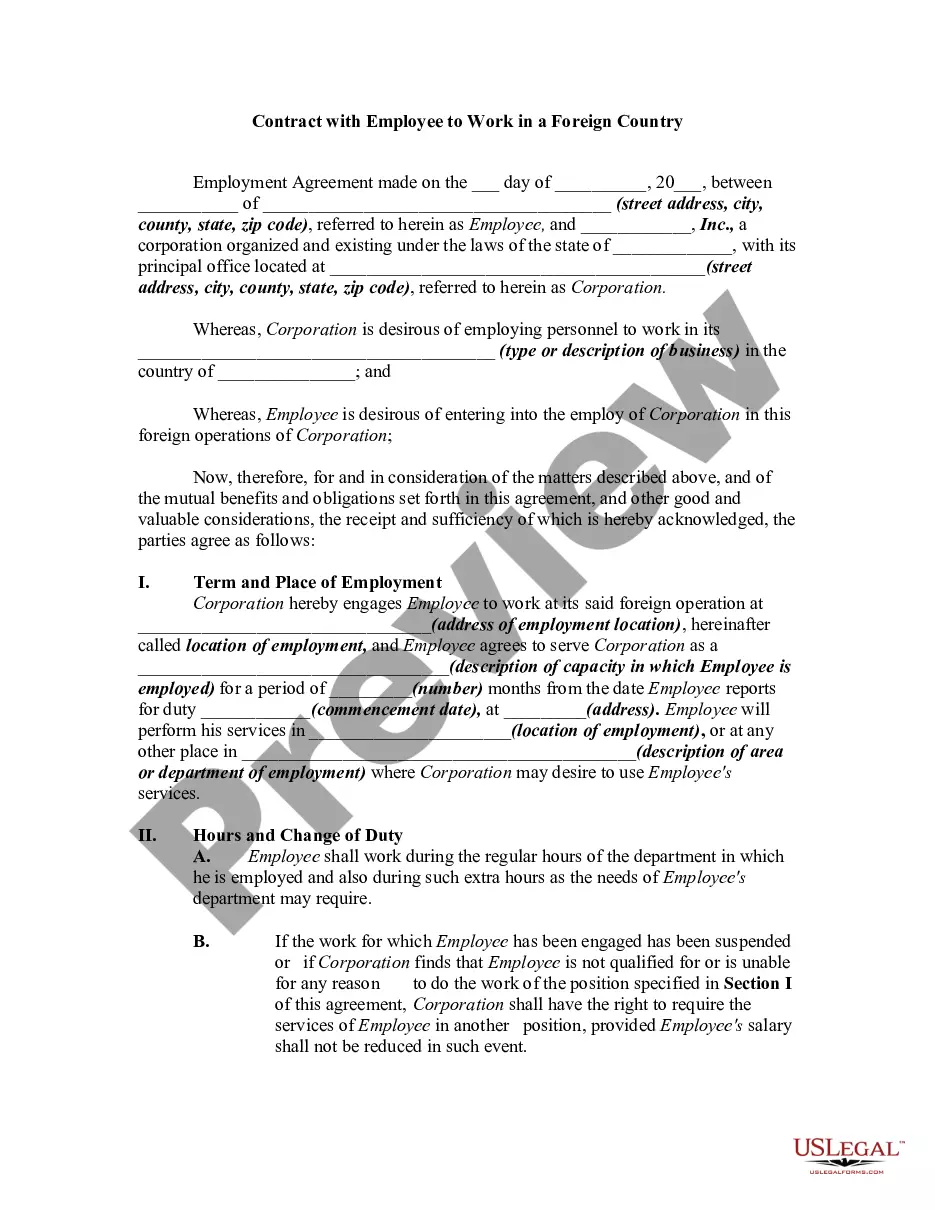

Form popularity
FAQ
Minimum Salary Threshold: The new rule raises the standard salary level from $35,568 per year ($684 per week) to $58,656 annually ($1,128 per week).
Thus, PTO for salaried employees is determined by private agreements between the employer and employee rather than by state law. Employers must adhere to their regulations, though, if they provide PTO.
Thus, PTO for salaried employees is determined by private agreements between the employer and employee rather than by state law. Employers must adhere to their regulations, though, if they provide PTO.
How does state or federal law impact the process of terminating an employee in Texas? In Texas, employment is generally at-will, meaning an employee can be dismissed at any time and for any reason, as long as that reason isn't illegal under state or federal law.
Legal requirements for termination Company owners must ensure that the termination process is lawful and fair for all parties involved. This includes providing notice of termination and the reason for dismissal, details of any entitlements such as an exit package, and the right to appeal.
Because Texas is an “employment at-will” state, an employer can fire an employee at any time for any lawful reason. Any lawful reason for termination may include a bad reason or no reason at all.
You can also file a complaint with the Department of Labor The DOL Wage & Hour Division can provide you with information as to what sorts of claims or complaints they accept and how their process works. They can be contacted at 866-487-9243. They also have a webpage with information that might be helpful.
Even if no PTO is left, employers cannot deduct exempt salaried employees' entire salary in exchange for partial days off. Employers may subtract full-day absences from PTO balances, but partial days cannot.
Specifically, under the DOL's 2024 Rule, the minimum salary for exempt employee status increased from $684/week to $844.00/week effective July 1, 2024, and was set to increase to $1,128.00/week effective on Jan. 1, 2025. The Rule also provided for automatic increases every three years. In an Opinion issued on Nov.