Erisa Retirement Plan Beneficiary Mother In Oakland
Description

Get your form ready online
Our built-in tools help you complete, sign, share, and store your documents in one place.
Make edits, fill in missing information, and update formatting in US Legal Forms—just like you would in MS Word.
Download a copy, print it, send it by email, or mail it via USPS—whatever works best for your next step.
Sign and collect signatures with our SignNow integration. Send to multiple recipients, set reminders, and more. Go Premium to unlock E-Sign.
If this form requires notarization, complete it online through a secure video call—no need to meet a notary in person or wait for an appointment.
We protect your documents and personal data by following strict security and privacy standards.
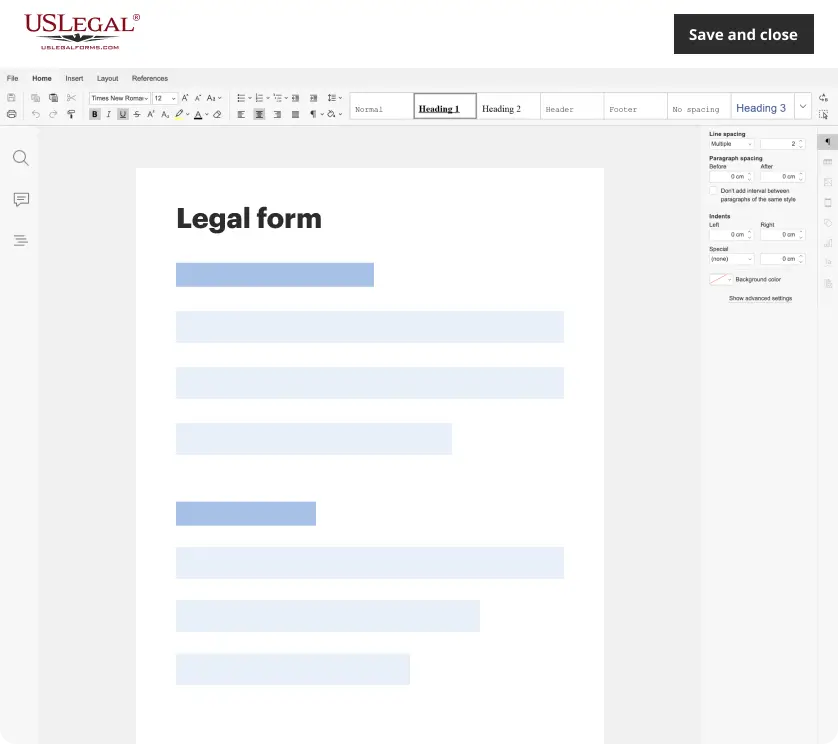
Make edits, fill in missing information, and update formatting in US Legal Forms—just like you would in MS Word.
Download a copy, print it, send it by email, or mail it via USPS—whatever works best for your next step.
Sign and collect signatures with our SignNow integration. Send to multiple recipients, set reminders, and more. Go Premium to unlock E-Sign.
If this form requires notarization, complete it online through a secure video call—no need to meet a notary in person or wait for an appointment.
We protect your documents and personal data by following strict security and privacy standards.
Looking for another form?

Form popularity
FAQ
You can name almost anyone as your beneficiary. such as your children, your parents, siblings, a friend, or your favorite charity. If you are married, your spouse is assumed to be your beneficiary. You will need their permission to designate a different primary beneficiary.
Choose people you want to provide for (and review regularly). A spouse, child, niece, or caretaker—designate the ones you love most or who would benefit from your help. Then revisit your decision when a big life change happens, such as divorce, remarriage, birth, or death.
The Newlywed Game and Beyond. The retirement plan rules specify that for a married participant, the default beneficiary is his or her spouse.
As the beneficiary, you may distribute the account assets in a lump sum without facing a 10% early withdrawal penalty. (If you inherit a Roth IRA, the account must have been open for at least five years to avoid paying a penalty.) There are a couple of downsides to distributing all the assets, however.
More In Retirement Plans Many plans require that the spouse is the primary beneficiary, unless the spouse gives written consent to an alternative beneficiary. A plan participant should review and possibly change his or her beneficiaries when his or her spouse dies.
Whom can I name as beneficiary? You have five basic options: your spouse if married; your children, grandchildren or other individuals; a trust; a charity; or some combination of the above. Most married people name their spouse as beneficiary.
Generally, you can review and update your beneficiary designations by contacting the company or organization that provides your insurance or retirement plan. You can sometimes do this online. Otherwise, you'll have to complete, sign, and mail a paper form.
In most states, a surviving spouse automatically inherits community property assets. This generally includes all property, such as the couple's home, bank accounts, and cars, that the couple comes to own during their marriage. However, property owned before the marriage, gifts, and inheritances are still separate.
The Spouse Is the Automatic Beneficiary for Married People A federal law, the Employee Retirement Income Security Act (ERISA), governs most pensions and retirement accounts.
A4: You can name as beneficiary your estate (in your will), charitable organizations, and/or someone who is not a U.S. citizen and does not have a Social Security number. Once again, we recommend that you consult with an estate planning professional in these cases to avoid any unintended complications.