Loan Payoff Letter Format Foreclosure In Sacramento
Description
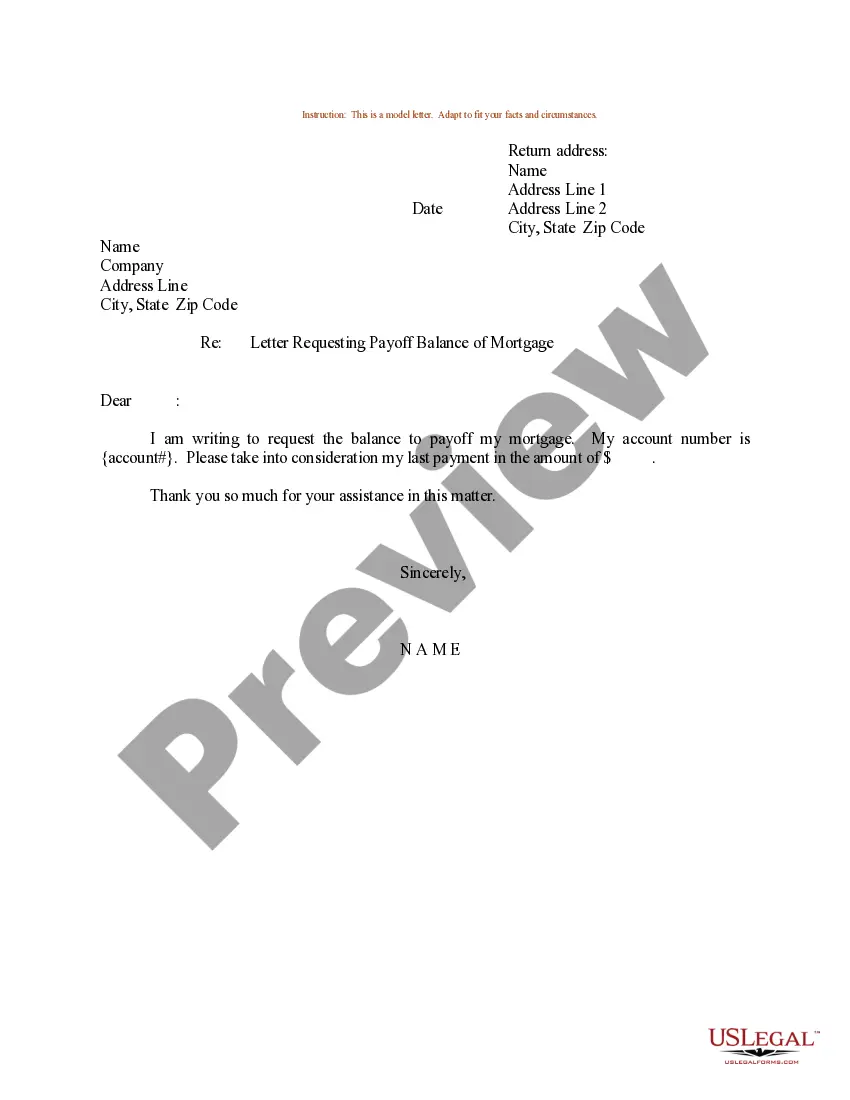
Get your form ready online
Our built-in tools help you complete, sign, share, and store your documents in one place.
Make edits, fill in missing information, and update formatting in US Legal Forms—just like you would in MS Word.
Download a copy, print it, send it by email, or mail it via USPS—whatever works best for your next step.
Sign and collect signatures with our SignNow integration. Send to multiple recipients, set reminders, and more. Go Premium to unlock E-Sign.
If this form requires notarization, complete it online through a secure video call—no need to meet a notary in person or wait for an appointment.
We protect your documents and personal data by following strict security and privacy standards.

Make edits, fill in missing information, and update formatting in US Legal Forms—just like you would in MS Word.

Download a copy, print it, send it by email, or mail it via USPS—whatever works best for your next step.

Sign and collect signatures with our SignNow integration. Send to multiple recipients, set reminders, and more. Go Premium to unlock E-Sign.

If this form requires notarization, complete it online through a secure video call—no need to meet a notary in person or wait for an appointment.

We protect your documents and personal data by following strict security and privacy standards.
Looking for another form?







Form popularity
FAQ
If fact, there are new laws such as California AB 2424 and Civ. Code Section 2924f that guarantee foreclosure postponement if you have the right representation! The most direct way to avoid foreclosure is to cure the default by paying the past due payments all at once.
Notification: After the foreclosure sale, you will receive a notice from the trustee if surplus funds are available. The trustee must also file a report with the court. Filing a Claim: Submit a claim form to the trustee or the court, detailing your right to the surplus funds.
Notification: After the foreclosure sale, you will receive a notice from the trustee if surplus funds are available. The trustee must also file a report with the court. Filing a Claim: Submit a claim form to the trustee or the court, detailing your right to the surplus funds.
Homeowners can obtain it from the Clerk of Court or their attorney. Former homeowners must prove they were the owner of record at the time of foreclosure, while lienholders must present valid claims. Claims must be filed with the Clerk of Court, typically within a year or two after the foreclosure sale.
Under New Hampshire law, the borrower typically receives just one warning about the foreclosure sale: a notice of sale. The lender has to personally serve the notice of sale to the borrower or mail it at least 45 days before the sale and publish it in a newspaper once a week for three weeks before the sale. (N.H. Rev.
Notification: After the foreclosure sale, you will receive a notice from the trustee if surplus funds are available. The trustee must also file a report with the court. Filing a Claim: Submit a claim form to the trustee or the court, detailing your right to the surplus funds.
California's new foreclosure laws emphasize homeowners' rights and aim to reduce the stress associated with foreclosure. Some of the most impactful changes include: Enhanced Notification: Lenders must give more straightforward notices with specific timelines, allowing titleholders to understand their options.
If you live in the City of Los Angeles, renters in good standing cannot be evicted because of a foreclosure. (See details below.) If you live anywhere else in California, renters get until the end of their lease, or at least 90 days, to move out in a foreclosure.
Generally, surplus funds are distributed in 30 to 120 days.
Right to Redeem After a Judicial Foreclosure Under California Law. If the foreclosure is judicial, you may generally redeem the home within: three months after the foreclosure sale, if the proceeds from the sale satisfy the indebtedness, or. one year if the sale resulted in a deficiency.

