Loan Payoff Letter Format For Audit In Michigan
Description
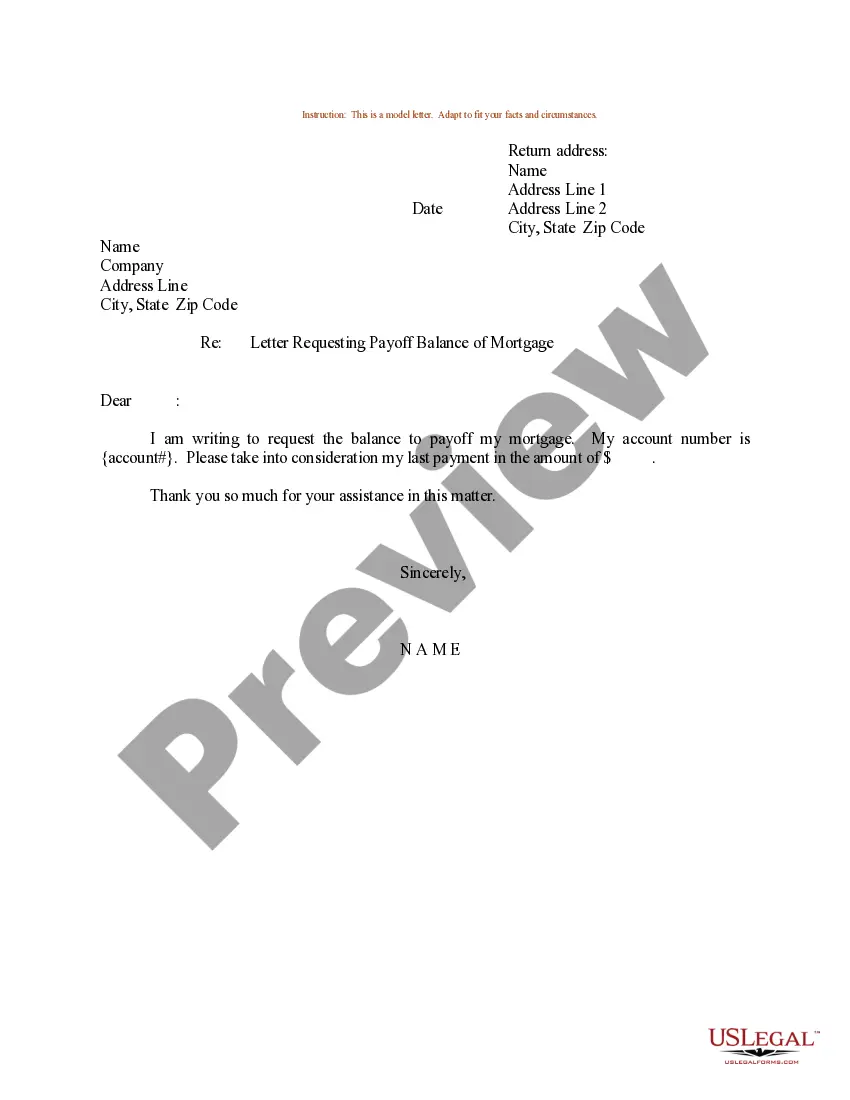
Get your form ready online
Our built-in tools help you complete, sign, share, and store your documents in one place.
Make edits, fill in missing information, and update formatting in US Legal Forms—just like you would in MS Word.
Download a copy, print it, send it by email, or mail it via USPS—whatever works best for your next step.
Sign and collect signatures with our SignNow integration. Send to multiple recipients, set reminders, and more. Go Premium to unlock E-Sign.
If this form requires notarization, complete it online through a secure video call—no need to meet a notary in person or wait for an appointment.
We protect your documents and personal data by following strict security and privacy standards.

Make edits, fill in missing information, and update formatting in US Legal Forms—just like you would in MS Word.

Download a copy, print it, send it by email, or mail it via USPS—whatever works best for your next step.

Sign and collect signatures with our SignNow integration. Send to multiple recipients, set reminders, and more. Go Premium to unlock E-Sign.

If this form requires notarization, complete it online through a secure video call—no need to meet a notary in person or wait for an appointment.

We protect your documents and personal data by following strict security and privacy standards.
Looking for another form?







Form popularity
FAQ
To get a payoff letter, ask your lender for an official payoff statement. Call or write to customer service or make the request online. While logged into your account, look for options to request or calculate a payoff amount, and provide details such as your desired payoff date.
Unreported income The IRS receives copies of your W-2s and 1099s, and their systems automatically compare this data to the amounts you report on your tax return. A discrepancy, such as a 1099 that isn't reported on your return, could trigger further review.
Federal audits focus on federal tax returns and are performed by the IRS. State audits focus on state tax returns and are performed by a state's Department of Revenue. Even though state and federal tax returns are typically prepared at the same time, it's possible to have issues with one and not the other.
The Michigan Department of Treasury may generally audit a taxpayer's return up to four years after it is filed. The Department may audit a taxpayer if they suspect problems with their tax return.
The 6 year period, known as the statute of limitations, may be extended by certain actions such as a court judgment. By law, the Department may use a variety of actions to collect your past-due tax, penalty and interest and may take these actions at any time during the course of collection.
What percentage of tax returns are audited? Your chance is actually very low — this year, 2022, the individual's odds of being audited by the IRS is around 0.4%. However, keep alert for the IRS audit triggers.
10 Best Practices for Writing a Digestible Audit Report Reference everything. Include a reference section. Use figures, visuals, and text stylization. Contextualize the audit. Include positive and negative findings. Ensure every issue incorporates the five C's of observations. Include detailed observations.
Examples of audit documentation include memoranda, confirmations, correspondence, schedules, audit programs, and letters of representation. Audit documentation may be in the form of paper, electronic files, or other media.
An IRS audit letter typically contains the taxpayer's name, tax ID number, contact information, and a request for additional documentation to support claims on the tax return. It may also include the name of the IRS officer handling the case and invite the taxpayer to a meeting.

