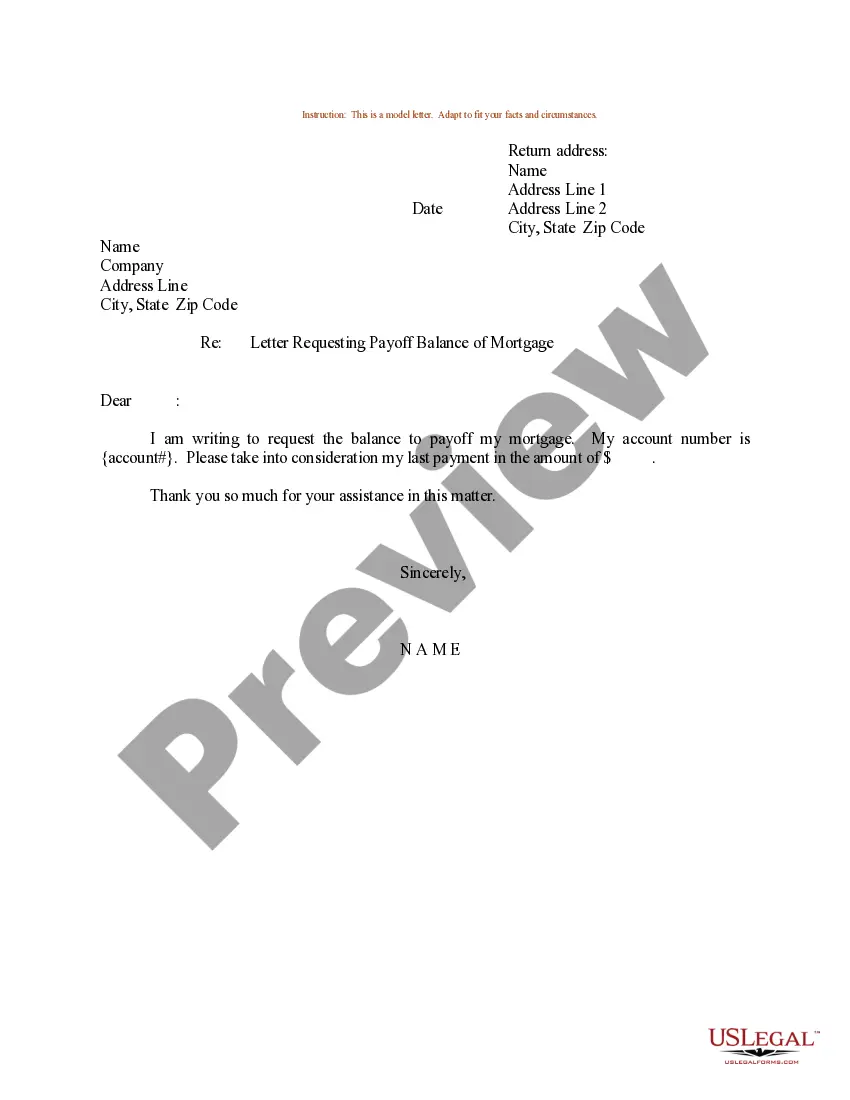
Loan Payoff Letter Example For Students In Massachusetts
Description
Get your form ready online
Our built-in tools help you complete, sign, share, and store your documents in one place.
Make edits, fill in missing information, and update formatting in US Legal Forms—just like you would in MS Word.
Download a copy, print it, send it by email, or mail it via USPS—whatever works best for your next step.
Sign and collect signatures with our SignNow integration. Send to multiple recipients, set reminders, and more. Go Premium to unlock E-Sign.
If this form requires notarization, complete it online through a secure video call—no need to meet a notary in person or wait for an appointment.
We protect your documents and personal data by following strict security and privacy standards.

Make edits, fill in missing information, and update formatting in US Legal Forms—just like you would in MS Word.

Download a copy, print it, send it by email, or mail it via USPS—whatever works best for your next step.

Sign and collect signatures with our SignNow integration. Send to multiple recipients, set reminders, and more. Go Premium to unlock E-Sign.

If this form requires notarization, complete it online through a secure video call—no need to meet a notary in person or wait for an appointment.

We protect your documents and personal data by following strict security and privacy standards.
Looking for another form?








Form popularity
FAQ
Income Exclusion for Forgiveness of Student Loans In tax year 2022 and thereafter, Massachusetts excludes from gross income such income that is attributable to the forgiveness of certain student loans pursuant to G.L. 62, § 2(a)(2)(R).
If you have loans that have been in repayment for more than 20 or 25 years, those loans may immediately qualify for forgiveness. Borrowers who have reached 20 or 25 years (240 or 300 months) worth of eligible payments for IDR forgiveness will see their loans forgiven as they reach these milestones.
Borrowers on the Income-Based Repayment (IBR) Plan will have any remaining balance on their loans forgiven after 20 or 25 years, depending on when they took out their loans. The income-driven repayment plan application is available and includes the option to enroll in the IBR Plan.
Is the ERC Tax Credit Taxable for Massachusetts? The ERC tax credit does not count towards income tax in Massachusetts. Businesses who earn over the amount they owed in taxes for that calendar year will receive the rest as a refund.
First, you'll need to contact your lender and let them know you want the information. Depending on your lender, you may have to sign in to an online account, call a helpline, or send a formal letter to start the request process.
To get a payoff letter, ask your lender for an official payoff statement. Call or write to customer service or make the request online. While logged into your account, look for options to request or calculate a payoff amount, and provide details such as your desired payoff date.
There's a process to getting the mortgage payoff statement. First, you'll need to contact your lender and let them know you want the information. Depending on your lender, you may have to sign in to an online account, call a helpline, or send a formal letter to start the request process.

