E Commerce Agreement Template With Answers In Washington
Description

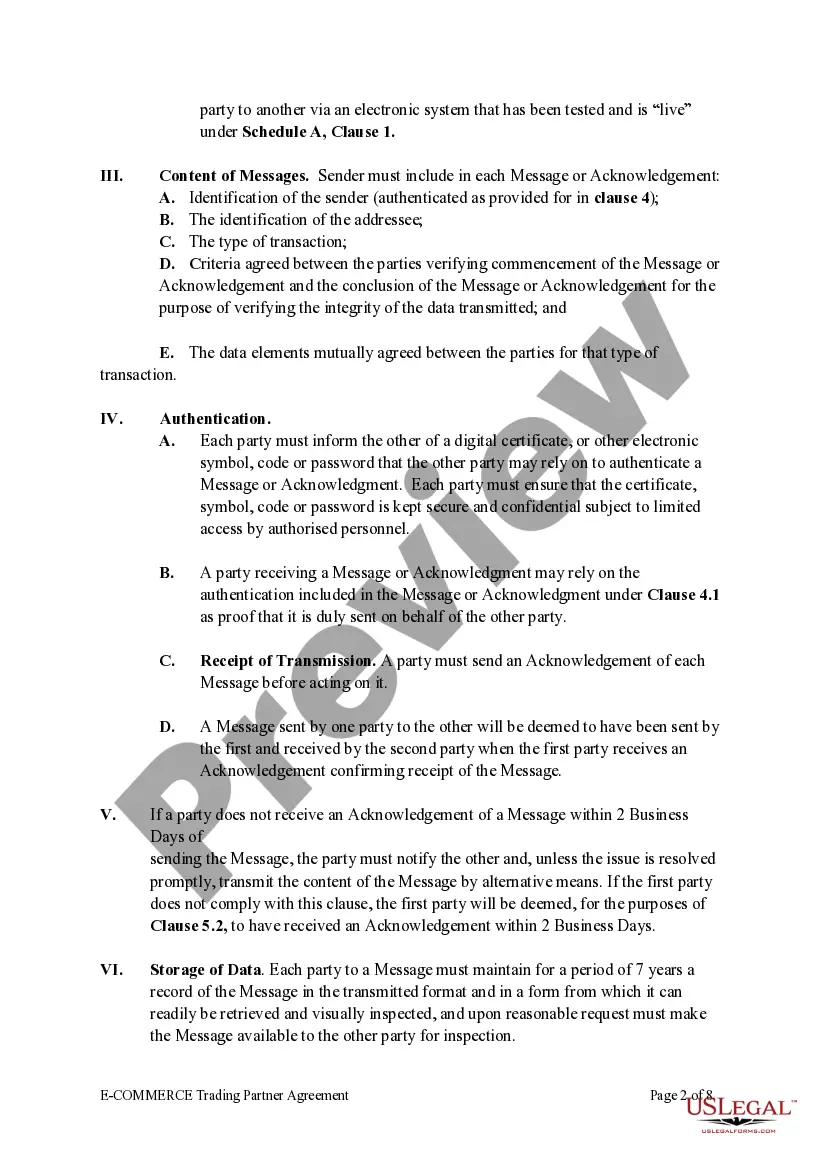
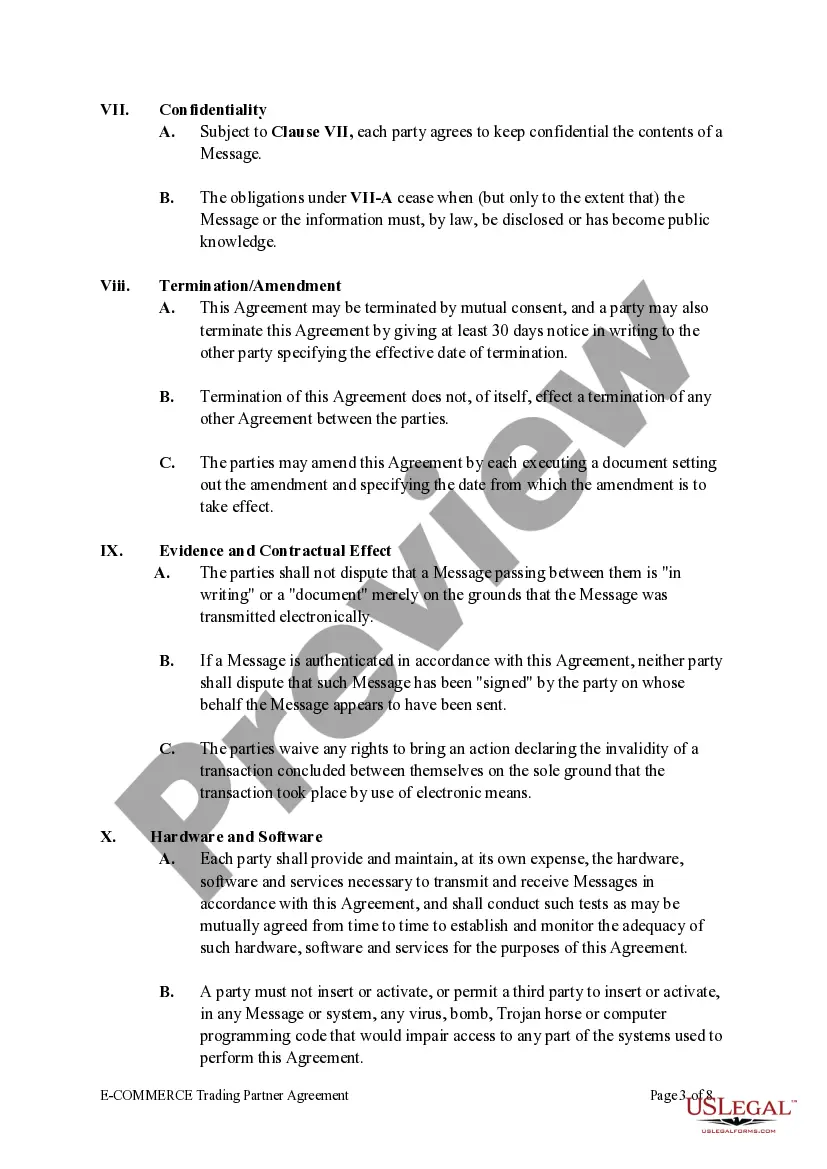
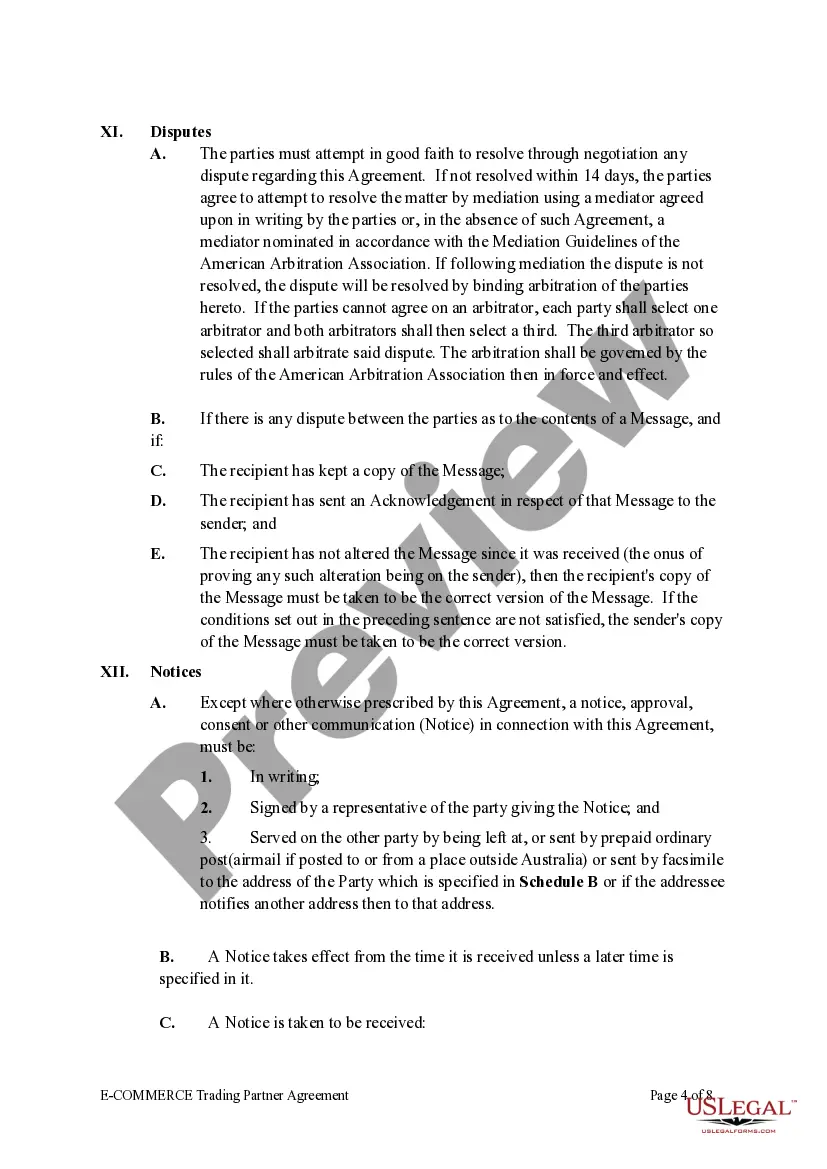
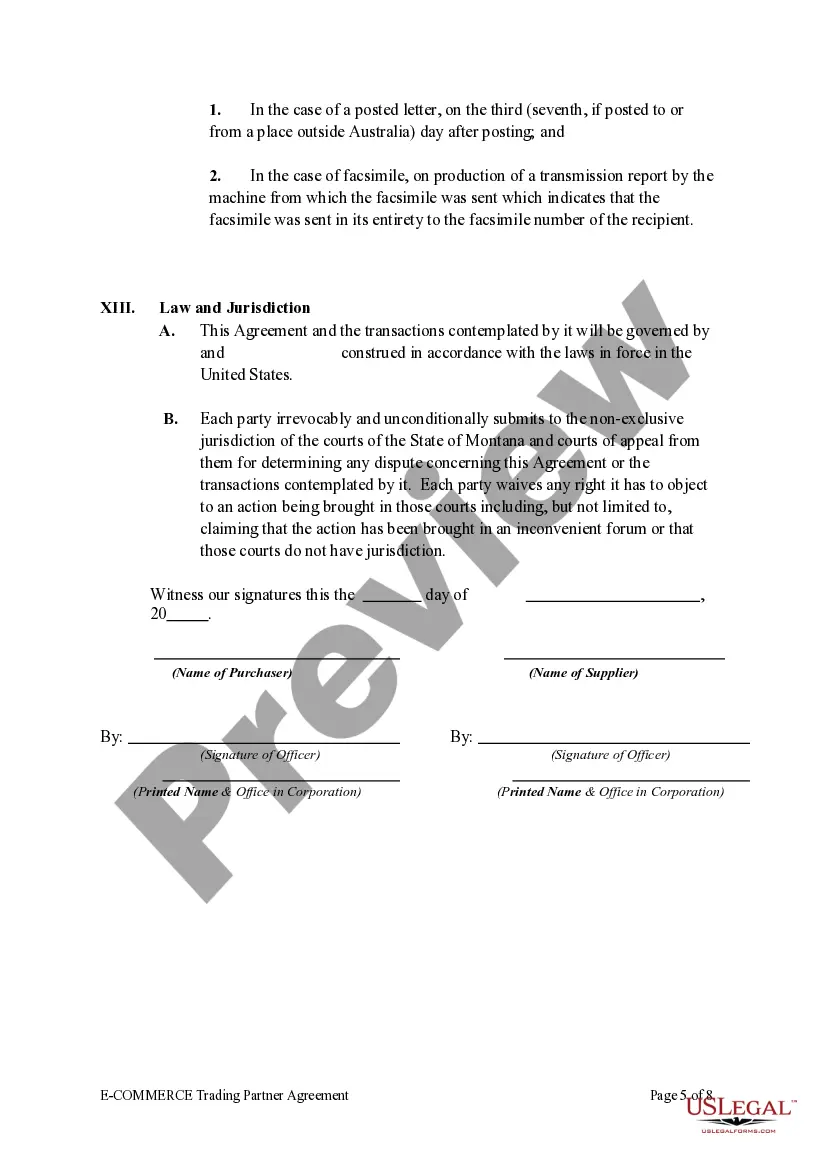
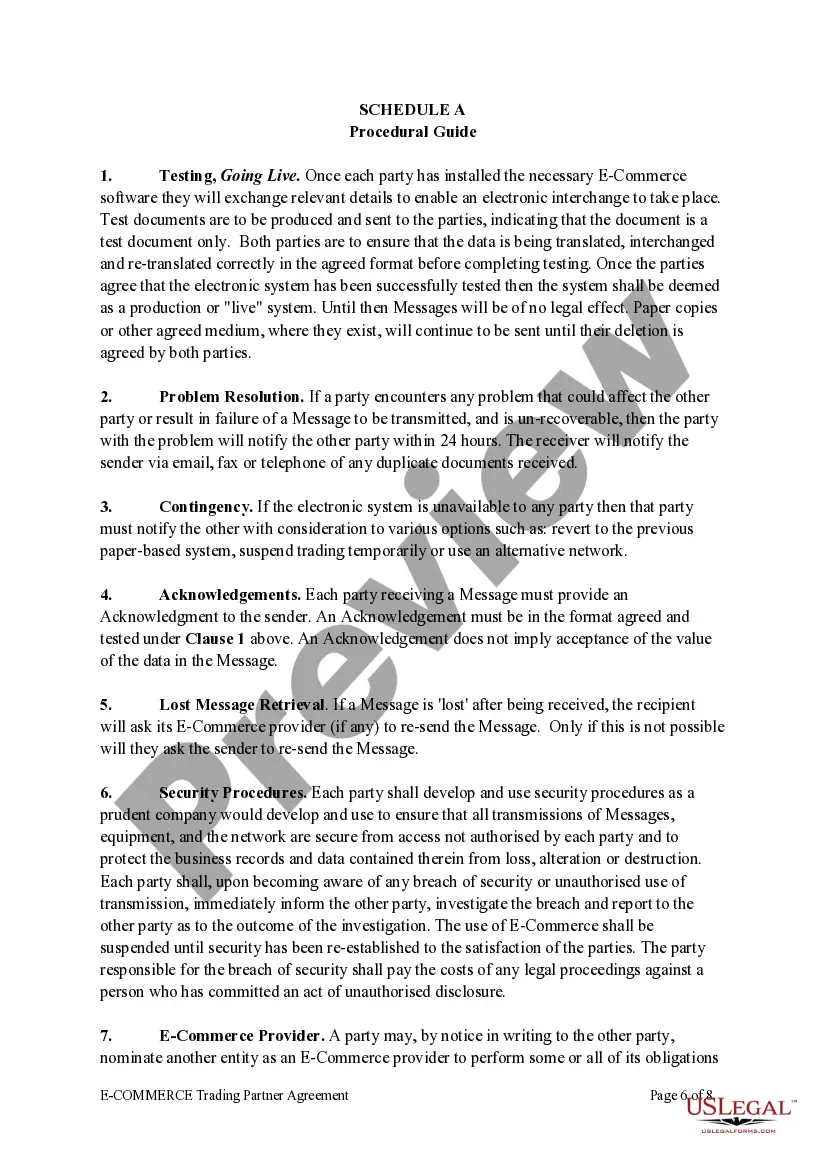
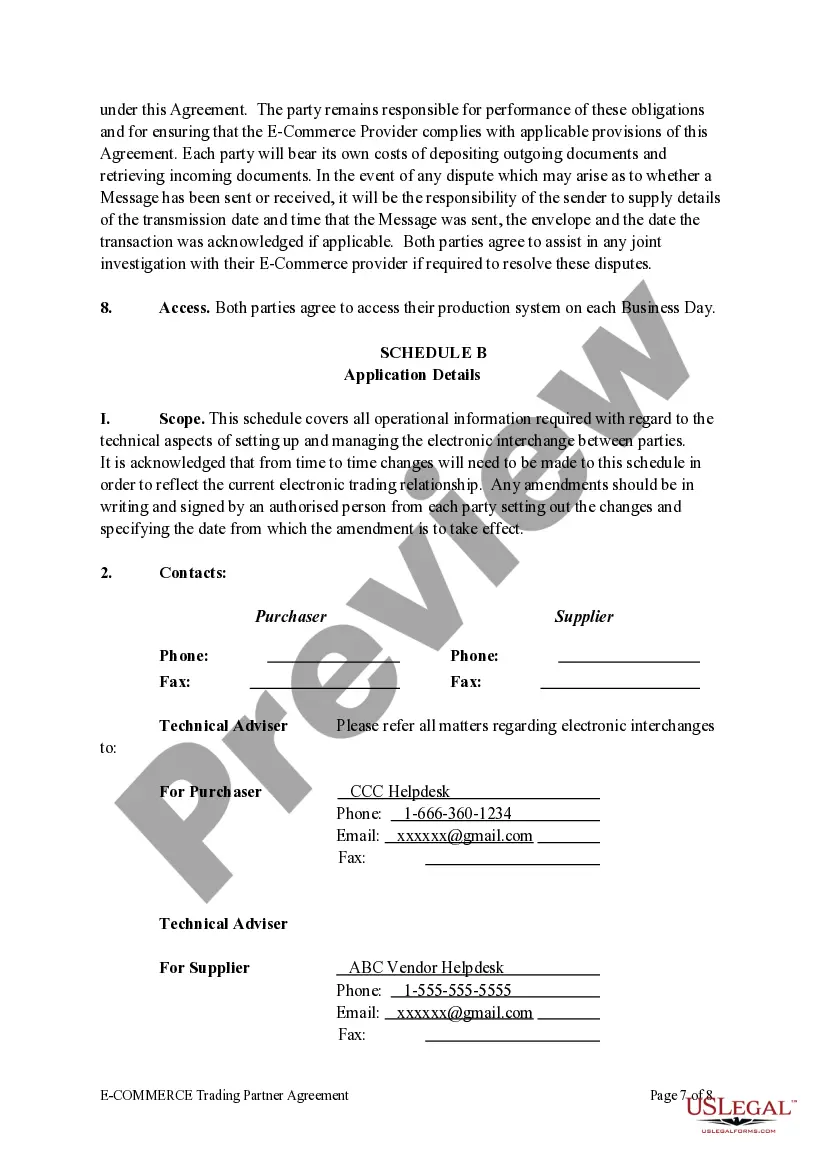

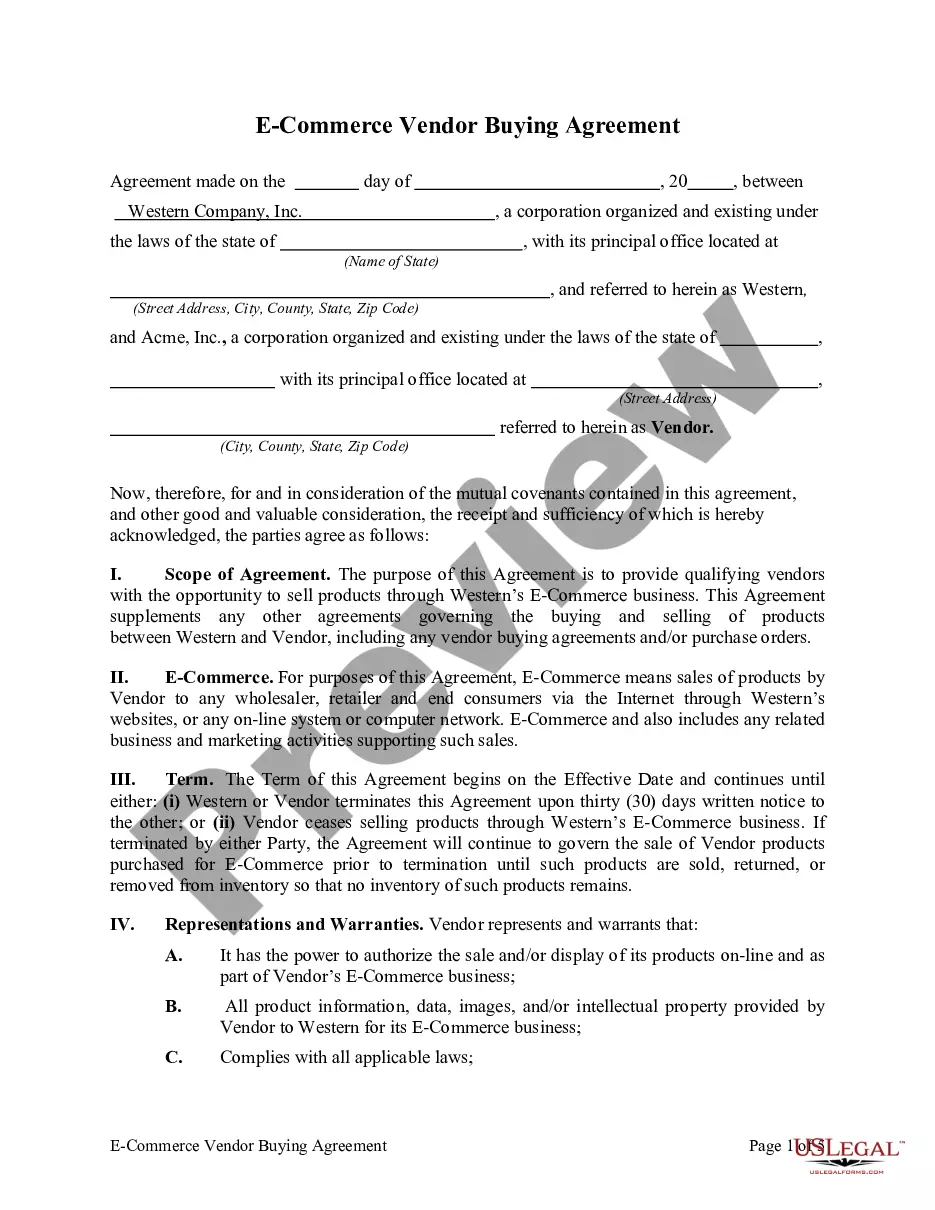
Get your form ready online
Our built-in tools help you complete, sign, share, and store your documents in one place.
Make edits, fill in missing information, and update formatting in US Legal Forms—just like you would in MS Word.
Download a copy, print it, send it by email, or mail it via USPS—whatever works best for your next step.
Sign and collect signatures with our SignNow integration. Send to multiple recipients, set reminders, and more. Go Premium to unlock E-Sign.
If this form requires notarization, complete it online through a secure video call—no need to meet a notary in person or wait for an appointment.
We protect your documents and personal data by following strict security and privacy standards.

Make edits, fill in missing information, and update formatting in US Legal Forms—just like you would in MS Word.

Download a copy, print it, send it by email, or mail it via USPS—whatever works best for your next step.

Sign and collect signatures with our SignNow integration. Send to multiple recipients, set reminders, and more. Go Premium to unlock E-Sign.

If this form requires notarization, complete it online through a secure video call—no need to meet a notary in person or wait for an appointment.

We protect your documents and personal data by following strict security and privacy standards.
Looking for another form?








Form popularity
FAQ
How to write an effective business contract agreement #1 Incorporate details about relevant stakeholders. #2 Define the purpose of the contract. #3 Include key terms and conditions. #4 Outline the responsibilities of all parties. #5 Review and edit. #6 Provide enough space for signatures and dates.
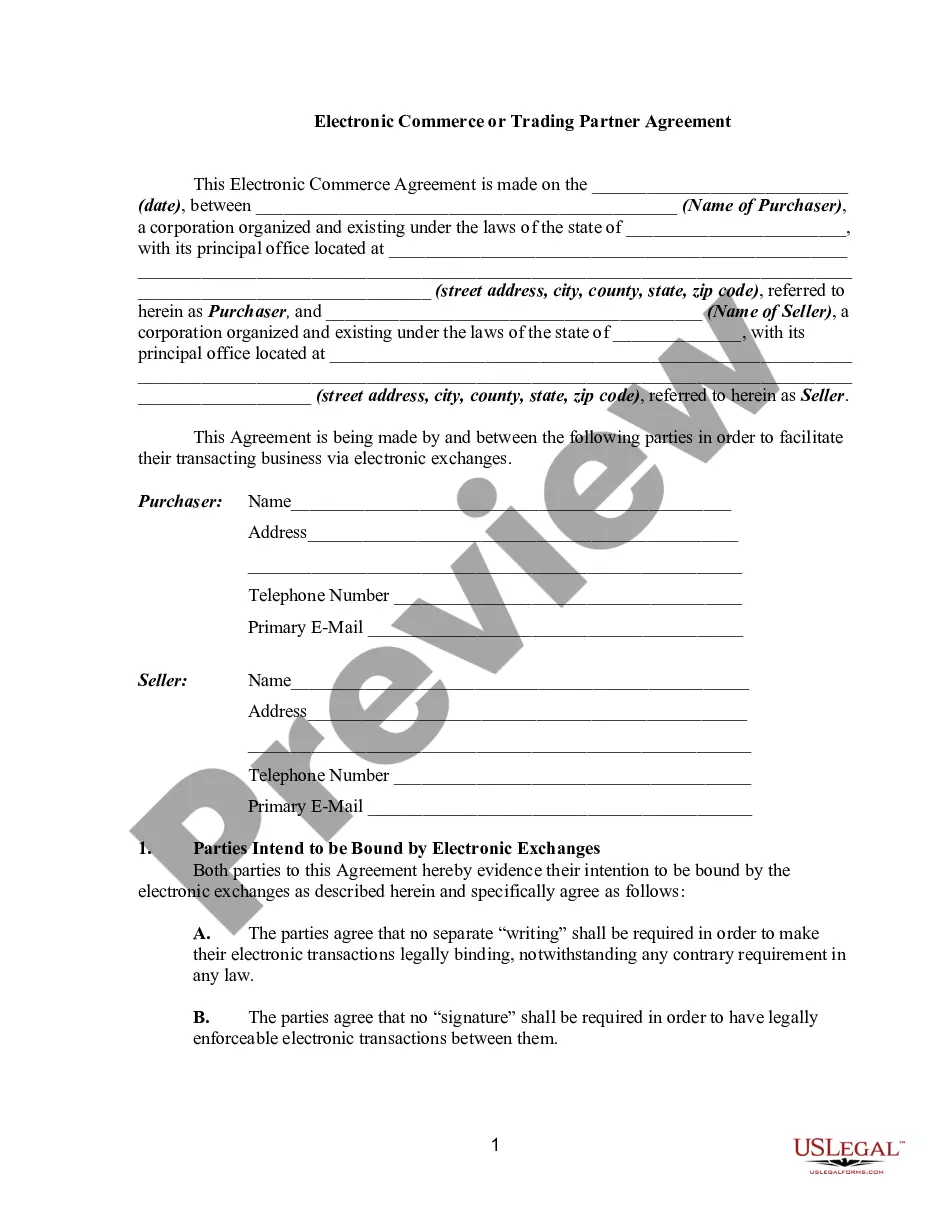
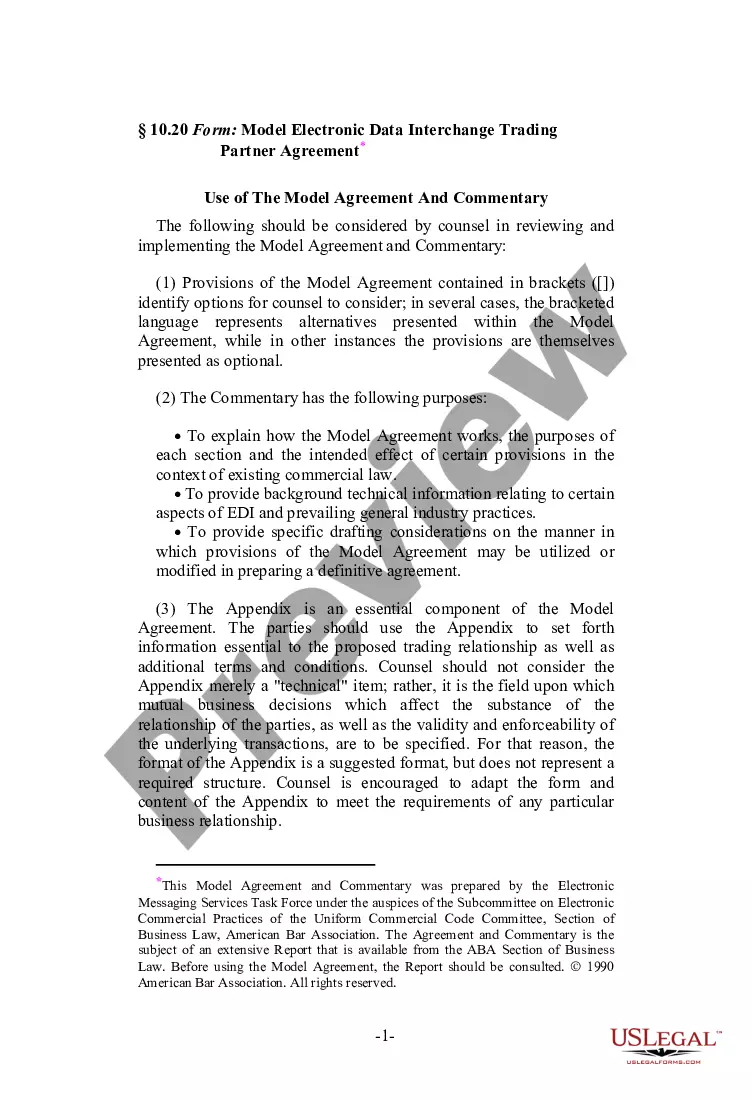
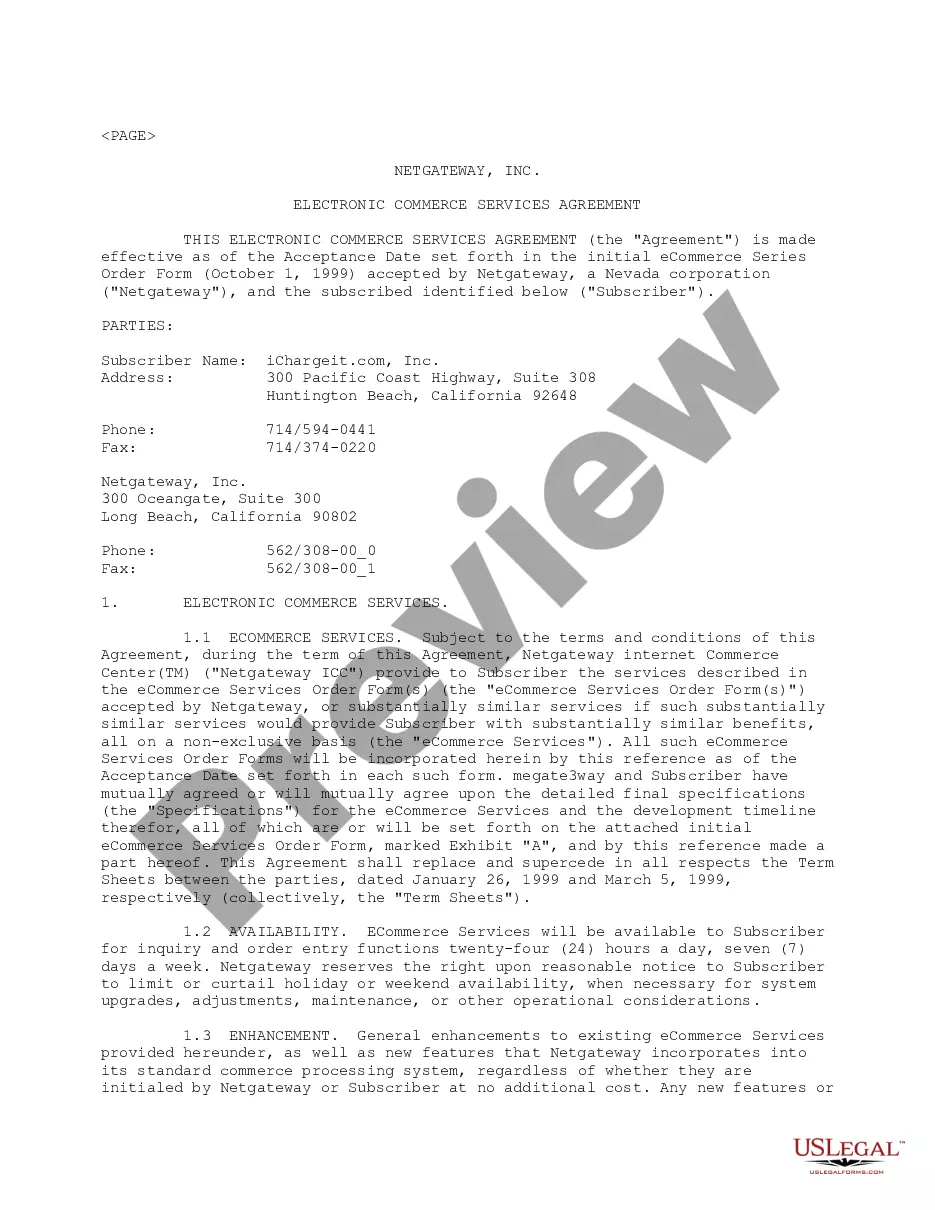
ECommerce agreements disclose the contractual relationship and obligations between a website owner and its commercial users.
The Electronic Signatures in Global and National Commerce Act (E-Sign Act), 1 signed into law on June 30, 2000, provides a general rule of validity for electronic records and signatures for transactions in or affecting interstate or foreign commerce.
How to write an effective business contract agreement #1 Incorporate details about relevant stakeholders. #2 Define the purpose of the contract. #3 Include key terms and conditions. #4 Outline the responsibilities of all parties. #5 Review and edit. #6 Provide enough space for signatures and dates.
Here are some tips on how to write a partnership agreement: Define Partnership Structure. Outline Capital Contributions and Ownership. Detail Profit, Loss, and Distribution Arrangements. Set Decision-Making and Management Protocols. Plan for Changes and Contingencies. Include Legal Provisions and Finalize the Agreement.
Terms and conditions are aimed at protecting the business (you). They give business owners the opportunity to set their rules (within applicable law) of how their service or product may be used including, but not limited to, things like copyright conditions, age limits, and the governing law of the contract.
How To Write Terms and Conditions – Step by Step Write the Introduction. Draft the Terms of Service. Create an Acknowledgment Statement. Limit Your Liability. List Who Owns Intellectual Property Rights. Generate a Privacy Policy. Spell Out What Happens for Non-Compliance. Add a Signature and Dateline for Both Parties.
Some quick examples are the use of the content (copyright) , the rules that users must follow while interacting with one another on the website / app and, finally, rules related to the cancellation or suspension of a user's account etc.