Ecommerce Term Com For Business
Description
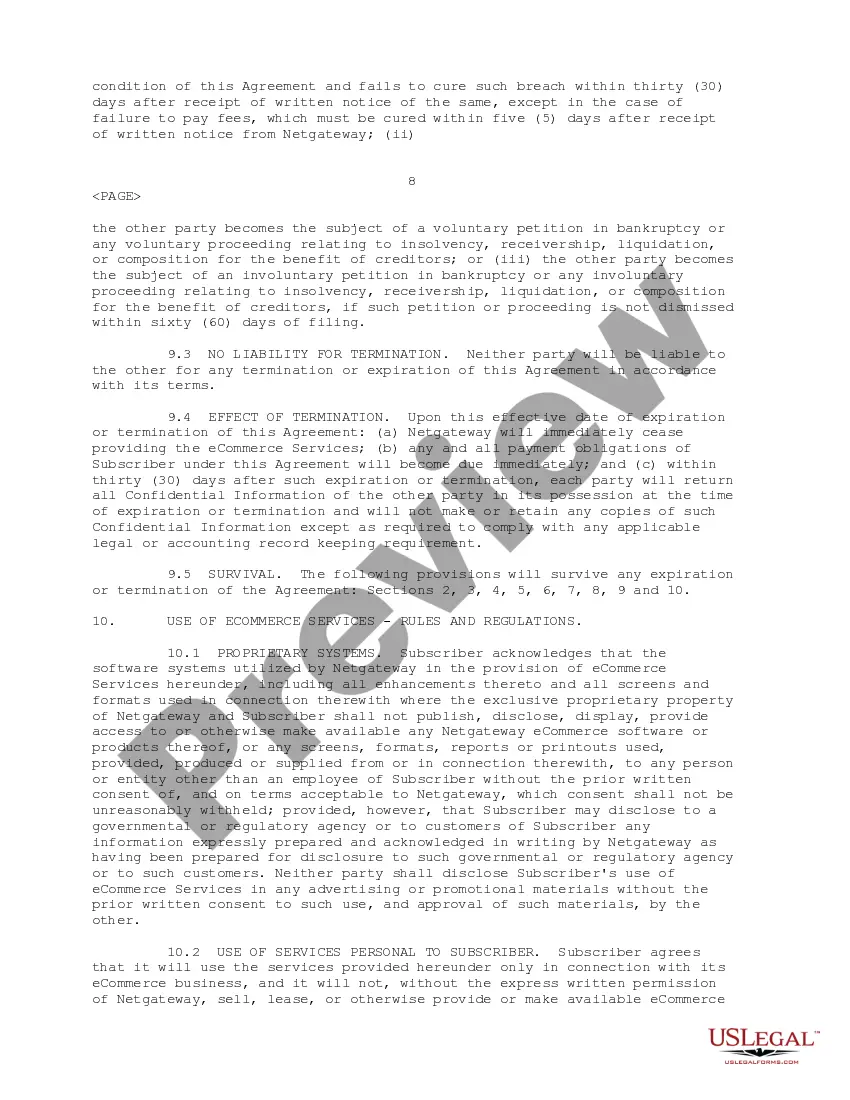
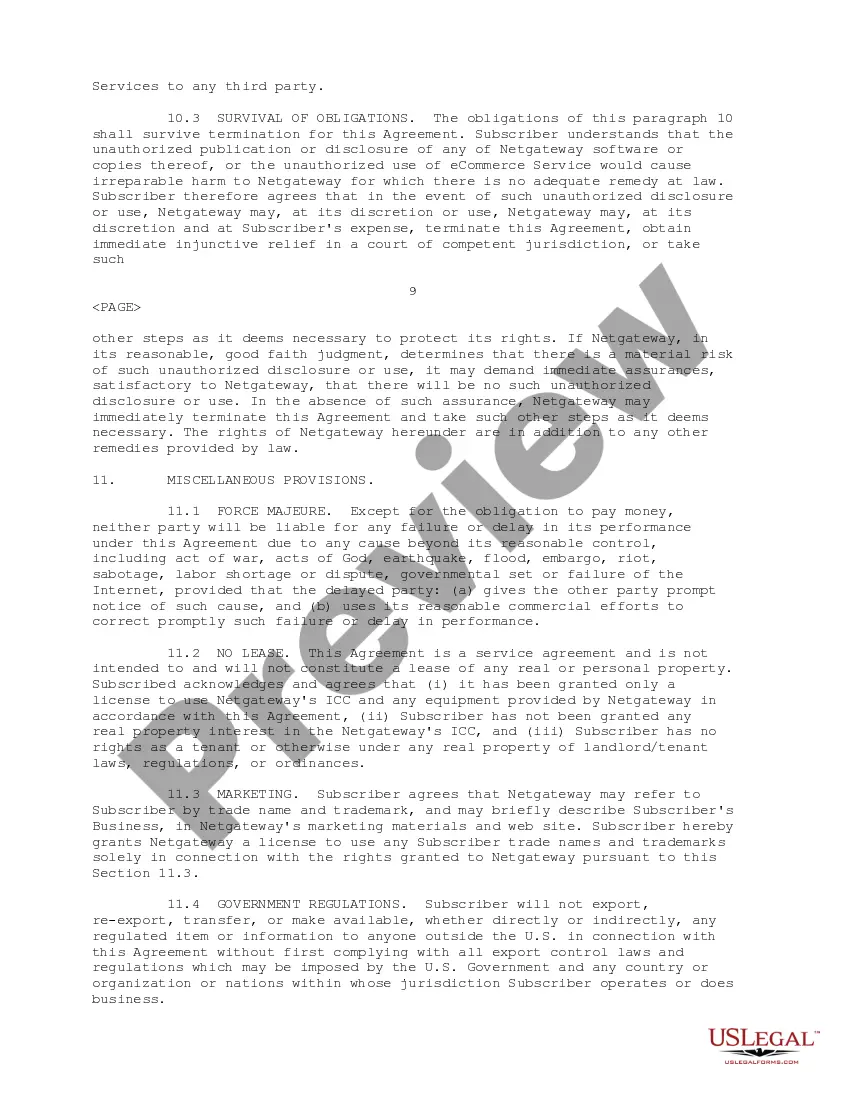



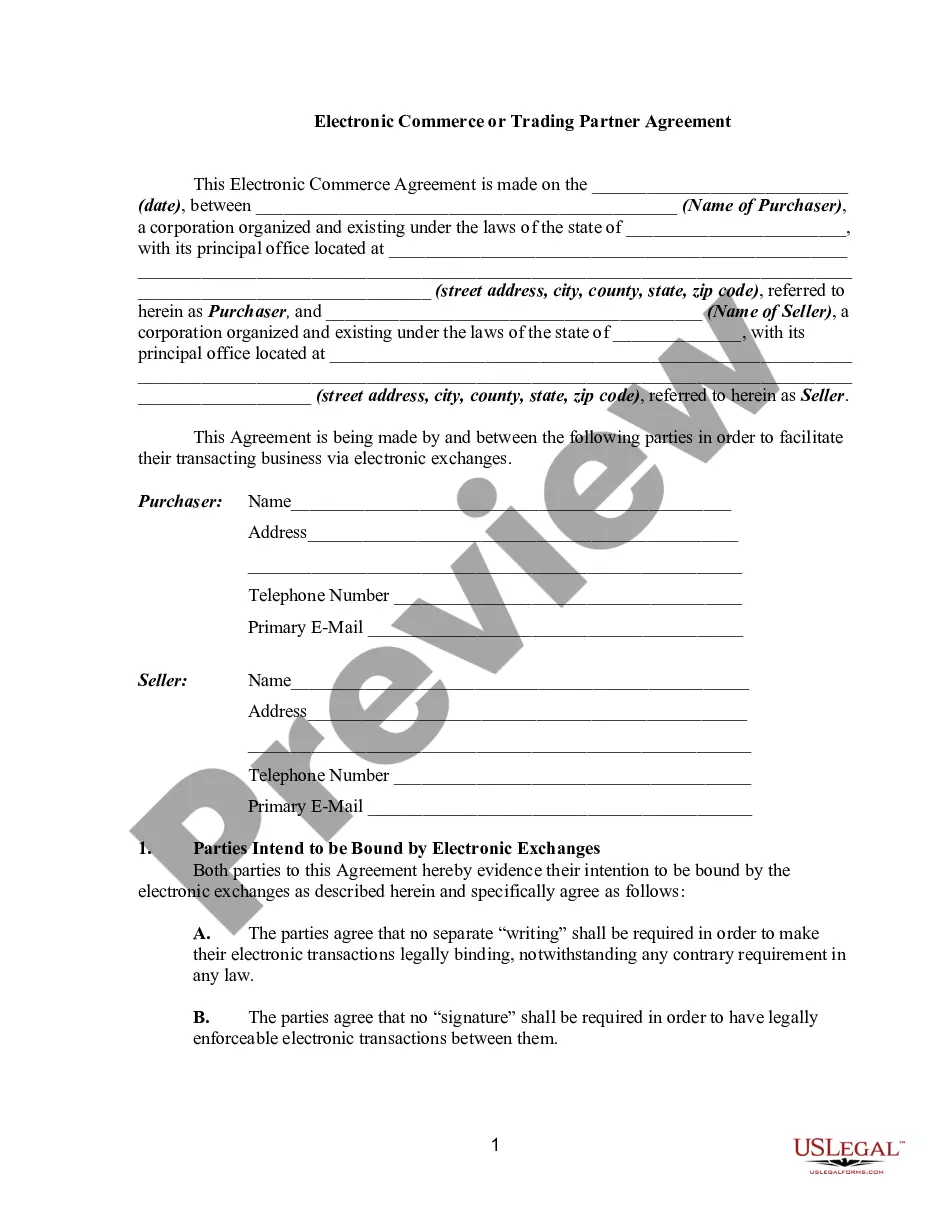
Get your form ready online
Our built-in tools help you complete, sign, share, and store your documents in one place.
Make edits, fill in missing information, and update formatting in US Legal Forms—just like you would in MS Word.
Download a copy, print it, send it by email, or mail it via USPS—whatever works best for your next step.
Sign and collect signatures with our SignNow integration. Send to multiple recipients, set reminders, and more. Go Premium to unlock E-Sign.
If this form requires notarization, complete it online through a secure video call—no need to meet a notary in person or wait for an appointment.
We protect your documents and personal data by following strict security and privacy standards.

Make edits, fill in missing information, and update formatting in US Legal Forms—just like you would in MS Word.

Download a copy, print it, send it by email, or mail it via USPS—whatever works best for your next step.

Sign and collect signatures with our SignNow integration. Send to multiple recipients, set reminders, and more. Go Premium to unlock E-Sign.

If this form requires notarization, complete it online through a secure video call—no need to meet a notary in person or wait for an appointment.

We protect your documents and personal data by following strict security and privacy standards.
Looking for another form?
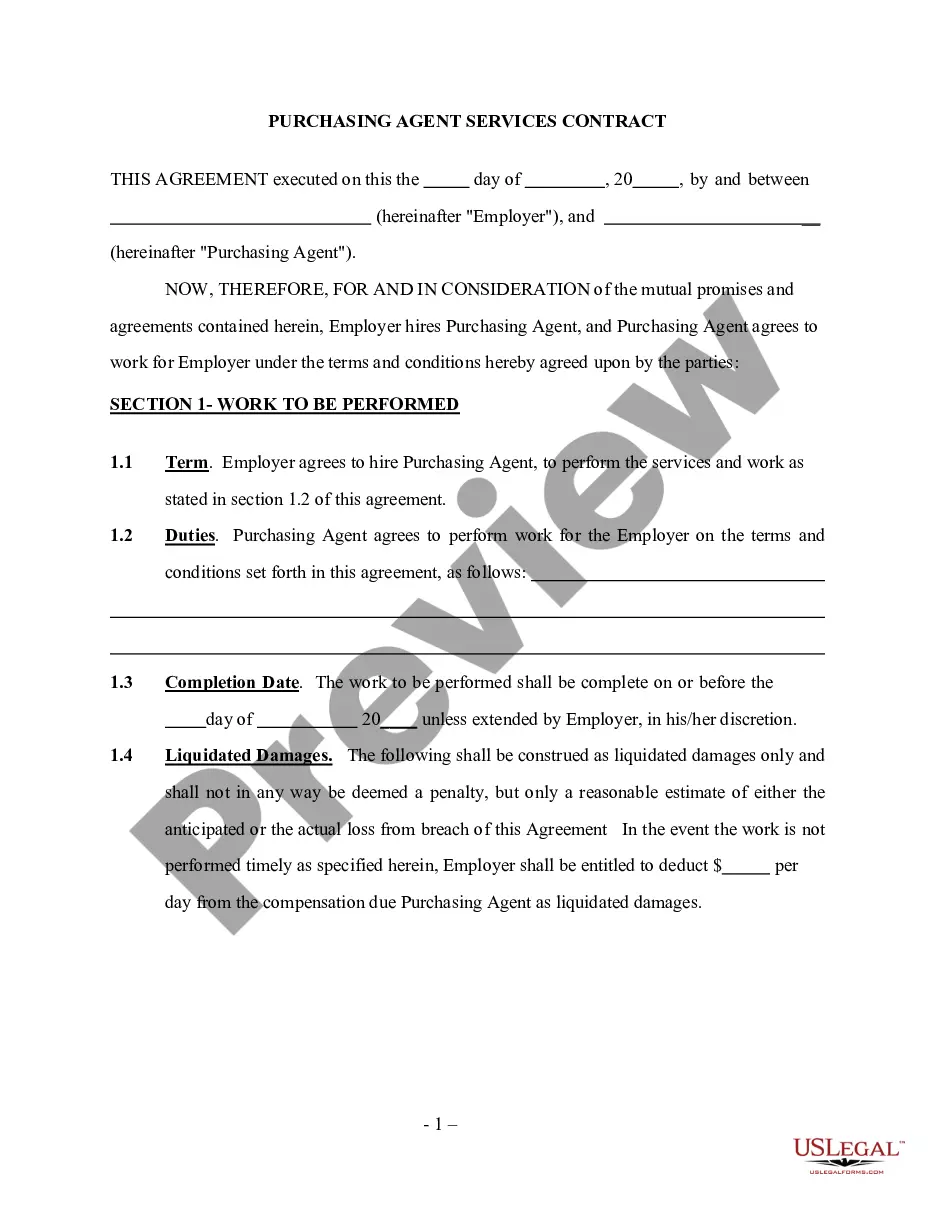

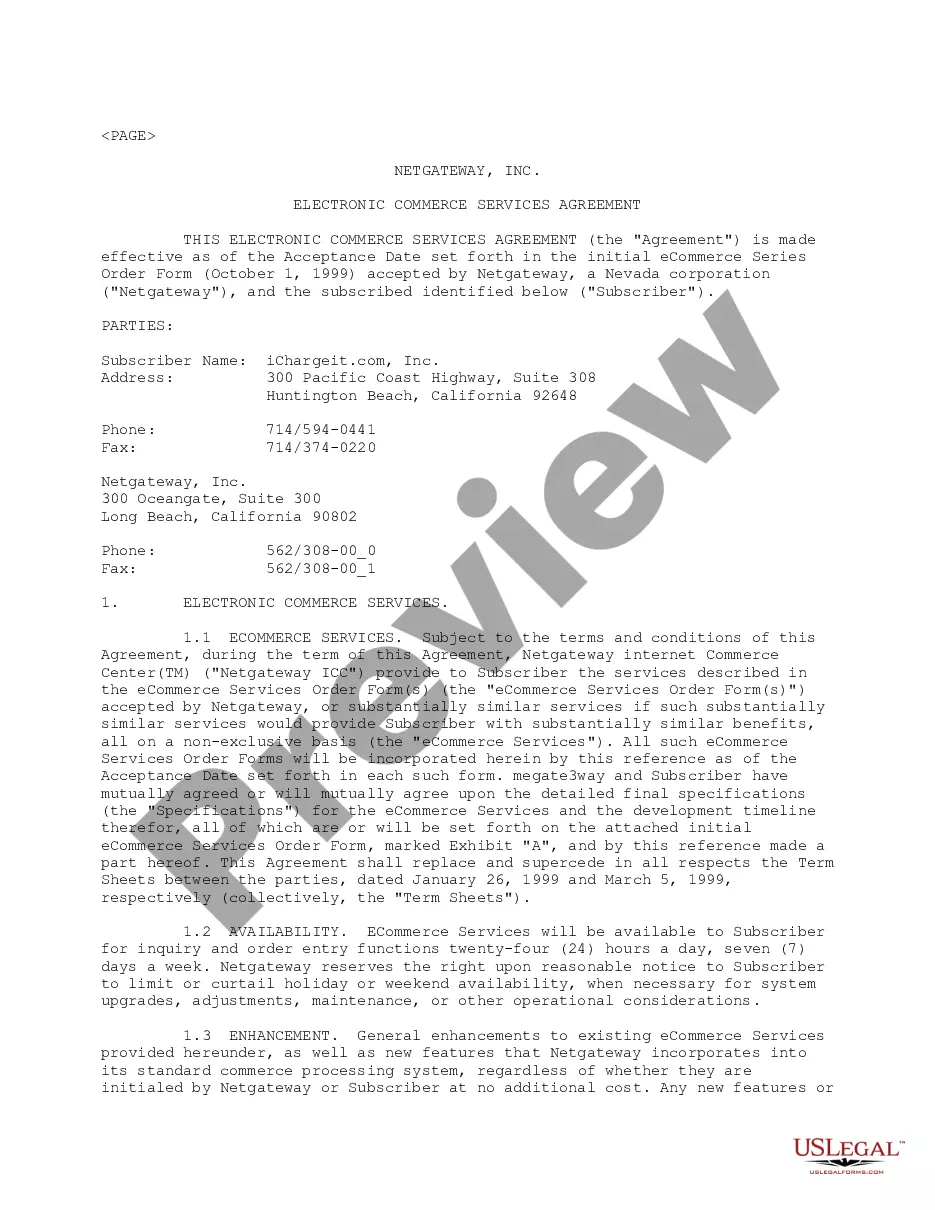
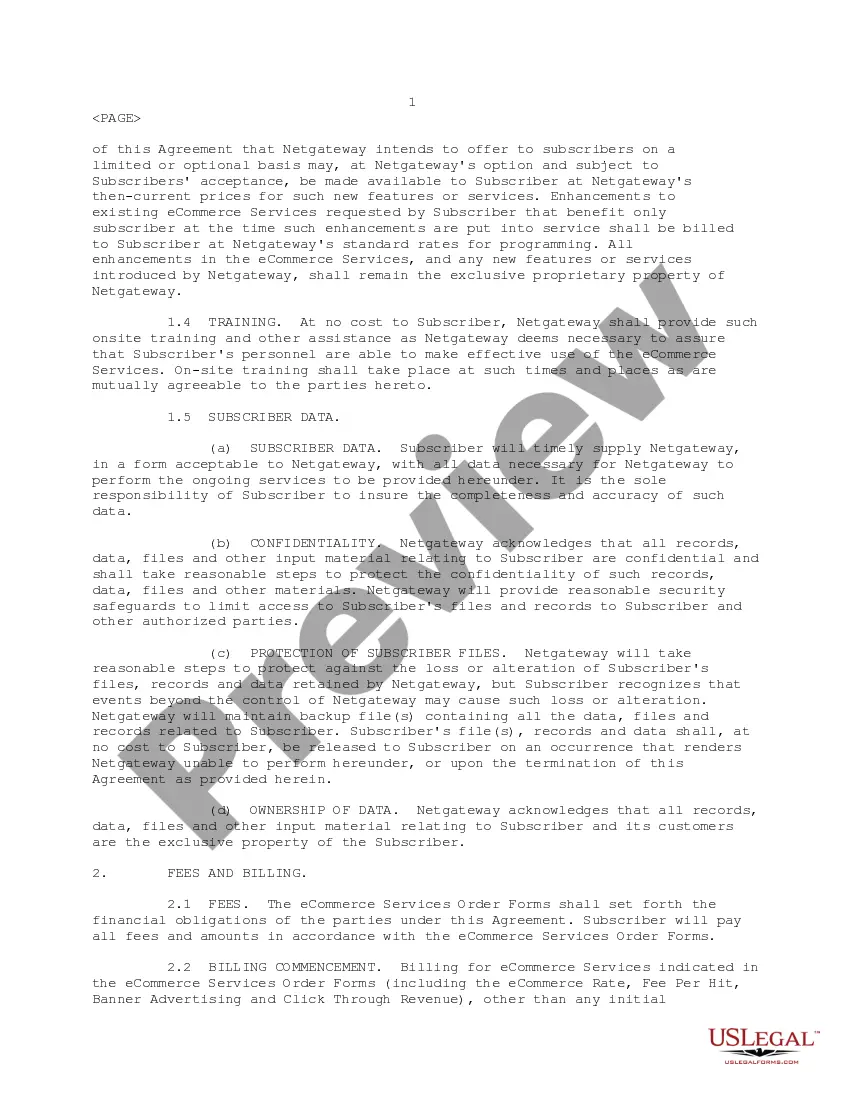
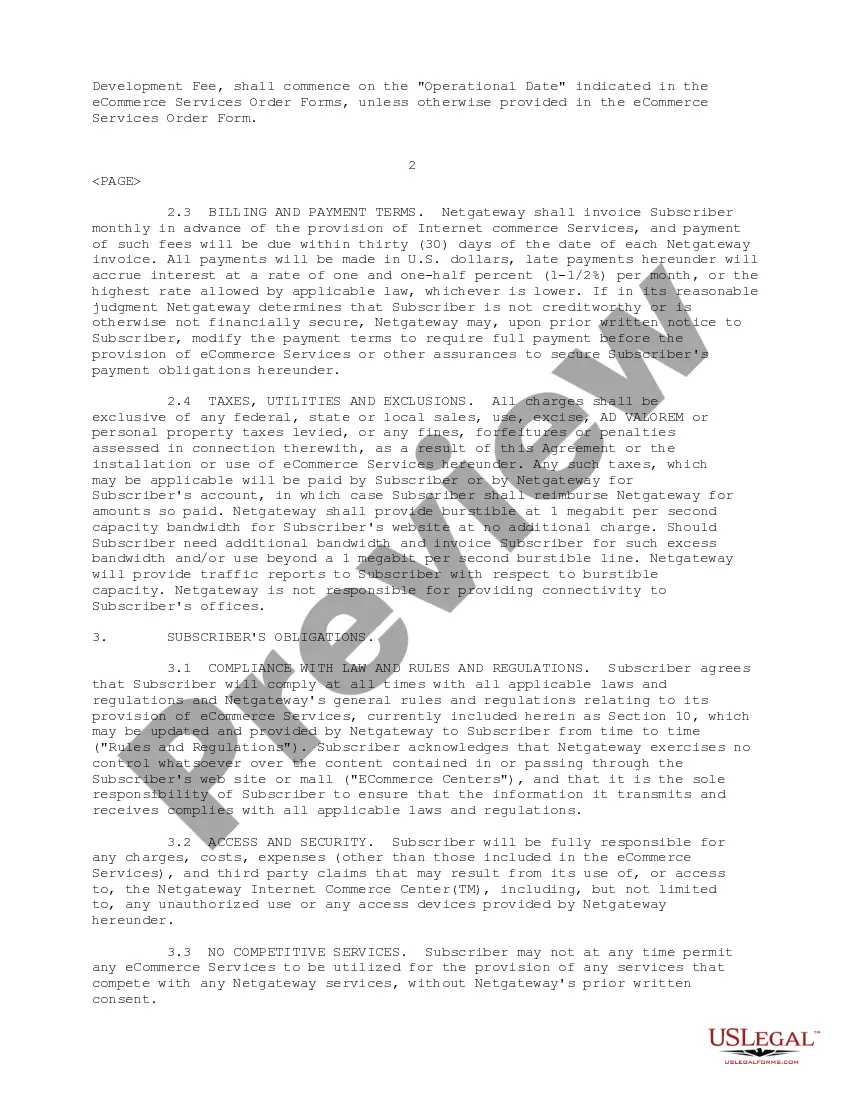
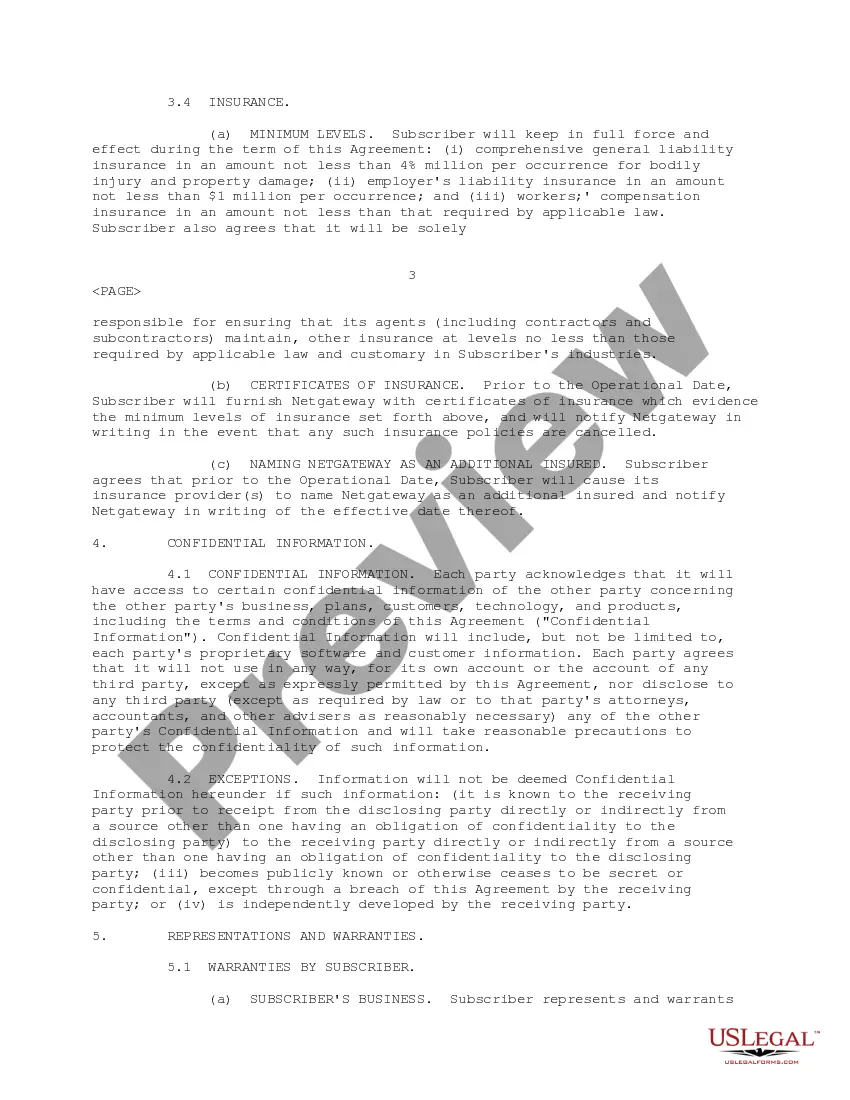
How to fill out Electronic Commerce Service Agreement?
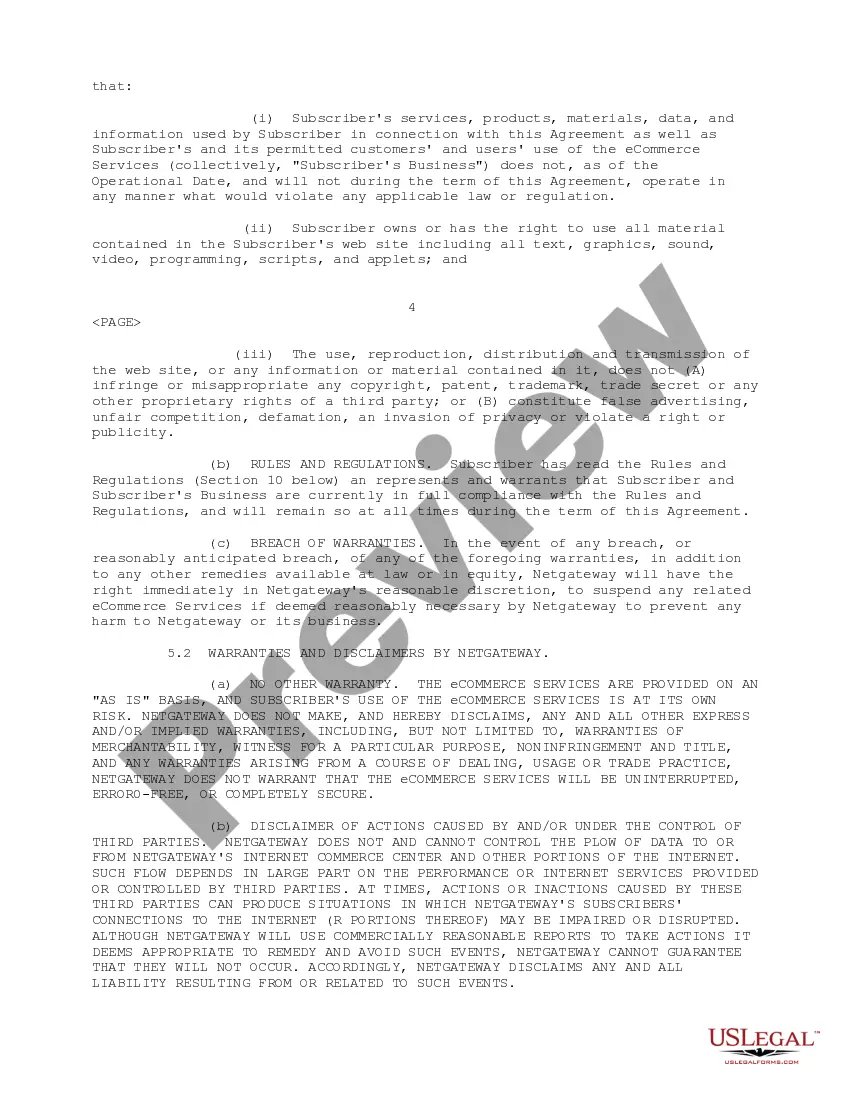
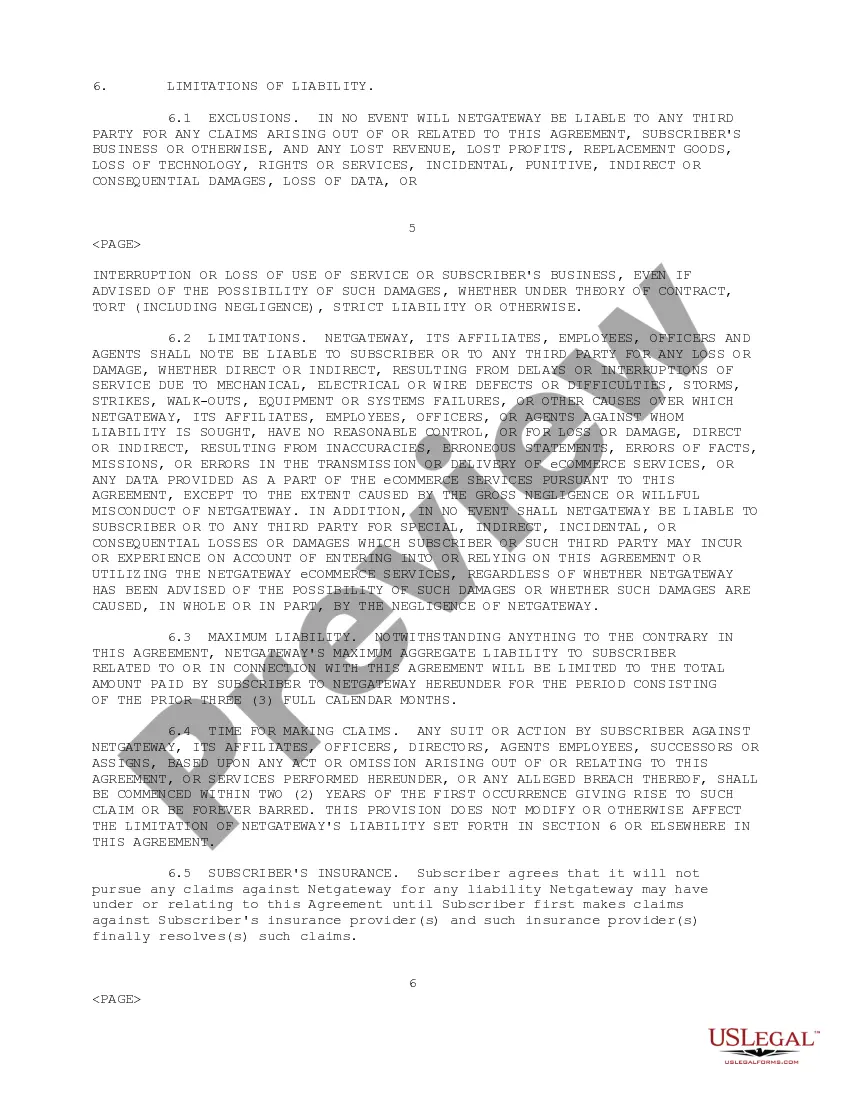
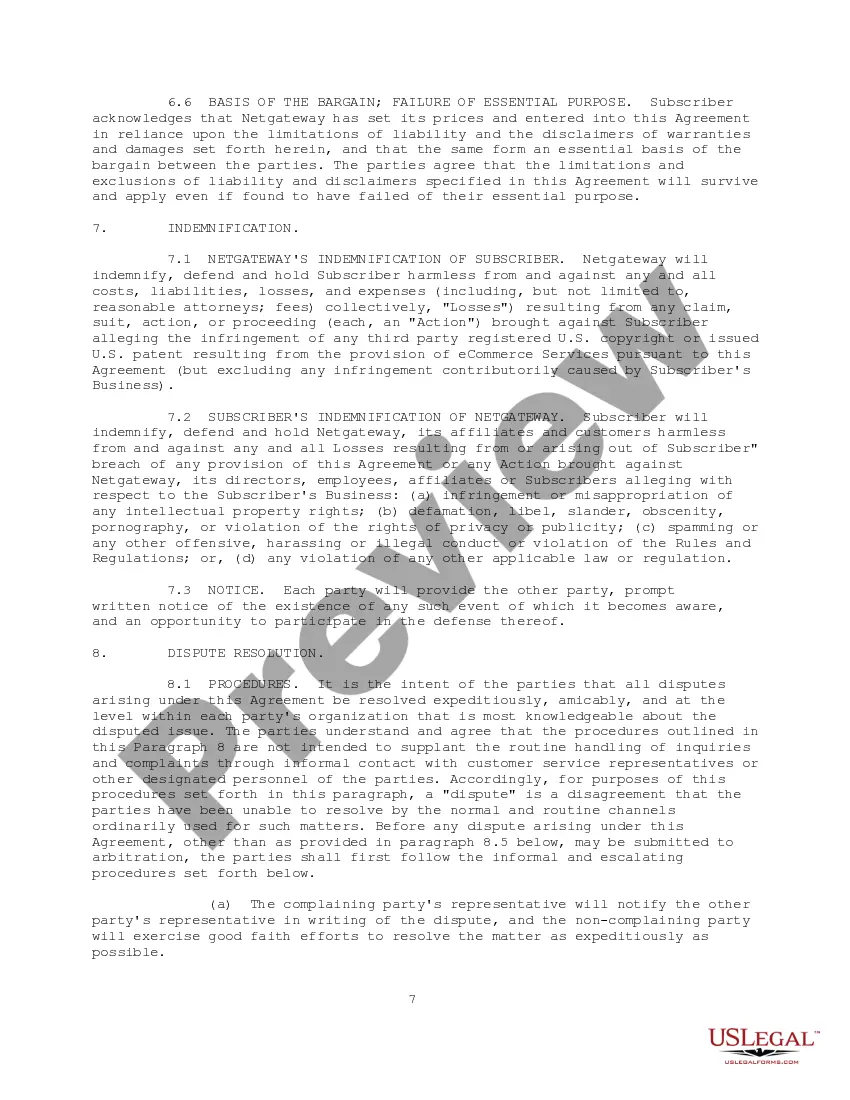
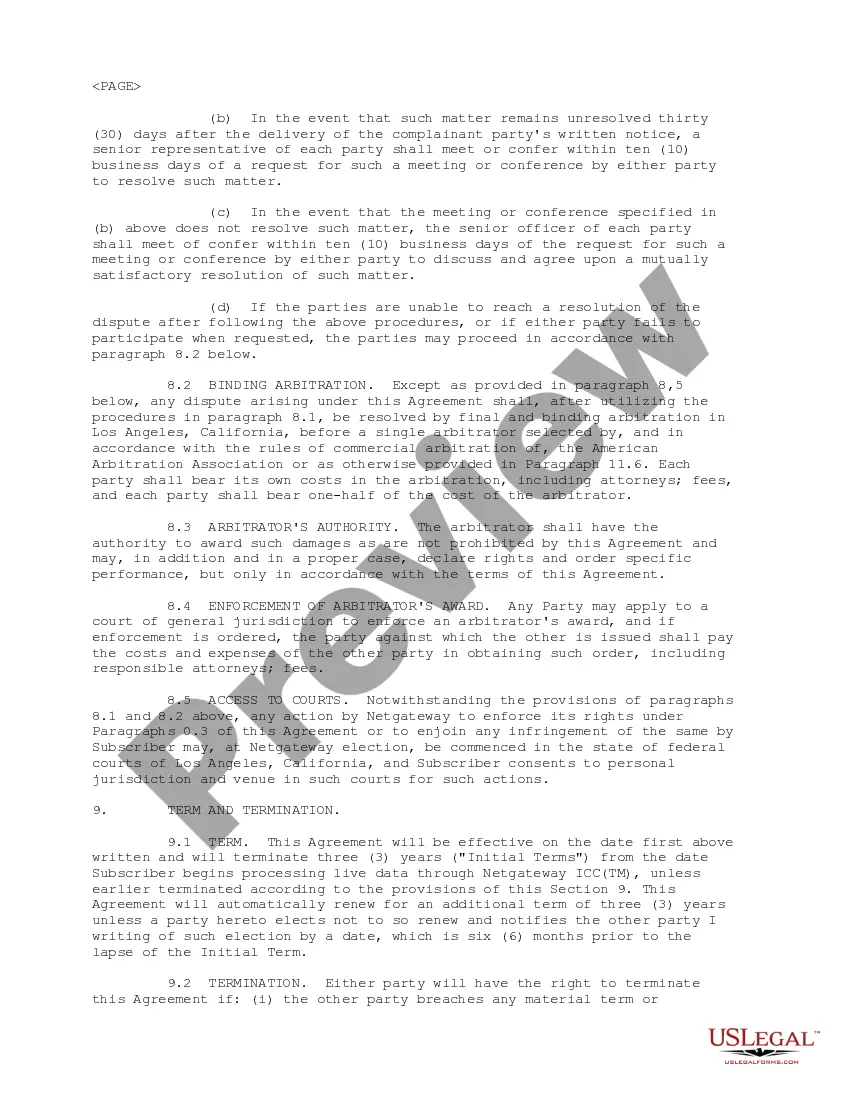
The Ecommerce Term Com For Business you see on this page is a reusable formal template drafted by professional lawyers in line with federal and local laws.
For over 25 years, US Legal Forms has supplied individuals, companies, and attorneys with more than 85,000 authenticated, state-specific forms for any business and personal event. It’s the quickest, simplest, and most reliable method to obtain the documentation you require, as the service ensures bank-level data security and anti-malware safeguards.
Subscribe to US Legal Forms to access verified legal templates for all of life’s circumstances at your convenience.
- Browse for the document you need and verify it.
- Sign up and Log In.
- Obtain the fillable template.
- Complete and sign the documentation.
- Download your paperwork once more.
Form popularity
FAQ
Yes, ecommerce should be hyphenated as 'e-commerce' in formal writing. This format enhances clarity and aligns with standard usage in the industry. By using 'e-commerce,' you can effectively communicate your focus on Ecommerce term com for business, ensuring your audience understands your content. Consistency in this usage will strengthen your brand's professionalism.
Writing terms and conditions for an ecommerce website involves outlining the rules and guidelines for using your site. Start by clearly defining your services, payment methods, return policies, and user responsibilities. It is also wise to include disclaimers and privacy policies to protect your business. For assistance in creating effective terms and conditions, consider using US Legal Forms, which can provide templates tailored to your Ecommerce term com for business needs.
The correct variation is 'e-commerce,' which includes a hyphen. While 'ecommerce' is commonly used in informal settings, it is less precise. For formal documents and websites, such as those focusing on Ecommerce term com for business, using 'e-commerce' is advisable. This approach ensures your content is clear and professional.
The correct way to write e-commerce includes the hyphen between the 'e' and 'commerce.' This format is widely recognized and accepted in both academic and business contexts. Additionally, using this format can enhance your website's credibility as you focus on Ecommerce term com for business. Always aim for consistency in your writing to ensure your audience understands your message.
The term 'ecommerce' can be written in a few different ways, but it is often accepted as 'e-commerce.' When you write ecommerce, remember that clarity matters. If you are targeting a formal audience or business context, using 'e-commerce' is usually preferred. Incorporating Ecommerce term com for business can help clarify your intentions while maintaining professionalism.
In general writing, the 'C' in e-commerce is not typically capitalized. However, in formal documents or branding, you may choose to capitalize it for emphasis. Consistency is key, so it is important to follow the same style throughout your content. When discussing Ecommerce term com for business, ensure that your presentation aligns with your overall branding strategy.
B2C stands for Business-to-Consumer, where businesses sell directly to consumers. B2B refers to Business-to-Business, meaning transactions occur between businesses. B2G, or Business-to-Government, involves businesses providing products or services to government entities. C2G, or Consumer-to-Government, involves individuals providing products or services to government agencies. Lastly, C2C, or Consumer-to-Consumer, refers to transactions between consumers, often facilitated by platforms. Understanding these terms is crucial for navigating the Ecommerce term com for business landscape.