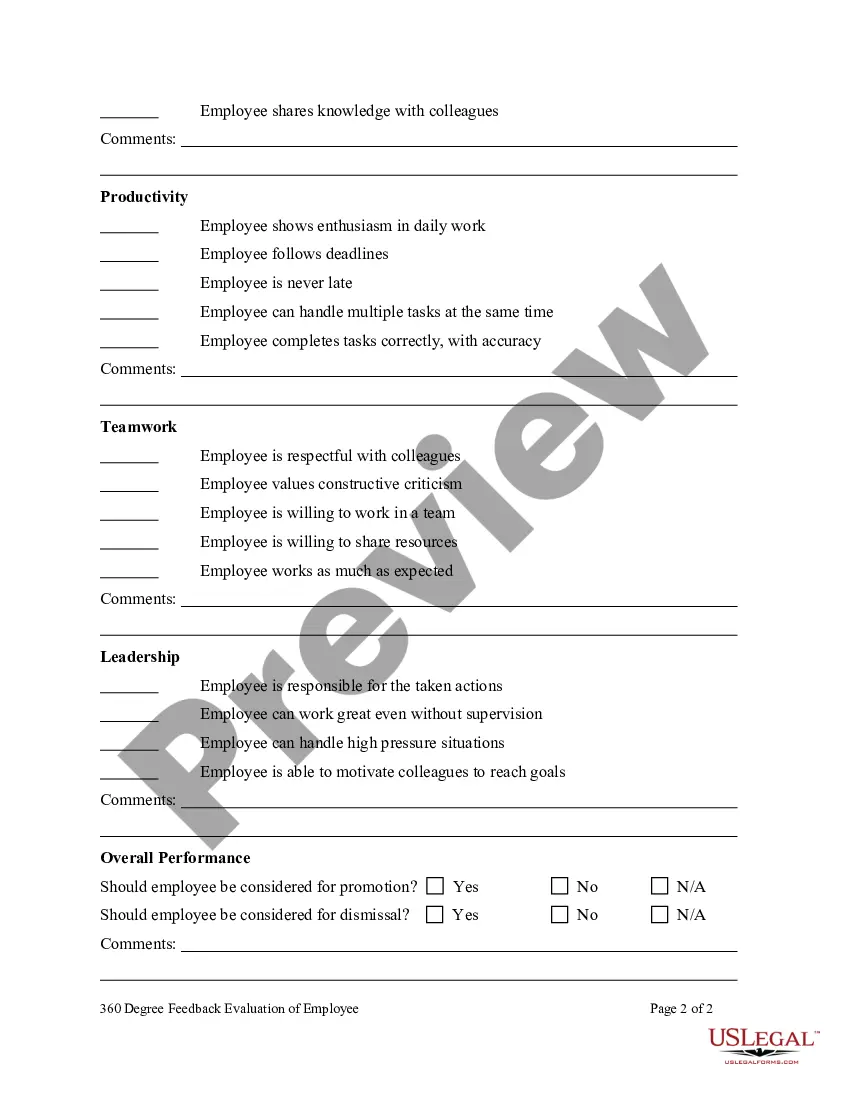
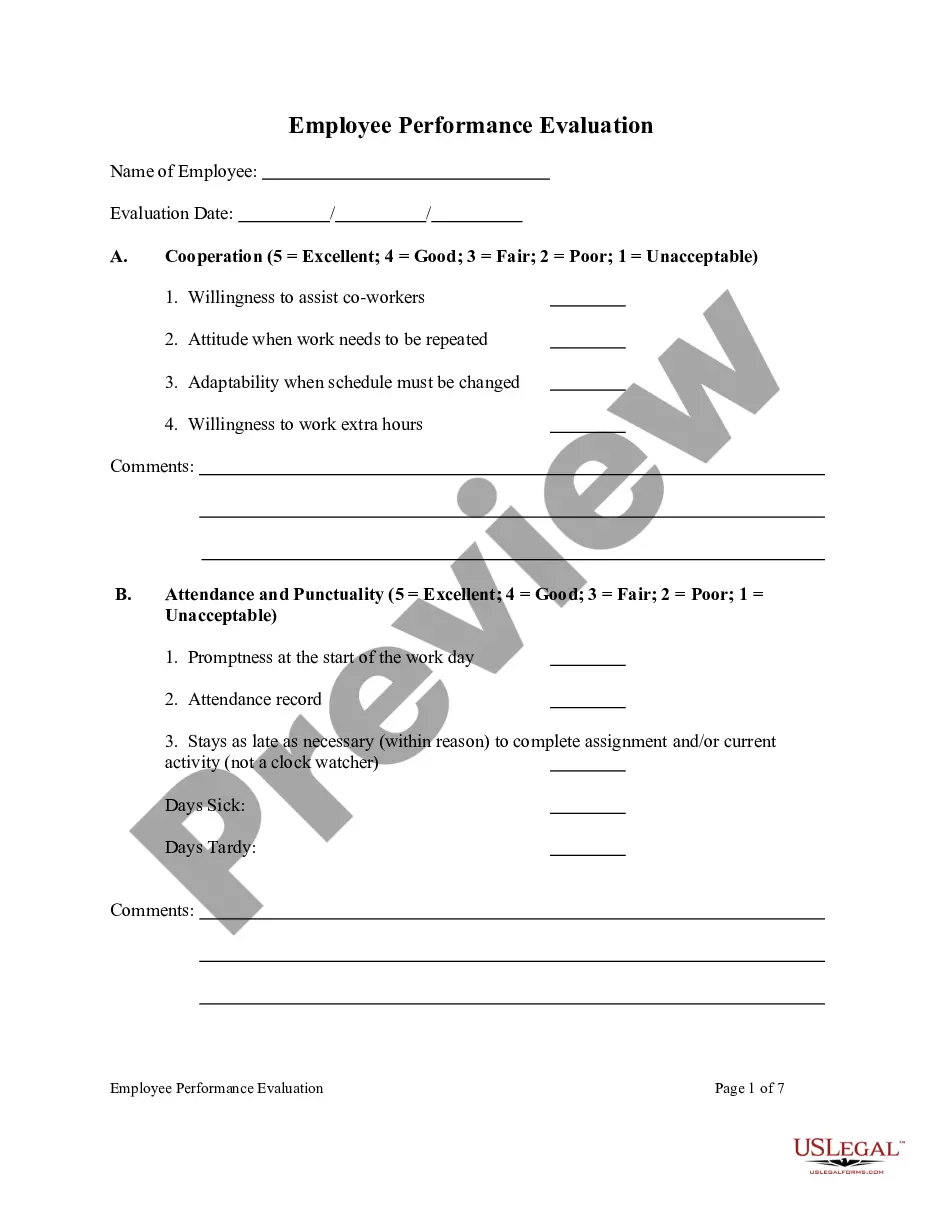
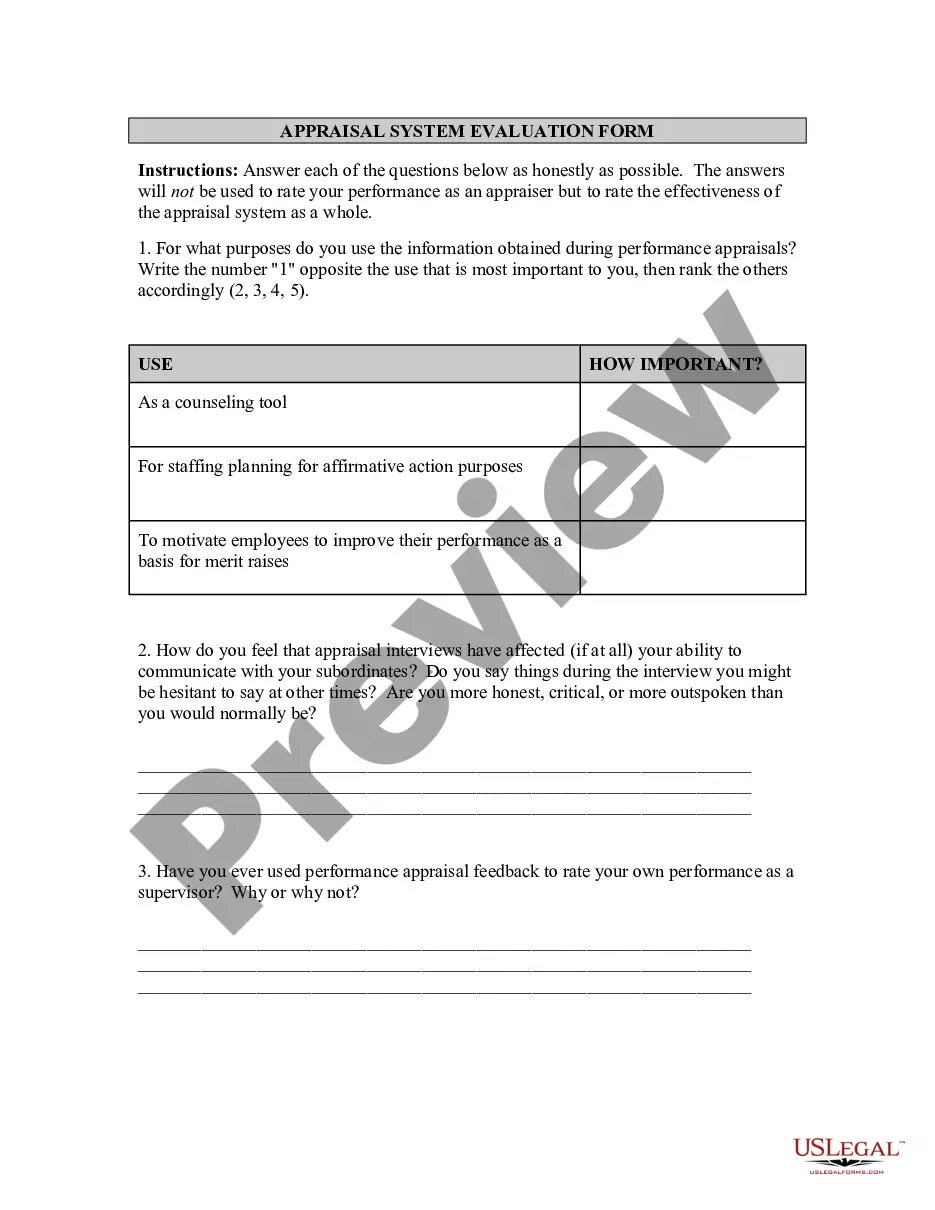
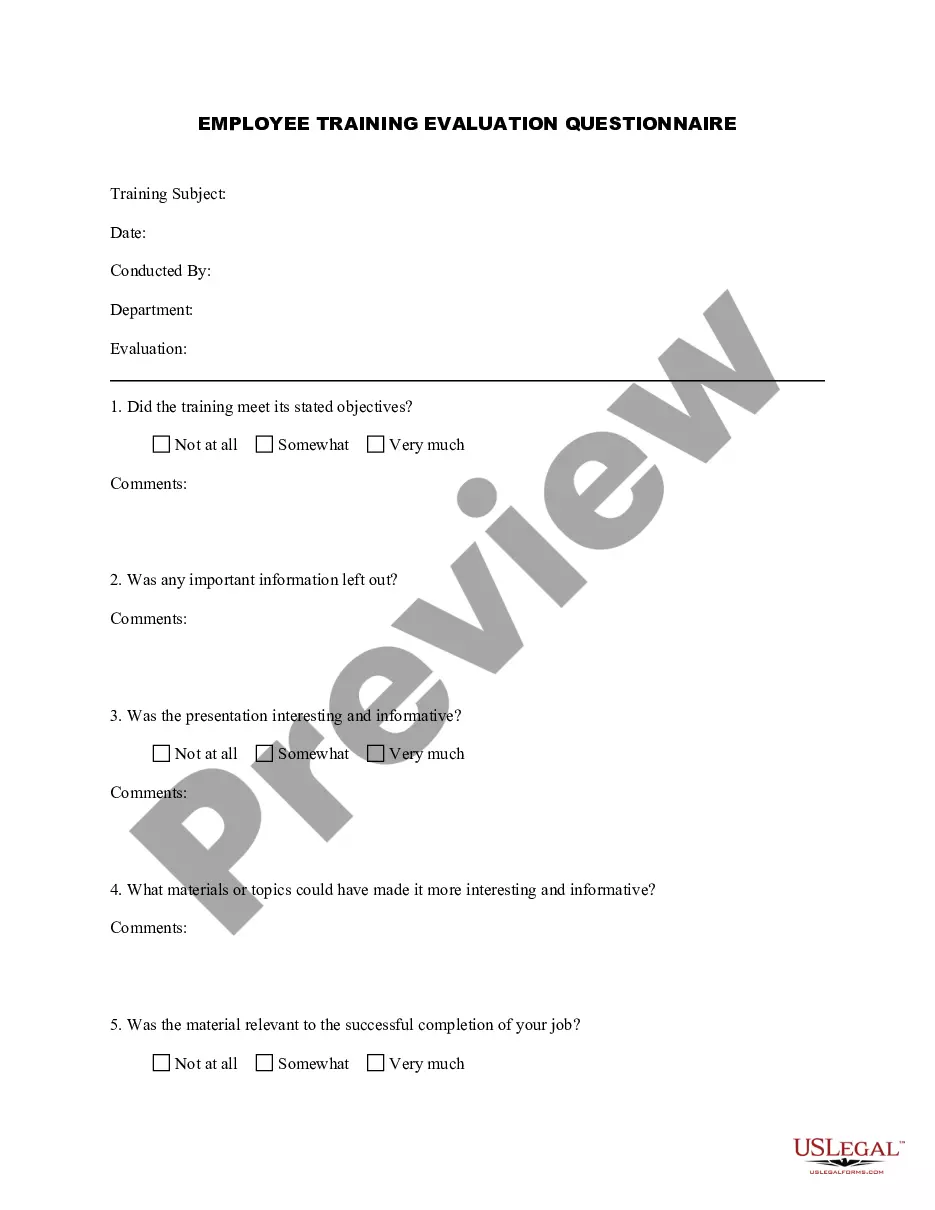
360 Feedback Examples For Peers In Los Angeles
Description

Get your form ready online
Our built-in tools help you complete, sign, share, and store your documents in one place.
Make edits, fill in missing information, and update formatting in US Legal Forms—just like you would in MS Word.
Download a copy, print it, send it by email, or mail it via USPS—whatever works best for your next step.
Sign and collect signatures with our SignNow integration. Send to multiple recipients, set reminders, and more. Go Premium to unlock E-Sign.
If this form requires notarization, complete it online through a secure video call—no need to meet a notary in person or wait for an appointment.
We protect your documents and personal data by following strict security and privacy standards.

Make edits, fill in missing information, and update formatting in US Legal Forms—just like you would in MS Word.

Download a copy, print it, send it by email, or mail it via USPS—whatever works best for your next step.

Sign and collect signatures with our SignNow integration. Send to multiple recipients, set reminders, and more. Go Premium to unlock E-Sign.

If this form requires notarization, complete it online through a secure video call—no need to meet a notary in person or wait for an appointment.

We protect your documents and personal data by following strict security and privacy standards.
Looking for another form?








Form popularity
FAQ
7 steps for designing an effective 360 degree feedback review program Set clear goals. Train raters. Focus on natural strengths. Involve managers and leaders. Create buy-in and trust in the 360 development program. Know what to ask and how to ask it. Personalise the 360 degree feedback program to your organisation.
Asking for feedback can be very simple: ``How do you think that went?'' ``What do you think I did well and what could have been better?'' ``What's one thing I should do differently next time?'' Just the fact that you asked is enough to start the conversation.
Dear rater's-first-name, As part of my leadership development, I am doing a 360° feedback process. I would appreciate it if you would rate my leadership and management skills. You will be asked to identify areas in which I do well and areas that I could develop.
360 Degree Feedback Examples for Communication “John consistently communicates complex ideas in a clear and concise manner, making it easy for everyone to understand.” “Emily effectively summarizes meeting discussions, ensuring everyone is on the same page.”
Allows employees to solicit feedback from peers managers in HR can request feedback on an employee'sMoreAllows employees to solicit feedback from peers managers in HR can request feedback on an employee's performance or competencies. Go to the employees profile. And select get feedback.
Dear (Name), My name is (name), and I'm contacting you from (company). I would like to ask for your feedback on (insert details). Your opinions and insights are highly valuable and will help ensure that we continue to deliver the best quality service to all our customers.
Examples of phrases that recognize positive peer behavior: Your feedback helped me refine my ideas for my last presentation, which was a success. I love how you take ownership of problems even when they're not yours. It sets a great example for me. You're great at solving challenging work problems.
"I appreciate the way you collaborate with your team and cross-functionally to find solutions to problems." "You're an effective team member, as demonstrated by your willingness to help out and contribute as required." "Sarah is a true team player who always helps out her colleagues.
Example: “I think you did a great job when you ran the all-hands meeting. It showed that you are capable of getting people to work together and communicate effectively. I admire your communication skills."
Some examples: ``What part of this presentation/exercise/seminar/etc. was most helpful to you?'' ``What was one thing you learned?'' ``What would you like to know more about?'' ``What was the most unexpected part of ...'' ``Would you attend a ... like this again? Why or why not?''
