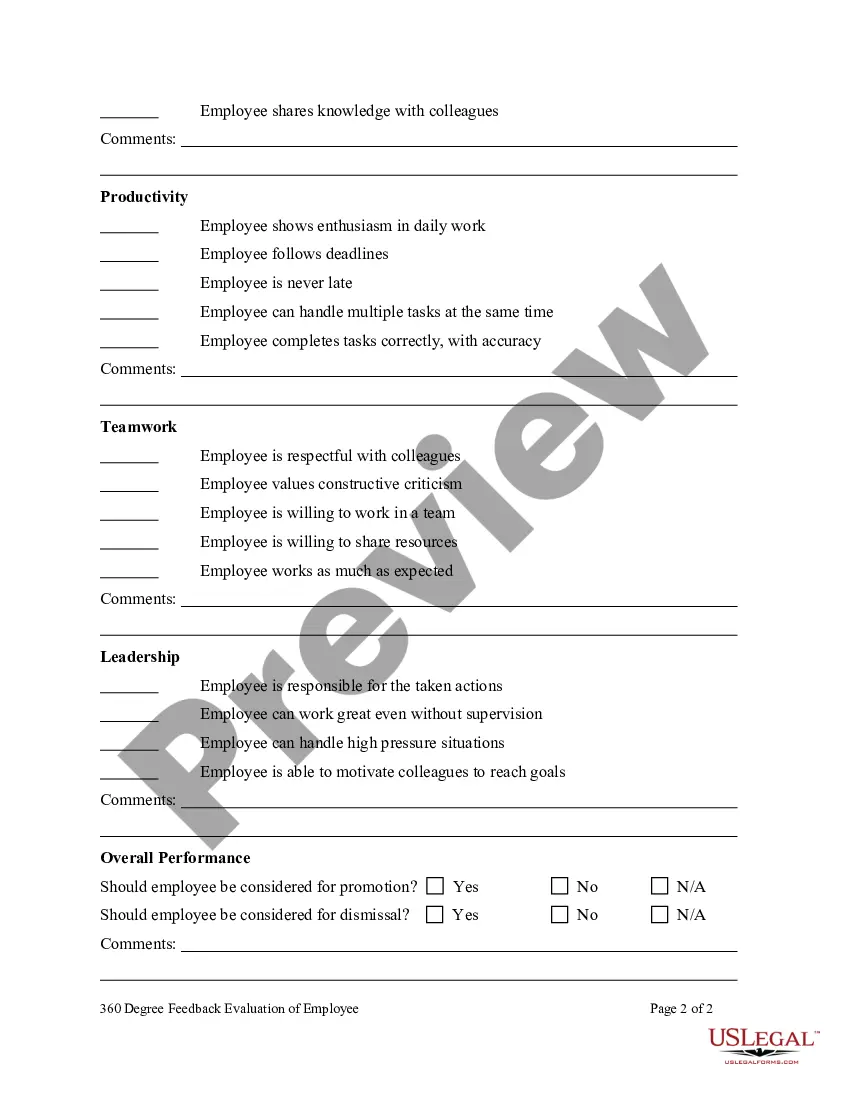
360 Degree Feedback Examples For Peers In Contra Costa
Description

Get your form ready online
Our built-in tools help you complete, sign, share, and store your documents in one place.
Make edits, fill in missing information, and update formatting in US Legal Forms—just like you would in MS Word.
Download a copy, print it, send it by email, or mail it via USPS—whatever works best for your next step.
Sign and collect signatures with our SignNow integration. Send to multiple recipients, set reminders, and more. Go Premium to unlock E-Sign.
If this form requires notarization, complete it online through a secure video call—no need to meet a notary in person or wait for an appointment.
We protect your documents and personal data by following strict security and privacy standards.

Make edits, fill in missing information, and update formatting in US Legal Forms—just like you would in MS Word.

Download a copy, print it, send it by email, or mail it via USPS—whatever works best for your next step.

Sign and collect signatures with our SignNow integration. Send to multiple recipients, set reminders, and more. Go Premium to unlock E-Sign.

If this form requires notarization, complete it online through a secure video call—no need to meet a notary in person or wait for an appointment.

We protect your documents and personal data by following strict security and privacy standards.
Looking for another form?







Form popularity
FAQ
Open-ended questions for 360 degree feedback assessments What else would you like to share about this employee? What has this employee done particularly well? What would make this employee more effective in their role? What other comments do you have?
360 Degree Feedback Examples for Collaboration “Emily is skilled at building strong relationships with her colleagues, fostering a positive and productive work environment.” “Samantha could improve her collaboration by actively seeking input from others and incorporating their ideas.”
360 Degree Feedback Examples for Communication “Emily is skilled at active listening, ensuring that everyone's concerns and ideas are heard.” “Michael could improve his communication by being more transparent about his thought process and decision-making.”
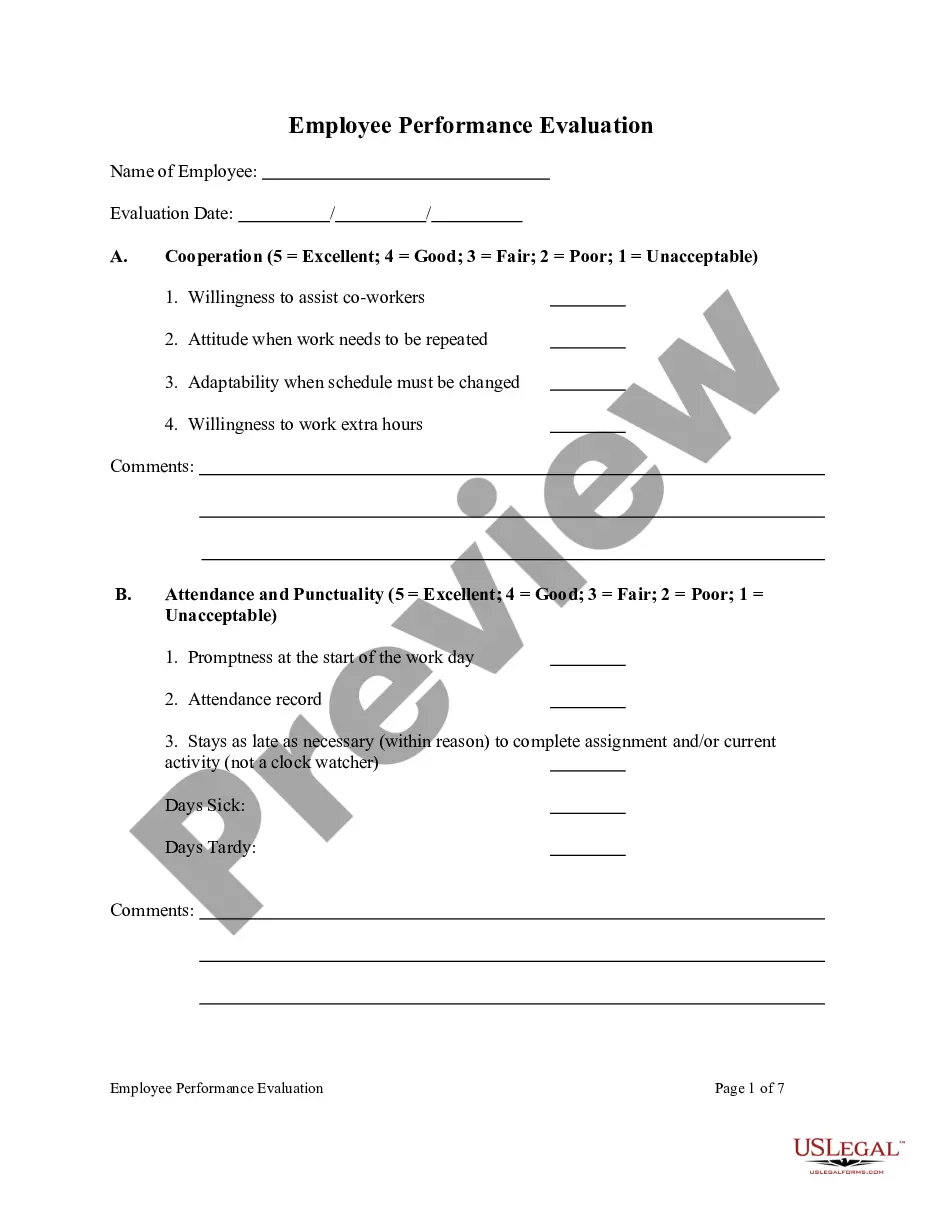
A 360 degree performance appraisal combines anonymous, direct feedback from the employee's self-evaluation, manager, team members and direct reports. This feedback rates an employee on their performance in areas that are vital for the company – like leadership, communication, tech skills, integrity and so on.
Maintain a supportive tone while focusing on helping the colleague grow and improve. To write effective 360 feedback for a colleague you must maintain a balance between detailed observations and an even-handed approach. Assess their strong points and identify areas where they need development.
Recognizing and praising an employee's achievements, contributions, or positive behaviors. Example 1: “Great job on completing the project ahead of schedule! Your dedication and hard work are truly commendable.” Example 2: “Thank you for always going above and beyond to assist your colleagues.
"I appreciate the way you collaborate with your team and cross-functionally to find solutions to problems." "You're an effective team member, as demonstrated by your willingness to help out and contribute as required." "Sarah is a true team player who always helps out her colleagues.
What should I include in 360 feedback? Start by recognizing their strengths and positive qualities, highlighting specific areas of excellence. Identify specific areas for improvement and offer constructive feedback for their development. Provide behavioral examples for your observations.
Positive Feedback examples “I appreciate how you always listen to our ideas and encourage open communication within the team. “Your ability to stay calm under pressure sets a great example for the rest of us. “The way you break down complex projects into manageable tasks is incredibly helpful.
Unlike conventional appraisal techniques, a 360-degree appraisal is a management tool where the manager and an employee evaluate the latter's performance. It is also known as multi-rater feedback. 360-degree feedback also allows you to receive feedback from superiors, peers, clients, and other staff members.
