360 Review Form For Managers In Clark
Description

Get your form ready online
Our built-in tools help you complete, sign, share, and store your documents in one place.
Make edits, fill in missing information, and update formatting in US Legal Forms—just like you would in MS Word.
Download a copy, print it, send it by email, or mail it via USPS—whatever works best for your next step.
Sign and collect signatures with our SignNow integration. Send to multiple recipients, set reminders, and more. Go Premium to unlock E-Sign.
If this form requires notarization, complete it online through a secure video call—no need to meet a notary in person or wait for an appointment.
We protect your documents and personal data by following strict security and privacy standards.

Make edits, fill in missing information, and update formatting in US Legal Forms—just like you would in MS Word.

Download a copy, print it, send it by email, or mail it via USPS—whatever works best for your next step.

Sign and collect signatures with our SignNow integration. Send to multiple recipients, set reminders, and more. Go Premium to unlock E-Sign.

If this form requires notarization, complete it online through a secure video call—no need to meet a notary in person or wait for an appointment.

We protect your documents and personal data by following strict security and privacy standards.
Looking for another form?









Form popularity
FAQ
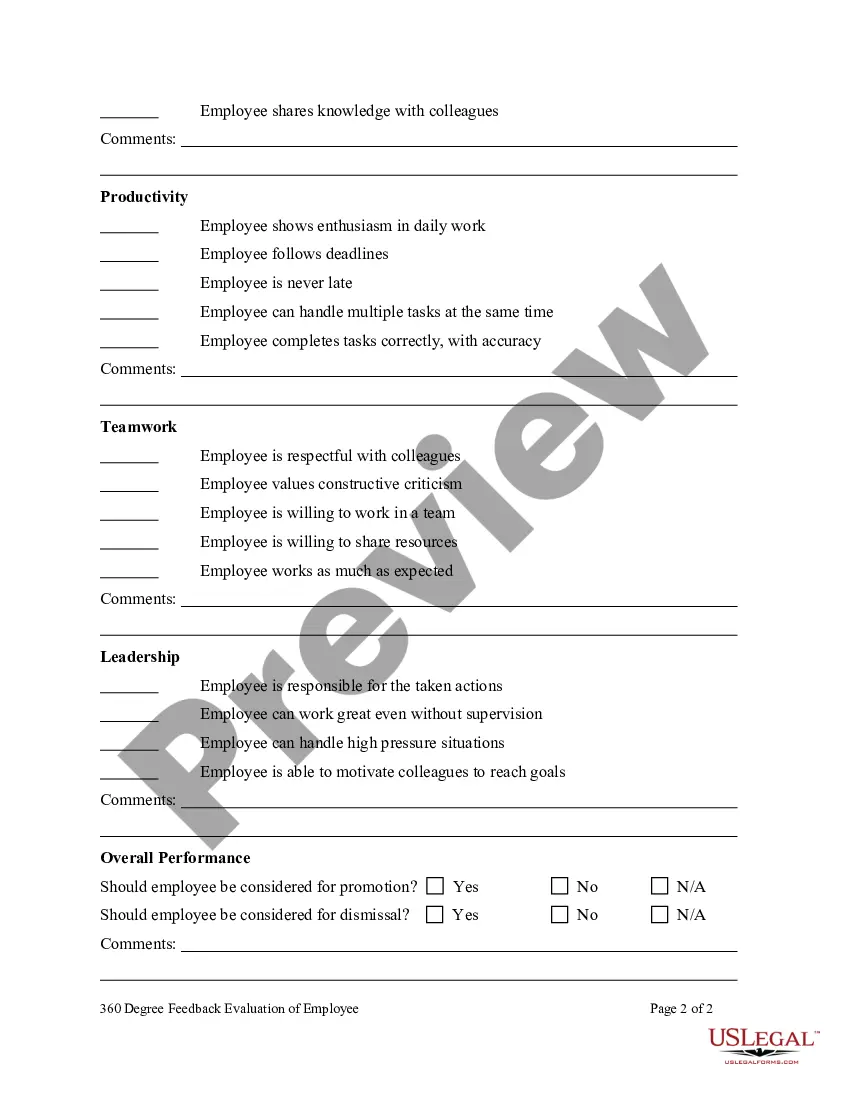
The 360-degree feedback form typically includes questions about the employee's job performance, communication skills, leadership abilities, and other relevant competencies. The questions may be open-ended or use a rating scale, and respondents are typically asked to provide specific examples to support their feedback.
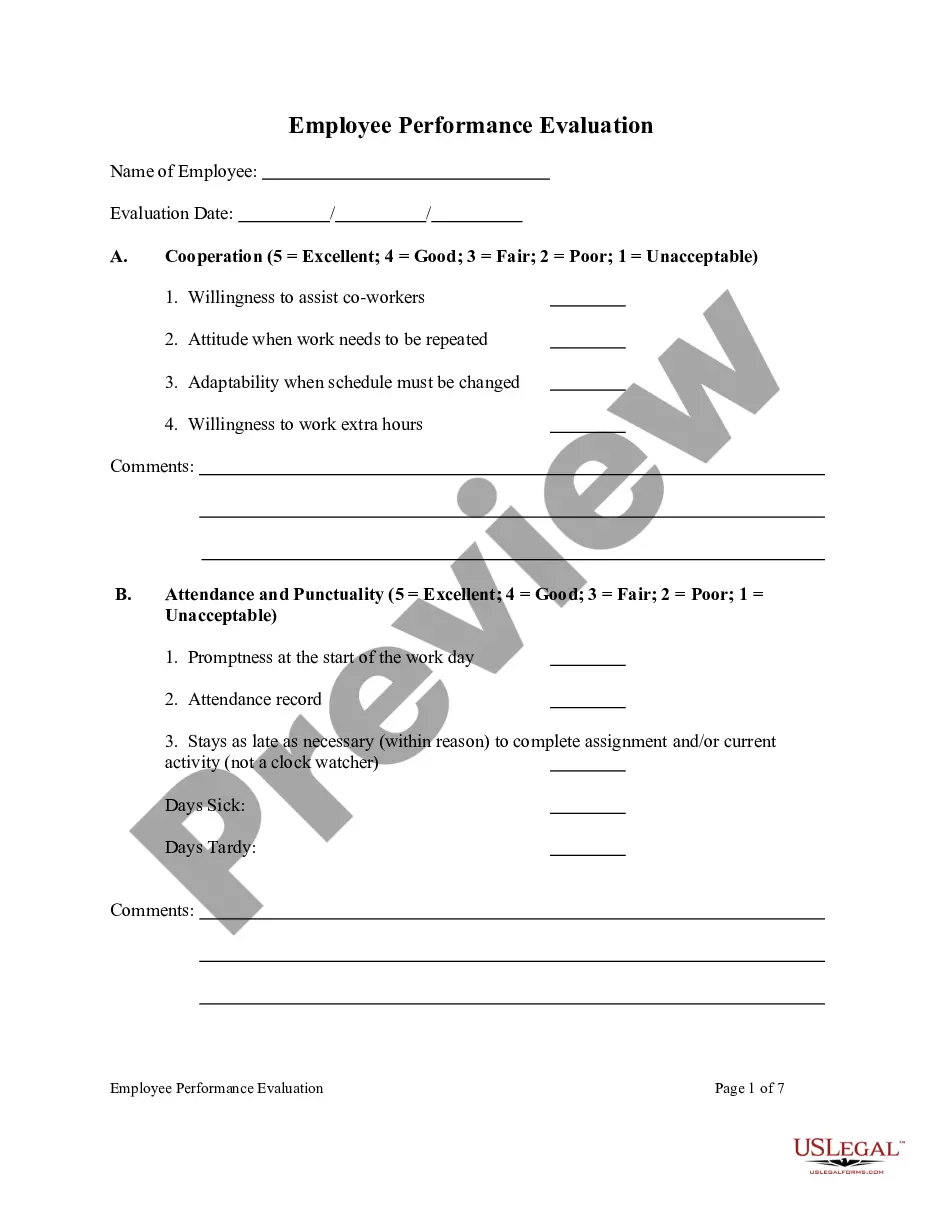
The following 10 steps will help you develop an effective evaluation: Keep up-to-date information about each employee's position. Make regular notes of employee performance. Solicit information from other managers. Get to the point. Note opportunities for improvement. Use clear, actionable language. Solicit a dialogue.
You can follow these steps to create an effective employee evaluation: Review the employee's job description. Get a current copy of each person's job description and review the requirements. Highlight areas of improvement. Compare strengths and weaknesses. Recommend actionable goals.
Reflect on your key accomplishments and contributions over the review period. Assess your performance against the goals, objectives, or key performance indicators (KPIs) set for your role. Identify areas where you demonstrated strong skills and competencies. Acknowledge any areas for improvement or development needs.
The performance management cycle can be divided into four key stages: planning, monitoring, developing and reviewing, and rating and rewards.
Speed up your review and approval process in 9 simple steps Define who needs to be involved in the process. Set your review dates. Keep all your file versions organized. Track stakeholder sign-off.
“A 360-degree review creates a place for employees to provide upward feedback about their manager that they may not feel comfortable doing in a one-on-one forum,” Inoa said. “This can inform a leader's holistic understanding of the impact they're having on their direct reports.”
The Leadership 360 is a personalized reflection tool created through self-assessment and survey feedback from your colleagues and partners, for a multifaceted perspective of your Leadership Competencies.
The 360-degree feedback program should be primarily used for individual development. Senior management should be made mentors or role models. Highly trained inhouse coaches should be used to help employees develop action plans for improvement.
360 feedback for managers includes input from peers, subordinates, supervisors, and self-evaluation. This gives you a holistic understanding of your performance from the perspective of multiple people.