360 Evaluation Method In Arizona
Description

Get your form ready online
Our built-in tools help you complete, sign, share, and store your documents in one place.
Make edits, fill in missing information, and update formatting in US Legal Forms—just like you would in MS Word.
Download a copy, print it, send it by email, or mail it via USPS—whatever works best for your next step.
Sign and collect signatures with our SignNow integration. Send to multiple recipients, set reminders, and more. Go Premium to unlock E-Sign.
If this form requires notarization, complete it online through a secure video call—no need to meet a notary in person or wait for an appointment.
We protect your documents and personal data by following strict security and privacy standards.

Make edits, fill in missing information, and update formatting in US Legal Forms—just like you would in MS Word.

Download a copy, print it, send it by email, or mail it via USPS—whatever works best for your next step.

Sign and collect signatures with our SignNow integration. Send to multiple recipients, set reminders, and more. Go Premium to unlock E-Sign.

If this form requires notarization, complete it online through a secure video call—no need to meet a notary in person or wait for an appointment.

We protect your documents and personal data by following strict security and privacy standards.
Looking for another form?









Form popularity
FAQ
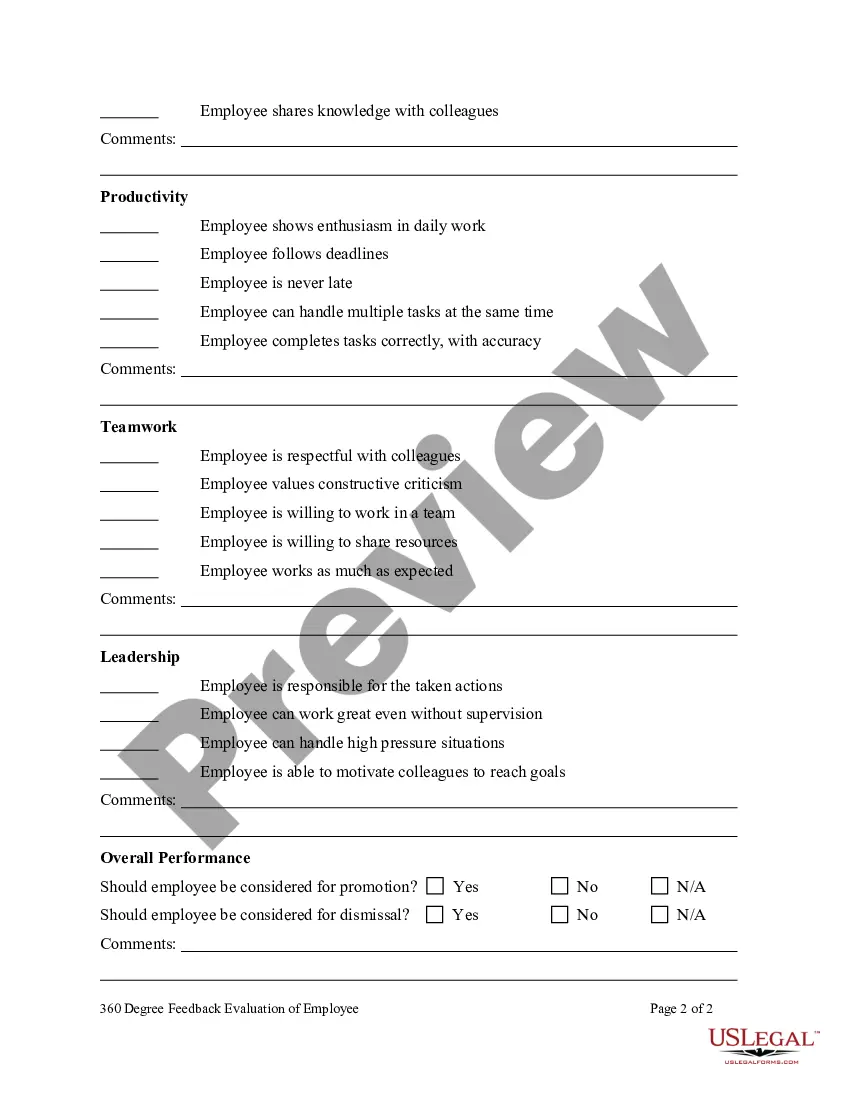
A 360-degree assessment is a method that systematically collects feedback about an individual's performance from peers, direct reports, colleagues, and superiors within the organization. Overall, it provides a comprehensive, 360-degree view of a leader's strengths and opportunities for growth.
360-degree evaluations go by several names, including 360-degree feedback, 360-degree assessment, and 360-degree performance review. Essentially, it is a process for measuring employee performance by utilizing feedback from peers, employees, clients, supervisors, and members of other teams.
Tips for Successfully Implementing a 360 Feedback Initiative at Your Organization Clarify the goals for the 360 feedback initiative. Address individual and organization readiness. Design the process. Select or design the tool. Identify and prepare participants. Prepare the organization. Administer the assessment.
Communication of the goals and objectives of the 360 assessment is part of the process. This includes obtaining various perspectives on identifying an individual's strengths, areas of opportunity, and “blind spots.” All of these can help promote more self-awareness and result in performance improvement and development.
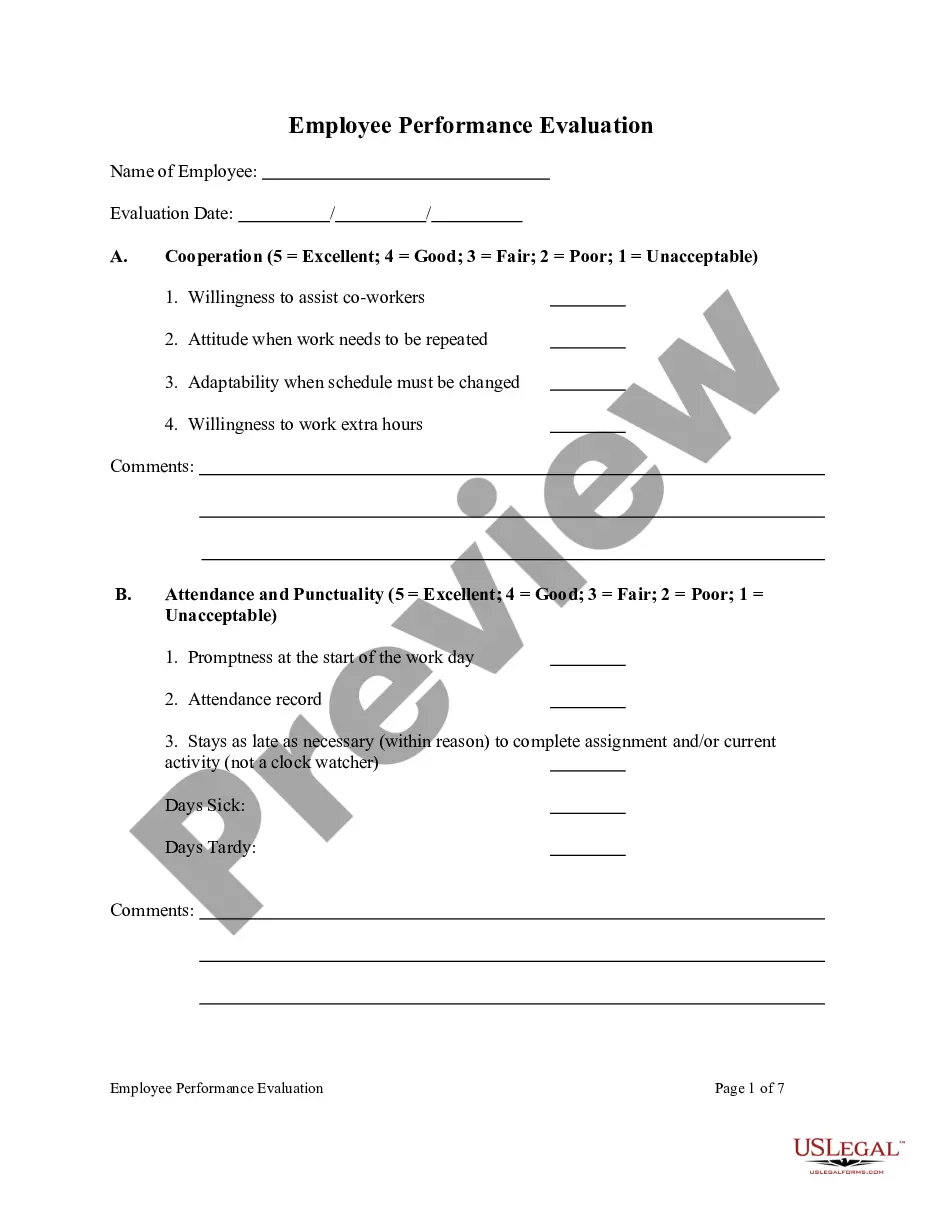
How to conduct 360 reviews Establish criteria for rating each employee. Invest time into developing useful, relevant questions that provide valuable insight. Choose who will assess each employee. Send surveys. Send the survey to the employee. Schedule the 360 evaluation. Review ratings with employee. Follow up on progress.
What is a 360 Degree Evaluation? A 360-degree evaluation, also known as multi-rater feedback assessment, is a process and tool used to provide employees comprehensive performance and culture feedback from self-evaluation as well as from those who work around them.
Tips for Successfully Implementing a 360 Feedback Initiative at Your Organization Clarify the goals for the 360 feedback initiative. Address individual and organization readiness. Design the process. Select or design the tool. Identify and prepare participants. Prepare the organization. Administer the assessment.
How to conduct 360 reviews Establish criteria for rating each employee. Invest time into developing useful, relevant questions that provide valuable insight. Choose who will assess each employee. Send surveys. Send the survey to the employee. Schedule the 360 evaluation. Review ratings with employee. Follow up on progress.
Here's how the process typically works: Selection of participants. The employee's feedback is collected from multiple sources, such as supervisors, peers, subordinates, and sometimes clients or customers. Survey distribution. Data collection and analysis. Feedback review session. Action planning. Follow-up.
When you fill the form: Be honest and critical. Analyze your failures and mention the reasons for it. Keep the words minimal. Identify weaknesses. Mention your achievements. Link achievements to the job description and the organization's goals. Set the goals for the next review period. Resolve conflicts and grievances.
