Special Meeting Sample For Nonprofit In Queens
Description



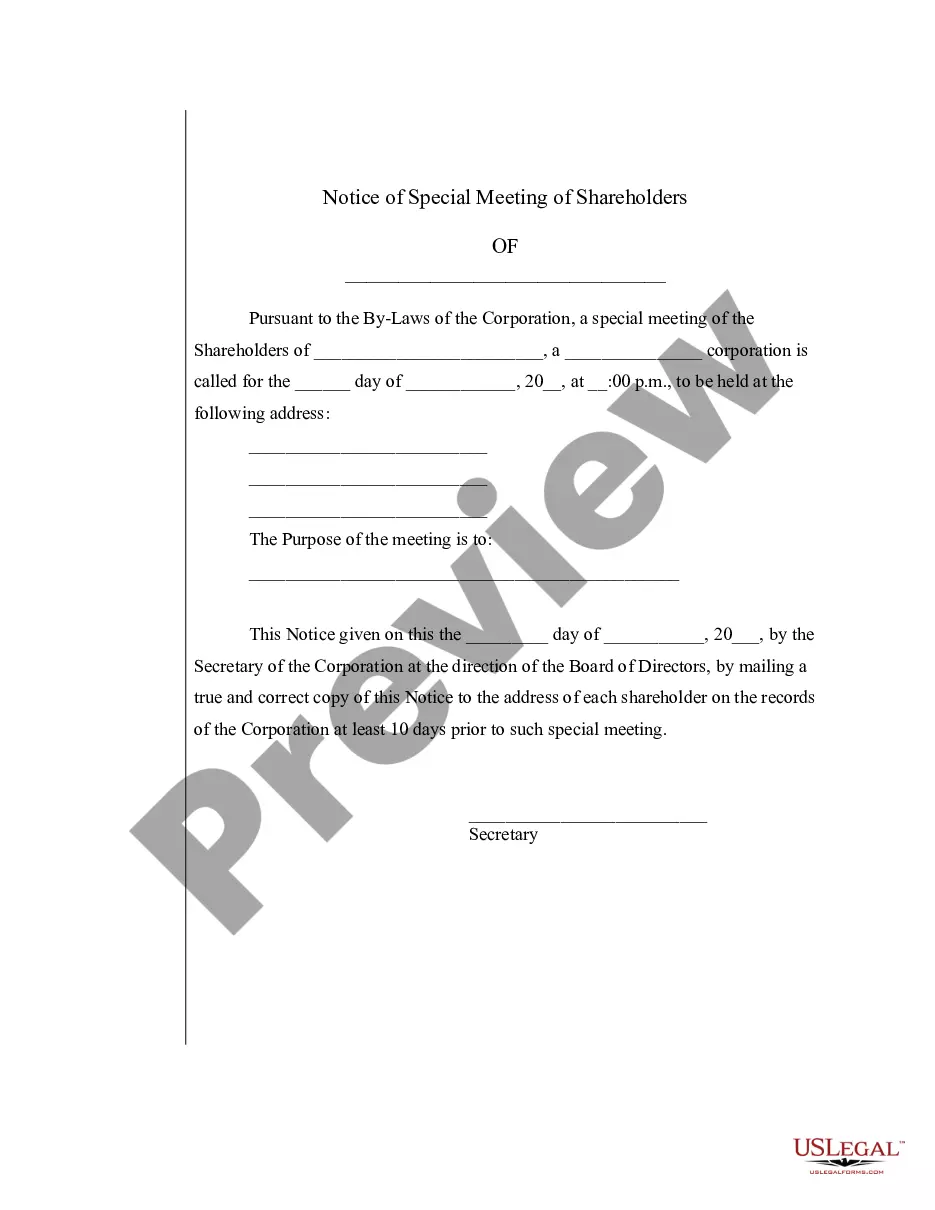
Get your form ready online
Our built-in tools help you complete, sign, share, and store your documents in one place.
Make edits, fill in missing information, and update formatting in US Legal Forms—just like you would in MS Word.
Download a copy, print it, send it by email, or mail it via USPS—whatever works best for your next step.
Sign and collect signatures with our SignNow integration. Send to multiple recipients, set reminders, and more. Go Premium to unlock E-Sign.
If this form requires notarization, complete it online through a secure video call—no need to meet a notary in person or wait for an appointment.
We protect your documents and personal data by following strict security and privacy standards.

Make edits, fill in missing information, and update formatting in US Legal Forms—just like you would in MS Word.

Download a copy, print it, send it by email, or mail it via USPS—whatever works best for your next step.

Sign and collect signatures with our SignNow integration. Send to multiple recipients, set reminders, and more. Go Premium to unlock E-Sign.

If this form requires notarization, complete it online through a secure video call—no need to meet a notary in person or wait for an appointment.

We protect your documents and personal data by following strict security and privacy standards.
Looking for another form?









Form popularity
FAQ
Content of Notice A proper meeting notice should include: Date, Time, and Venue: Clear details on when and where the meeting will take place. Purpose of the Meeting: A brief description of the meeting's objectives. Agenda: An outline of topics to be discussed; this helps attendees prepare for the meeting.
Here are some important tips to bear in mind when taking non-profit meeting minutes. Prepare in advance. Use a standard template. Record attendance. Summarise key discussions. Document decisions and votes. List action items. How detailed should the minutes be?
The notice must provide directors with the date, time, and location of the meeting. Although technically, the purpose of the meeting does not have to be provided, it is generally a good idea to include an agenda or similar information so directors know what to expect and why it is important to attend.
Here are a few valid reasons for calling a special meeting: An urgent matter needs to be dealt with before the next regular meeting. There is a proposal to amend bylaws. Adopting or amending special rules of order. Amending or rescinding something that was previously adopted.
The officers of the organization prepare the agenda with assistance from the organization advisor. An agenda starts with a list of general business items. Specific topics that are to be discussed at the meeting are placed under the proper agenda item in an outline format.
The chair owns the agenda Who prepares the first draft? Usually the company secretary, the CEO or the board secretary. This then needs to be approved or amended by the chair. The agenda and the board papers need to be sent to all directors at least 5 days plus a weekend, prior to the board meeting.
It is different from a regular meeting, which is held on a regular schedule. For example, a company may call a special meeting to discuss a major decision, such as a merger or acquisition. A school board may call a special meeting to address a specific issue, such as a budget shortfall.
The responsibility for setting the agenda for board meetings typically falls on the shoulders of the board chair or president, in collaboration with the executive director or CEO of the nonprofit organization.
Special board meetings may be called by the chair of the board, the president, any vice president, the secretary, or any two directors.
The nonprofit chair and board secretary should collaborate to plan the agenda, which may be a combination of standard best practices and unique concerns of the business.