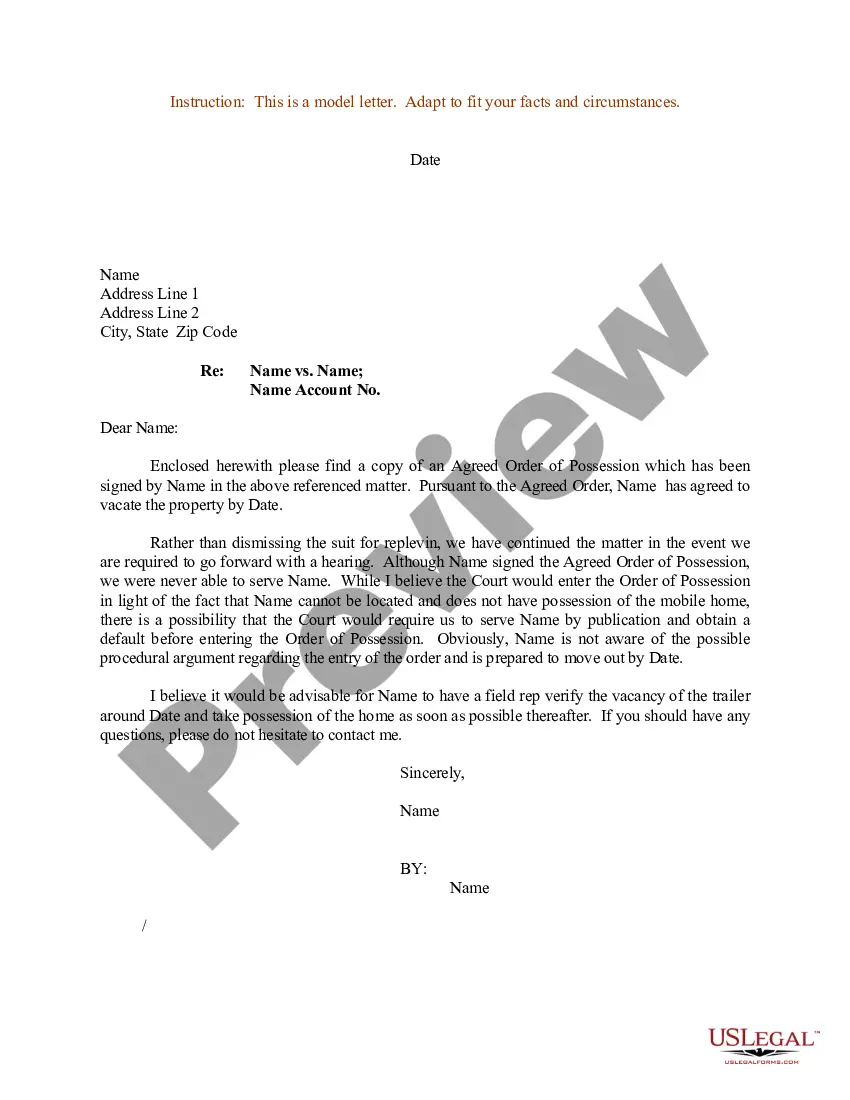
Court Letter Sample With Reason In Texas
Description



Get your form ready online
Our built-in tools help you complete, sign, share, and store your documents in one place.
Make edits, fill in missing information, and update formatting in US Legal Forms—just like you would in MS Word.
Download a copy, print it, send it by email, or mail it via USPS—whatever works best for your next step.
Sign and collect signatures with our SignNow integration. Send to multiple recipients, set reminders, and more. Go Premium to unlock E-Sign.
If this form requires notarization, complete it online through a secure video call—no need to meet a notary in person or wait for an appointment.
We protect your documents and personal data by following strict security and privacy standards.

Make edits, fill in missing information, and update formatting in US Legal Forms—just like you would in MS Word.

Download a copy, print it, send it by email, or mail it via USPS—whatever works best for your next step.

Sign and collect signatures with our SignNow integration. Send to multiple recipients, set reminders, and more. Go Premium to unlock E-Sign.

If this form requires notarization, complete it online through a secure video call—no need to meet a notary in person or wait for an appointment.

We protect your documents and personal data by following strict security and privacy standards.
Looking for another form?










Form popularity
FAQ
Although a demand letter is not a required prerequisite to a lawsuit under California law, courts tend to have a more favorable view of parties that make good faith efforts to resolve disputes prior to formal legal action in court.
You may send your Texas demand letter via email or mail. For letters that you mail, consider sending your letter with tracking information so that you know when it has been delivered.
Some types of cases even require you to send a demand letter before you are allowed to file a lawsuit. Even when a formal demand is not required before filing suit, sending a demand letter is still helpful because it can encourage the settlement of the dispute.
Introduce yourself to the Court. Explain how you know (and how long you have known) the defendant. Make it personal when describing the defendant's characteristics. Can you think of examples of good deeds done by the defendant (hard work, dedication to family/church/community, generosity, etc).
Sample Format for a Character Letter First Paragraph: Explain who you are. Second Paragraph: Explain why you are writing the letter. Third Paragraph: Thank the court, and make your “ask.” State that you are available to confirm the facts in this letter as necessary.
The first demand letter should be sent no later than 30 days after the obligation becomes delinquent. The second demand letter should be sent no sooner than 30 days, but not more than 60 days, after the first demand letter.
Open with a respectful greeting Regardless of the content of your letter, try to begin with a friendly and respectful greeting. Use the recipient's full name and open with a salutation such as “dear Miss. Adkins”, followed by “I hope this letter finds you well.”
In person: In an interview, social event, or in court, address a judge as “Your Honor” or “Judge last name.” If you are more familiar with the judge, you may call her just “Judge.” In any context, avoid “Sir” or “Ma'am.” Special Titles.
Follow the order of this format, leaving a space in between each section: Your Information (first thing that goes on the inside of the letter) Name. The Date. The Judge's Information. Honorable Judge First Name Last Name. What the Letter Is Going to Address. Salutation. Body. Signature.
Sample Format for a Character Letter First Paragraph: Explain who you are. Second Paragraph: Explain why you are writing the letter. Third Paragraph: Thank the court, and make your “ask.” State that you are available to confirm the facts in this letter as necessary.

