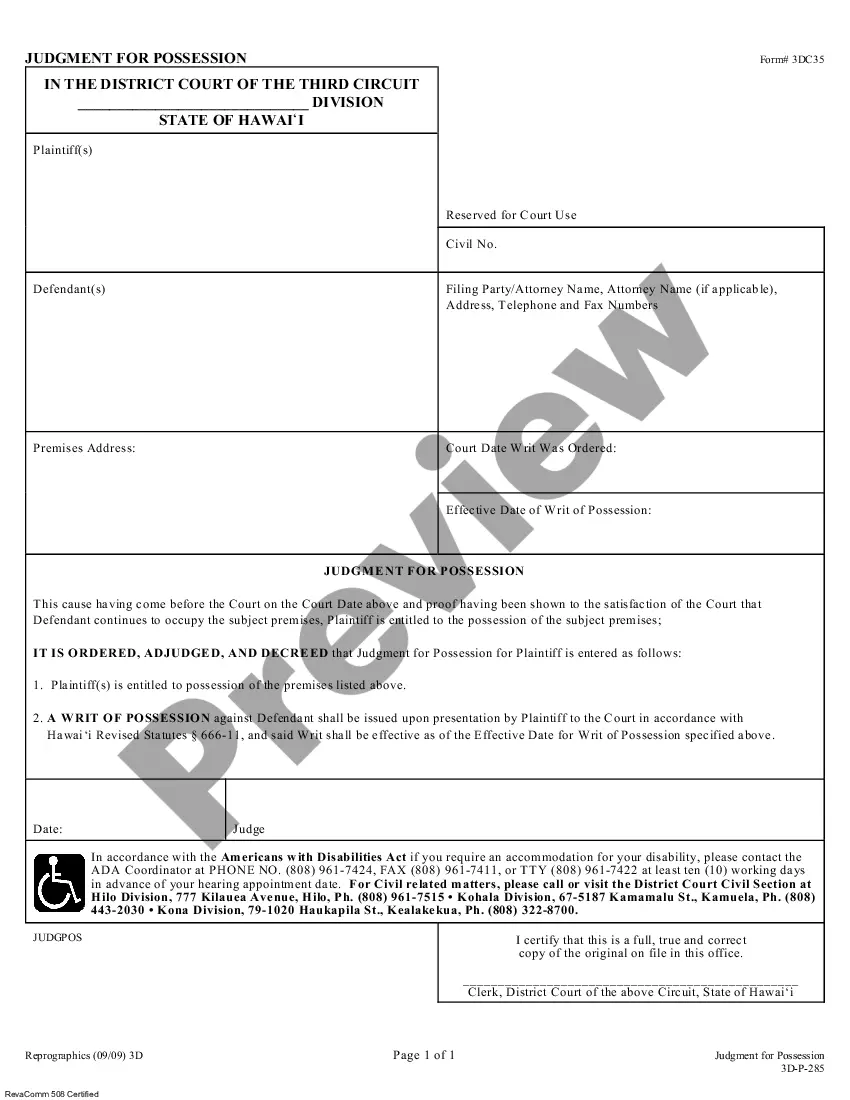
Notice of Default
Understanding this form
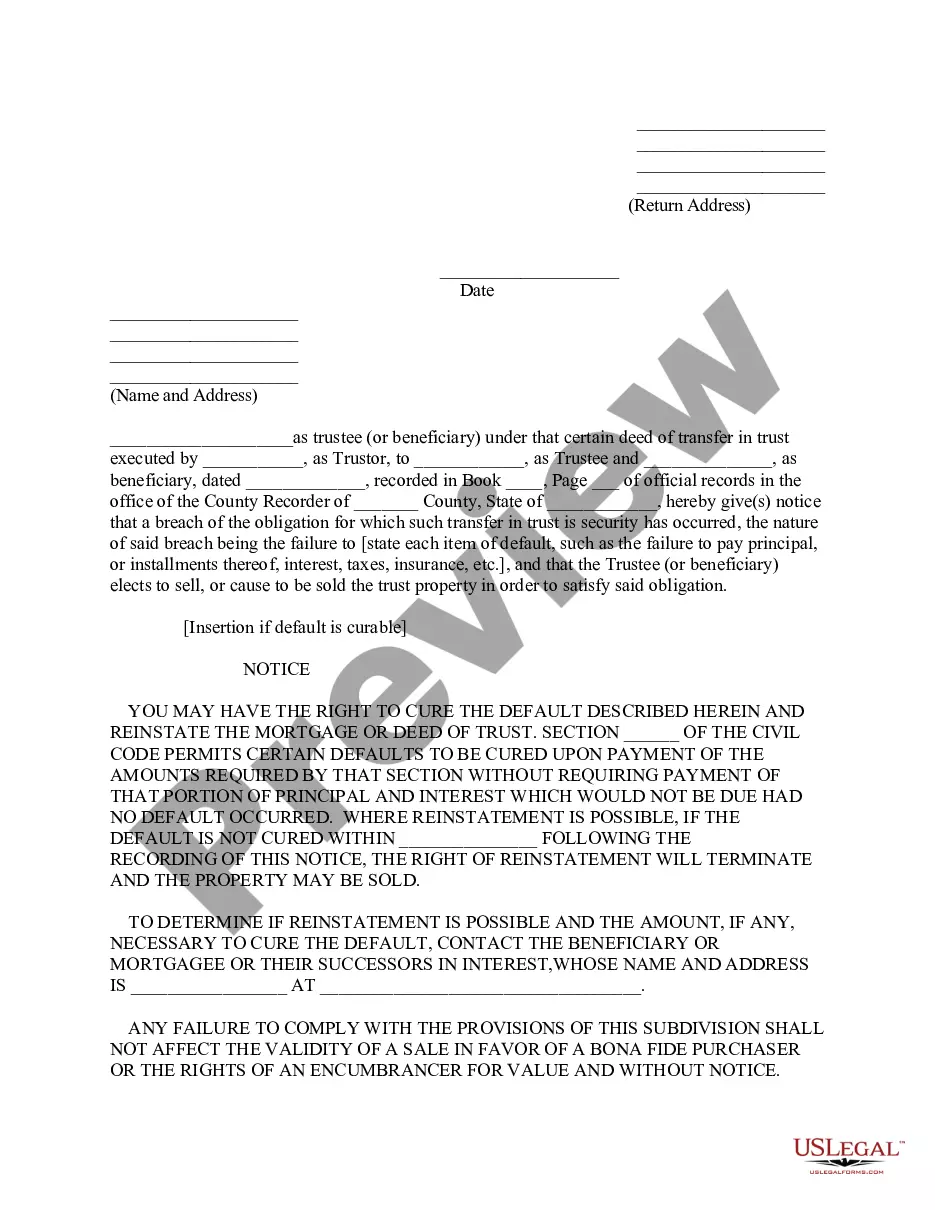
The Notice of Default is a legal document used to inform a borrower that a breach of the obligation for a mortgage or deed of trust has occurred. This form serves as the official notification that the lender (trustee or beneficiary) intends to take action, which may include selling the property to recover owed amounts. Unlike other forms, a Notice of Default specifically addresses defaults related to payment failures and outlines potential remedies available to the borrower.
Key parts of this document
- Return address: Specifies where the notice is sent from.
- Recipient details: Includes the name and address of the borrower.
- Trustee information: Identifies the trustee or beneficiary involved in the deed of trust.
- Description of default: Outlines the specific nature of the default, such as missed payments or unpaid taxes.
- Reinstatement information: Provides details on the right to cure the default and restore the mortgage.
- Contact information: Lists how to reach the beneficiary or mortgagee for further inquiry.
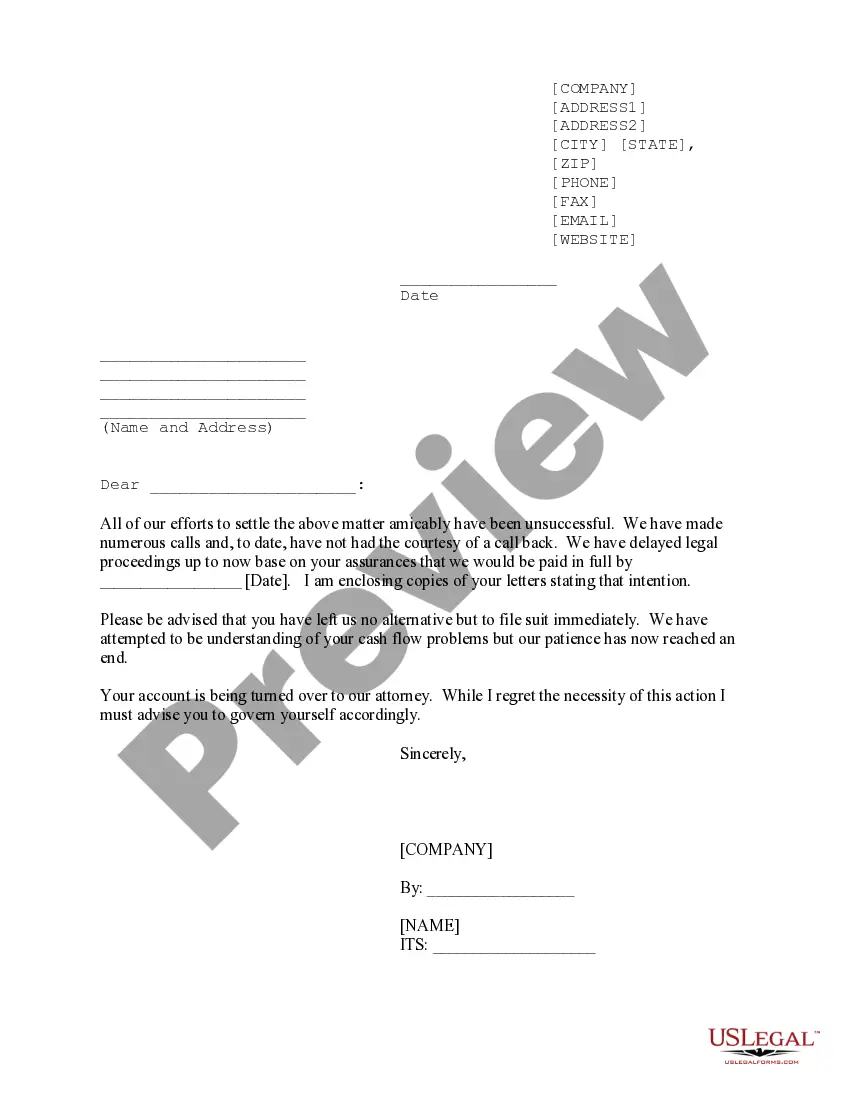
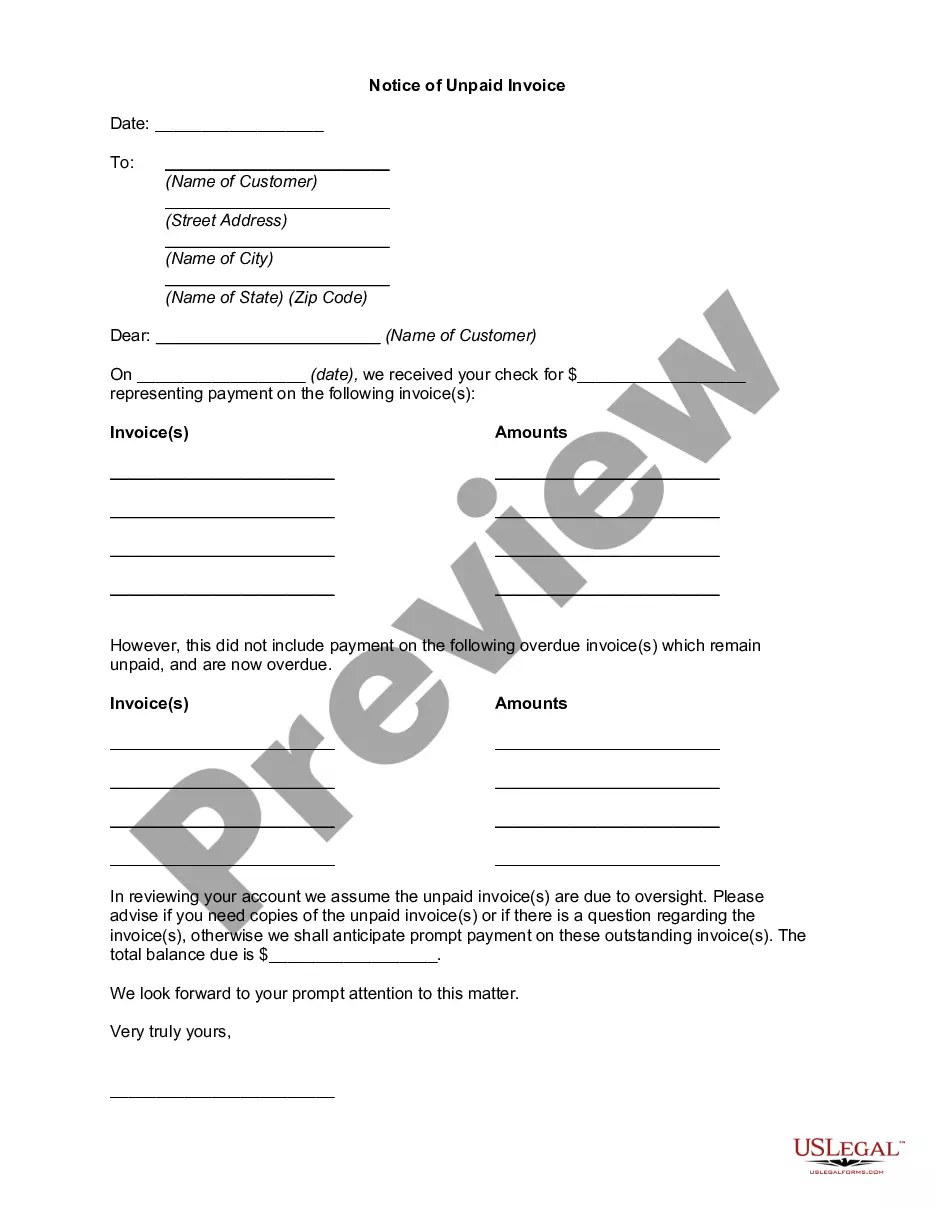
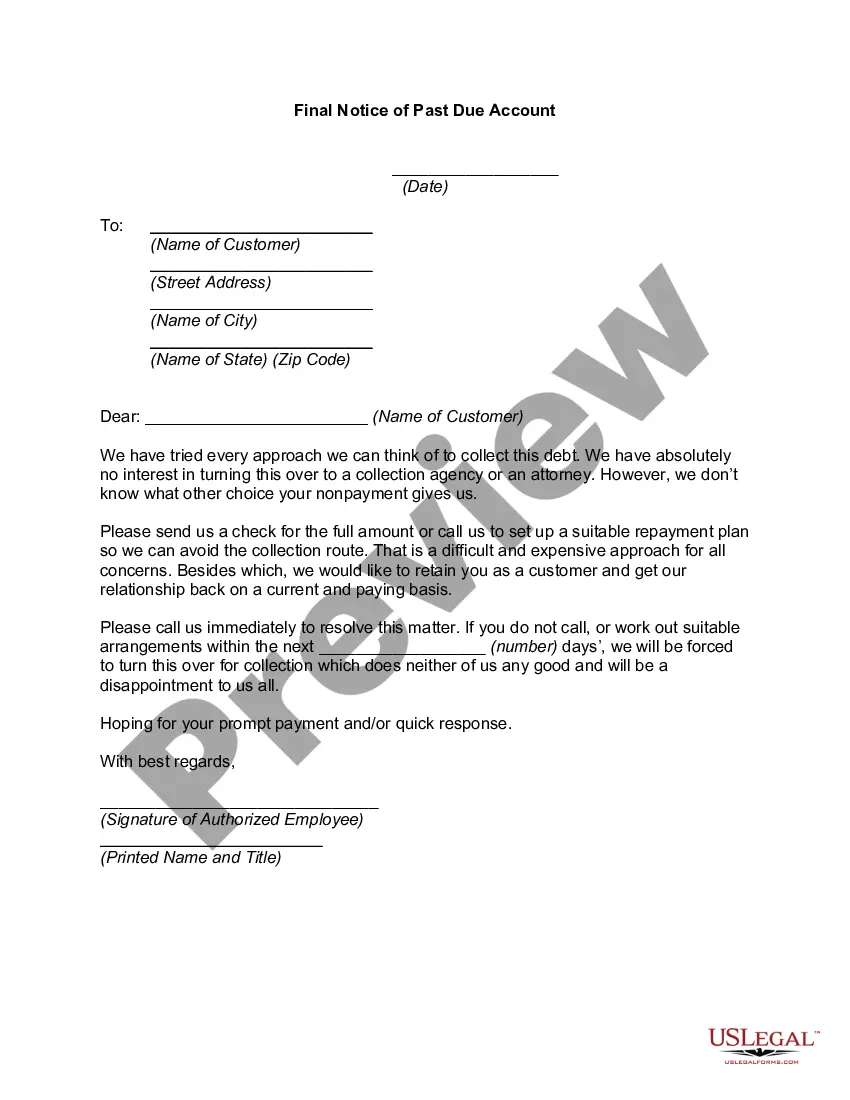
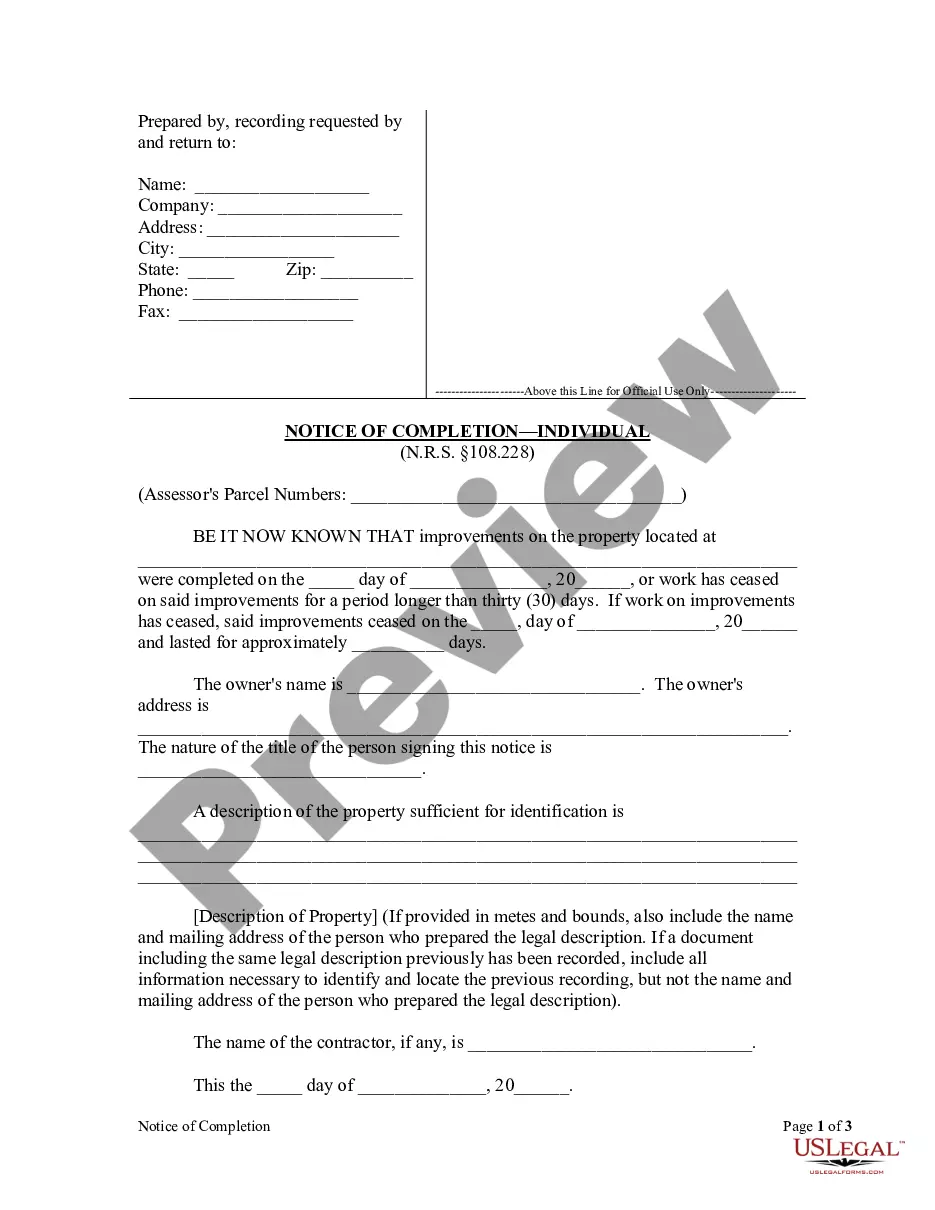
Situations where this form applies
This form should be used when a borrower has failed to meet the obligations set forth in their mortgage or deed of trust. If you are a trustee or beneficiary and need to notify the borrower of their default status, this form is necessary. It is often a precursor to initiating foreclosure proceedings and can help clarify the steps the borrower can take to remedy the situation.
Intended users of this form
- Trustees under a deed of trust seeking to notify borrowers of a default.
- Beneficiaries of a loan who wish to enforce their rights related to an unpaid mortgage.
- Lenders needing a formal method to communicate payment failures to borrowers.
Steps to complete this form
- Identify the parties: Fill in the names and addresses of the trustee and borrower.
- Specify the property: Include details of the property referred to in the deed of trust.
- Enter the date: Insert the date of the notice and when defaults occurred.
- Detail the nature of the default: Clearly state the specific breaches such as unpaid principal, interest, or taxes.
- Provide contact information: Ensure the name and address of the beneficiary/mortgagee are accurate.
Notarization requirements for this form
This form does not typically require notarization unless specified by local law. However, confirming with a legal professional is advised to ensure compliance with your stateâs requirements.
Get your form ready online
Our built-in tools help you complete, sign, share, and store your documents in one place.
Make edits, fill in missing information, and update formatting in US Legal Forms—just like you would in MS Word.
Download a copy, print it, send it by email, or mail it via USPS—whatever works best for your next step.
Sign and collect signatures with our SignNow integration. Send to multiple recipients, set reminders, and more. Go Premium to unlock E-Sign.
If this form requires notarization, complete it online through a secure video call—no need to meet a notary in person or wait for an appointment.
We protect your documents and personal data by following strict security and privacy standards.

Make edits, fill in missing information, and update formatting in US Legal Forms—just like you would in MS Word.

Download a copy, print it, send it by email, or mail it via USPS—whatever works best for your next step.

Sign and collect signatures with our SignNow integration. Send to multiple recipients, set reminders, and more. Go Premium to unlock E-Sign.

If this form requires notarization, complete it online through a secure video call—no need to meet a notary in person or wait for an appointment.

We protect your documents and personal data by following strict security and privacy standards.
Avoid these common issues
- Failing to include accurate recipient information can delay the notification process.
- Not specifying all types of breaches, which may lead to confusion over what needs to be cured.
- Ignoring state-specific guidelines for completing and serving the notice.
- Omitting critical contact information, preventing borrowers from reaching out for clarification.
Why use this form online
- Convenient access: Download and complete the form from anywhere at any time.
- Editability: Easily customize the form to fit your specific situation without expensive legal fees.
- Reliability: Rely on professionally drafted templates that comply with current legal standards.
Main things to remember
- The Notice of Default is vital in the foreclosure process, notifying borrowers of their defaults.
- Users include trustees, beneficiaries, and lenders needing to initiate foreclosure proceedings.
- Completing the form correctly is essential to avoid legal complications.
Key terms explained
- Trustor: The individual who creates a trust and is responsible for the debt secured by the deed of trust.
- Trustee: The party appointed to oversee the trust and manage the property in case of default.
- Beneficiary: The party that benefits from the trust, usually the lender or person to whom the trust owes the obligation.
Looking for another form?

Form popularity
FAQ
What is the Notice of Default? The notice of default is a public notice that is filed in the county where your home is located stating that you are in default on your mortgage. It is used to notify you that you are in breach of your mortgage contract and that the lender is initiating the formal foreclosure process.
What happens if I don't pay the notice of default? If you have not repaid the arrears or set up a repayment agreement with your creditor within 14 days of receiving the notice of default form, your credit agreement can be terminated and the default will be registered on your credit file for 6 years.
Receiving a default notice is serious and can result in your creditor passing on your debt to a debt collection agency, or even starting legal proceedings against you to recover the debt.
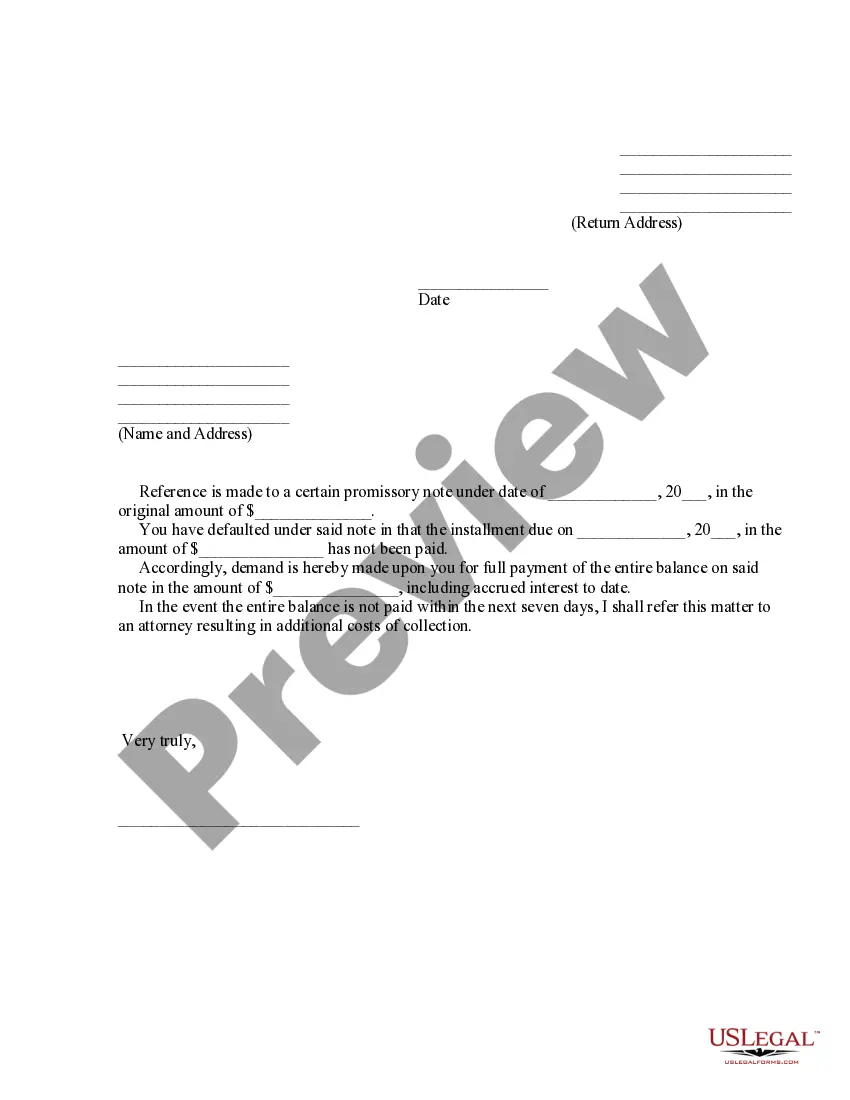
Dear Sir/Madam, I entered into an/the attached agreement with you on date invoice number can be added in brackets if necessary. You/name of company failed to comply with the agreement. The agreement obliges you/name company to explain the obligations to which the party has failed to comply.
How long does a default stay on your credit file? A default will remain on your credit file for six years. After six years, the default will be removed, even if the debt from the default hasn't been fully cleared.
Credit Reporting and defaults Your client must be 60 days in default. Your client must also be sent a section 21D(3) (of the Privacy Act) informing your client that a default will be listed. The listing cannot be made until 14 days after the notice or more than 3 months after the notice. Enforcement (Part 5 NCC) - Legal Aid NSW nsw.gov.au ? the-credit-law ? enfor... nsw.gov.au ? the-credit-law ? enfor...
After the Notice of Default is filed, the homeowner has 90 days to cure the default, which usually means paying everything that is owed. If the borrower does not pay within the 90-day timeline, the bank can record a Notice of Sale announcing that the property will be sold at auction. California Foreclosure Process Timeline DebtStoppers debtstoppers.com ? blog ? california-foreclo... debtstoppers.com ? blog ? california-foreclo...
A default notice is a notification from a lender asking you to catch up with your payments or else have your account closed. It's your chance to stop a default from happening. You should try and pay the amount you owe immediately to avoid a default.
When you receive the Notice of Default, you have 180 days to get your loan current or the bank can take the next step in the foreclosure process. The next step, called the Notice of Trustee's Sale, sets a date for a public foreclosure auction of your home.