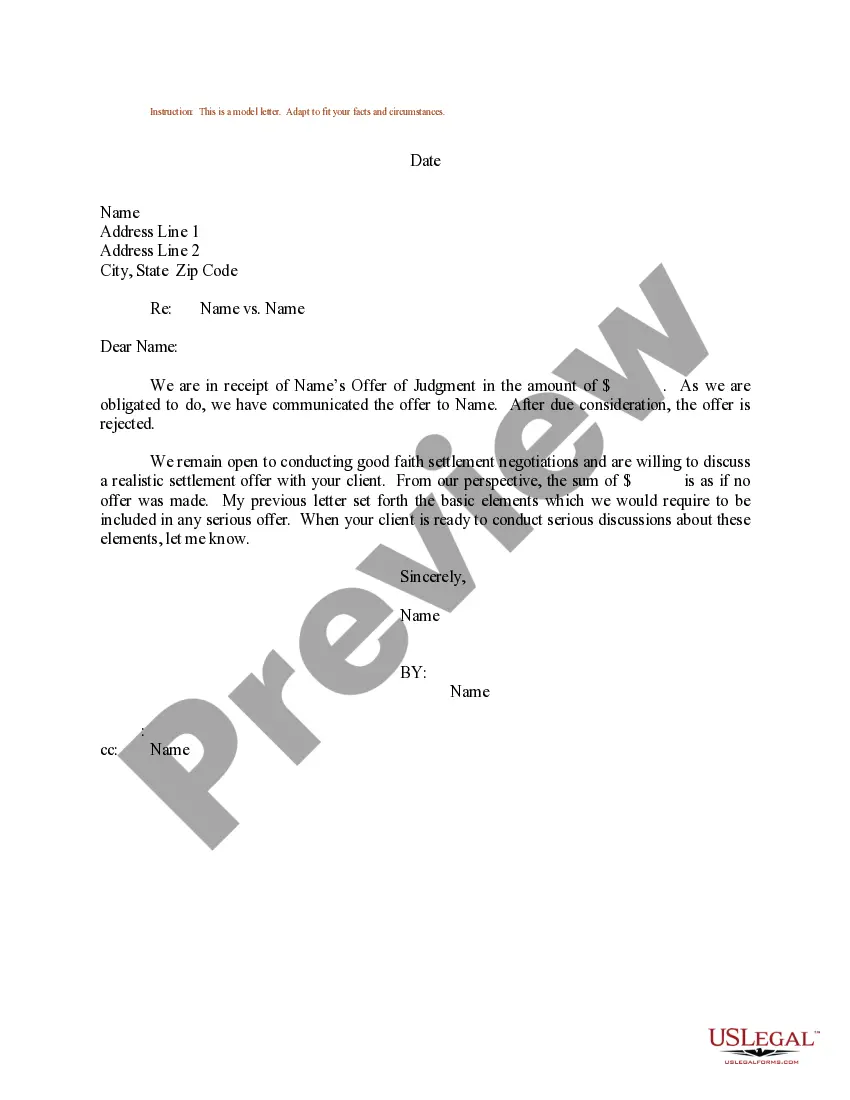
Sample Letter For Settlement Offer In Pima
Description


Get your form ready online
Our built-in tools help you complete, sign, share, and store your documents in one place.
Make edits, fill in missing information, and update formatting in US Legal Forms—just like you would in MS Word.
Download a copy, print it, send it by email, or mail it via USPS—whatever works best for your next step.
Sign and collect signatures with our SignNow integration. Send to multiple recipients, set reminders, and more. Go Premium to unlock E-Sign.
If this form requires notarization, complete it online through a secure video call—no need to meet a notary in person or wait for an appointment.
We protect your documents and personal data by following strict security and privacy standards.

Make edits, fill in missing information, and update formatting in US Legal Forms—just like you would in MS Word.

Download a copy, print it, send it by email, or mail it via USPS—whatever works best for your next step.

Sign and collect signatures with our SignNow integration. Send to multiple recipients, set reminders, and more. Go Premium to unlock E-Sign.

If this form requires notarization, complete it online through a secure video call—no need to meet a notary in person or wait for an appointment.

We protect your documents and personal data by following strict security and privacy standards.
Looking for another form?




Form popularity
FAQ
These are the steps to follow: Work out what you can offer the people you owe. Send your offer to them in writing. Ask them to confirm they accept your offer in writing. Keep any letters your creditors send you about the settlement offer. Negotiate with your creditors if you need to.
Tips for Writing a Counteroffer Letter State clear reasons backed with research. Communicate other job offers. Emphasize your sought-after skills. Formulate your wants as requests rather than demands. Use polite, neutral terms. Edit and proofread.
Countering a Low Insurance Settlement Offer State that the offer you received is unacceptable. Refute any statements in the adjustor's letter that are inaccurate and damaging to your claim. Re-state an acceptable figure. Explain why your counteroffer is appropriate, including the reasons behind your general damage demands.
Treat the following as a set of general guidelines: Gather complete information before you start writing. Describe your injuries and medical treatment. List your medical expenses, lost wages, and non-economic damages. Make a settlement demand. Include a deadline for legal action if you want to, but don't bluff.
To properly reject an insurance settlement offer, you must communicate the rejection in writing through a formal demand letter. This letter should clearly state the reasons for rejecting the offer, such as it not providing maximum compensation for the damages incurred.
If you choose to reject the low settlement offer, you must communicate your decision to the claims adjuster. Your legal representative can help you write a letter that states your intentions. Within the letter, you can indicate that you reject the offer and highlight why you deserve a higher settlement amount.
Keep your emotions out of the letter and stick to facts, such as the extreme pain and suffering you have had to endure and the frustration and hassle of attending medical treatments. Be professional, courteous, and confident, and never attack the claims adjuster personally in your counteroffer letter.
I am writing in response to the settlement offer you presented on Settlement Offer Date, related to claim number Claim Number for the incident that occurred on Incident Date. After careful consideration, I must reject this offer as it does not meet my needs based on the severity and ongoing nature of my injuries.
If you choose to reject the low settlement offer, you must communicate your decision to the claims adjuster. Your legal representative can help you write a letter that states your intentions. Within the letter, you can indicate that you reject the offer and highlight why you deserve a higher settlement amount.
I hereby acknowledge full settlement and satisfaction of all the aforesaid claims and fully understand that I can make no further claim or demand against the aforesaid, even though my damages and injuries are found to be more serious than or different from what I know them to be or to exist at this time.

