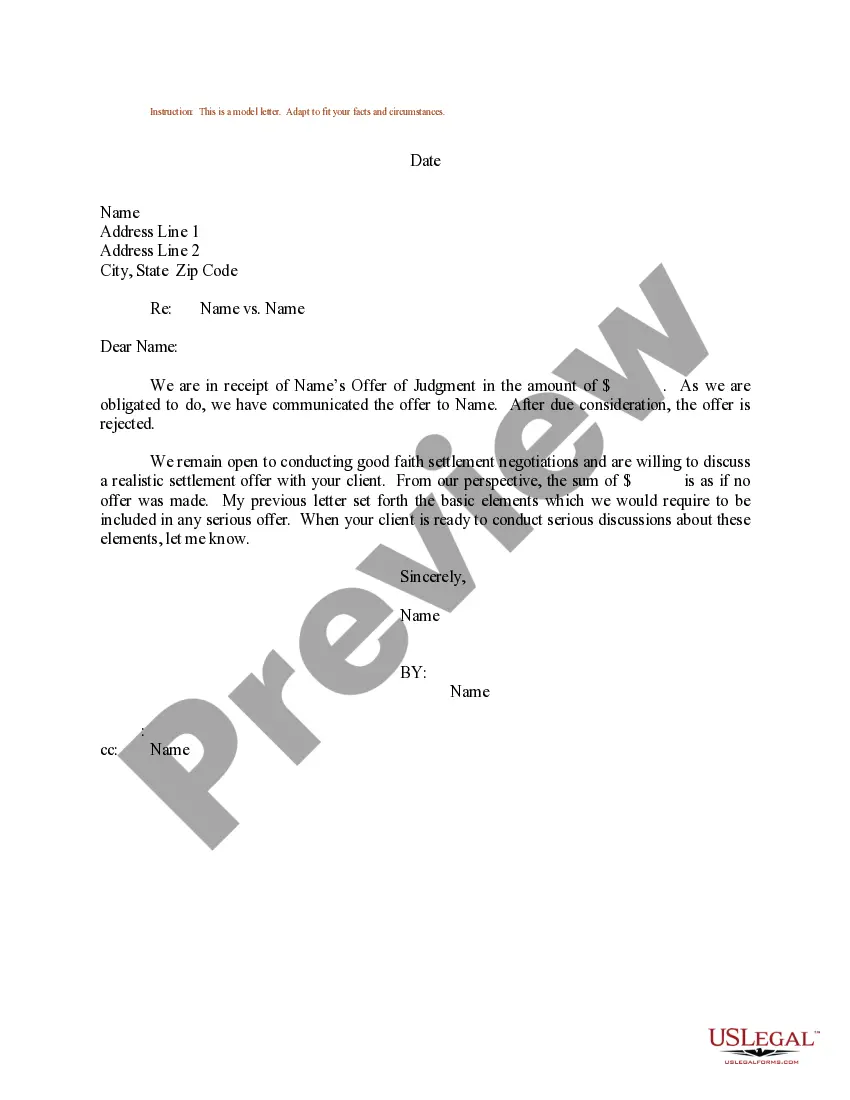
Sample Settlement Letter Without Prejudice In Florida
Description


Get your form ready online
Our built-in tools help you complete, sign, share, and store your documents in one place.
Make edits, fill in missing information, and update formatting in US Legal Forms—just like you would in MS Word.
Download a copy, print it, send it by email, or mail it via USPS—whatever works best for your next step.
Sign and collect signatures with our SignNow integration. Send to multiple recipients, set reminders, and more. Go Premium to unlock E-Sign.
If this form requires notarization, complete it online through a secure video call—no need to meet a notary in person or wait for an appointment.
We protect your documents and personal data by following strict security and privacy standards.

Make edits, fill in missing information, and update formatting in US Legal Forms—just like you would in MS Word.

Download a copy, print it, send it by email, or mail it via USPS—whatever works best for your next step.

Sign and collect signatures with our SignNow integration. Send to multiple recipients, set reminders, and more. Go Premium to unlock E-Sign.

If this form requires notarization, complete it online through a secure video call—no need to meet a notary in person or wait for an appointment.

We protect your documents and personal data by following strict security and privacy standards.
Looking for another form?
Form popularity
FAQ
The proposal for settlement rule provides that a party may serve a proposal for settlement, which must be accepted within 30 days or rejected. The effect of rejection depends on the amount of the offer and the results of the trial.
APPROVAL OF A MINOR'S PROPOSED SETTLEMENT Florida Statute 768.25 requires Court approval of any settlement of a minor or incompetent while an action is pending. This statute also requires the Court to approve “apportionment among the beneficiaries ....”.
In order to be binding, a proposal for settlement must be in writing and signed by both parties. The terms of the agreement must be clearly stated, and both parties must agree to them. If either party breaches the agreement, the other party can file a lawsuit to enforce the agreement.
Whether or not dismissal is with or without prejudice is dependent upon whether or not the case has permanently ended without a chance of coming back to court or if it has only been removed from the docket, meaning that it could be re-filed if certain conditions have been met, and would be treated as if it had never ...
Whereas a case that is dismissed “with prejudice” is dismissed permanently, a case that is dismissed “without prejudice” is only dismissed temporarily. This temporary dismissal means that the plaintiff is allowed to re-file charges, alter the claim, or bring the case to another court.
The purpose and intended effect of the words “without prejudice” is to prohibit a party from using the doctrine of res judicata (from the Latin, “a thing decided”) in any later actions on the subject matter.
If the case is dismissed without prejudice, prosecutors will have another two years to refile before the statute of limitations expires. You can contact our California criminal defense lawyers for a case review. Eisner Gorin LLP has offices in Los Angeles, California.
A dismissal without prejudice means the court has closed the case, but your right to bring the matter before the court again is not barred. This is distinct from a dismissal with prejudice, which would prevent you from refiling the case on the same grounds.
Where do I put the words "without prejudice" on a document or email? There are no rules about this but generally, at the top of any document or in the subject line etc - so that it is instantly clear to the reader.
The 'without prejudice' label can be attached to any form of communication – letters, emails, phone calls, and meetings – whether online or otherwise. All that is required is that one or both parties state that the communication is 'without prejudice' before the communication occurs.

