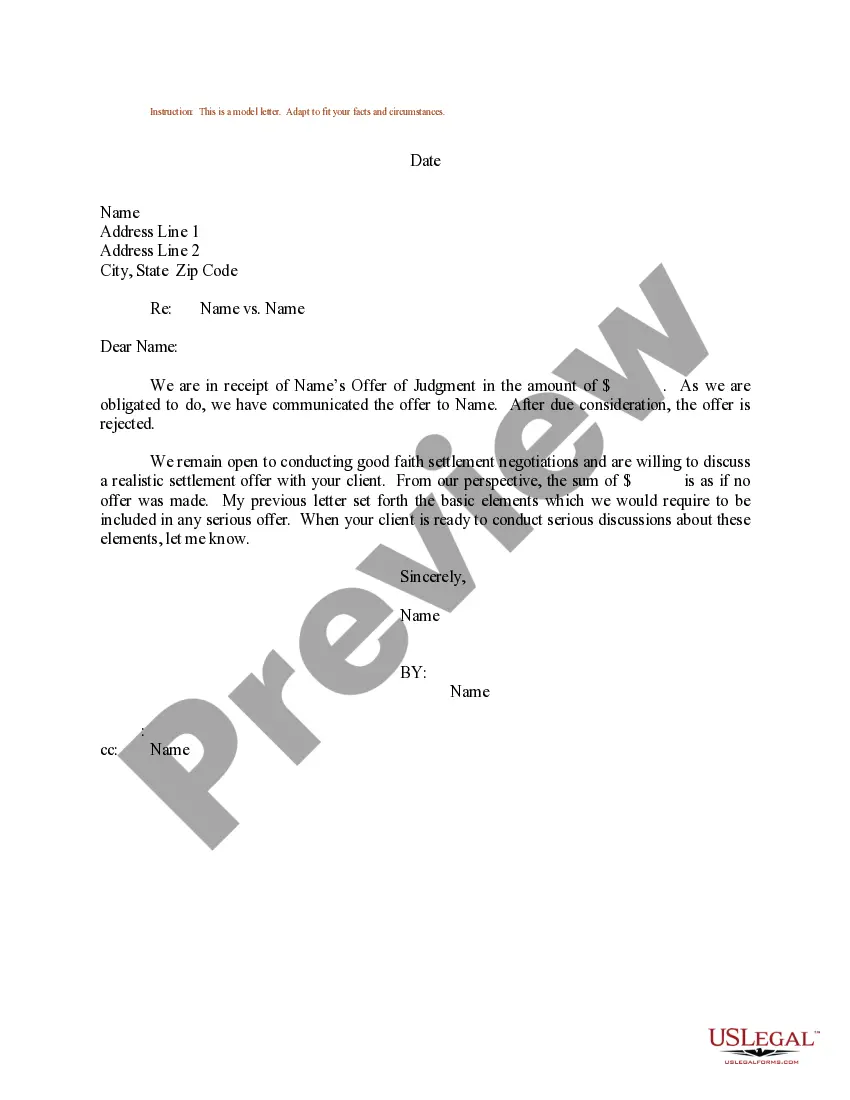
Sample Letter For Settlement In Alameda
Description


Get your form ready online
Our built-in tools help you complete, sign, share, and store your documents in one place.
Make edits, fill in missing information, and update formatting in US Legal Forms—just like you would in MS Word.
Download a copy, print it, send it by email, or mail it via USPS—whatever works best for your next step.
Sign and collect signatures with our SignNow integration. Send to multiple recipients, set reminders, and more. Go Premium to unlock E-Sign.
If this form requires notarization, complete it online through a secure video call—no need to meet a notary in person or wait for an appointment.
We protect your documents and personal data by following strict security and privacy standards.

Make edits, fill in missing information, and update formatting in US Legal Forms—just like you would in MS Word.

Download a copy, print it, send it by email, or mail it via USPS—whatever works best for your next step.

Sign and collect signatures with our SignNow integration. Send to multiple recipients, set reminders, and more. Go Premium to unlock E-Sign.

If this form requires notarization, complete it online through a secure video call—no need to meet a notary in person or wait for an appointment.

We protect your documents and personal data by following strict security and privacy standards.
Looking for another form?








Form popularity
FAQ
Frequently Asked Questions (FAQ) Type your letter. Concisely review the main facts. Be polite. Write with your goal in mind. Ask for exactly what you want. Set a deadline. End the letter by stating you will promptly pursue legal remedies if the other party does not meet your demand. Make and keep copies.
If an entire case is settled or otherwise disposed of, each plaintiff or other party seeking affirmative relief must immediately file written notice of the settlement or other disposition with the court and serve the notice on all parties and any arbitrator or other court-connected alternative dispute resolution (ADR) ...
For California small claims, you don't have to “serve” a demand letter. You just have to send the demand letter. You can send it by mail, email, or hand delivery, or you can text the demand letter.
Send your letter by regular and certified mail with a return receipt requested. Send it also by regular mail with tracking/delivery confirmation in case the recipient refuses to sign the receipt. Keep a copy of all post office receipts.
Provide Detailed Information: Include relevant details such as dates, amounts owed, and any contractual agreements or promises made. Provide supporting documentation, such as invoices, contracts, or correspondence, to substantiate your claim. 3. Be Concise and Professional: Keep your letter concise and professional.
If an entire case is settled or otherwise disposed of, each plaintiff or other party seeking affirmative relief must immediately file written notice of the settlement or other disposition with the court and serve the notice on all parties and any arbitrator or other court-connected alternative dispute resolution (ADR) ...
Although a demand letter is not a required prerequisite to a lawsuit under California law, courts tend to have a more favorable view of parties that make good faith efforts to resolve disputes prior to formal legal action in court.
A demand letter can be used as evidence that you sent written notice before filing your lawsuit. This is especially important if your claim is based on a federal act or state statute that requires you to provide notice before filing a lawsuit.
Frequently Asked Questions (FAQ) Type your letter. Concisely review the main facts. Be polite. Write with your goal in mind. Ask for exactly what you want. Set a deadline. End the letter by stating you will promptly pursue legal remedies if the other party does not meet your demand. Make and keep copies.

