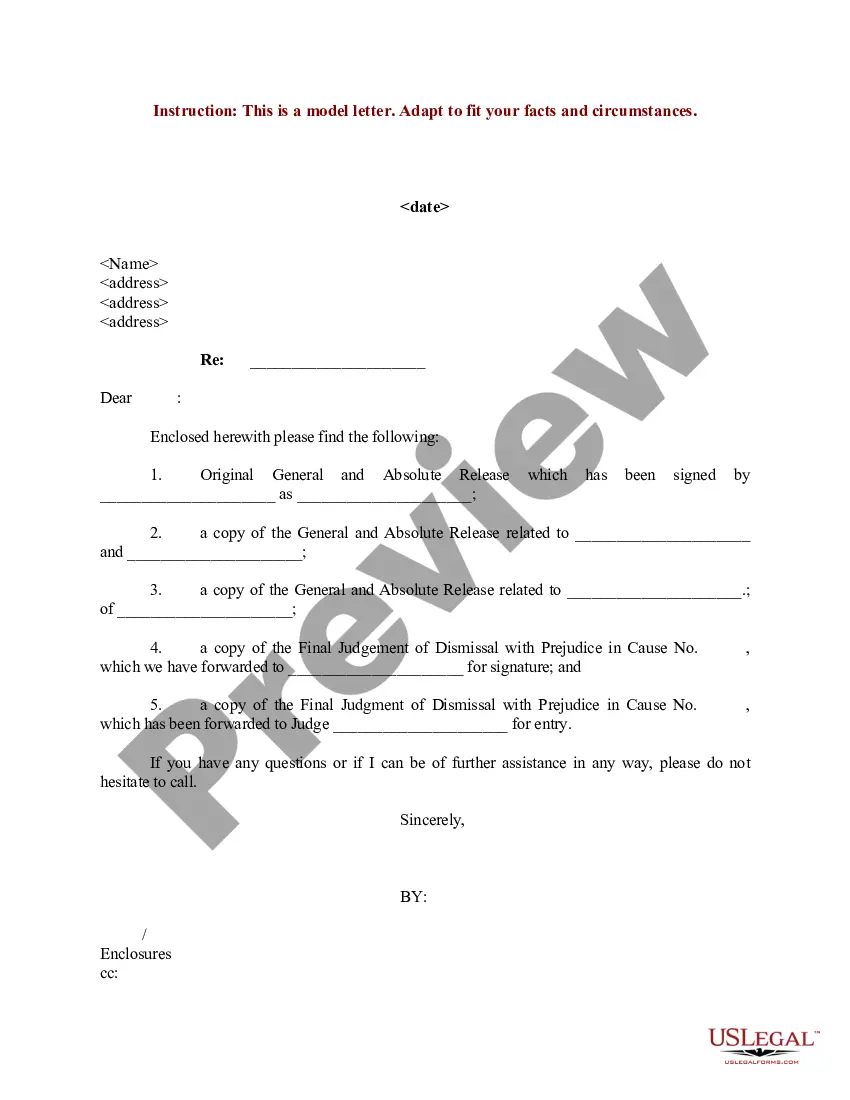
Release With Prejudice Without In Queens
Description

Get your form ready online
Our built-in tools help you complete, sign, share, and store your documents in one place.
Make edits, fill in missing information, and update formatting in US Legal Forms—just like you would in MS Word.
Download a copy, print it, send it by email, or mail it via USPS—whatever works best for your next step.
Sign and collect signatures with our SignNow integration. Send to multiple recipients, set reminders, and more. Go Premium to unlock E-Sign.
If this form requires notarization, complete it online through a secure video call—no need to meet a notary in person or wait for an appointment.
We protect your documents and personal data by following strict security and privacy standards.

Make edits, fill in missing information, and update formatting in US Legal Forms—just like you would in MS Word.

Download a copy, print it, send it by email, or mail it via USPS—whatever works best for your next step.

Sign and collect signatures with our SignNow integration. Send to multiple recipients, set reminders, and more. Go Premium to unlock E-Sign.

If this form requires notarization, complete it online through a secure video call—no need to meet a notary in person or wait for an appointment.

We protect your documents and personal data by following strict security and privacy standards.
Looking for another form?

Form popularity
FAQ
A “motion to dismiss” is typically filed in response to a complaint and is made in lieu of filing an “answer.” Technically, a plaintiff can move to “strike” a defense that a defendant has pled, given that defenses are subject to the same pleading requirements as are the plaintiff's claims.
Criminal Record and Dismissal Without Prejudice California law allows a case file and arrest record to remain a public record following dismissal without prejudice. However, as there was no trial, there is no conviction on record if the final result was a voluntary dismissal without prejudice.
If the court grants these motions to dismiss, the case is over, but the plaintiff can correct the problem and start the case again. This is called a dismissal without prejudice. Other motions to dismiss ask for dismissal with prejudice. This means that the case can't be started again.
Understanding Case Dismissal Without Prejudice in California Dismissal without prejudice is a legal term indicating that the case has been dismissed but can be reopened at some point.
After a summons with notice is served, the defendant will demand that the plaintiff serve a complaint. The plaintiff must then have the complaint served within 20 days after being served with the demand, or the case may be dismissed.
You can wear almost anything to small claims court . The judge does not care what you are wearing .
Conclusion: Going to small claims court may be worth it for $500, but it will determine how you weigh your costs versus benefits. At a minimum, it is worth it to send a demand letter.
The dismissal ``without prejudice'' does not mean that you won the issue regarding the debt. It just means that the creditor stopped fighting in court without conceding that you won. So the dismissal ``without prejudice'' does not necessarily help your argument to remove this from your credit report.
If the court grants these motions to dismiss, the case is over, but the plaintiff can correct the problem and start the case again. This is called a dismissal without prejudice. Other motions to dismiss ask for dismissal with prejudice. This means that the case can't be started again.