Consumer Investigative Release With Case Laws
Description
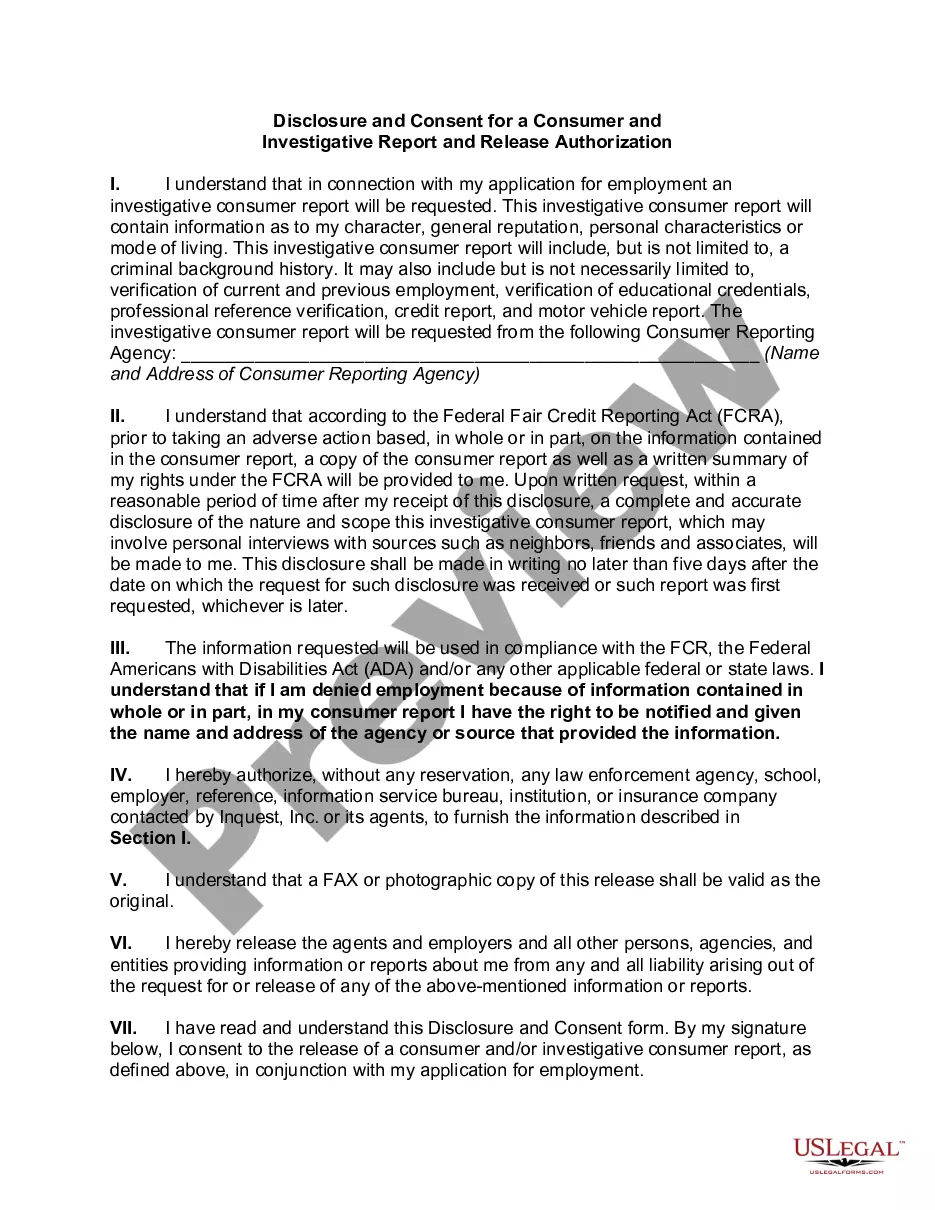
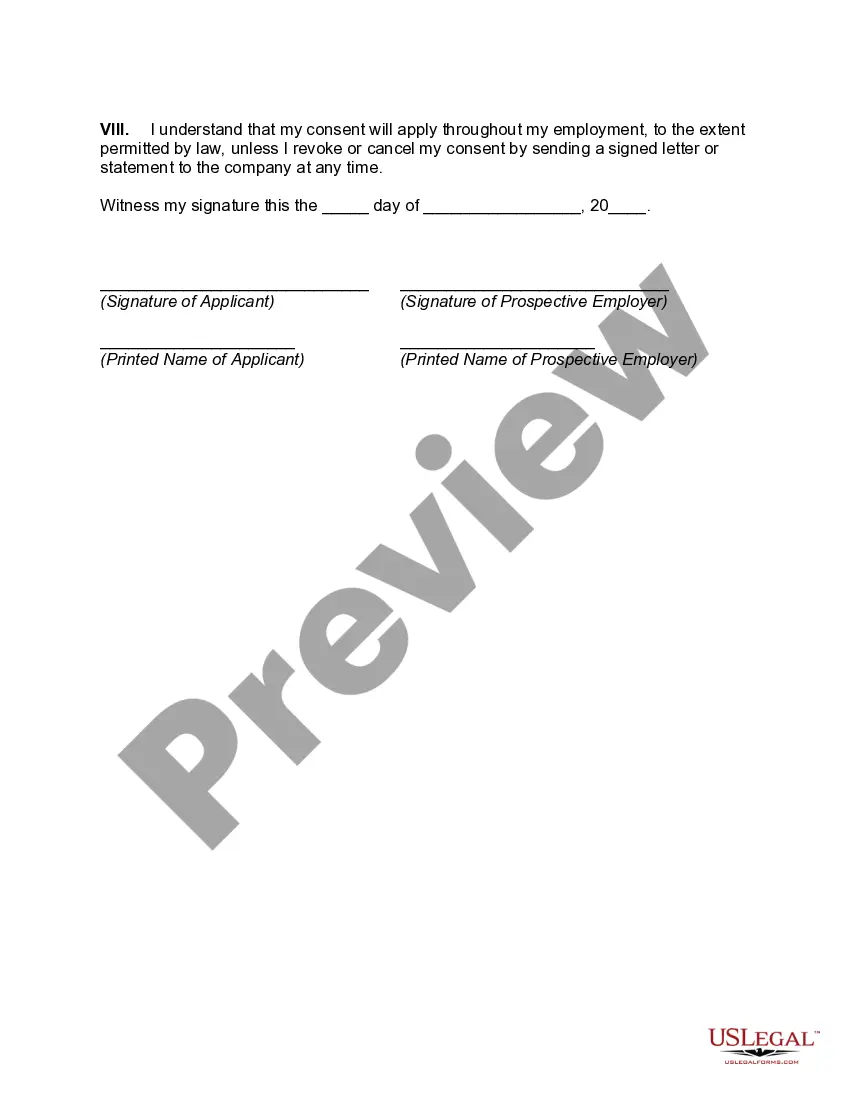
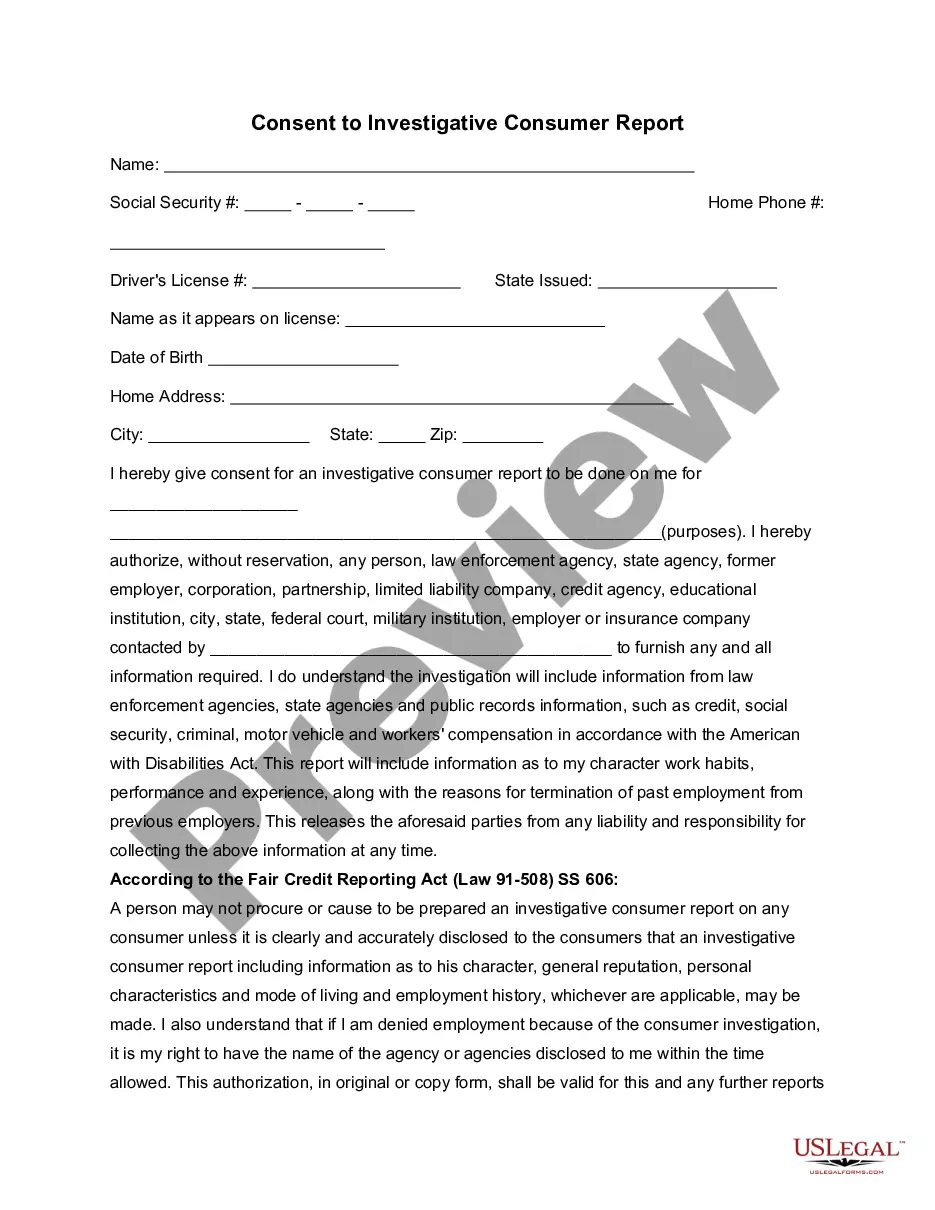
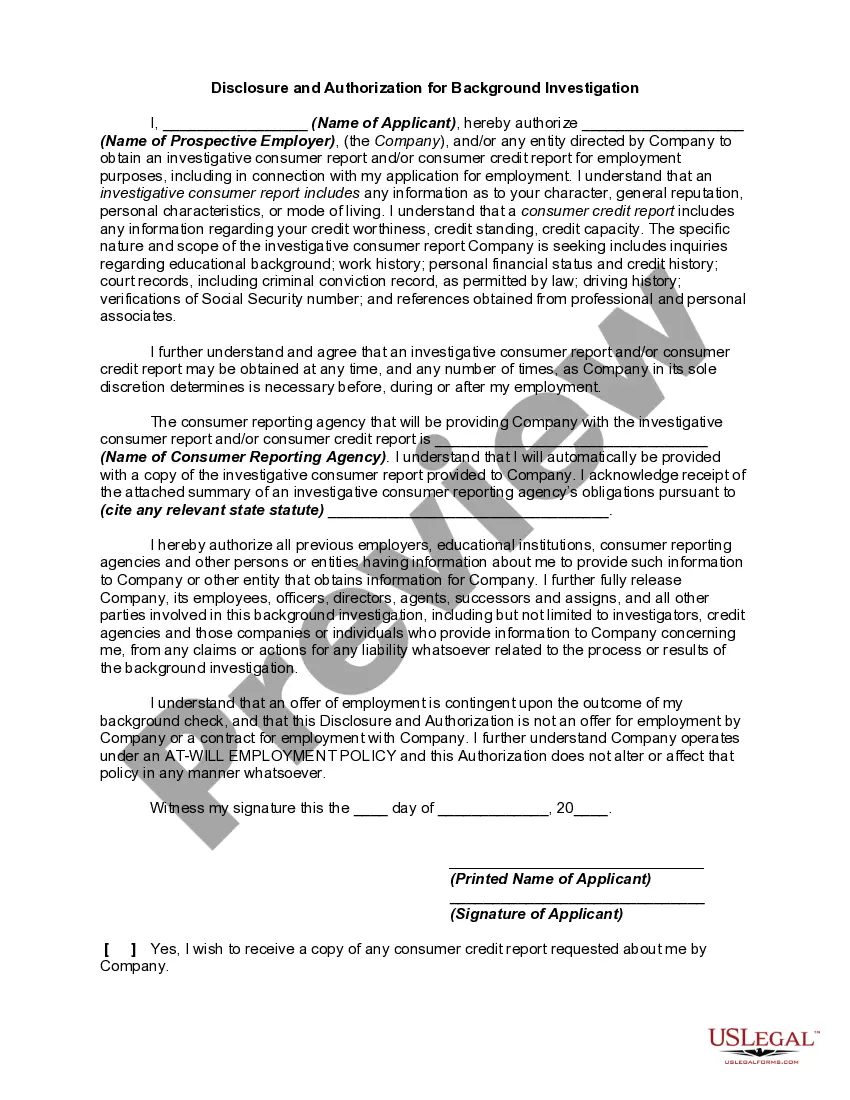
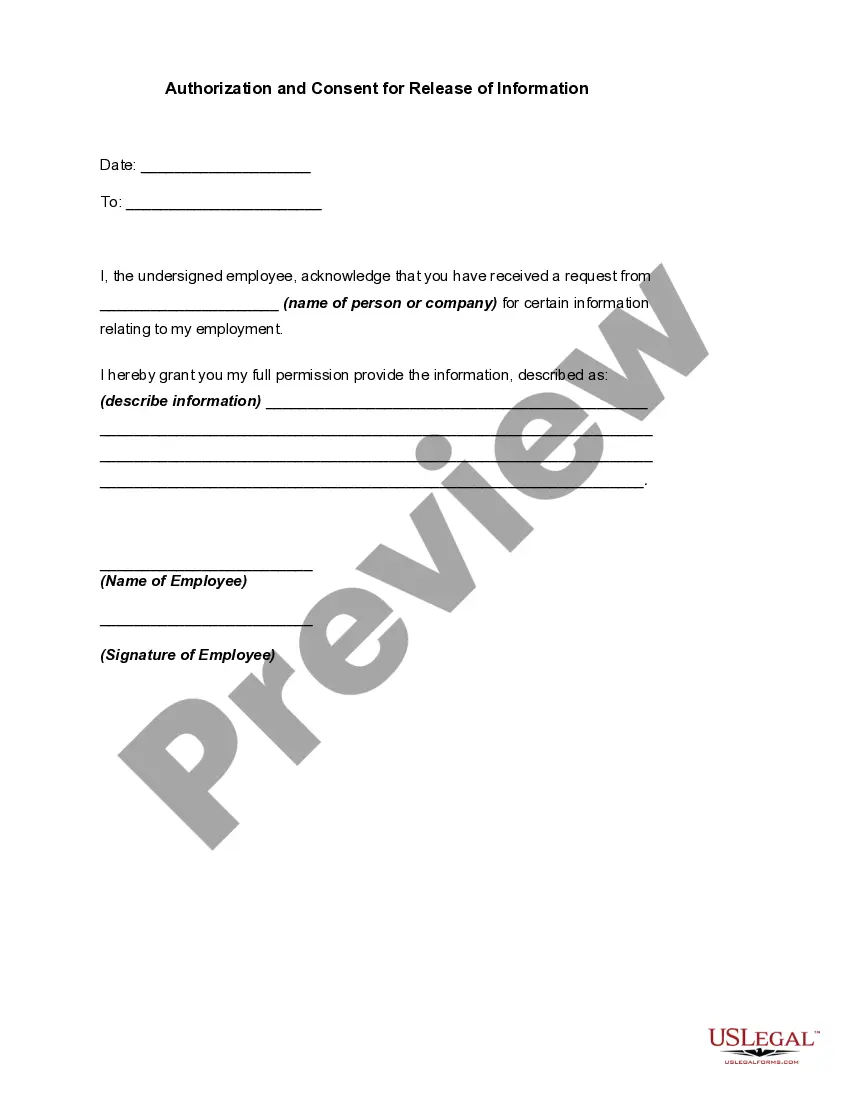






How to fill out Disclosure And Consent For A Consumer Investigative Report And Release Authorization?
The Consumer Investigative Release Along With Case Laws you view on this site is a reusable legal template created by experienced attorneys in compliance with federal and state statutes and regulations.
For over 25 years, US Legal Forms has offered individuals, organizations, and lawyers more than 85,000 validated, state-specific forms for any commercial and personal event. It’s the quickest, easiest, and most trustworthy method to acquire the documents you require, as the service assures the utmost level of data protection and anti-malware safeguards.
Subscribe to US Legal Forms to have authenticated legal templates for all of life's situations readily available.
- Search for the document you require and examine it.
- Browse through the sample you looked for and preview it or review the form description to ensure it meets your needs. If it does not, utilize the search function to find the correct one. Click Buy Now once you have found the template you are looking for.
- Register and Log In.
- Choose the pricing plan that works best for you and create an account. Use PayPal or a credit card for a swift payment. If you already possess an account, Log In and verify your subscription to proceed.
- Retrieve the editable template.
- Select the format you prefer for your Consumer Investigative Release Along With Case Laws (PDF, DOCX, RTF) and save the template on your device.
- Fill out and sign the documents.
- Print the template to complete it by hand. Alternatively, use an online multi-functional PDF editor to quickly and accurately fill out and sign your document with a valid signature.
- Download your documents again.
- Reuse the same file whenever necessary. Access the My documents tab in your profile to redownload any previously saved templates.
Form popularity
FAQ
Put it in writing It is helpful to put your complaint in writing if you can. If this isn't something you feel comfortable doing, you could ask a friend, carer, family member or an organisation like Citizens Advice to help you. Make sure to write 'complaint' at the top of your letter or email, so there can be no doubt.
STEP 1: Intimation via Notice: A notice to be sent by the aggrieved party to the service provider who provided the goods or the services. ... STEP 2: Get the Consumer Complaint Drafted: ... STEP 3: Attach Relevant Documents: ... STEP 4: Appropriate Forum: ... STEP 5: Pay Requisite Court Fees: ... STEP 6: Submit an Affidavit:
Section 1681a of the Fair Credit Reporting Act defines an ?investigative consumer report? as ?a consumer report or portion thereof in which information on a consumer's character, general reputation, personal characteristics, or mode of living is obtained through personal interviews with neighbors, friends, or ...
The complaint can be made on plain paper and you can file it in person or through an authorised agent, after it has been notarised, through registered post or regular post. It is important that you serve a personal or legal notice to the opposite party before filing the complaint.
Every year the FTC brings hundreds of cases against individuals and companies for violating consumer protection and competition laws that the agency enforces. These cases can involve fraud, scams, identity theft, false advertising, privacy violations, anti-competitive behavior and more.